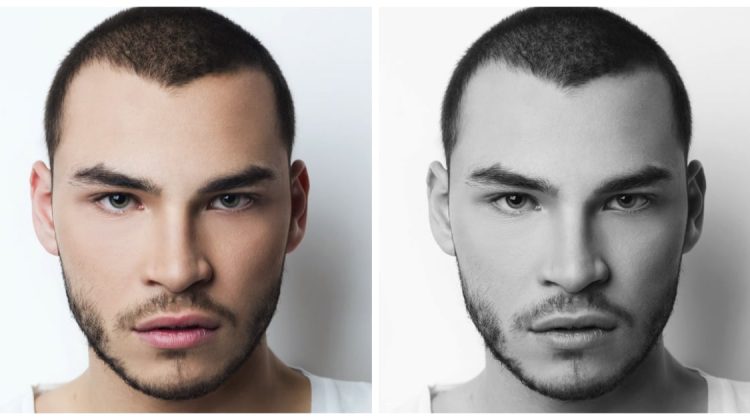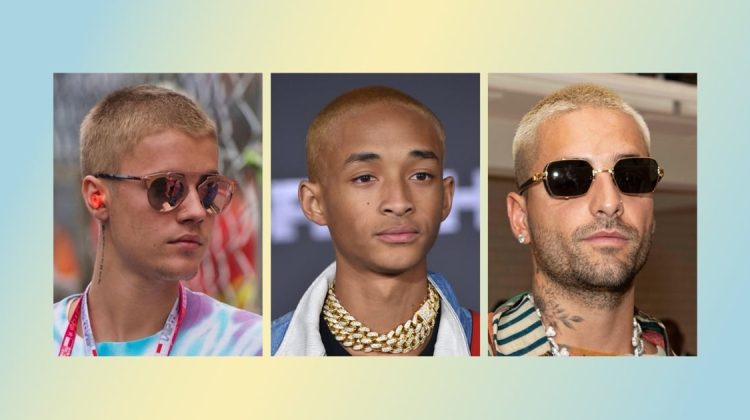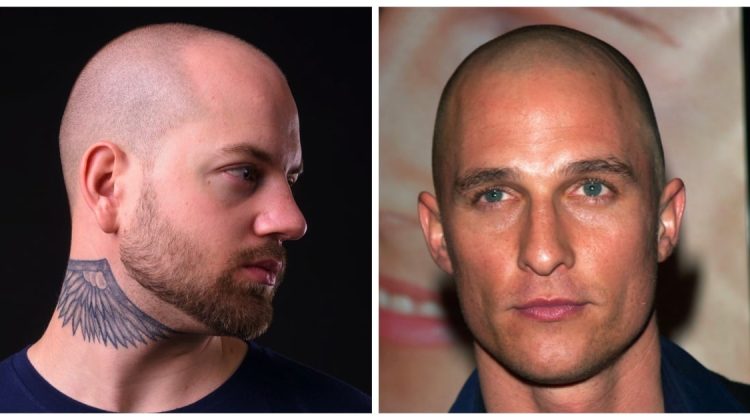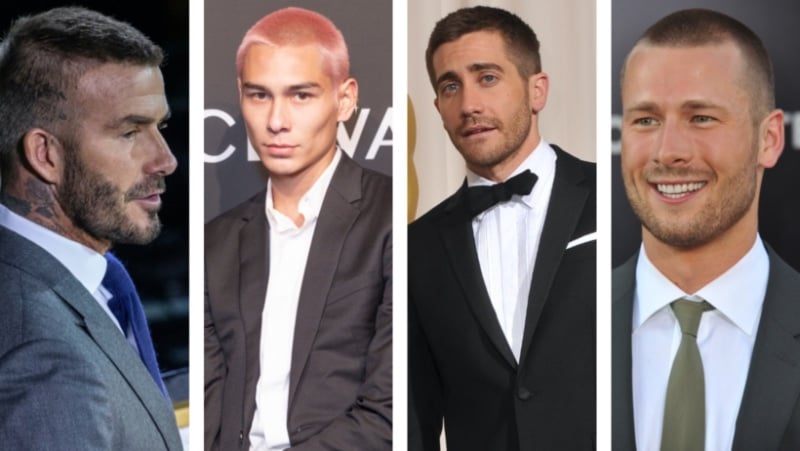
A buzz cut is a short, clipper-cut hairstyle, typically kept at one length across the head. The guard determines how much hair remains, from a close no-guard cut to a #8 that leaves about an inch.
With little to style, the cut draws attention to the hairline, head shape and facial features. A different guard or a fade at the sides can change its character considerably.
What Is a Buzz Cut?
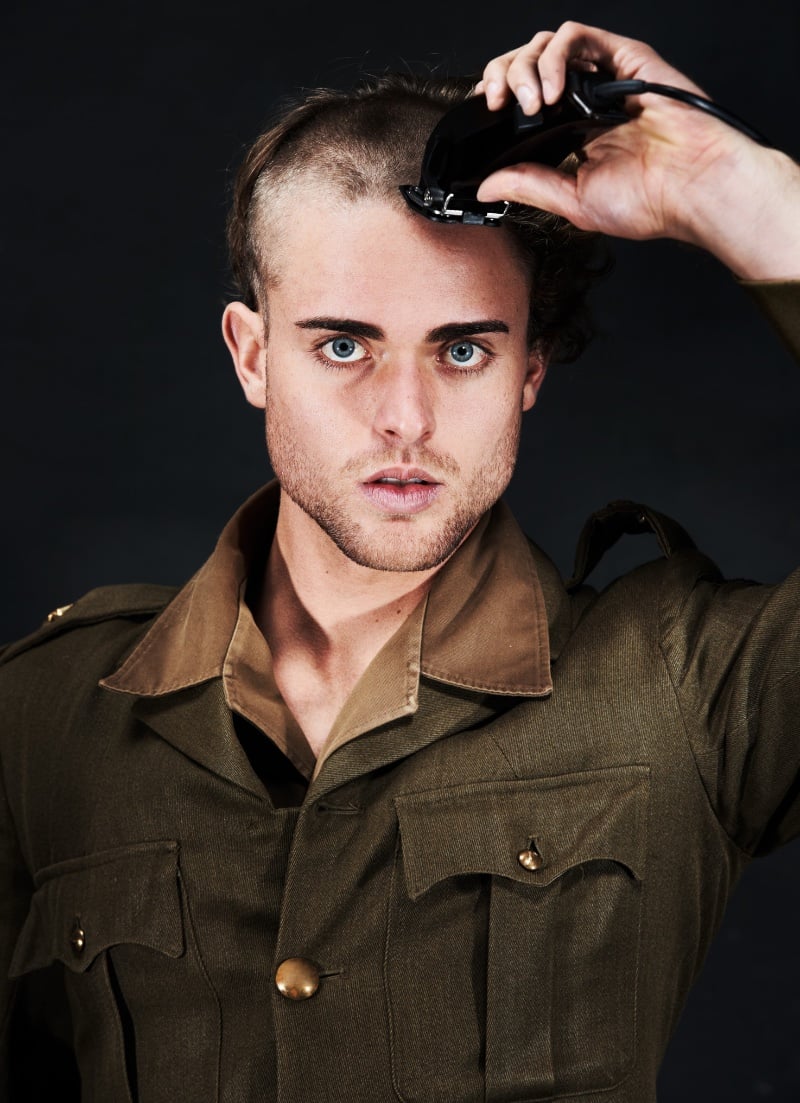
For an even buzz cut, clippers pass against the direction of hair growth using the same guard across the head. A trimmer tidies the hair around the ears and neckline.
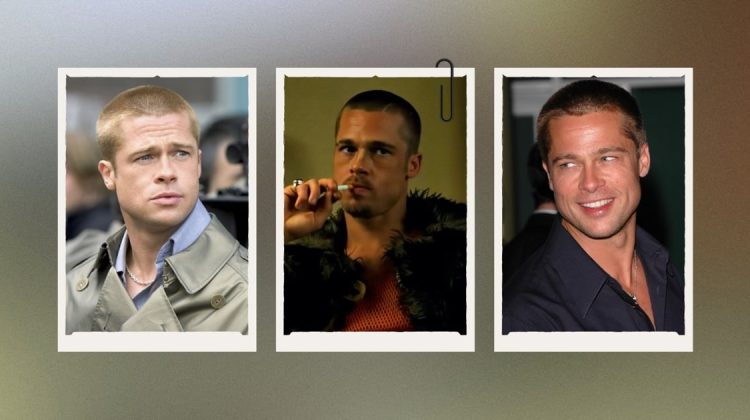
The buzz cut is closely associated with the military, where recruits get one on their first day. It has since become an everyday civilian haircut, worn by everyone from athletes to actors, including Brad Pitt in Fight Club.
The main variables are the guard length and what happens at the sides. A classic buzz cut is one length all over. A buzz cut fade keeps the top at one guard and blends the sides and back shorter.
Buzz Cut Lengths & Clipper Guard Numbers
Clipper guard numbers indicate the hair left after cutting. On most standard sets, each successive guard adds roughly 1/8 inch.
| Guard | Length | What it looks like |
|---|---|---|
| #0 (no guard) | About 1/16 in. (1.5 mm) | Close to bare scalp. The induction cut |
| #1 | 1/8 in. (3 mm) | Very short, with the scalp clearly visible |
| #2 | 1/4 in. (6 mm) | The most common buzz cut length, with even coverage |
| #3 | 3/8 in. (10 mm) | Soft and touchable, with some texture |
| #4 | 1/2 in. (13 mm) | A full, even crop with little scalp showing |
| #5 | 5/8 in. (16 mm) | Grown-in, with enough length to blend into a fade |
| #6 | 3/4 in. (19 mm) | The natural direction of the hair starts to show |
| #7 | 7/8 in. (22 mm) | Close to a short haircut, with visible waves or parting |
| #8 | 1 in. (25 mm) | The longest guard in most standard sets |
Some brands sell longer guards, up to #10, #12 or #16, for a long buzz cut. The shorter guards show more scalp, so fine or thinning hair often looks fuller at a #1 or #2 than at a #4.
Types of Buzz Cuts


Length separates the shortest buzz cuts from longer versions that can be brushed or parted. The crew cut and brush cut are close relatives, distinguished by extra length or shaping on top.
Short Buzz Cuts
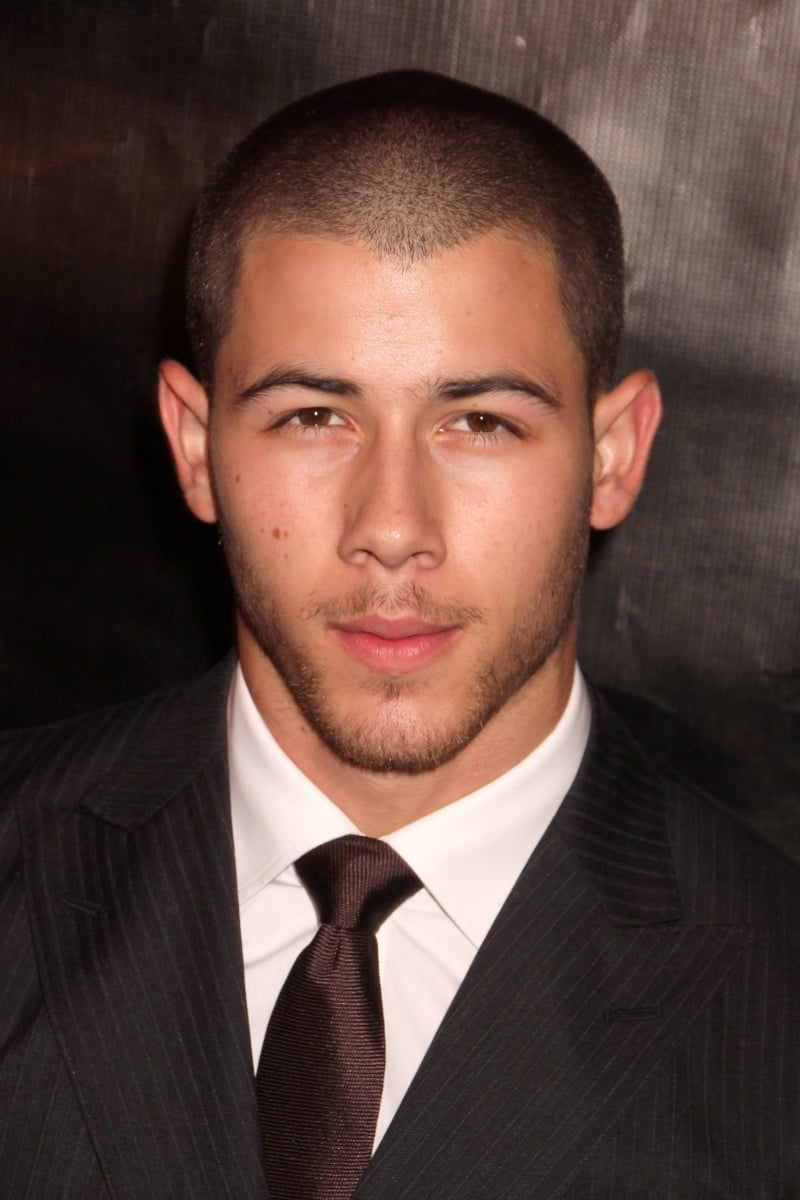
Short buzz cuts use no guard through a #2. The scalp remains visible at the closest lengths, and regrowth changes the appearance quickly.
Zero Buzz Cut
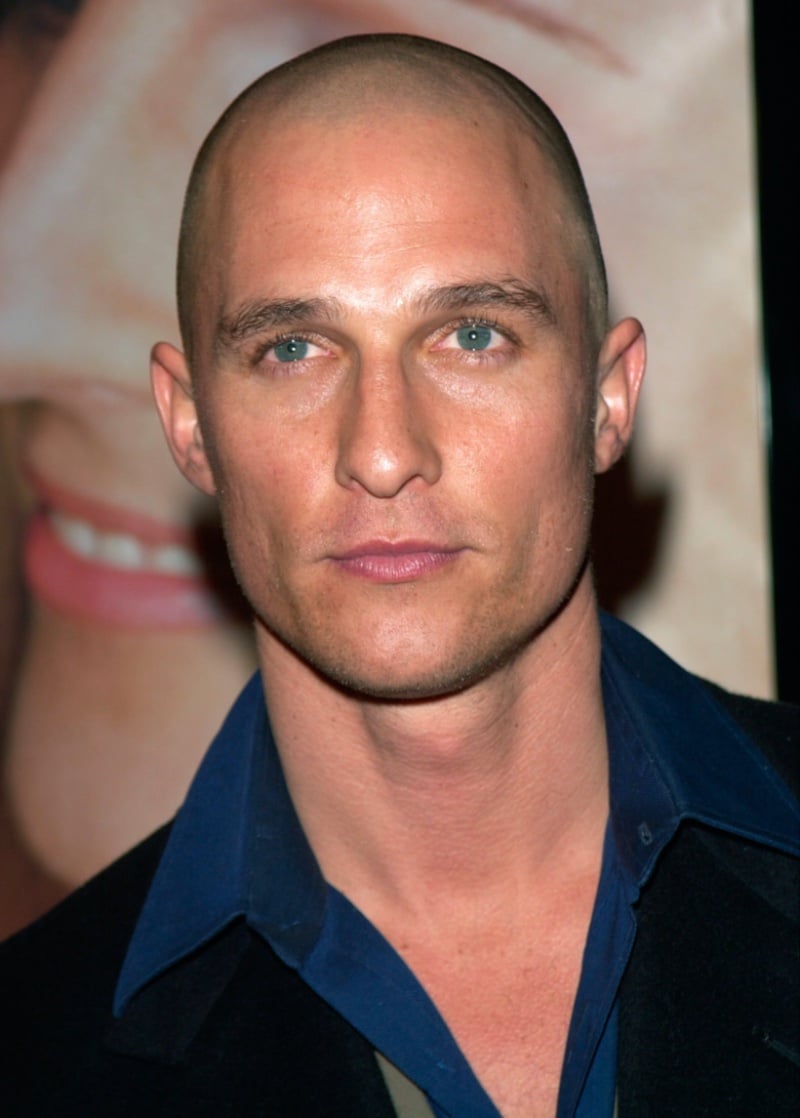
A zero buzz cut is clipped with no guard, leaving about 1/16 inch of hair. It’s the closest a clipper gets without shaving, so a faint shadow of hair remains.
The close-cut shadow becomes more visible within days. Maintaining the same near-shaved finish usually means clipping again about once a week.
Induction Cut
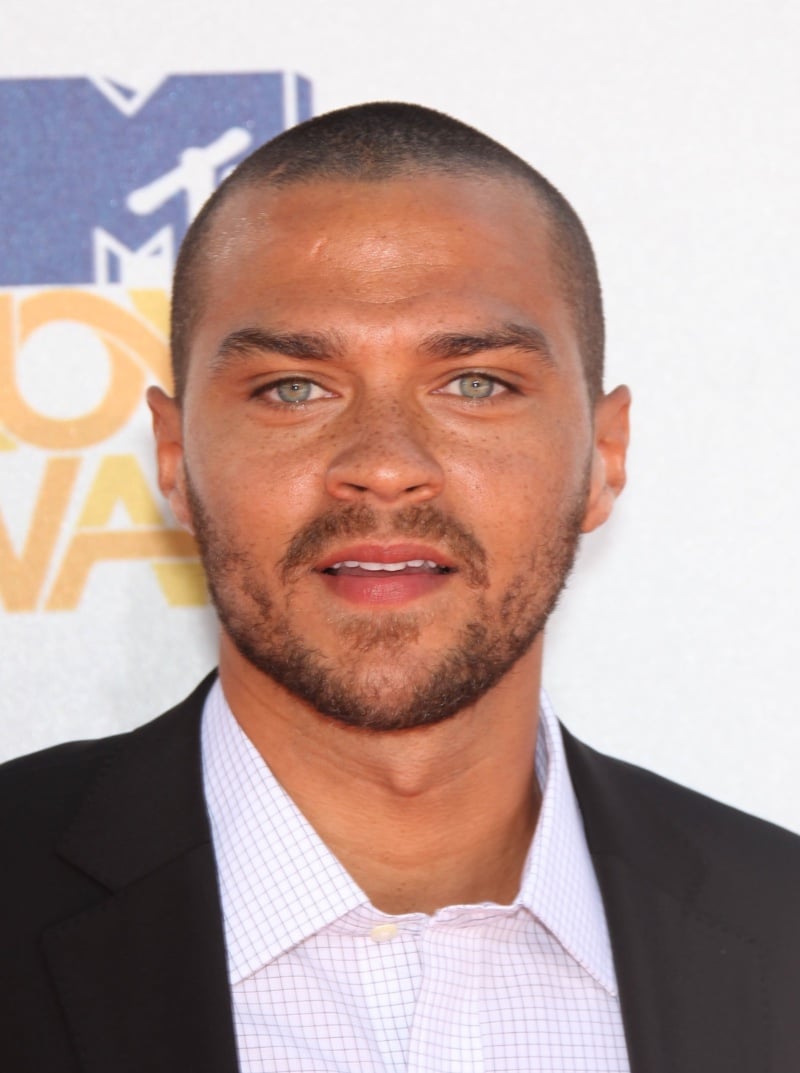
Named for the close clipping given to military recruits, an induction cut is essentially a zero buzz cut, made with clippers and no guard.
The two terms are used interchangeably, although some barbers use a #1 for an induction cut that’s slightly softer.
Burr Cut

A burr cut generally uses a #1 or #2 guard. The hair is long enough to soften the scalp outline but short enough to retain an even, close-cropped appearance.
On thinning hair, a burr cut is often the most flattering length, because there’s too little hair for sparse areas to stand out.
Medium Buzz Cuts
At a #3 or #4, the hair has enough length to reveal its natural texture and respond to a small amount of product.
Butch Cut

A butch cut uses a #3 or #4 guard for a uniform layer of hair across the head. Its extra length shows the direction and texture of the growth.
A touch of fiber or putty separates the hair. The fuller top also works well beside a beard.
Crew Cut

A crew cut keeps the sides and back short and leaves more length on top, usually longest at the front. Unlike a buzz cut, the top is often cut with scissors.
The distinction in a buzz cut vs. crew cut comparison is the graduation of length. A buzz cut is generally uniform, while a crew cut leaves a longer front that can be lifted or swept sideways.
Long Buzz Cuts
A long buzz cut, at a #5 or longer, starts to show the natural direction of the hair. These cuts sit at the border between buzz cuts and other short haircuts.
Brush Cut

A brush cut leaves enough length on top for the hair to stand up like the bristles of a brush, with shorter sides. It works best on thick, straight hair, which holds the upright shape on its own.
High & Tight
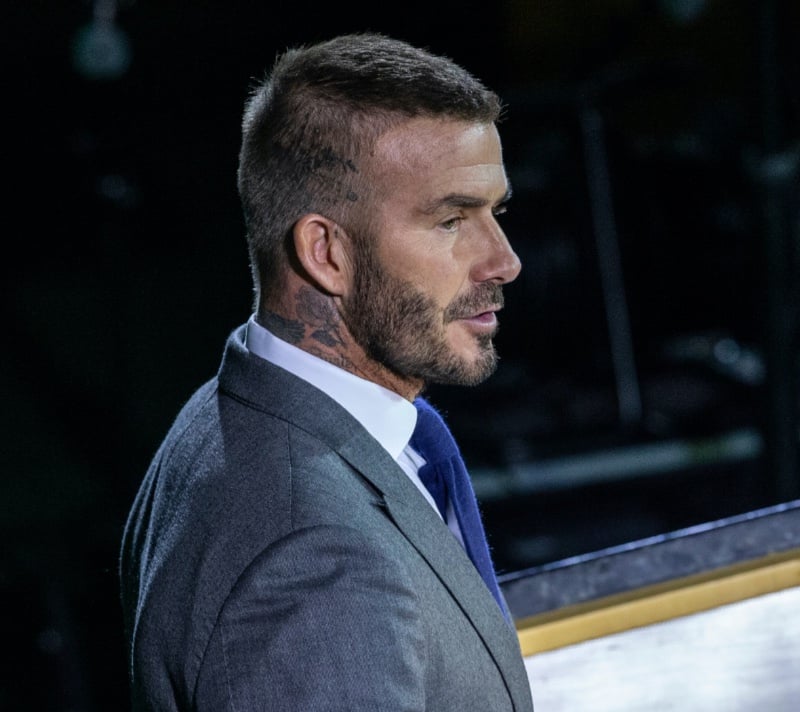
The high and tight is a military haircut with the back and sides clipped very short, high up the head, and a short patch of longer hair on top. The sharp contrast between the two is what defines it.
With a high and tight fade, the abrupt division between top and sides becomes a graduated transition.
Ivy League

The Ivy League, also called the Harvard clip or Princeton, is a longer crew cut with enough length on top to part and comb to the side. The sides are tapered short.
It’s the most polished of the buzz cut family and an easy professional haircut.
Buzz Cut Styles
The sides can match the top, narrow gradually at the edges or fade toward the skin.
Classic Buzz Cut

The classic buzz cut uses one guard over the whole head, with no fade or taper. The edges around the ears and neckline are tidied with a trimmer, but the length stays the same everywhere.
Its uniform length also makes it the simplest version to clip at home.
Buzz Cut Fade
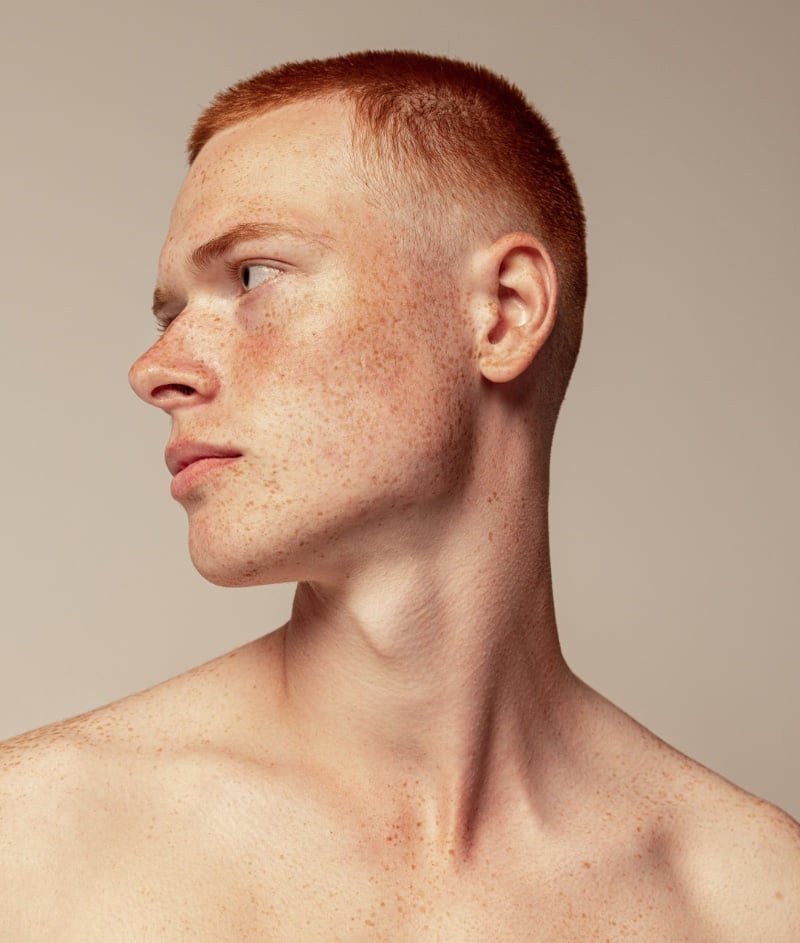
A buzz cut fade keeps the top at one guard and blends the sides and back through progressively shorter lengths, often down to skin. The barber starts with the top guard, then works down with lower guards toward the neckline.
A fade may sit low, mid or high. A line-up adds a defined border at the forehead and temples; the dedicated buzz cut fade article explores the variations in detail.
Long Buzz Cut Fade
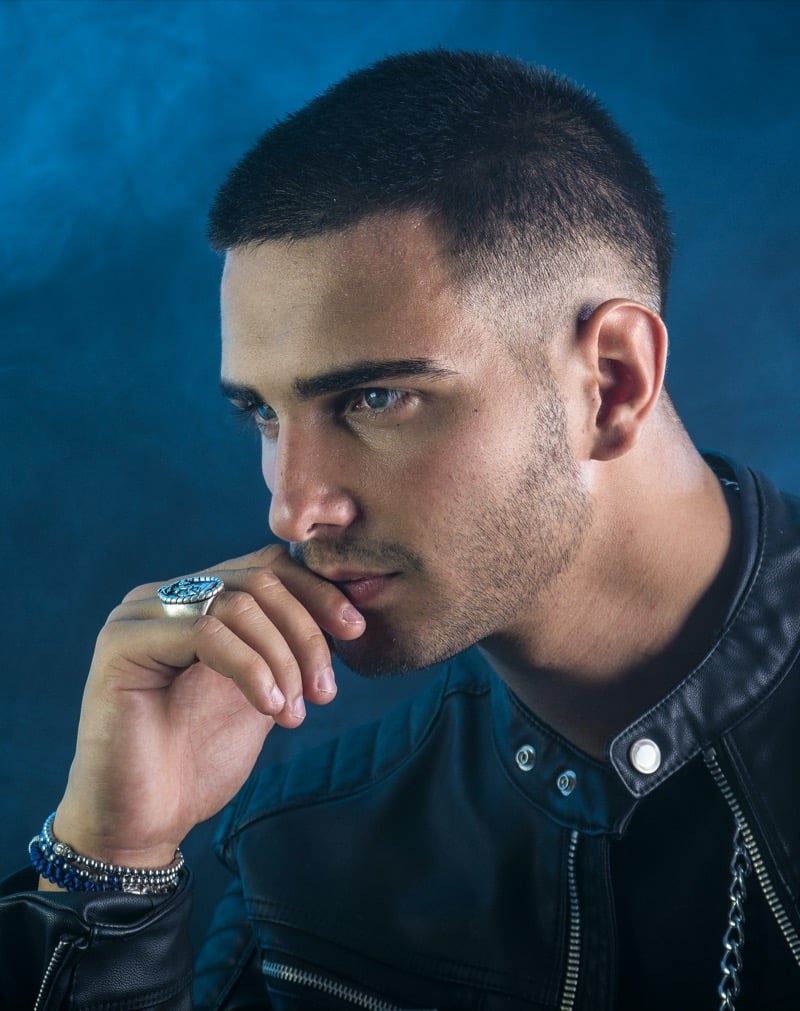
With a #4 to #6 on top and closely faded sides, the long buzz cut fade shows more of the hair’s natural texture. On thick, straight hair, the longer top may stand upright.
Buzz Cut Taper
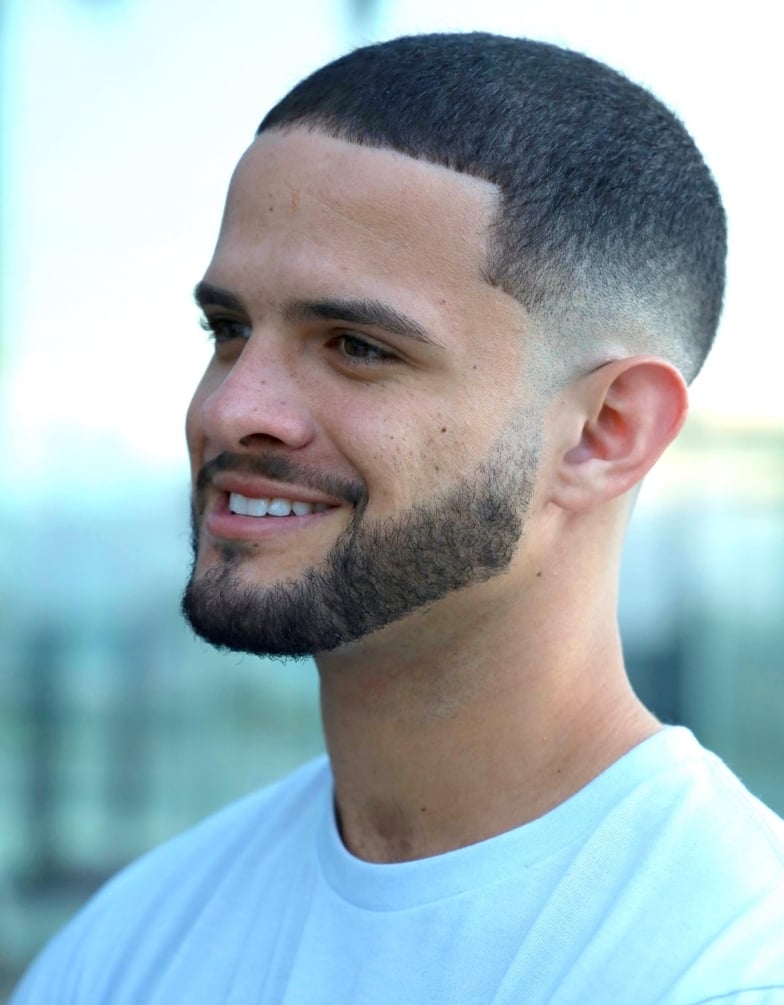
A buzz cut taper keeps the top even and shortens only the hair at the sideburns and neckline. It’s subtler than a full fade and grows out more evenly. A long buzz cut taper uses a longer guard on top.
Buzz Cut Low Taper Fade
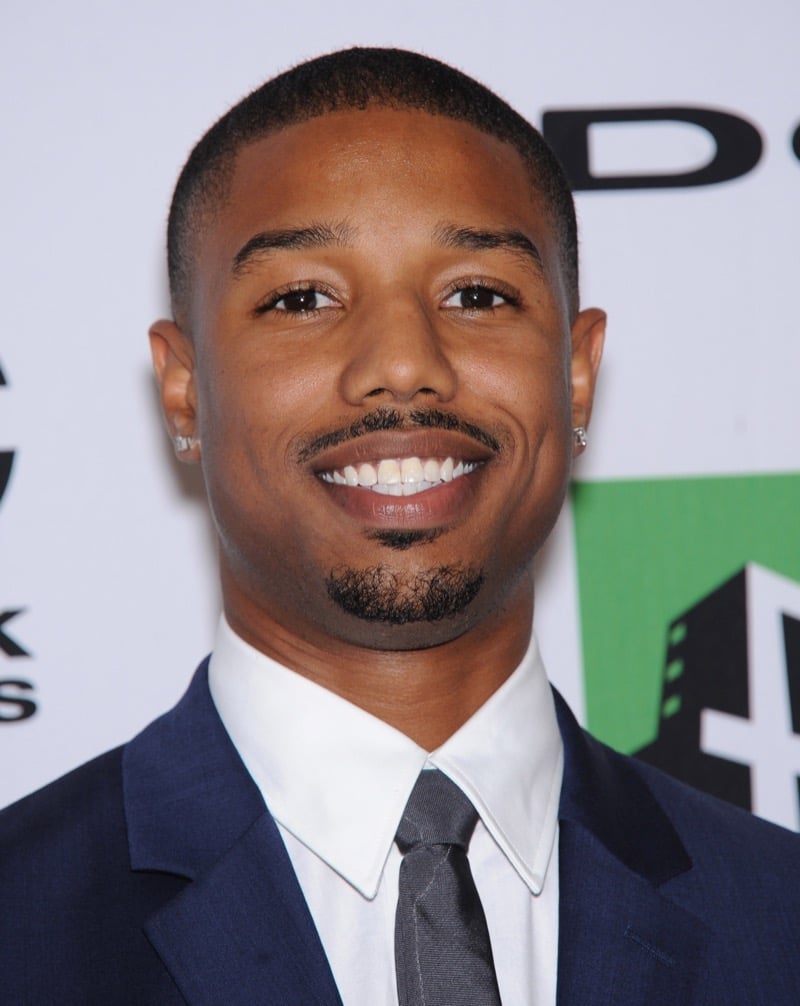
A low taper fade buzz cut blends the hair to skin only around the ears and neckline, keeping the top short and even, usually with a low guard. The result is a clean outline that adds shape without drawing much attention. More on the cut in the low taper fade guide.
Buzz Cut Low Fade
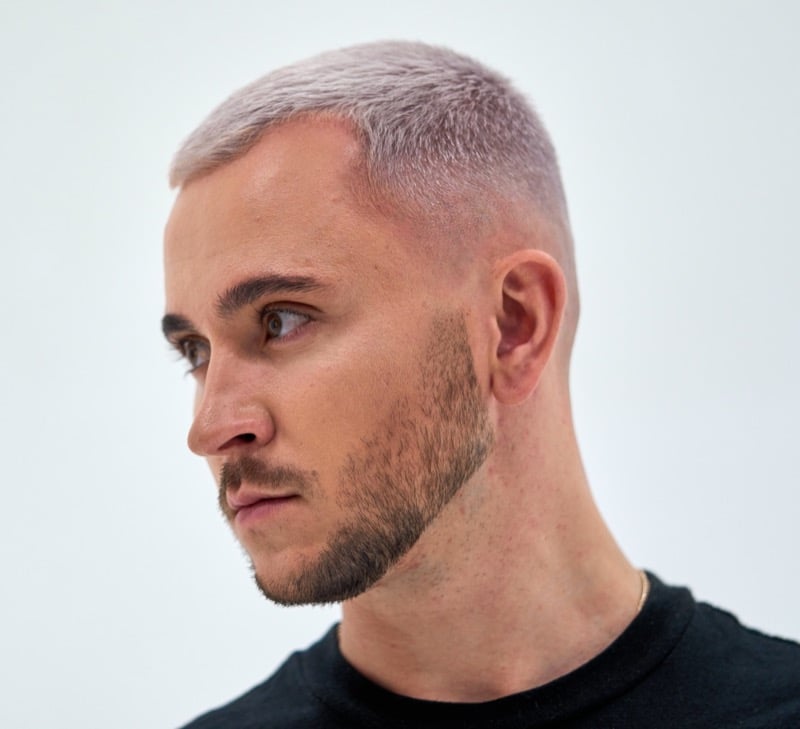
Shortening the hair around the sideburns and neckline defines the outline while leaving the rest of the buzz cut intact. See the low fade for more.
Mid Fade Buzz Cut
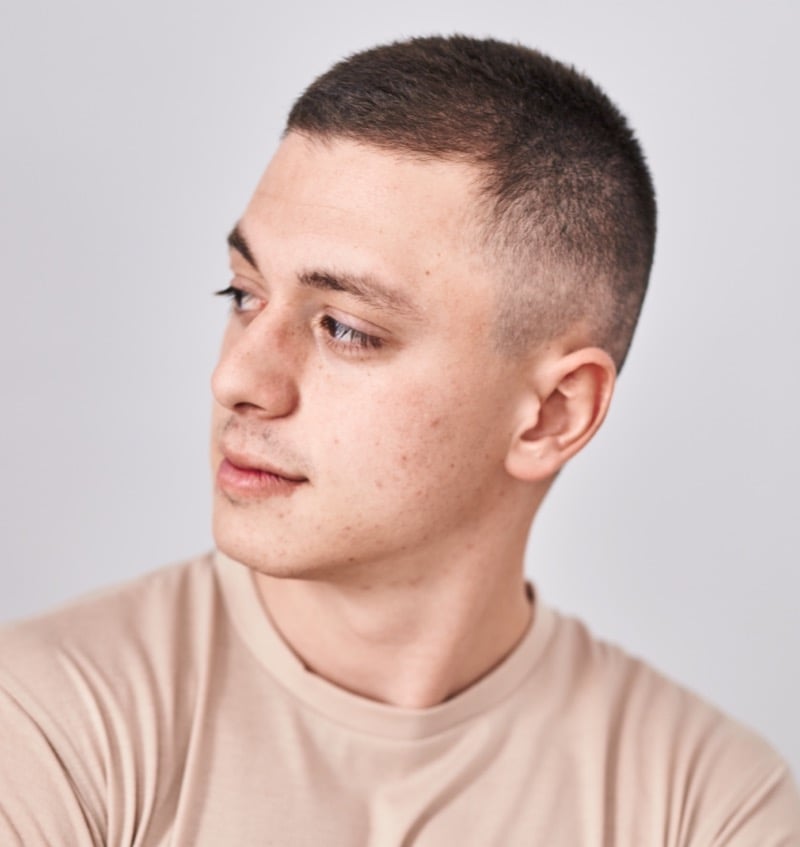
A mid fade begins around the temples, creating a stronger difference between the top and sides than a low fade. See the mid fade for more.
Buzz Cut High Fade
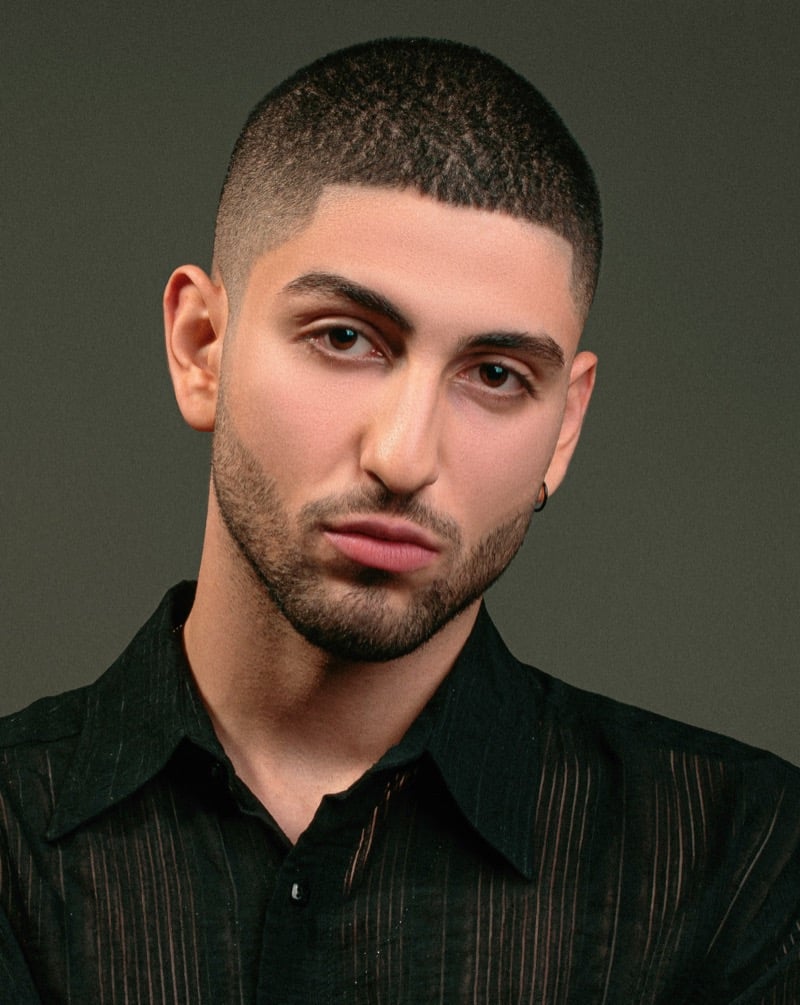
A buzz cut high fade starts the blend high on the sides, so the short top becomes the focus. The top is usually a #1 to #3, and a line-up at the forehead and temples sharpens the outline. See the high fade for more.
Military Buzz Cut Fade
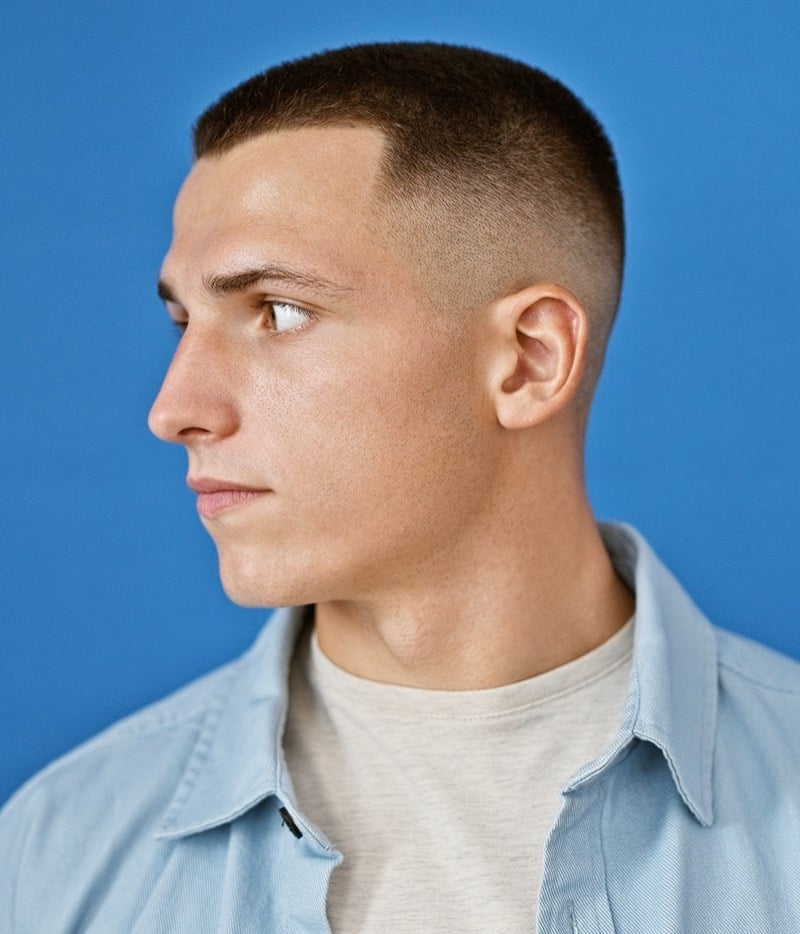
A military buzz cut fade typically combines a #1 or #2 top with a high skin fade. The blended sides distinguish it from a high and tight with a hard division.
Buzz Cut Drop Fade
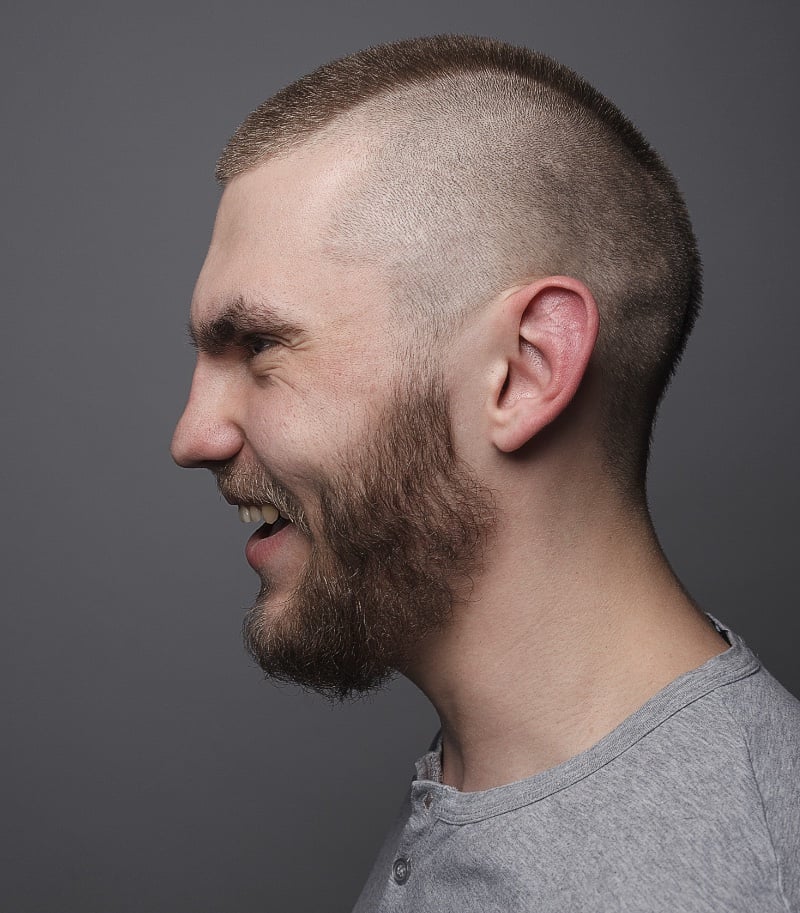
A buzz cut drop fade keeps the top at a #1 or #2 and curves the fade down behind the ear toward the nape, following the shape of the head. A trimmer cleans up the edges.
The top needs clipping every one to two weeks to stay even, and the fade a touch-up every two to three weeks to keep its curve. See the drop fade for more.
Buzz Cut with a Beard

A beard adds length around the jaw beneath a closely cropped head. Tapering the sideburns into the beard creates a continuous transition. More ideas among beard styles.
Buzz Cuts for Different Hair Types
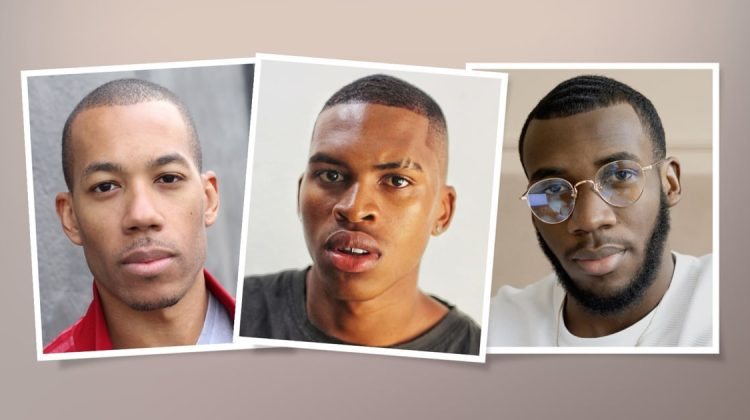
Buzz Cuts for Black Men
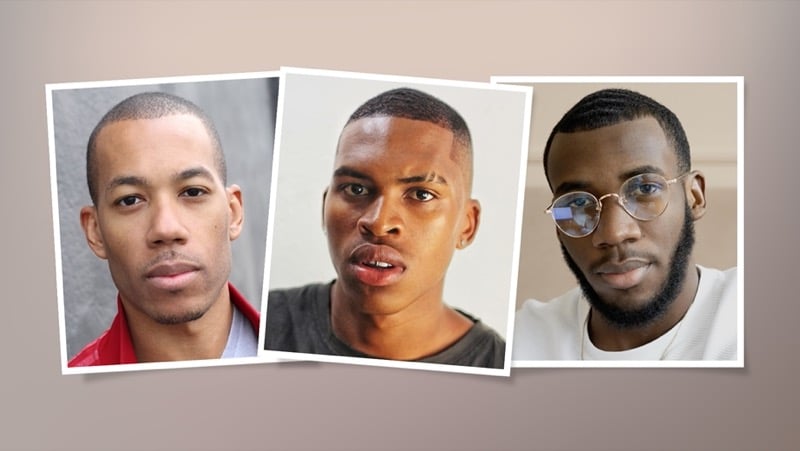
Buzz cuts for Black men show off the texture of coily hair, even at short lengths. Coily hair also holds a sharp line-up at the forehead and temples.

A line-up keeps the cut looking fresh between full haircuts. Short hair leaves the scalp exposed, so a light moisturizer or oil helps prevent dryness. A well-groomed beard pairs naturally with the cut.
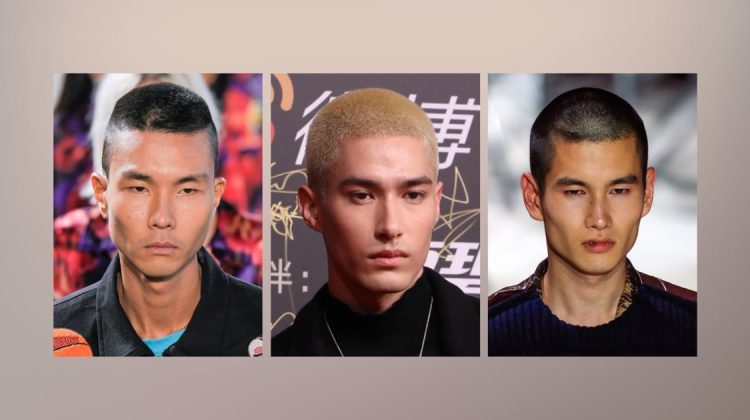
Buzz Cuts for Asian Men
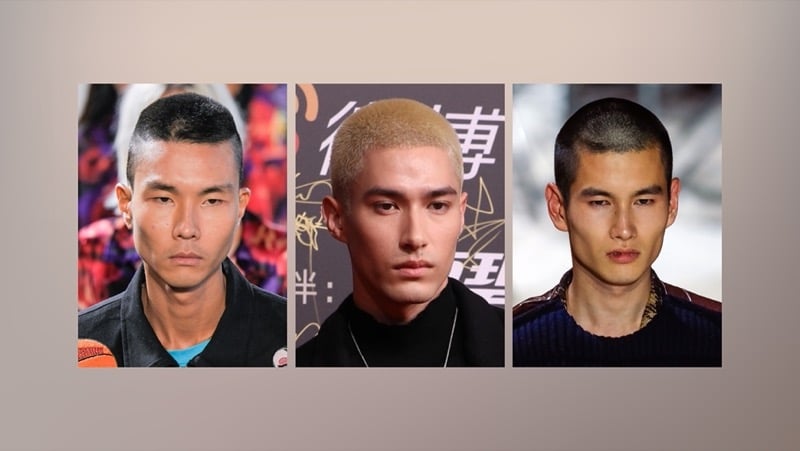
Buzz cuts for Asian men often suit straight, thick hair, which clips to a clean, even finish. At longer guards, straight hair tends to stand up, giving a natural brush cut effect.
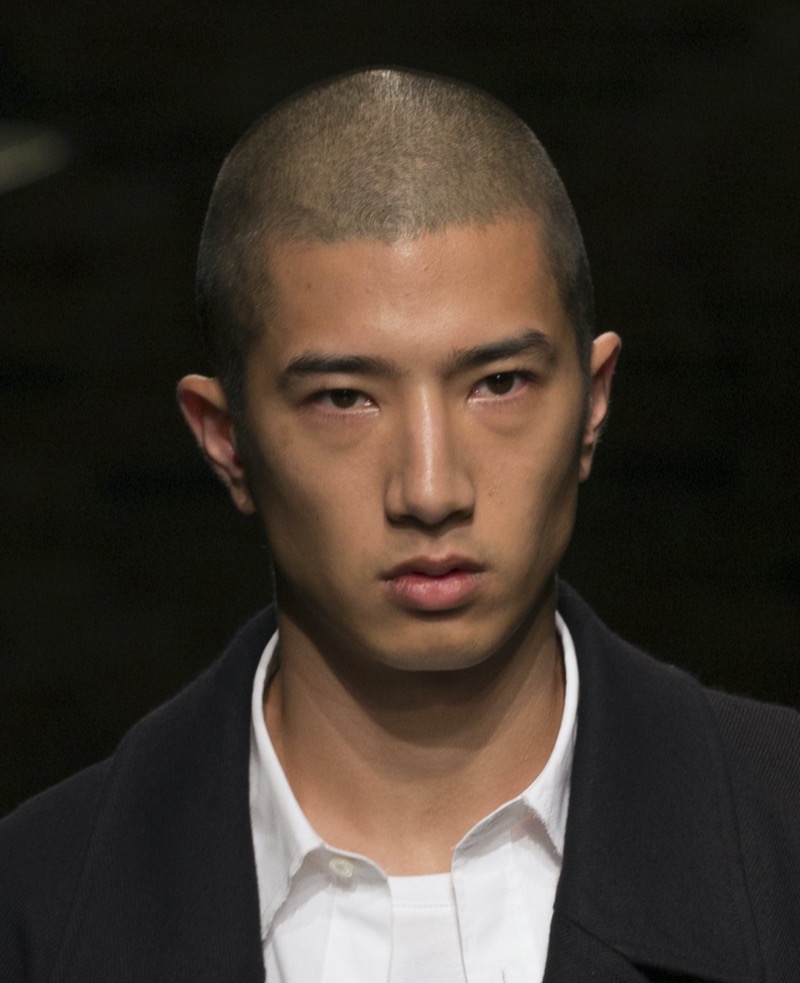
Lengths range from a close induction cut to a longer brush cut. On very short cuts, well-groomed eyebrows give the face more definition.
Buzz Cuts for Latino Men

On thick or wavy hair, a buzz cut removes bulk and keeps the hair easy to manage. A classic buzz cut shows the natural texture, a line-up at the temples and forehead sharpens the outline, and a taper or fade at the sides adds structure.
A trim every two to three weeks keeps the shape. A gentle shampoo and light moisturizer help prevent a dry scalp.
Buzz Cuts for Boys

Buzz cuts are a common choice for boys because they need no styling and are easy to keep up at home. Parents often go with a #2 to #4, which is short and practical without looking severe.
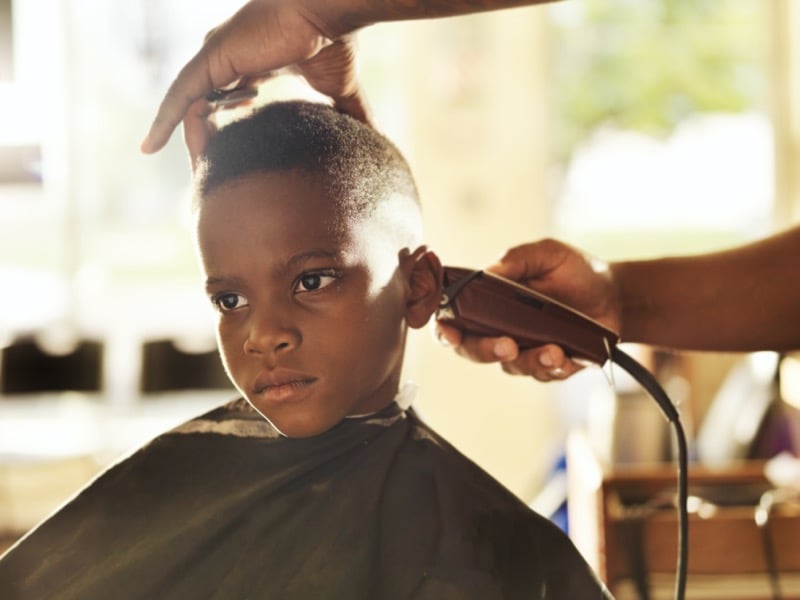
A slightly longer top with shorter sides keeps the look neat while showing more of the natural texture. A low fade or taper is a popular option for older kids.
Buzz Cuts for Thinning Hair & Receding Hairlines
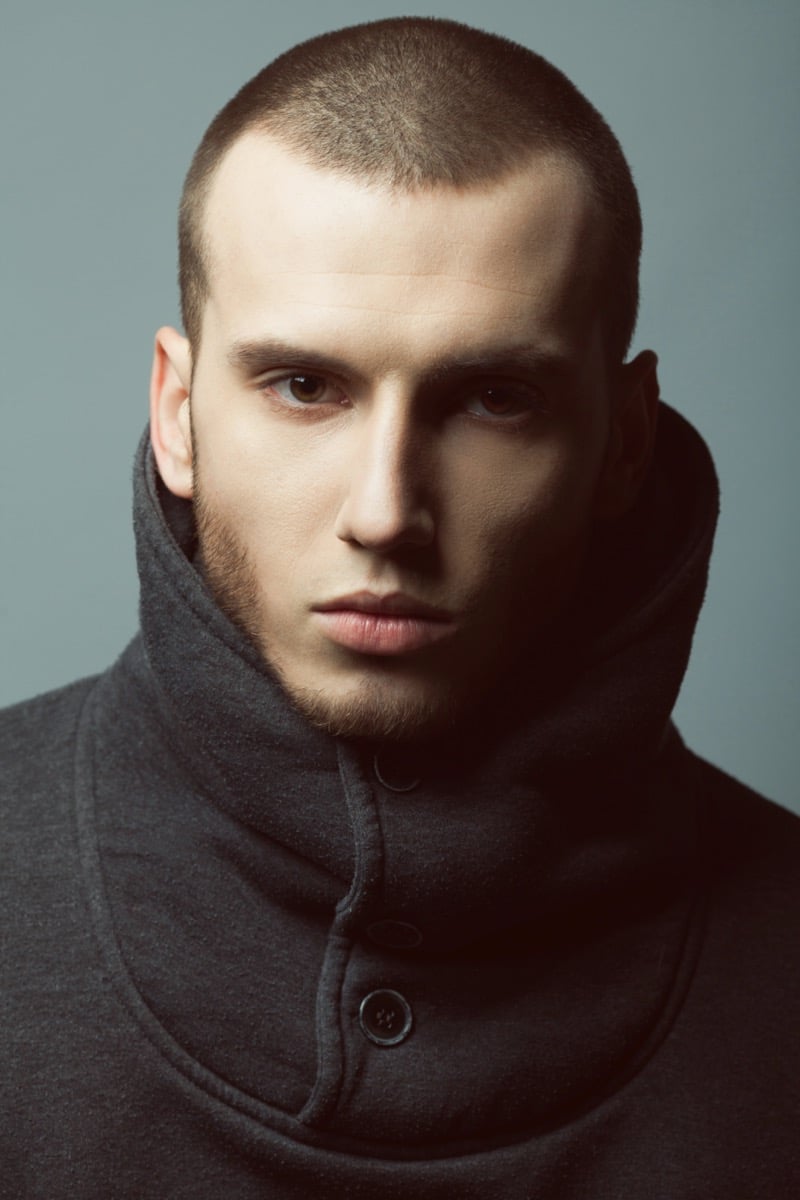
A shorter guard can make thinning hair or a receding hairline appear more uniform by reducing the difference between dense and sparse areas. A #1 or #2 often shows fewer uneven patches than a longer cut.
A neat edge around the hairline, rather than a sharp line-up, keeps a receding hairline from looking more pronounced. More options in hairstyles for receding hairlines.
How to Give Yourself a Buzz Cut
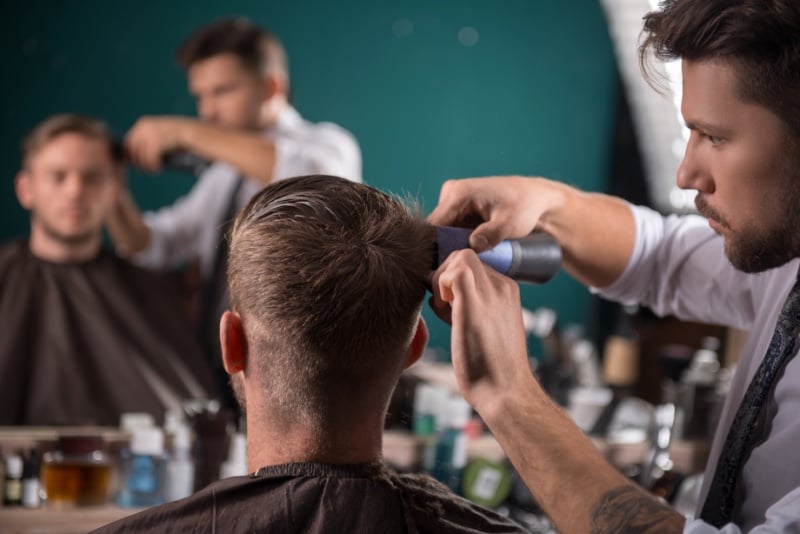
For a one-length buzz cut at home, clippers and a suitable guard are usually enough.
- Start with clean, dry hair and a guard one size longer than the target length. It’s easy to go shorter, impossible to go back.
- Clip against the direction of growth, starting at the front and working back over the top, then the sides and back.
- Go over each area several times, from different angles, to catch missed hairs.
- Switch to the target guard and repeat.
- Clean up the neckline and around the ears with a trimmer or the clipper with no guard, using a hand mirror to check the back.
Fades are harder to make symmetrical on your own, especially at the back of the head. A barber can refine the graduation between lengths.
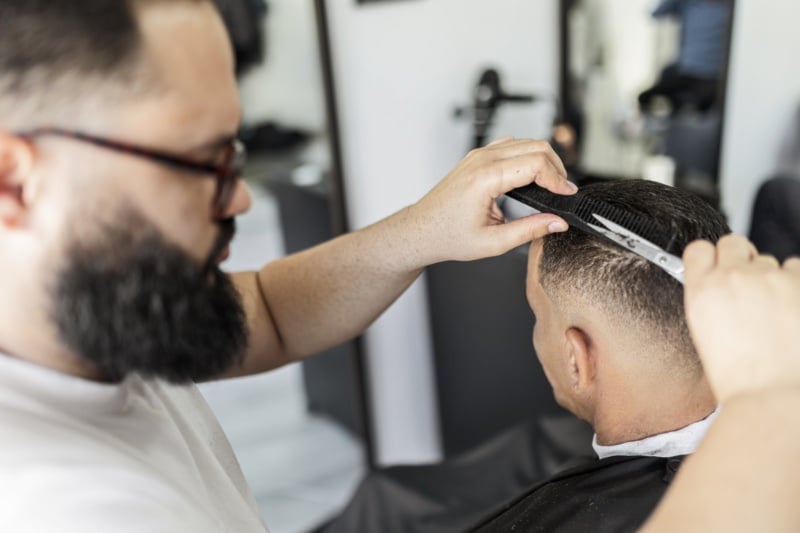
A close buzz cut needs little styling product. Moisturizer can help a dry scalp, while a small amount of matte cream settles stray hairs.
Coloring a Buzz Cut
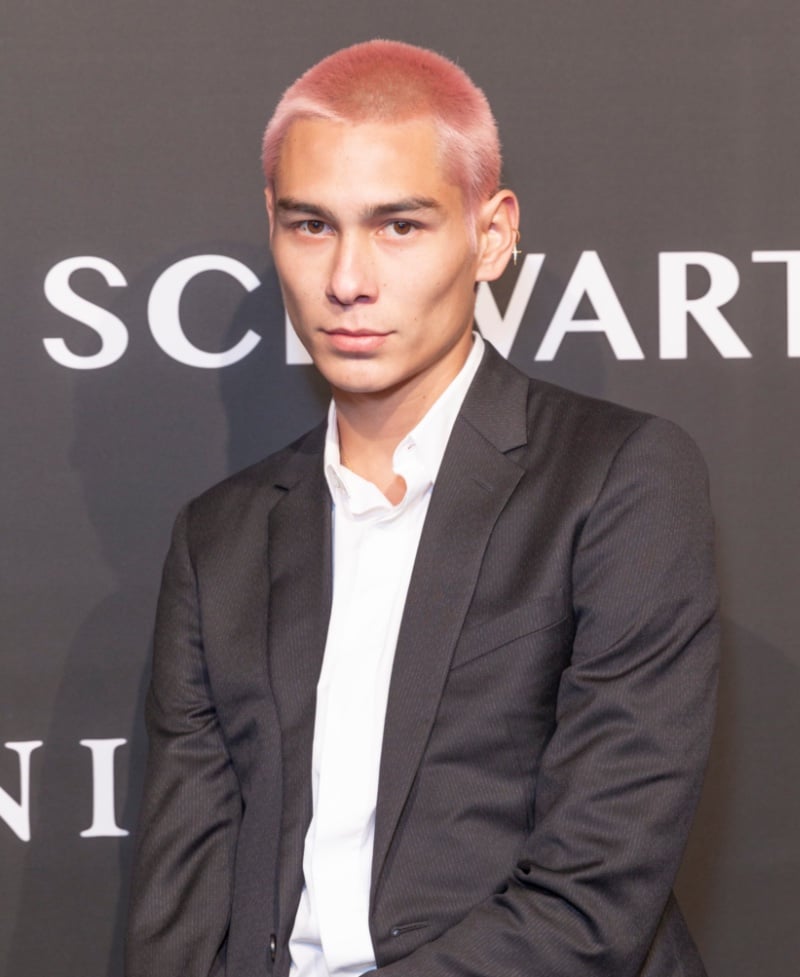
Short hair offers little room to conceal uneven color, and new growth appears quickly. Pink, silver and blue shades show clearly on a closely cropped head.
Blonde & Bleached Buzz Cuts
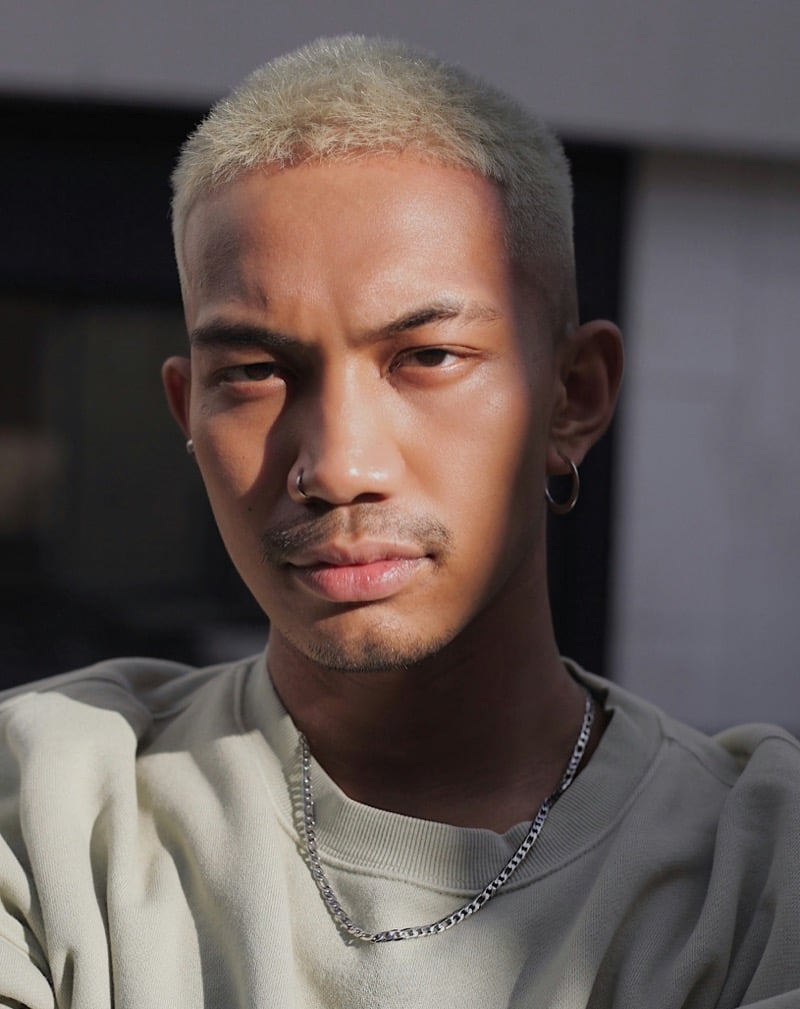
A bleached or blonde buzz cut is the most popular way to color the style, from platinum to a softer dirty blonde. Dark hair usually needs bleaching first, which can irritate the scalp, so it’s best done by a colorist. Toning keeps the blonde from turning yellow or brassy.
How to Style a Buzz Cut
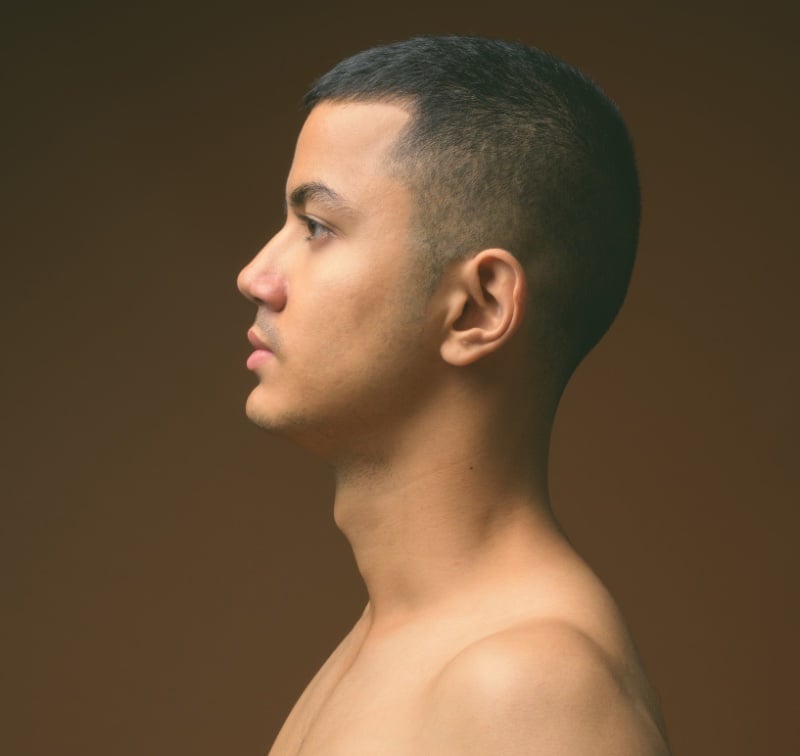
A short buzz cut needs no product. A light moisturizer keeps the scalp from getting dry, and a little matte cream can tame stray hairs.
A textured buzz cut, with more length on top, can be brushed back or roughed up with a little matte paste or clay. Longer tops can also be cut into a short mohawk.
How to Ask for a Buzz Cut

- Give the guard number for the top, such as "a #2 all over" or "a #3 on top."
- Say whether the sides should match or be faded or tapered, and how high.
- Ask for a line-up if you want sharp edges at the forehead and temples.
- Bring a reference photo, especially for fades.