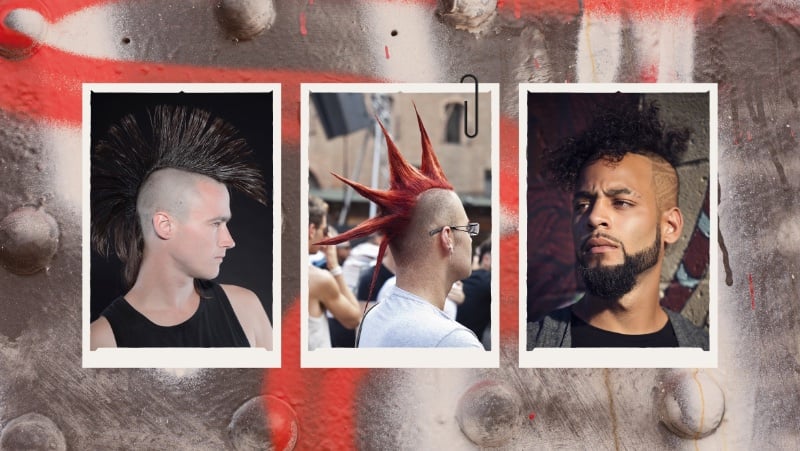
A mohawk haircut leaves a strip of longer hair from the forehead to the nape, bordered by shaved or closely cut sides. The strip can rise into a fan, separate into spikes or fall in curls. Among men's haircuts, its width and length make especially visible changes to the silhouette.
What Is a Mohawk Haircut?
The barber sets the width of the central strip, then removes hair on either side. A narrow, buzzed strip follows the scalp closely; longer hair can project well above it. Shaving exposes the sides evenly, while a fade graduates through lengths toward the longer hair.
The name refers to the Mohawk people, a Haudenosaunee nation, although related shaved-side styles also appear in Pawnee hair traditions. The raised strip became associated with the late-1970s punk scene. In the UK, the cut is often called a mohican. A faux hawk keeps fuller sides, with the top styled into a central ridge.
Mohawk Haircuts for Men
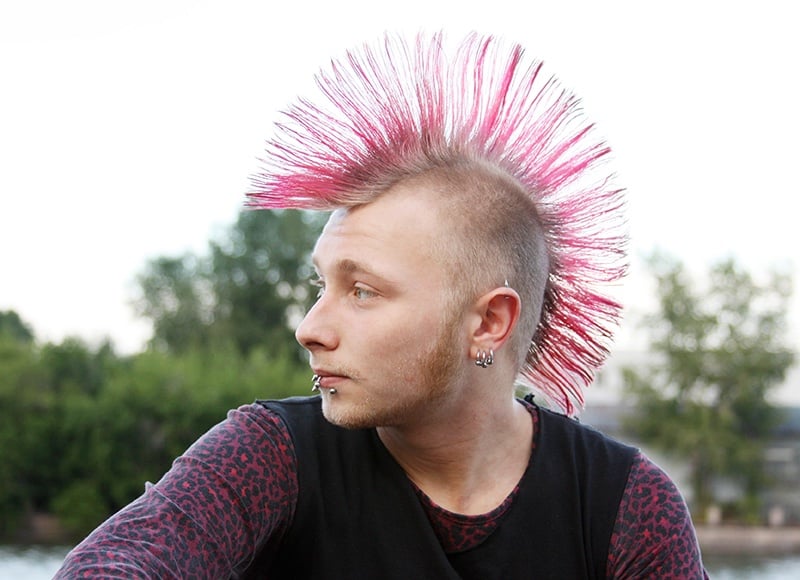
These 14 variations change the strip's shape through color, curl pattern, styling direction and the finish at the sides.
Bleached Mohawk
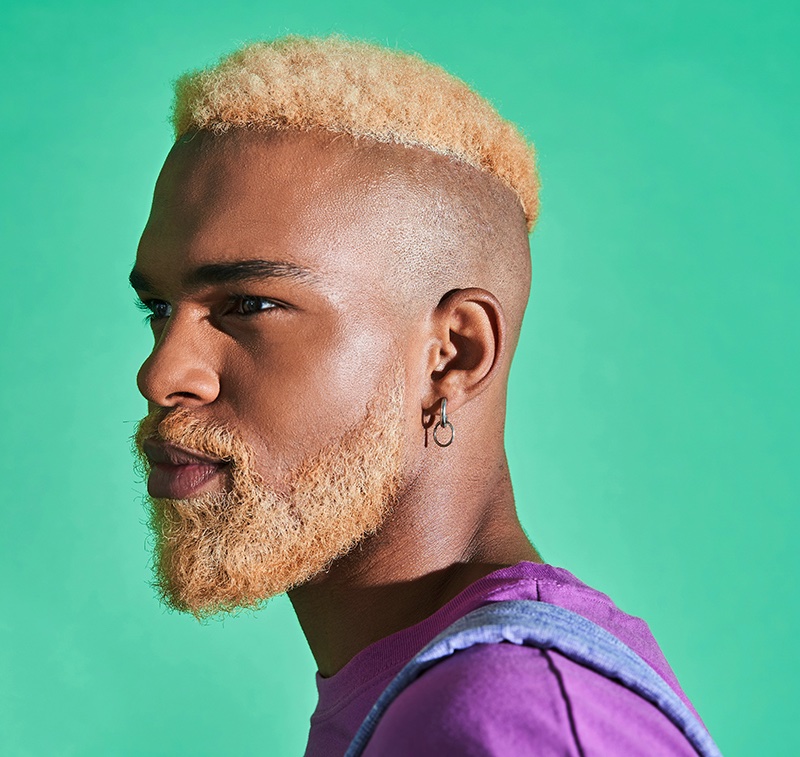
Bleaching makes a short central strip lighter than the surrounding stubble. Close sides expose the transition from dark roots to pale ends, while a dyed beard can carry the same color below the face.
Bleached hair may need conditioning as its texture changes. Color-safe shampoo alone does not prevent brassiness; any toning treatment should suit the shade and the hair's condition.
Curly Mohawk
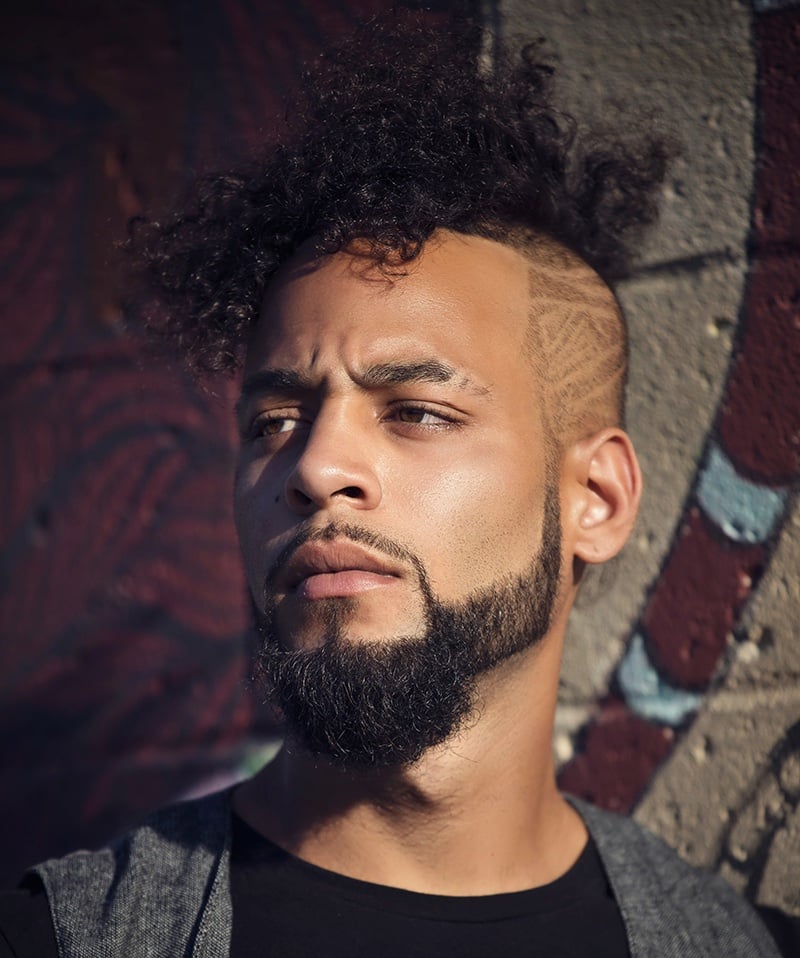
On naturally curly hair, the central section expands into a rounded ridge, with individual curls breaking up its edge. A mohawk on afro-textured hair is also often called a frohawk.
Judge the length with the curls dry so shrinkage does not leave the top shorter than expected. In this example, shaved lines cross the clipped sides beneath the full top.
Dreadhawk

Separate dreadlocks trace the central strip of a dreadhawk. Short locs project from visible roots; longer ones can fall across the shaved sides or gather at the back.
Keep the boundary between the locs and clipped hair consistent during maintenance. Gradually shaving farther into that section can narrow the strip and leave isolated locs at its edges.
Fan Mohawk
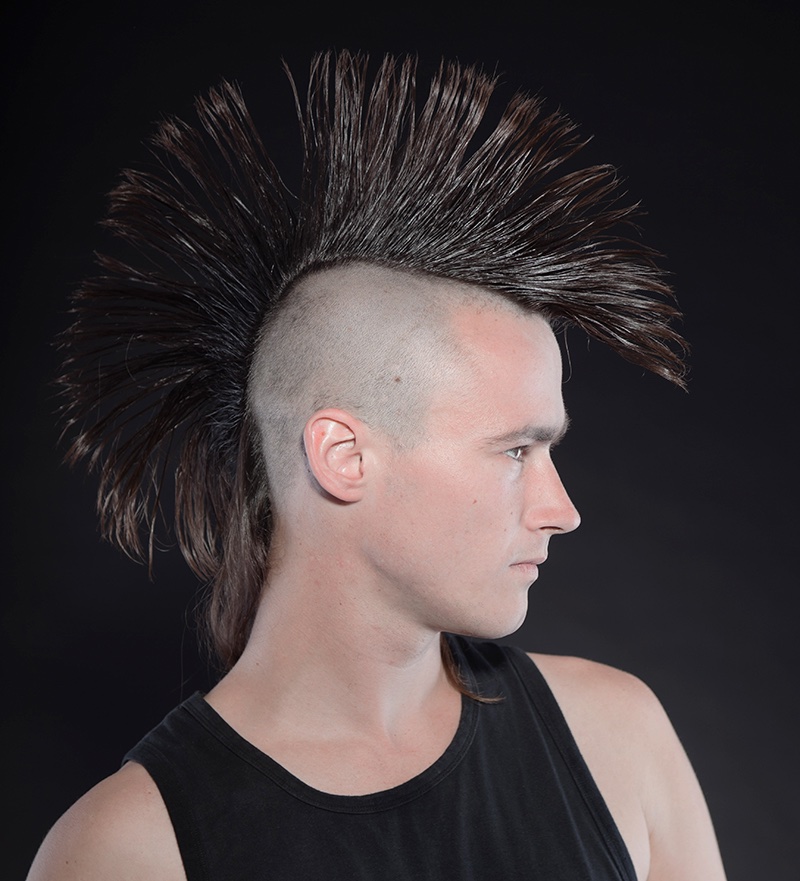
The fan mohawk spreads long hair into one broad fin. Its outer edge runs from the raised front toward the nape, with the lengths overlapping to fill the spaces between them.
Work in sections to dry the roots upward, then join the lengths with a strong-hold styling product made for hair. A taller fan needs more support and more time to set than a short ridge.
Forward Mohawk
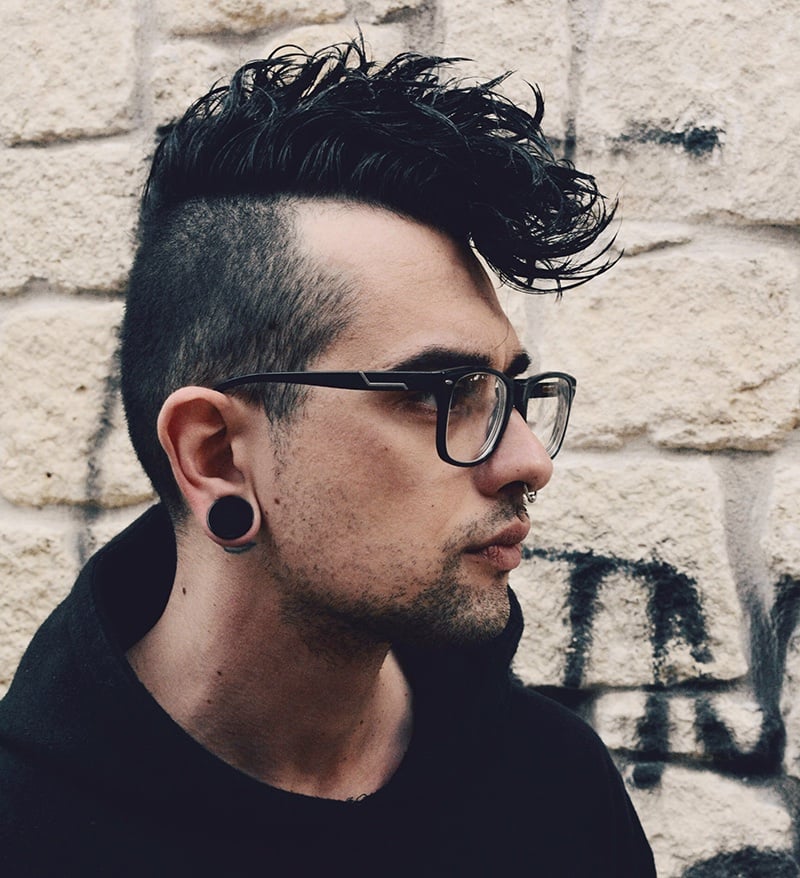
Long front pieces bend toward the forehead in a forward mohawk, forming a projecting crest above the clipped temples. The strip extends into a forward fringe instead of ending in an upright point at the hairline.
Dry the roots forward and lift the ends into the intended curve. Too much product at the tips can pull that overhanging section down, especially as the front grows longer.
Liberty Spikes Mohawk
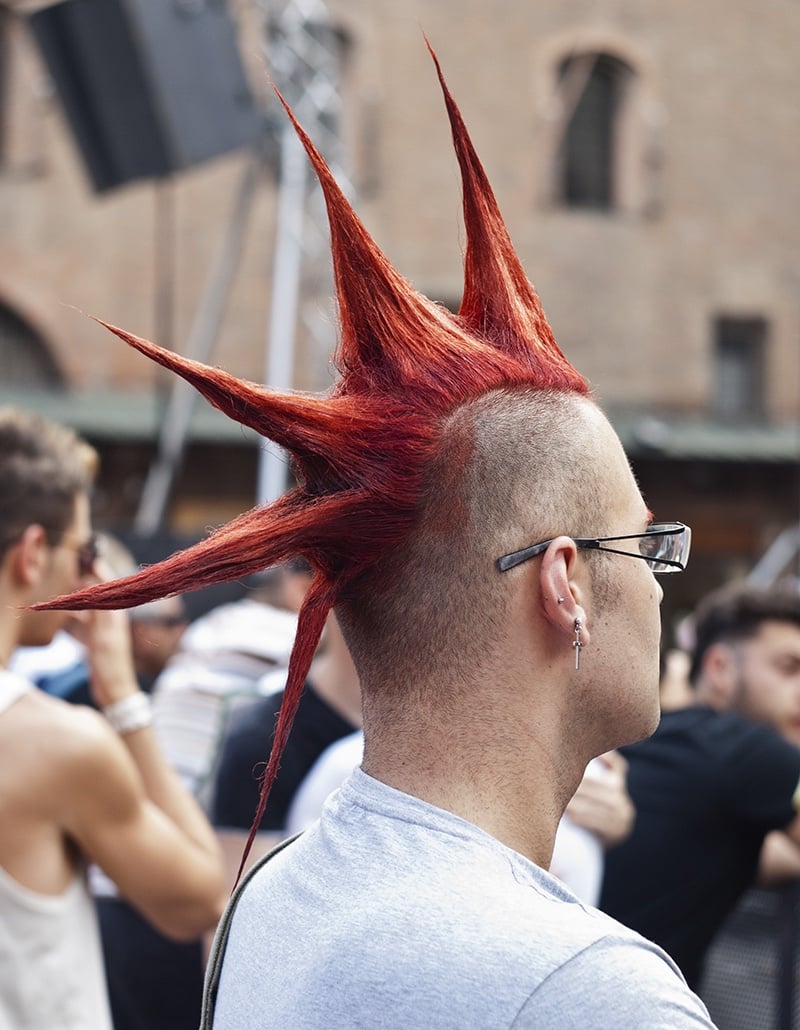
Liberty spikes separate the strip into tall, widely spaced points, named for the Statue of Liberty's crown. Gaps between the spikes expose the scalp and distinguish them from a continuous fan.
Divide the hair into sections before shaping each point. Direct the dryer along its length and use a strong-hold product made for hair, allowing each spike to set before handling the next.
Modern Deathhawk
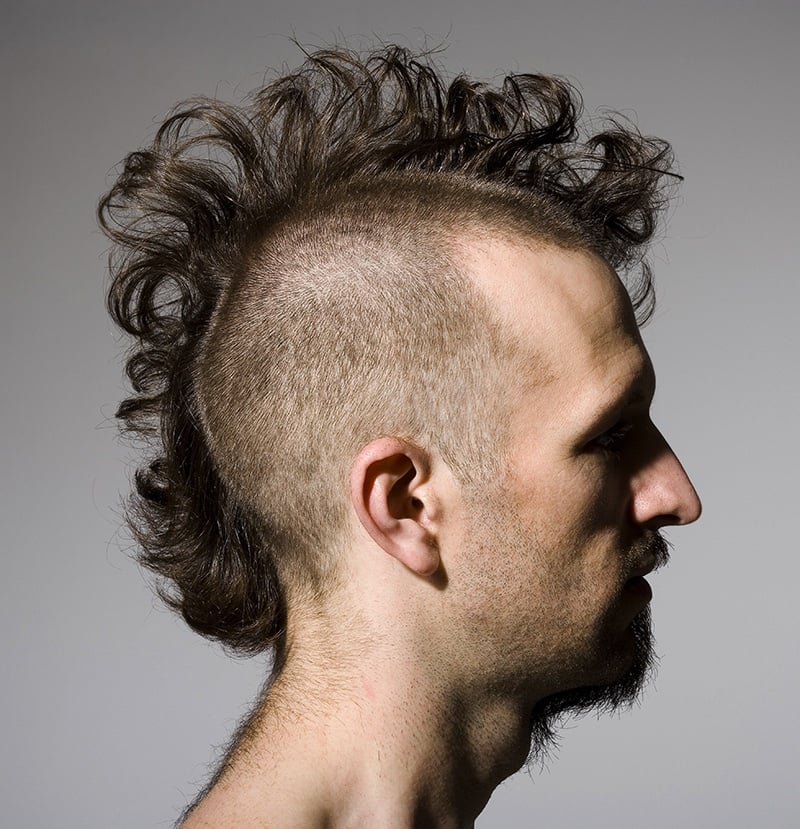
Associated with goth and deathrock styles, a deathhawk often uses heavy teasing to spread the central section into a broad, irregular mass. This version keeps the curls visible, with loose bends running from the forehead toward the nape.
The curly top has a softer edge than a teased deathhawk. Separate the curls gently when drying, keeping their larger bends intact instead of combing them into a solid fin.
Mohawk Buzz
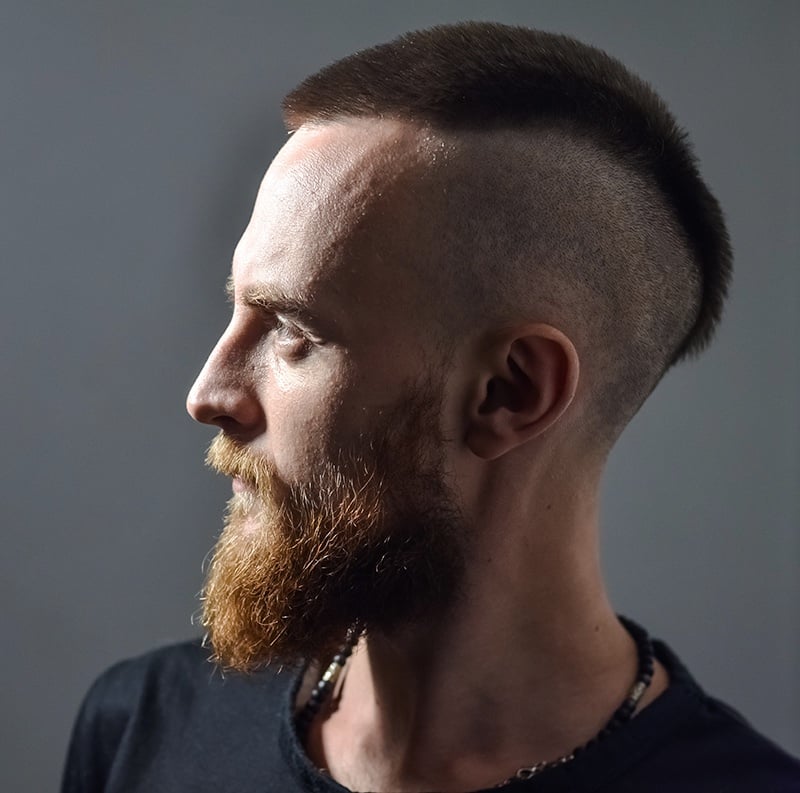
A narrow band of short hair distinguishes the mohawk buzz from other types of buzz cut. The strip sits close to the scalp, so its width and path through the crown matter more than styling height.
There is little length to arrange each morning. Maintaining the bare sides still requires shaving or clipper work, and new stubble soon makes the strip's outline less distinct.
Mohawk Fade

A mohawk fade graduates the sides beneath the central strip, which can end in skin or a longer guard. A burst fade curves around the ear, leaving more length behind it.
The high fade places the transition farther up the sides. Specify both its height and shortest length when discussing how much scalp should show beneath the strip.
Mullet Mohawk
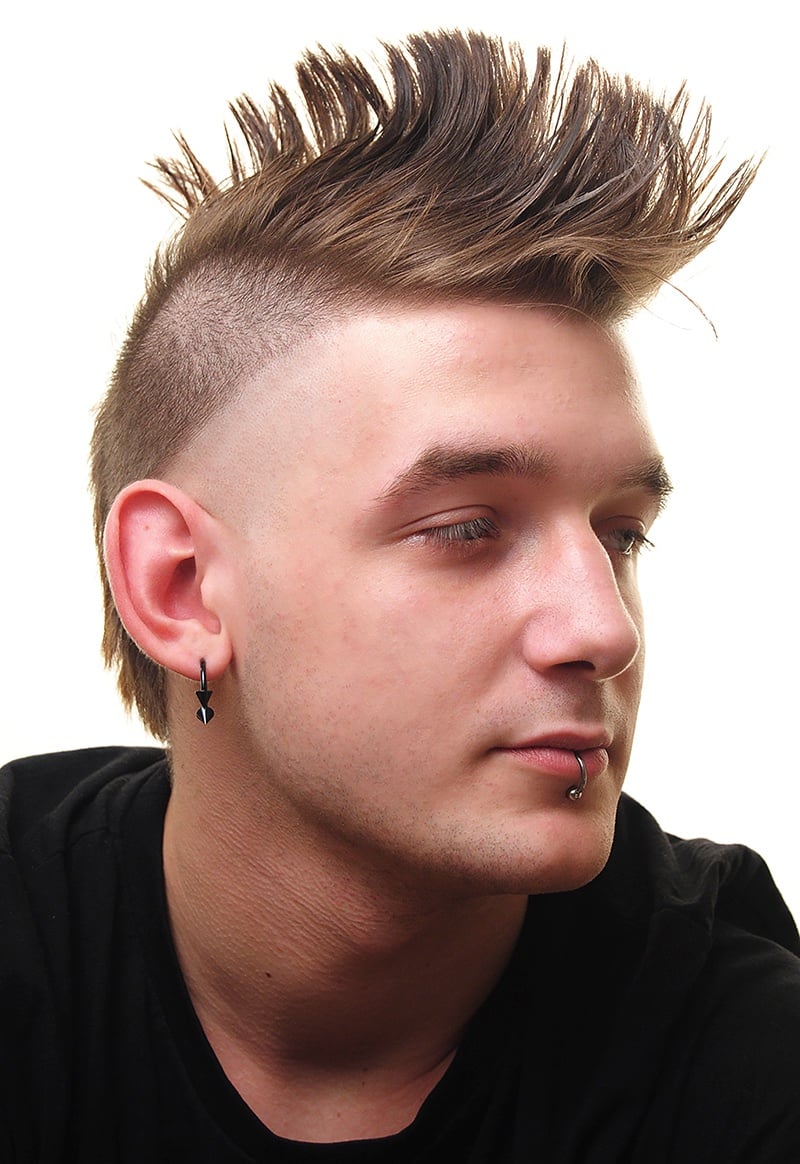
Length continues beyond the nape in a mullet mohawk. A spiked front rises above the forehead while the longer back falls toward the neck.
The side profile shows the distinction most clearly. Exposed skin around the ear separates the raised front from the trailing ends, which can stay loose even when the top is styled upright.
Psychobilly Mohawk
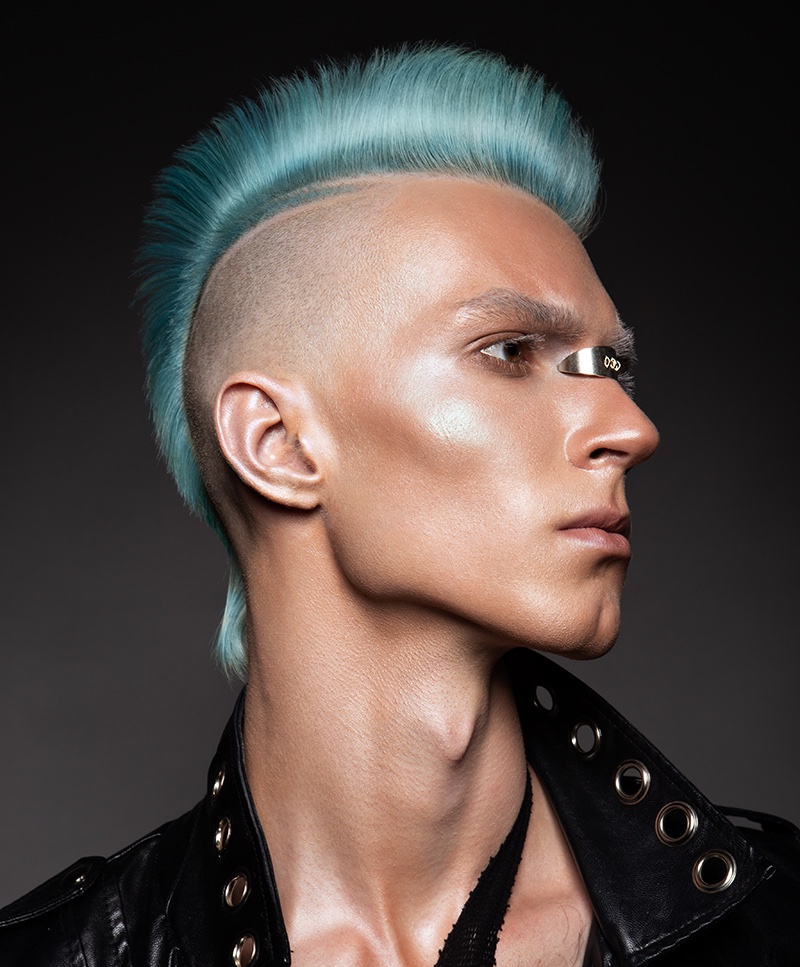
A psychobilly mohawk carries the rounded rise of a pompadour into a narrow central fin. In this example, the front stands tallest before the smooth surface slopes back toward the crown.
Dry the front upward at the roots, then brush the surface back while retaining that height. A combed finish makes stray ends more visible than they are in a spiky or teased version.
Slick Back Mohawk
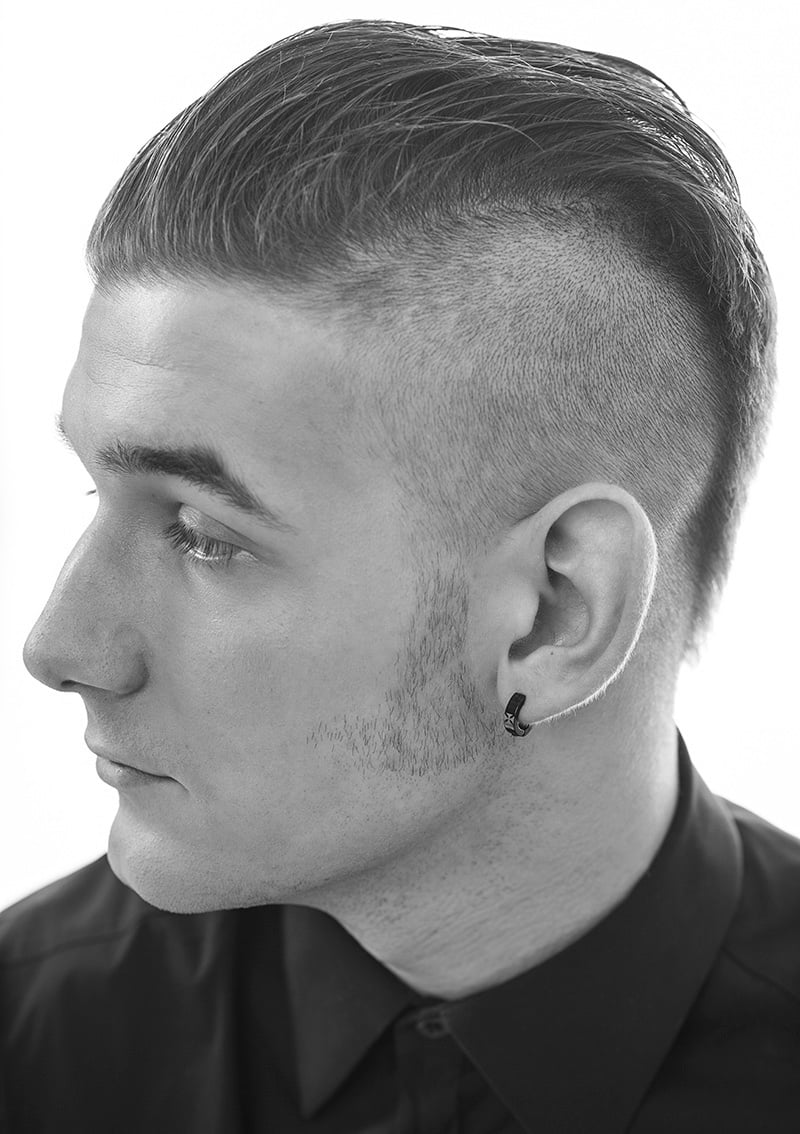
The top of a slick back mohawk lies closer to the scalp, exposing the clipped sides along its full length. Leave enough hair to slick back past the crown, where a change in growth direction can make shorter pieces spring up.
Comb marks emphasize the backward sweep. Pomade can add shine and hold, while the longer ends may hang below the clipped section at the rear.
Spiky Mohawk
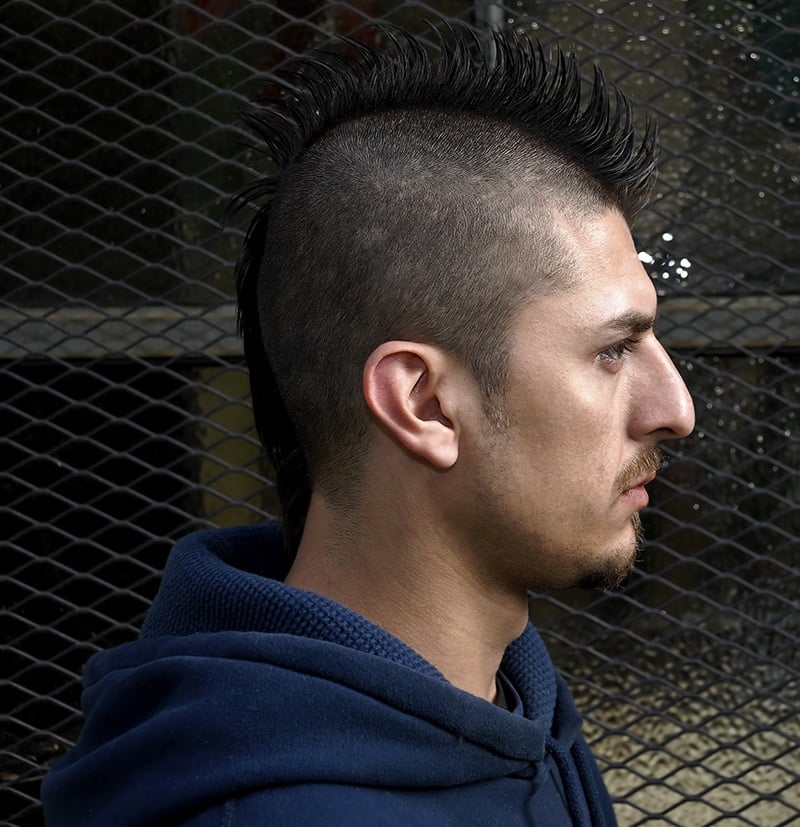
Short, irregular points form a continuous ridge in a spiky mohawk. Compared with the separated towers of liberty spikes, these spikes sit closer together and follow the curve of the head.
Work a small amount of styling product through the strip, then pinch selected ends upward. Keep the roots lifted as they dry so the points do not lie flat along the scalp.
Twist Out Mohawk With Cornrows

Curved cornrows gather the sides close to the scalp beneath a full twist out. The braids make the center appear taller while retaining hair along the sides.
The braids and twist out need different care. Retwist sections only as needed to refresh their definition, avoid pulling tightly at the edges, and protect the hair from friction with a satin covering at night.
The Mohawk Today
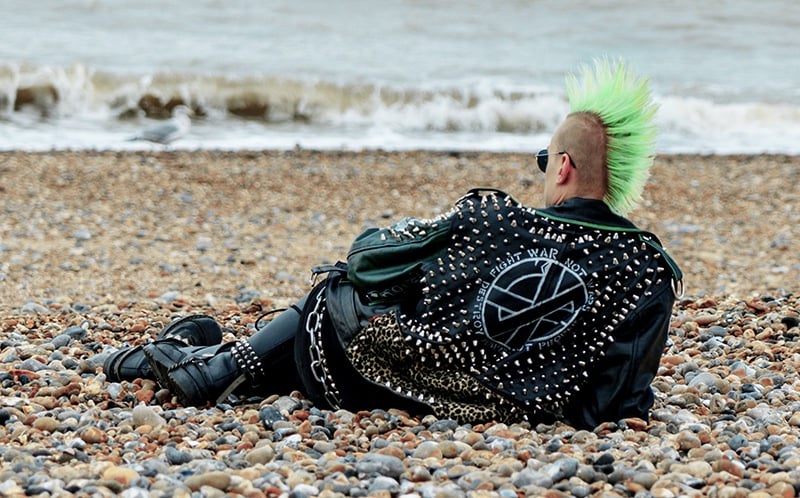
A mohawk can change substantially as the strip gains length. A buzzed version traces the scalp, a fan projects above it, and curls spread at the crown. The central strip continues toward the nape, distinguishing the layout from an undercut with a broader top.





