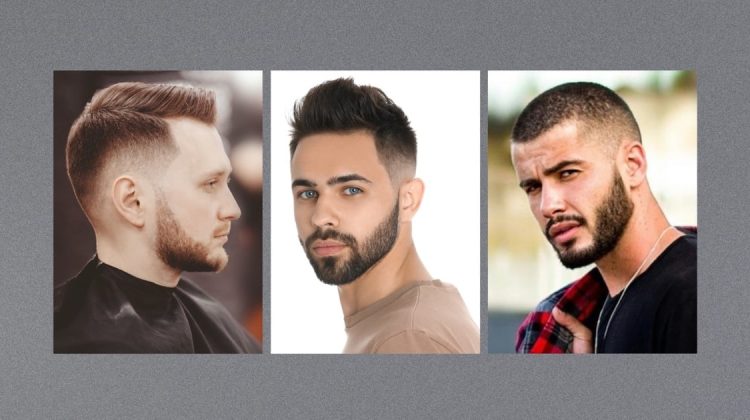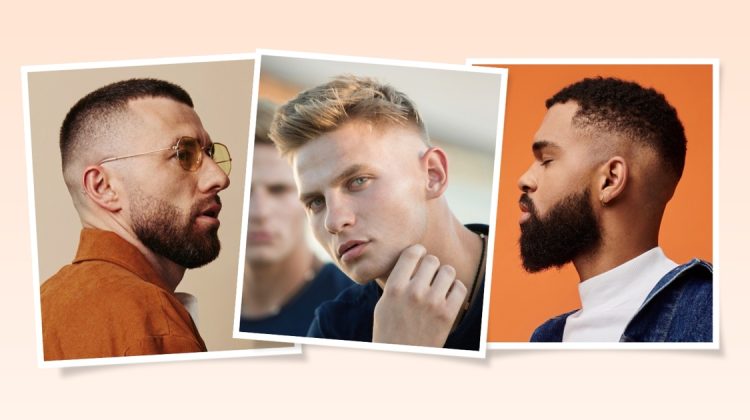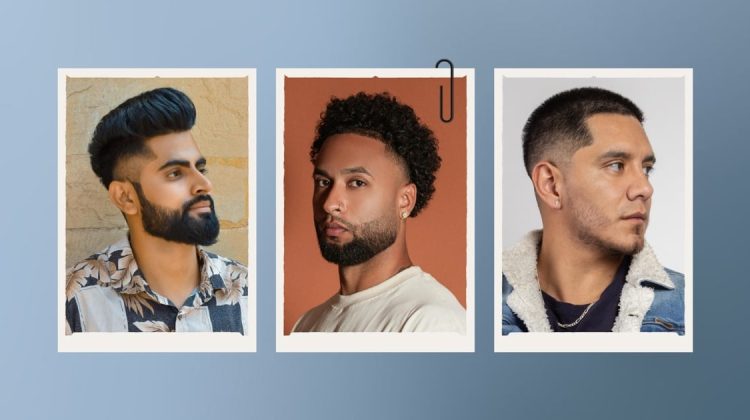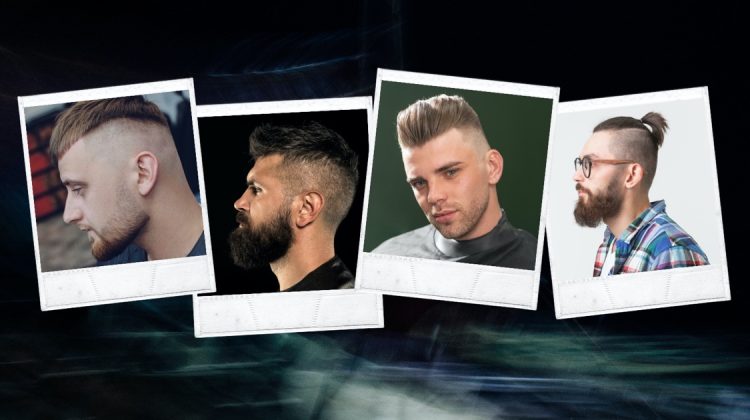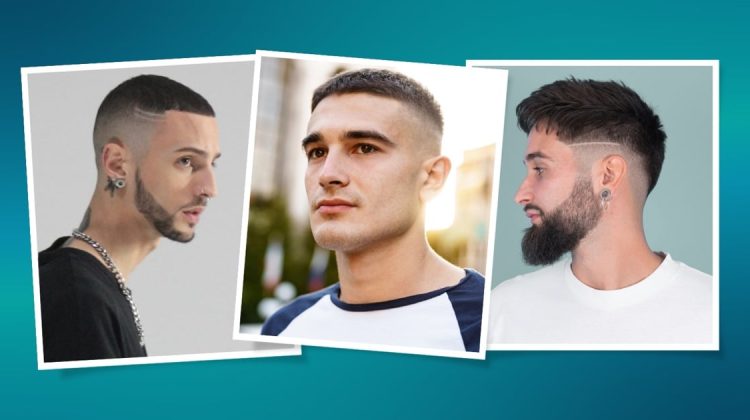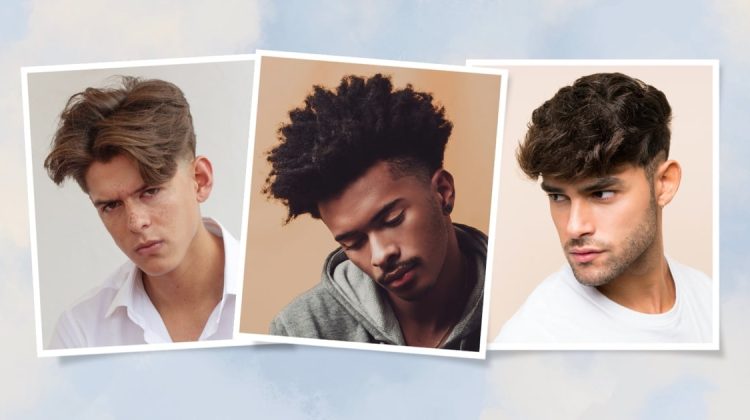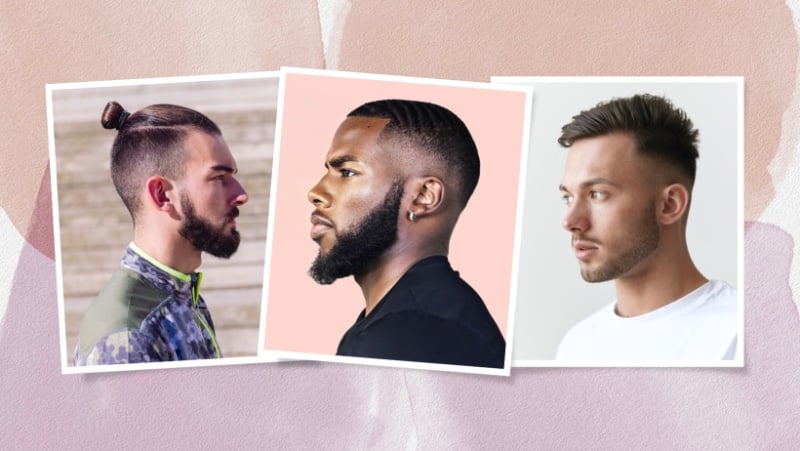
A mid fade blends the sides and back from longer to short starting around the middle of the head, roughly level with the temples. It’s the middle option between a low fade and a high fade: more contrast than a low fade, less exposed skin than a high one.
Its position between a low and high fade gives the mid fade a distinct profile, with enough contrast to emphasize the top while retaining some coverage through the upper sides.
What Is a Mid Fade Haircut?
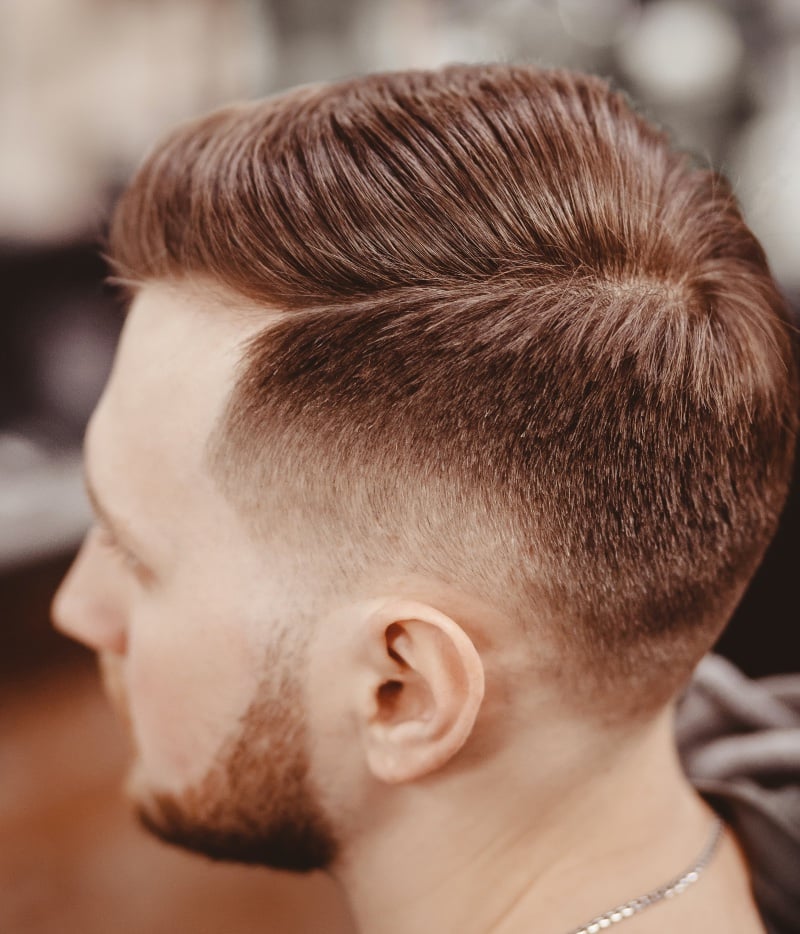
The barber sets a guideline around the head at temple height, then works downward with progressively shorter guards, for example from a #3 at the top of the fade to a #1, then a 0.5, then bare clippers near the ears and neckline. Each step is blended into the one above with a lever or flicking motion, so the change in length looks gradual. Some people call the result a medium fade.
Three choices create the variations:
- Finish. It can go down to bare skin (a mid skin fade or mid bald fade) or stop at a short guard (a mid taper fade).
- Shape. The fade line can run straight around the head, drop behind the ear (a mid drop fade) or curve around the ear (a mid burst fade).
- Top. Anything from a buzz to a slick back. The fade only changes the sides.
It works on straight, wavy, curly and coily hair, which is a big part of why it’s so common.
Mid Fade Haircuts
The mid fade adapts to classic side parts, close buzz cuts, curls and more experimental shapes. Each hairstyle changes the effect of the same basic clipper technique.
Mid Fade Side Part
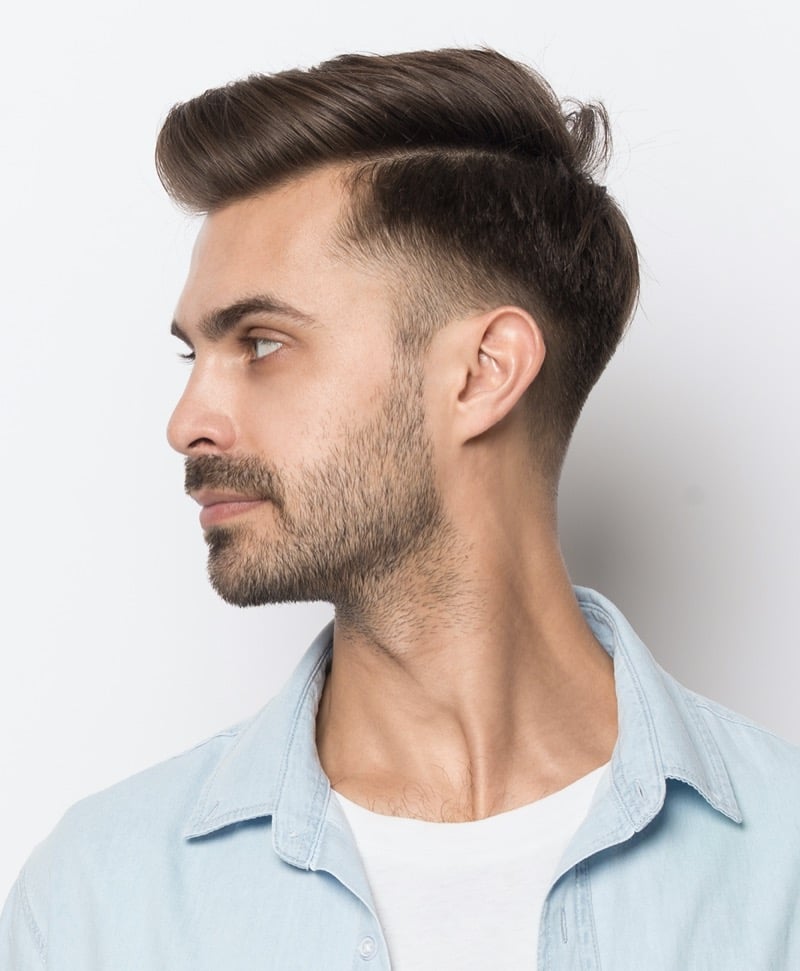
A mid fade side part puts a defined part on top and fades the sides from temple height down. The fade keeps the sides tight so the part reads clearly from the front.
This take on the side part suits straight or wavy hair best. Blow-dry the hair along the part, then finish with pomade for shine or a cream for a softer look. Upkeep: every 2–3 weeks.
Brush Back Mid Skin Fade
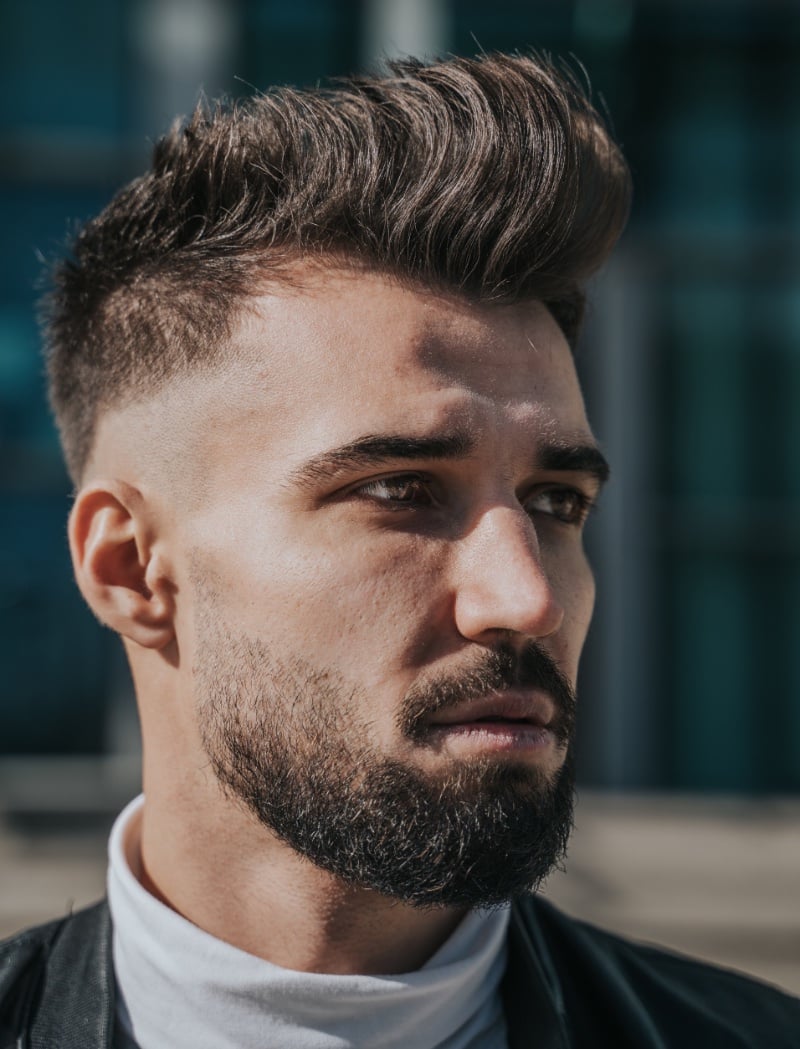
A brush back leaves three to five inches on top and blow-dries it up and back. Taking the sides down to skin makes the top look fuller still.
You need thick, straight or wavy hair to hold the height. Spray sea salt into damp hair before blow-drying, then set it with a matte paste. Upkeep: a skin fade shows regrowth fast, so every 10–14 days.
Mid Fade Buzz Cut
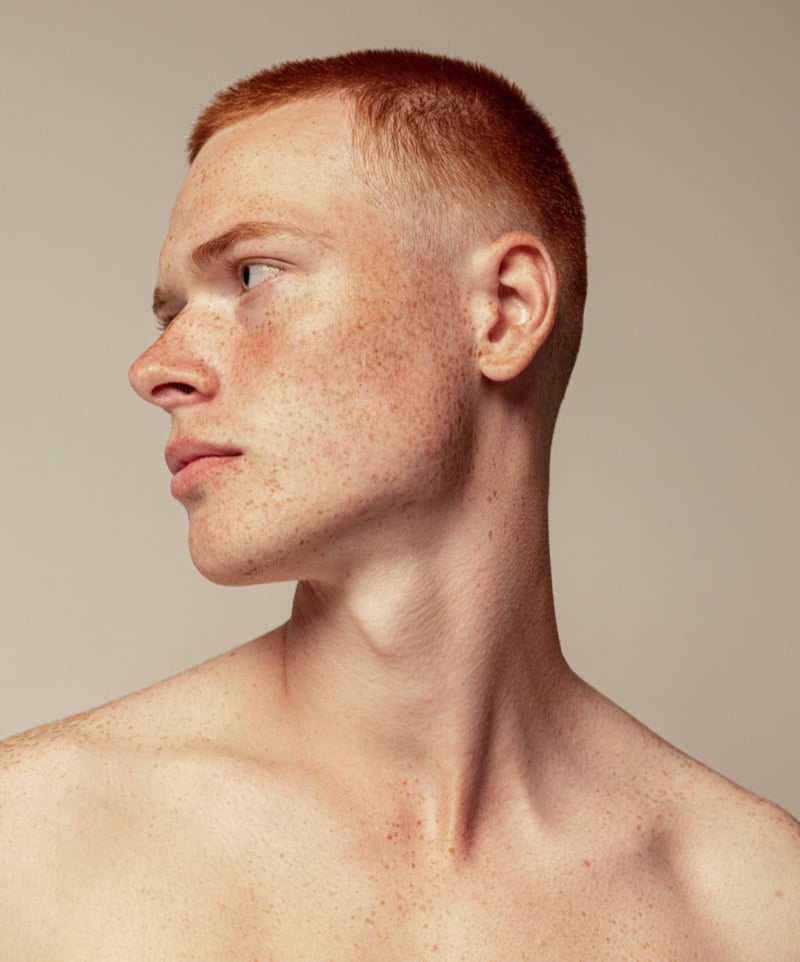
A mid fade buzz cut clips the top with a #2–#4 guard (about ¼ to ½ inch) and fades the sides down from the temples, sometimes to skin. It’s one of the simplest ways to make a buzz cut look sharper.
There’s nothing to style. A little matte powder or cream takes down shine if your scalp shows through. Upkeep: about every 2 weeks, since a short top makes regrowth on the sides more obvious.
Mid Fade Comb Over

A mid fade comb over leaves two to four inches on top, parts it and sweeps it to one side. The mid fade keeps the sides clean without the starkness of a high fade, so it’s an easy fit for work.
It suits straight or wavy hair. Blow-dry the hair in the direction of the part, then set it with pomade or a molding paste. A shaved hard part, like the one here, adds definition. Upkeep: every 2–3 weeks.
Curly Top Mid Fade
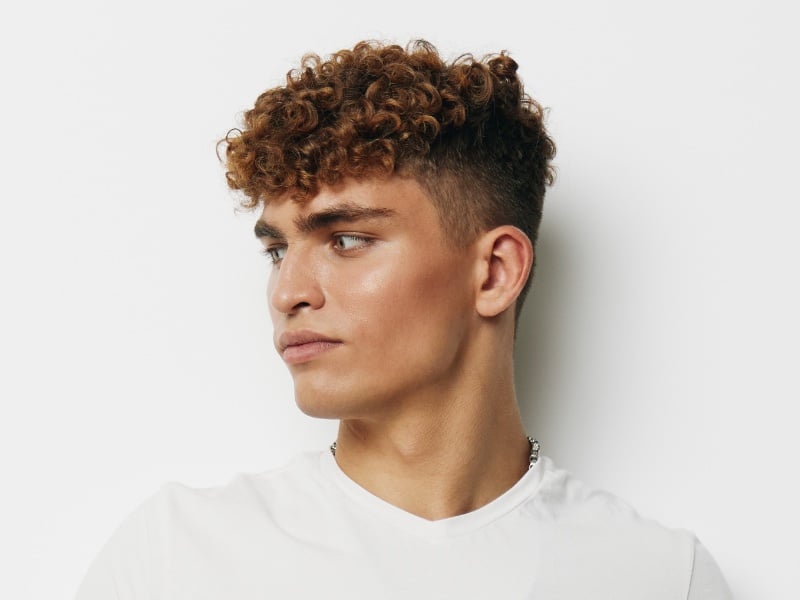
A mid fade on curly hair keeps the sides short and leaves the top long enough for the curls to form. The fade stops the shape from getting wide as the curls grow.
Apply curl cream to damp hair and dry with a diffuser, or leave it to air-dry. Ask your barber to trim the top with scissors, which keeps the curl pattern intact. More ideas among curly hair types. Upkeep: fade every 2–3 weeks.
Mid Drop Fade Haircut

The mid fade keeps the sides close and gives the longer hair on top a more defined silhouette.
A mid drop fade starts at temple height, then dips down behind the ear toward the nape instead of running in a straight line. The drop fade follows the curve of the head, so the outline looks rounder from the side.
It’s a good match for tops that need weight at the back, like a pompadour or a textured crop. Use a round brush and matte cream for volume, or a curl product on textured hair. Upkeep: every 2–3 weeks to keep the curve clean.
Mid Fade Spiky Haircut

One to three inches on top is enough to push the hair up into spikes, and the mid fade keeps the sides tight so the spikes look deliberate rather than messy.
Straight hair holds spikes best. Work matte paste or a light gel through dry hair with your fingers to separate it. Upkeep: every 3 weeks.
Mid Skin Fade Buzz Cut
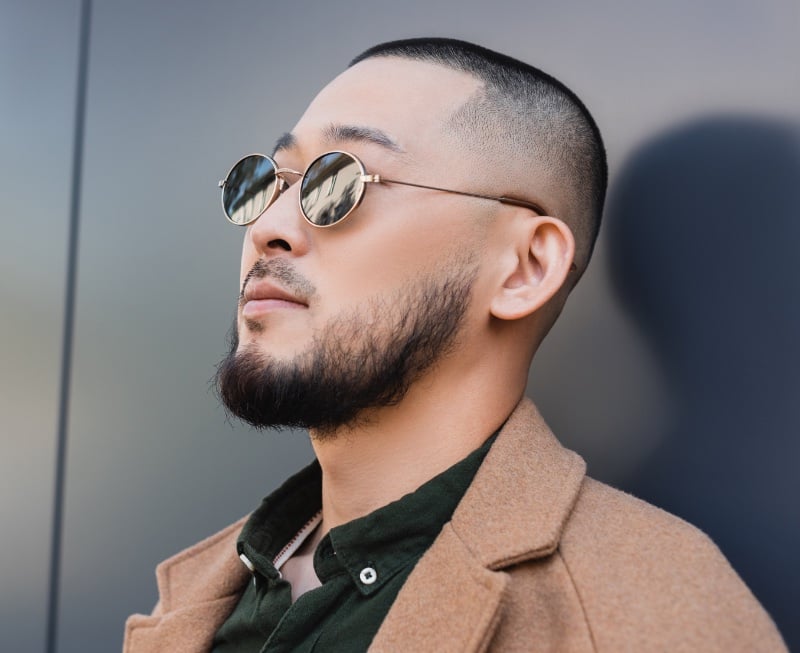
Same top as the mid fade buzz cut, but the sides go all the way to bare skin. The contrast is stronger, and the head shape and jawline look more defined.
There’s no styling to speak of. Matte powder helps control shine on fine hair. See more options in our buzz cut fade guide. Upkeep: every 2 weeks to keep the line sharp.
Dreadlock Burst Mid Fade

A burst fade fans out in a semicircle around the ear, which frames longer locks on top without cutting into them. The curve keeps the sides neat while the dreadlocks carry the volume.
Your locks follow their usual routine. The fade needs more attention. Upkeep: every 2 weeks to keep the curve defined.
Mid Skin Fade

A mid skin fade (also called a mid bald fade) starts at temple height and blends all the way down to bare skin, finished with a foil shaver or razor. The bare sides make whatever’s on top stand out, whether that’s curls, a brush back or a crop.
It’s the boldest version of the mid fade. Style the top with matte paste for texture or pomade for shine, and for more skin fade styles see our skin fade guide. Upkeep: every 10–14 days.
Executive Mid Fade
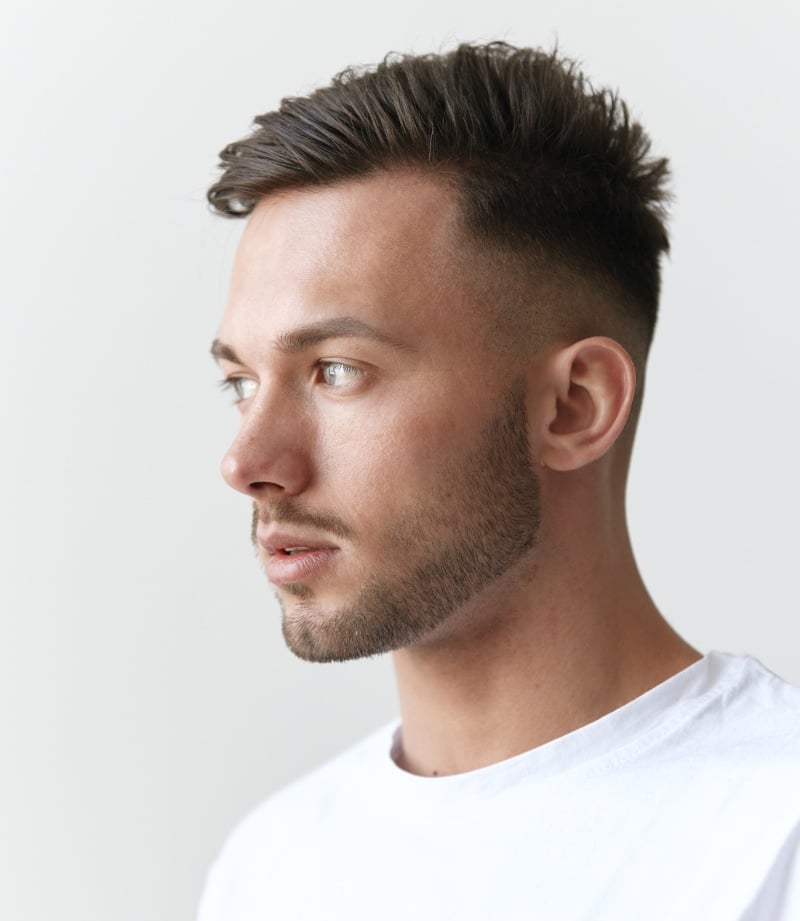
The executive is a neat, business-friendly cut, with three to four inches on top brushed back or parted to the side. A mid fade keeps it modern without looking too sharp for a conservative office.
Straight or slightly wavy hair works best. A light pomade or cream holds the shape without stiffness. See more professional hairstyles. Upkeep: every 2–3 weeks.
Mid Fade Haircut for Short Hair

If you keep things short on top, a mid fade under a Caesar cut or French crop removes weight at the sides and keeps the shape tidy. The Caesar here has a short, straight fringe brushed forward.
A small amount of matte paste defines the fringe. It’s one of the easiest short haircuts to live with. Upkeep: every 2–3 weeks.
Mid Fade Faux Hawk

A faux hawk pushes the hair toward the center into a ridge, without shaving the sides like a true mohawk. Two to four inches on top is enough, and the mid fade makes the ridge stand out.
Use matte clay or paste and work the hair inward and up. Upkeep: every 2–3 weeks.
Mid Fade Mullet

A modern mullet keeps length at the back and fades the sides around the ears. The mid fade gives the cut a clean profile without losing the shape at the nape.
Wavy and curly hair show the mullet best, though straight hair can be layered for movement. Sea salt spray adds grip at the back. Upkeep: fade every 2 weeks, back trims less often.
Mid Fade with a Design
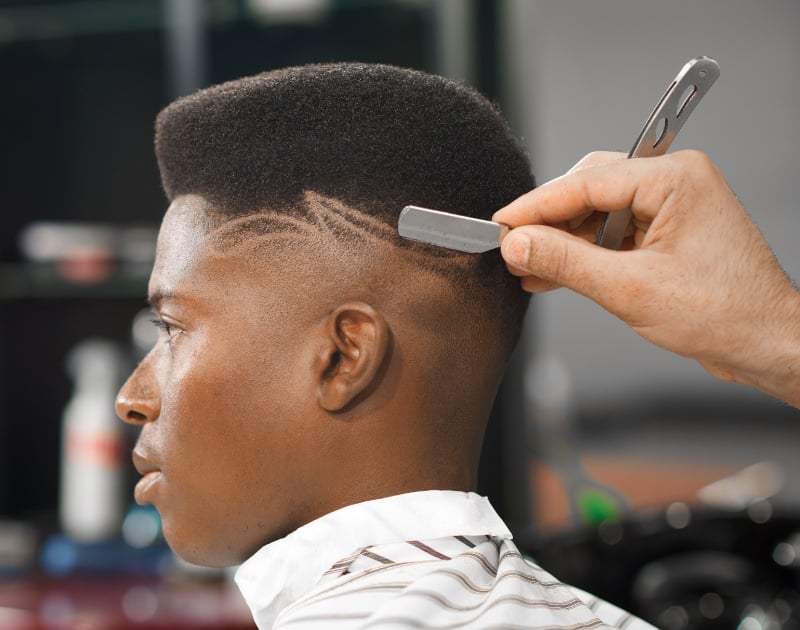
A design is a line or pattern shaved into the faded section with a trimmer. A mid fade gives the barber a wide, short area to work in, and a short top like this flattop keeps the focus on the sides.
Designs show up most clearly on darker and coarser hair. Upkeep: most designs soften within 1–2 weeks.
Mid Fade Pompadour
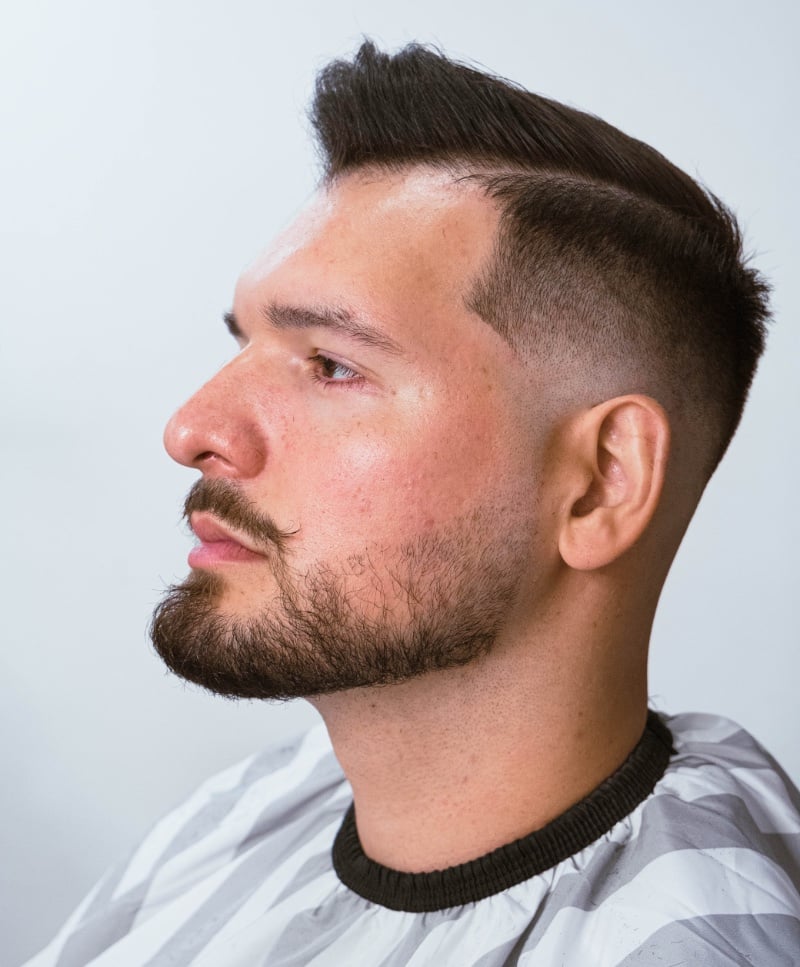
A pompadour leaves four to six inches at the front, blown up and back into a rounded shape. A mid fade tightens the sides enough to make that height obvious without the stark look of a high fade.
Blow-dry the front upward with a round brush, then set with pomade for shine or cream for a softer finish. Upkeep: every 2–3 weeks.
Burst Mid Fade Mohawk
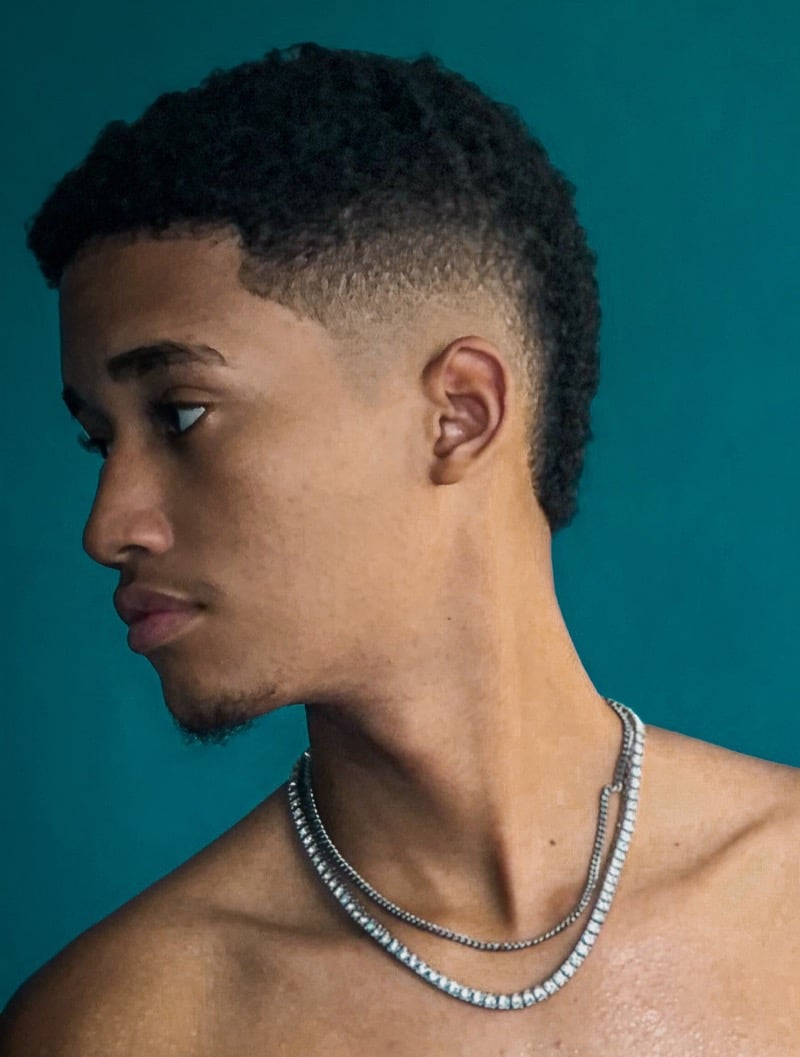
A mohawk leaves a strip of longer hair through the center. A burst fade curves around the ears and leaves length at the back of the neck, so the whole cut follows the line of the mohawk.
Wear the strip curly, spiked or brushed up. Use curl cream on coils or matte clay for spikes. Upkeep: every 2 weeks to keep the curve crisp.
Mid Taper Fade
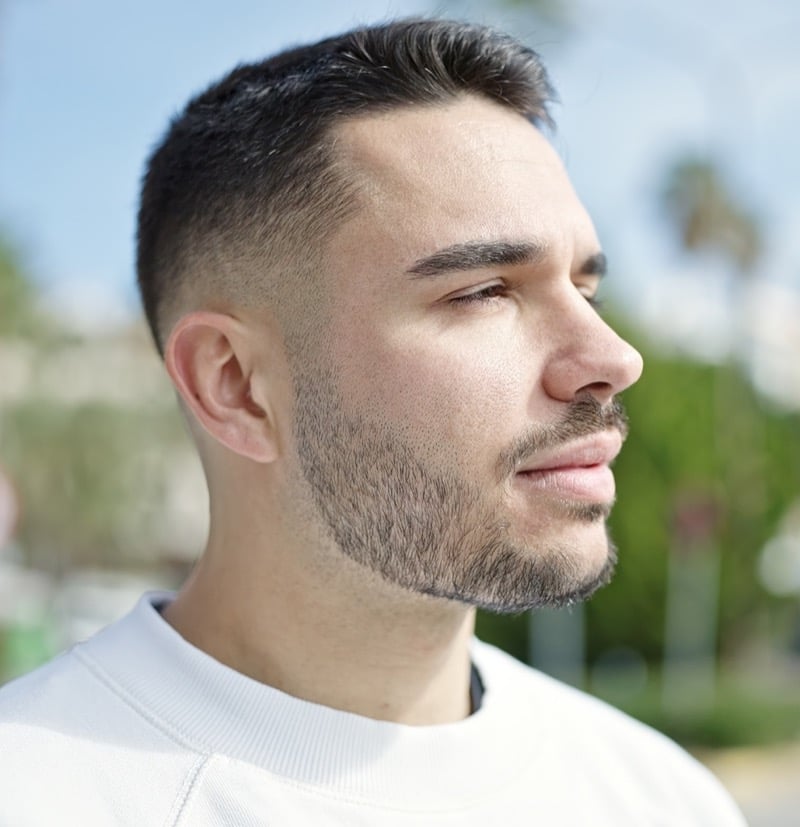
A mid taper fade shortens the hair around the sideburns and neckline from temple height but doesn’t go down to skin, so the shortest hair is still visible. It’s the most conservative way to wear a mid fade, and it grows out more evenly.
It works with crops and longer combed styles, with a little matte cream or powder. Upkeep: every 3–4 weeks, longer than a skin fade.
Mid Fade Samurai Bun
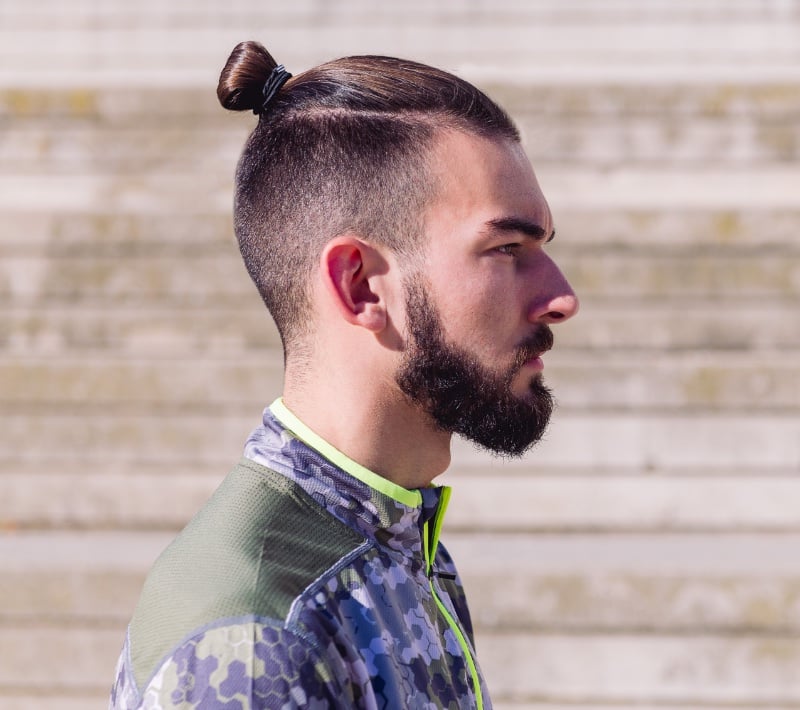
A top bun needs at least six inches on top, and fading the sides removes the bulk that would otherwise sit under it. The result looks tidier than a bun over full-length sides.
Straight or slightly wavy hair ties up most easily. A light cream controls flyaways. Upkeep: fade every 2–3 weeks, top trims only as needed.
Mid Temp Fade
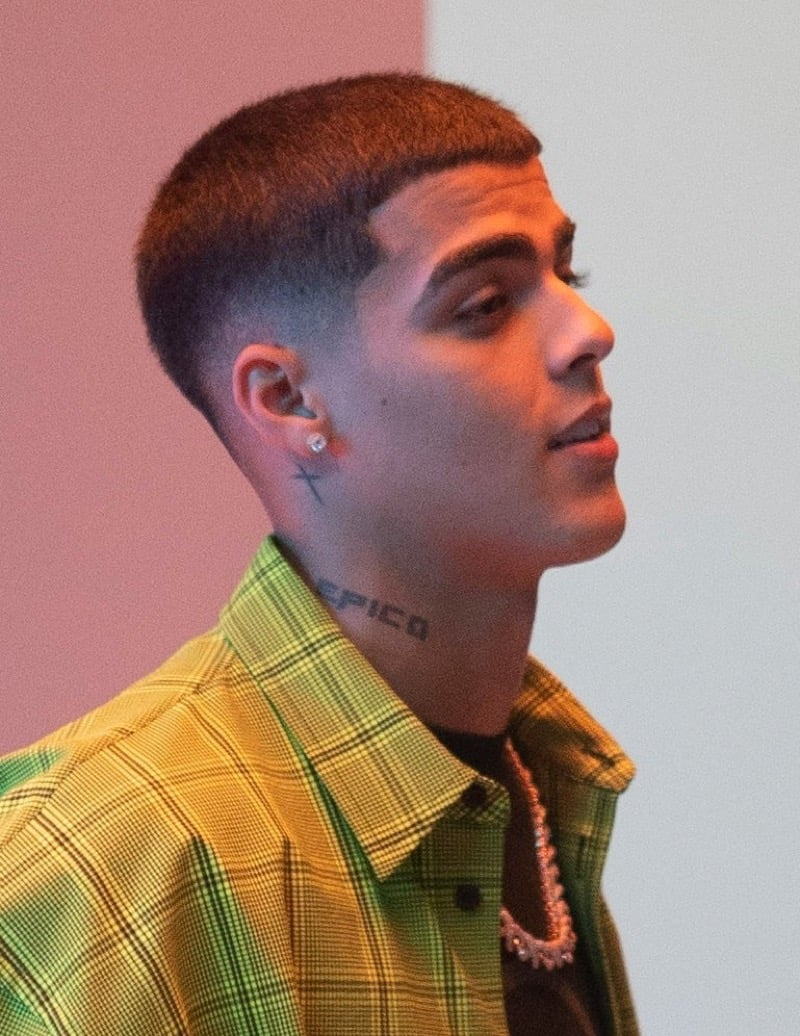
A temp fade (short for temple fade) fades only the temples and sideburns, leaving more length across the rest of the sides. Starting it at mid height sharpens the corners of the hairline without taking off much bulk.
Styling is minimal. A bit of matte paste or cream separates the top. Upkeep: every 2–3 weeks.
Mid Fade Slick Back
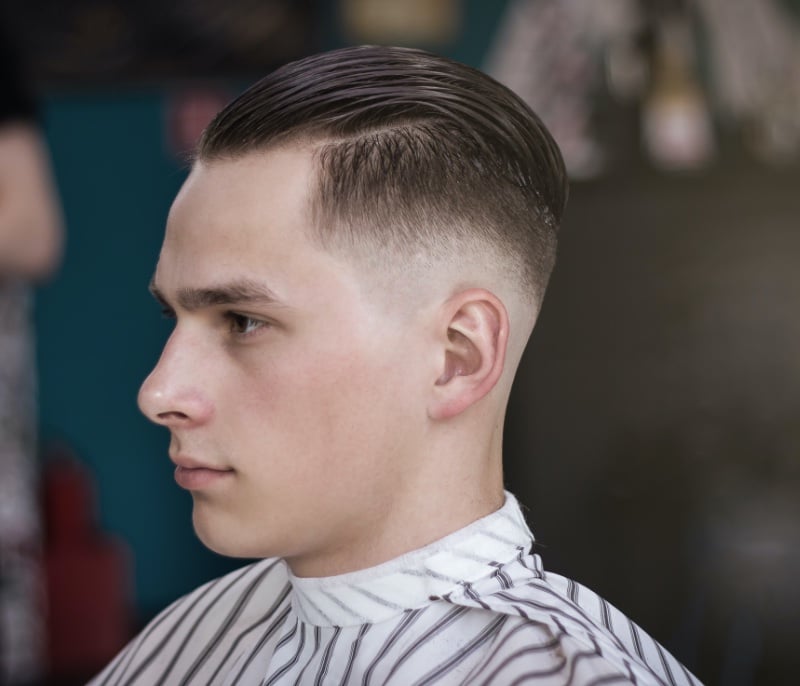
A slick back leaves three to five inches on top and combs it straight back. A mid fade keeps the sides close, so the slicked back hair looks close to the head.
Medium to thick straight hair works best. Pomade or cream gives the shine and control. Upkeep: fade every 2–3 weeks, top trim monthly.
Mid Burst Fade
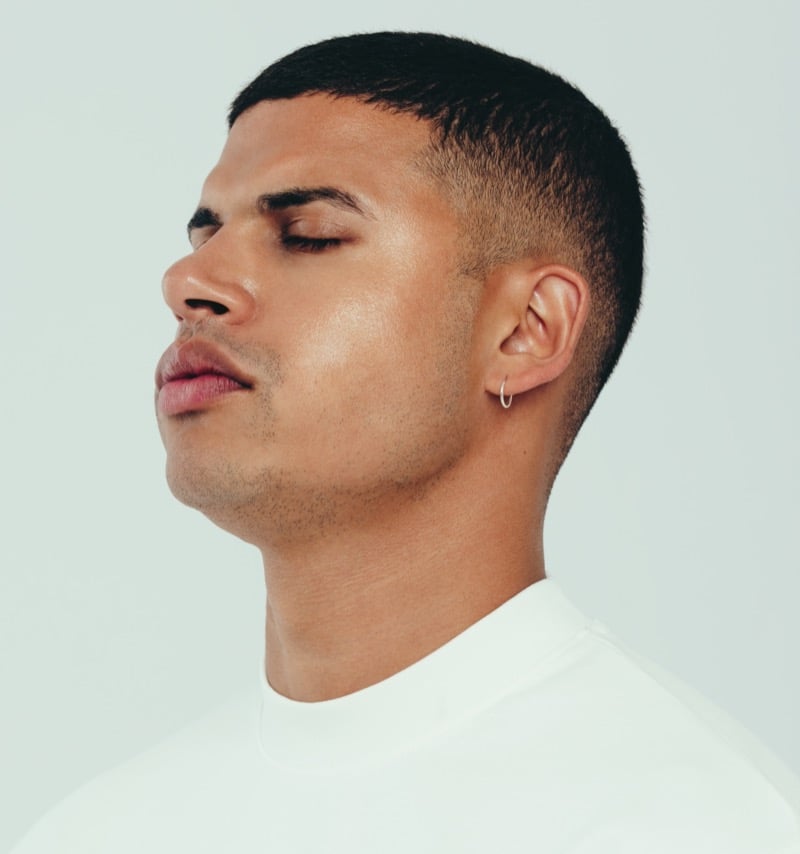
A mid burst fade curves around the ear in a semicircle at mid height instead of following a straight line around the head. Even on a simple buzz cut like this one, the curve gives the sides a distinct shape.
It also suits bolder tops like mohawks, curly crops and pompadours. Upkeep: every 2 weeks to keep the curve defined.
Textured Crop Mid Fade
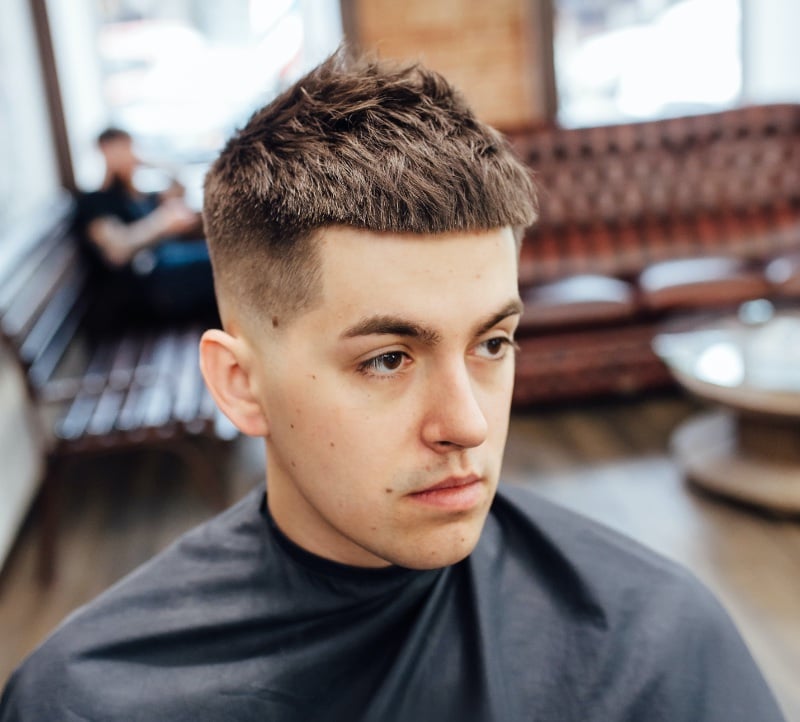
A textured crop is cut short and pushed forward, with a choppy fringe and layers on top for movement. The mid fade clears the temples so the outline looks sharp.
Straight or wavy hair suits it best. Rub matte clay between your palms and work it through with your fingers. Upkeep: every 3 weeks.
Mid Fade Hard Part
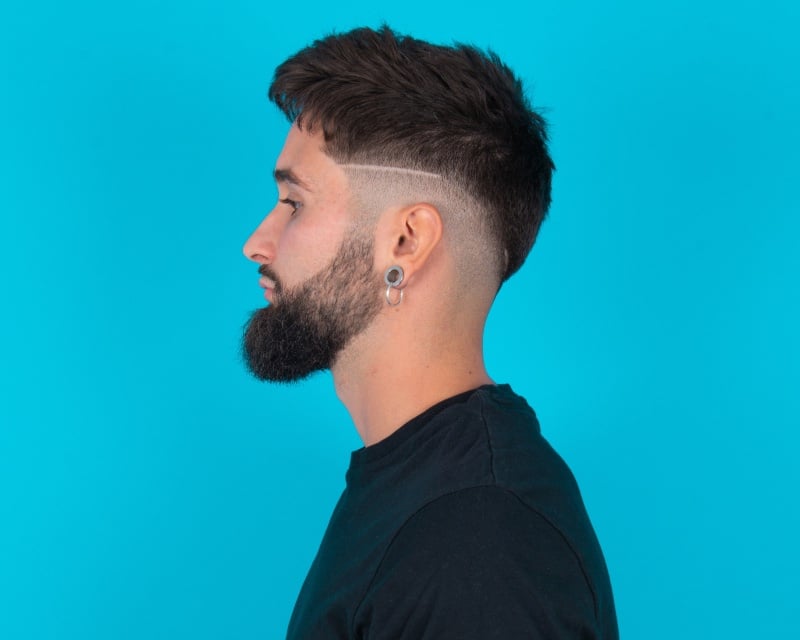
A hard part is a line shaved into the scalp where your natural part would sit. Paired with a mid fade, it gives a comb over or crop a clear, graphic divide between top and sides.
Straight or slightly wavy hair shows the part best. Pomade or paste keeps the top in place. Upkeep: every 2–3 weeks, or the line fills in.
Mid Fade Textured Quiff
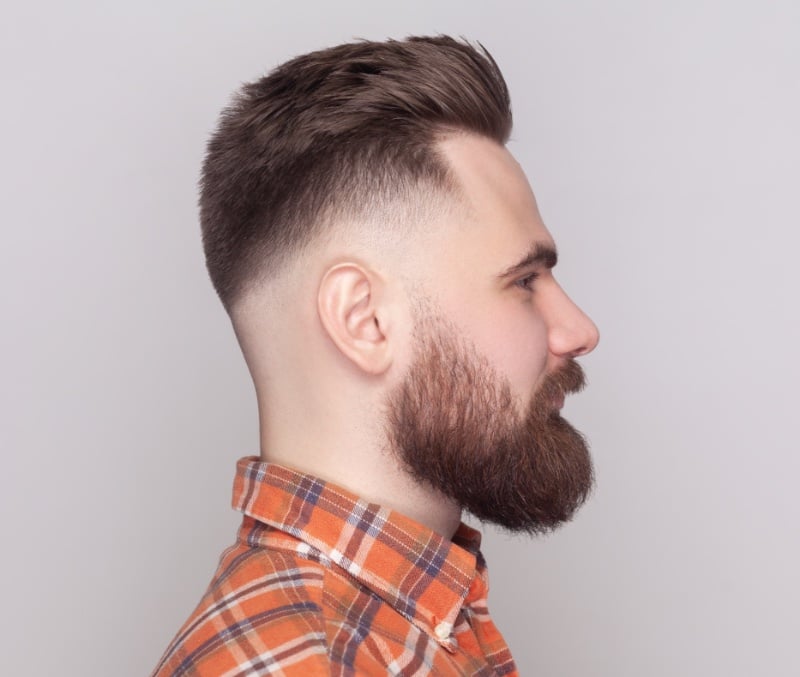
A quiff lifts the front up and back. The textured version is messier and matte rather than smooth. A mid fade keeps the sides neat, which complements the extra height.
Blow-dry with sea salt spray for lift, then finish with matte paste. Upkeep: every 2–3 weeks.
Tousled Mid Fade

A tousled top is styled to look a bit messy on purpose. The mid fade keeps the outline tidy, so the overall look reads as relaxed rather than overdue for a cut.
Wavy hair does this on its own. Straight hair needs a little salt spray and some roughing up with your fingers. Upkeep: fade every 2–3 weeks, top trims as needed.
Mid Fade with Waves
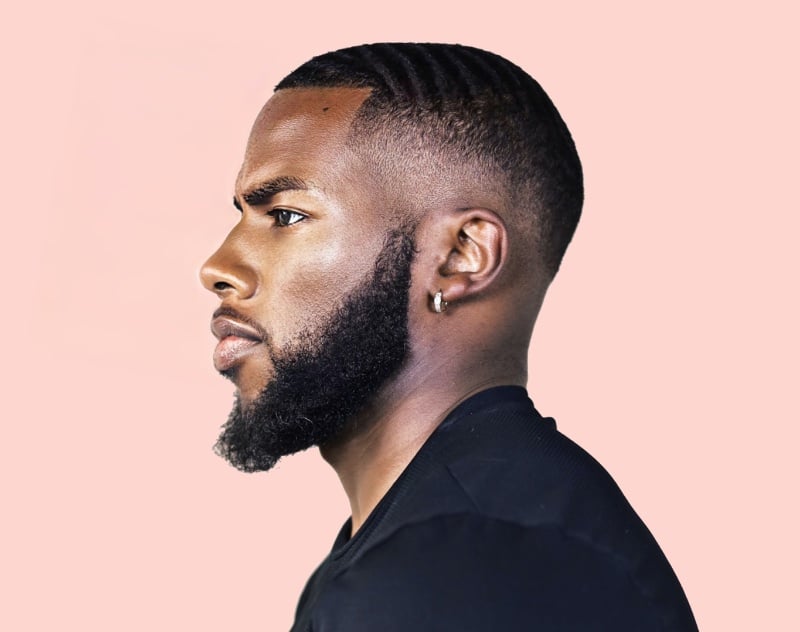
Waves are ripple patterns trained into short, coarse or curly hair with daily brushing and a durag. A mid fade frames the pattern and gives the cut clean edges.
Brush daily and use a moisturizer or wave pomade to keep the pattern defined. Upkeep: fade every 2 weeks.
Windswept Mid Fade
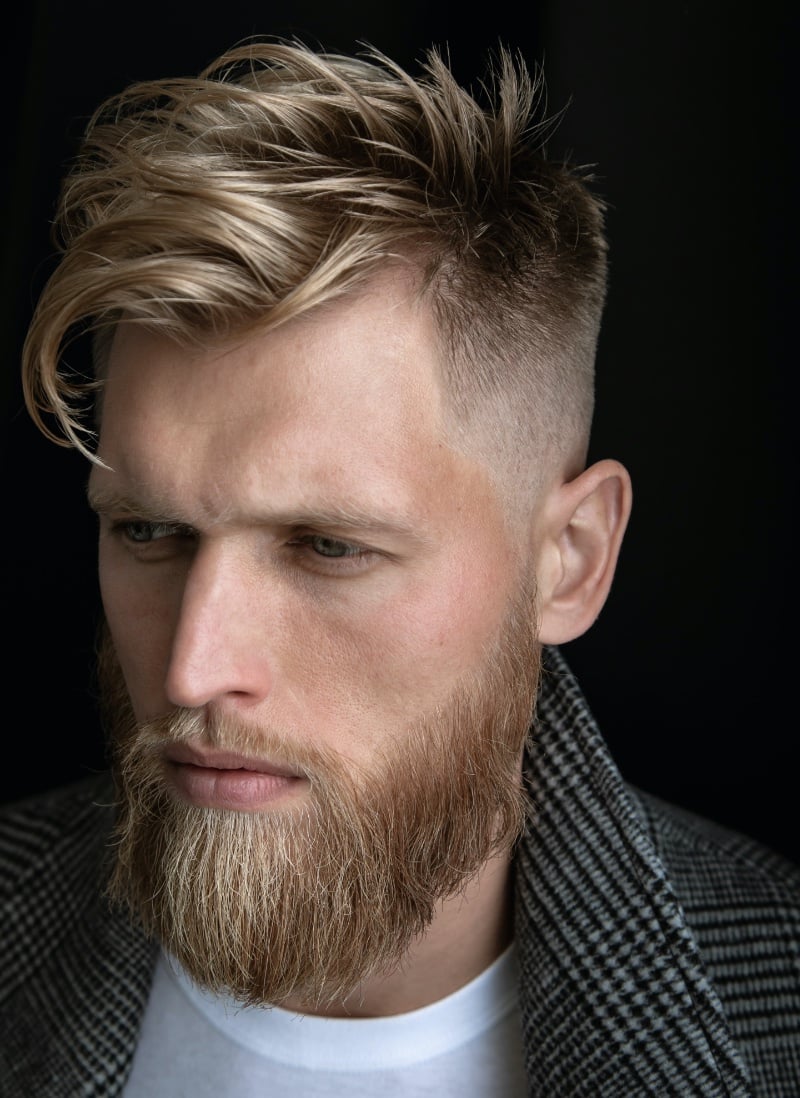
A windswept top is longer hair pushed back and outward with natural movement, as though you’ve been outside on a breezy day. The mid fade keeps it from looking unkempt.
Straight or wavy hair works. Use sea salt spray, blow-dry in the direction you want it to go, and finish with a matte cream. Upkeep: fade every 2–3 weeks, top trims monthly.
Low Fade vs. Mid Fade vs. High Fade
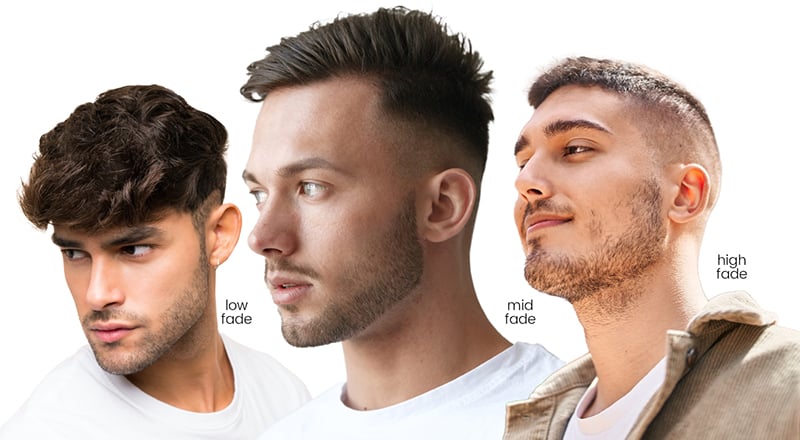
All three are the same idea at different heights:
| Fade | Where it starts | Look |
|---|---|---|
| Low fade | Just above the ears and neckline | Subtle, keeps width at the sides |
| Mid fade | Around temple height | Clear contrast, still easy to wear |
| High fade | Where the head starts to curve toward the crown | Bold, sides look almost fully short |
A low fade is the subtler choice and grows out more gracefully. A high fade gives the most contrast and needs the most upkeep. The mid fade sits between them, which is why it’s the easiest place to start. For every height and finish in one place, see more on the types of fade haircuts.
How to Ask Your Barber for a Mid Fade
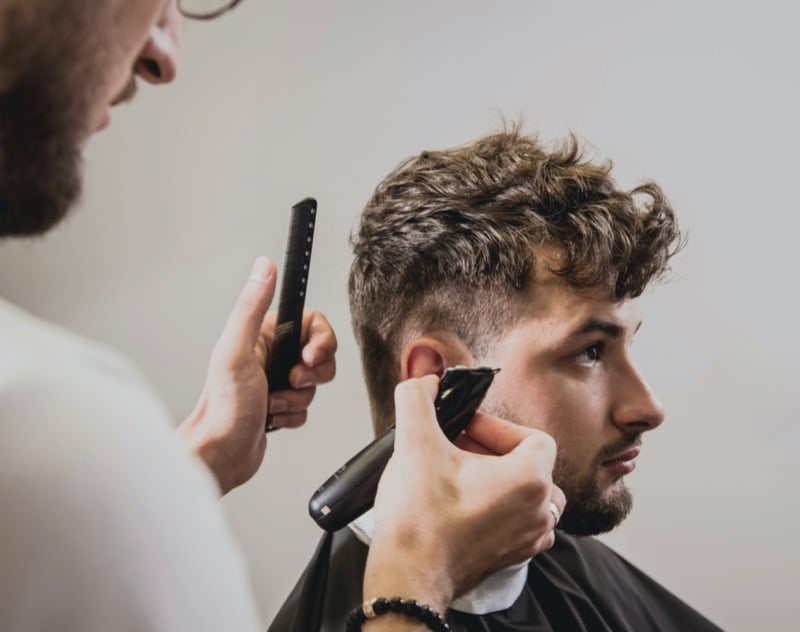
- Say “mid fade” and point to your temple. That’s where you want the blend to start.
- Choose the finish. Skin for a mid skin fade, or a short guard (0.5 or 1) for a mid taper fade.
- Name the shape if you want one. Straight, drop or burst.
- Say how much to leave on top. In inches, or by naming the style.
- Bring a photo. Fade heights vary between barbers, and a picture removes the guesswork.
Products for a Mid Fade

The fade itself needs no product. What you use depends on what’s on top:
- Sea salt spray: adds texture and lift before blow-drying. Good for quiffs, windswept and tousled tops.
- Matte paste or clay: firm hold with no shine. Good for textured crops, spikes and faux hawks.
- Pomade: shine and control for slick backs, side parts and pompadours.
- Styling cream: light hold that keeps hair soft. Good for curls and executive cuts.
- Powder: quick volume and grip between washes.
Start with less than you think and add more if needed.
Is a Mid Fade Right for You?
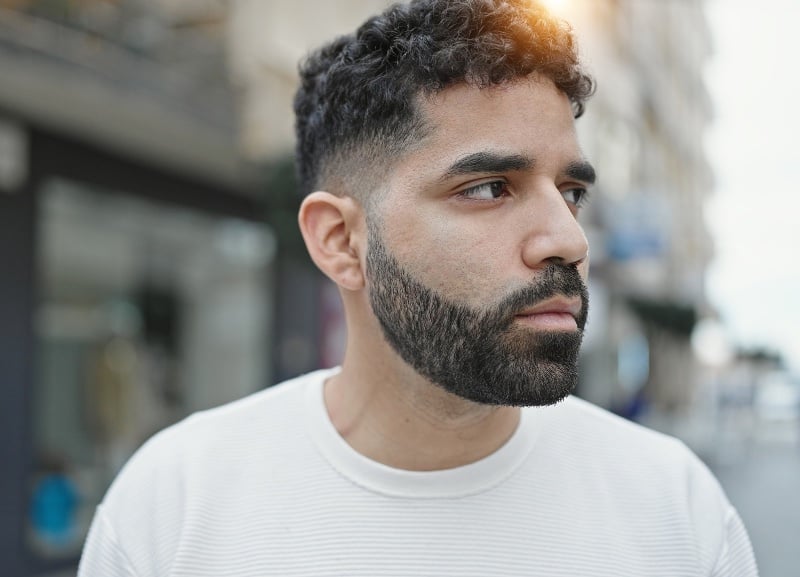
If you want a fade that’s clearly visible but not dramatic, yes. A mid fade works on most hair types and under almost any top, from a buzz to a bun. Go lower if you want something that grows out gently or suits a strict dress code. Go higher, or down to skin, if you want maximum contrast and don’t mind a barber visit every couple of weeks.