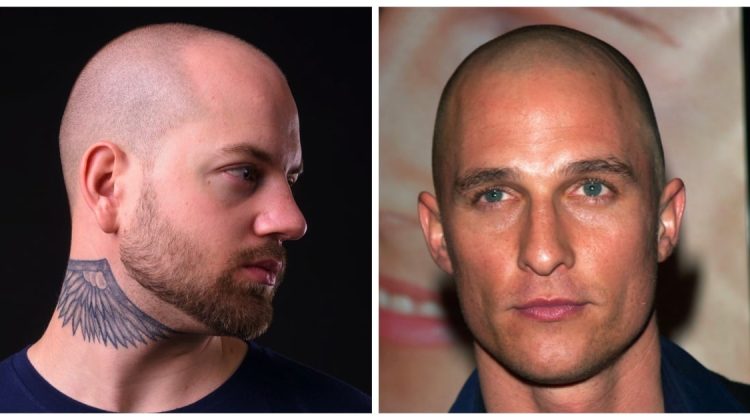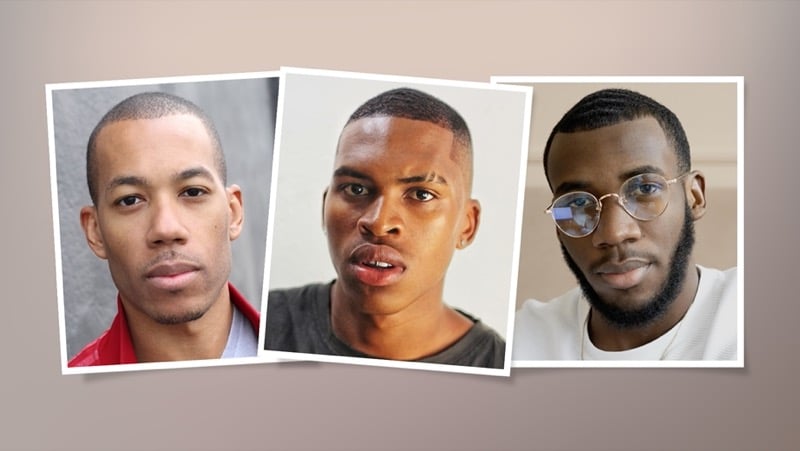
On coily hair, a buzz cut reveals the curl pattern even at a close clipper length. A line-up defines the forehead and temples, while a fade can bring the sides closer to the scalp.
The cut demands little daily styling, though guard length and hairline work give each version its character. A short, even top can look quite different with a squared line-up or a gradual fade. See the buzz cut for the wider range of lengths.
Buzz Cuts for Black Men
A few millimeters change how much curl shows on top. At the sides, the choice between an even clip, a taper and a full fade determines the silhouette.
Classic Buzz Cuts, No Fade
Classic Buzz Cut
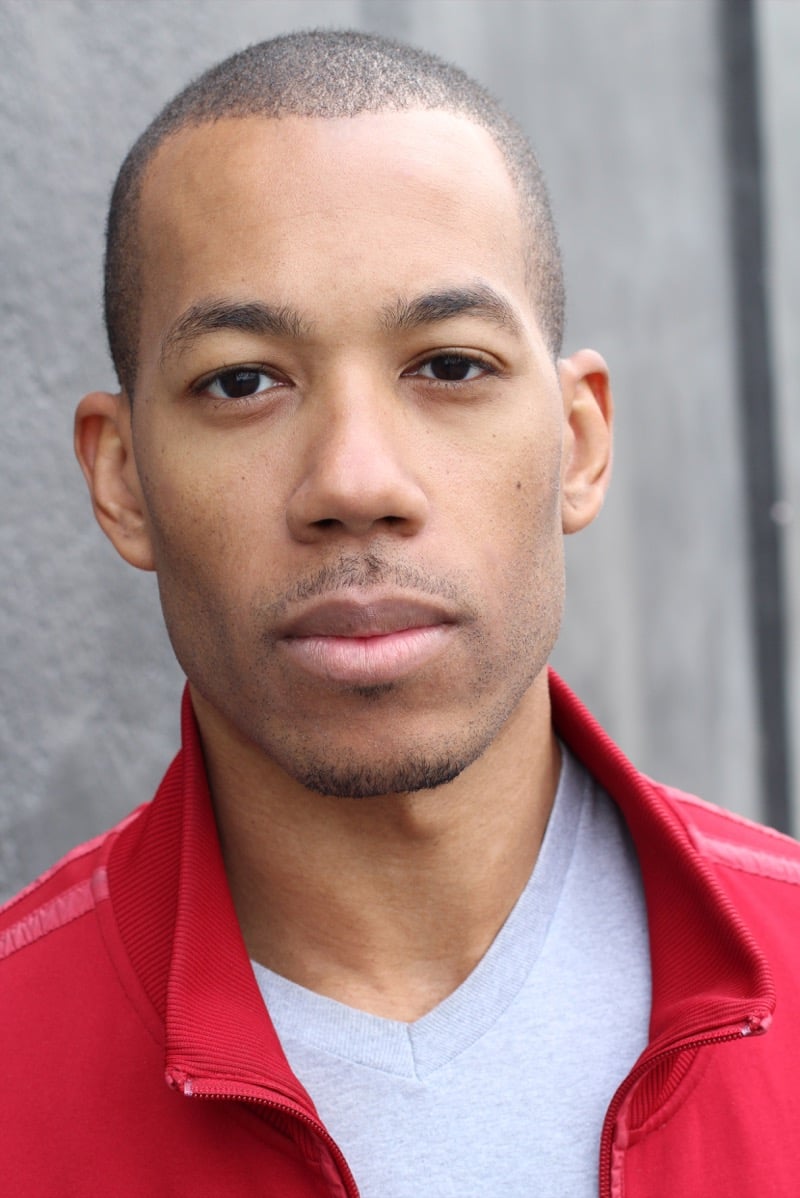
The classic buzz cut uses the same guard from crown to neckline. A line-up can sharpen the hairline while the sides remain unfaded.
A 2 guard buzz cut leaves about 1/4 inch, enough for the curl pattern to remain visible. The guard table in the buzz cut guide covers shorter options; the 3 guard buzz cut retains more coverage.
Brush Cut

With a brush cut, the top has enough length for individual coils to rise from the scalp. A line-up defines the perimeter, as the low fade in this example shows.
Induction Cut

Clippers run directly against the scalp for an induction cut, leaving only a fine shadow of hair. It can be worn at one length, with no fade or line-up. The 0 & 1 guard buzz cut explains the shortest settings.
Buzz Cut Fade Variations
Fading removes weight from the sides while retaining the cropped top. The starting height determines how much dark hair remains above the ears. The buzz cut fade covers the variations in greater depth.
High Fade

With a high fade, the transition rises close to the crown. Most of the sides become closely clipped, making the textured top and squared hairline more prominent.
Mid Fade

The mid fade begins around the temples. It removes more weight than a low fade while leaving a visible band of hair beneath the crown.
Low Fade

A low fade concentrates the shortest hair around the ears and nape. Above that narrow transition, the sides retain much of the buzz cut’s original length.
Skin Fade

A skin fade exposes the scalp at the base of the sides. The bare section makes new growth apparent sooner, often calling for a touch-up in about two weeks.
Temp Fade

Michael B. Jordan’s temp fade cuts closely around the temples while preserving the length farther back. Its precise line-up draws attention to the corners of the hairline.
Textured Buzz Cuts
Waves Buzz Cut

A waves buzz cut needs enough hair for the pattern to develop, often a #1 or #2 guard or longer. Regular brushing and a durag help form the waves. A low fade or taper can tidy the perimeter while leaving the pattern intact.
Buzz Cut Afro

The buzz cut afro keeps a dense field of short curls close to the scalp. A line-up defines the forehead, while a slight fade at the temples gives the sides a more precise edge.
Taper Buzz Cut
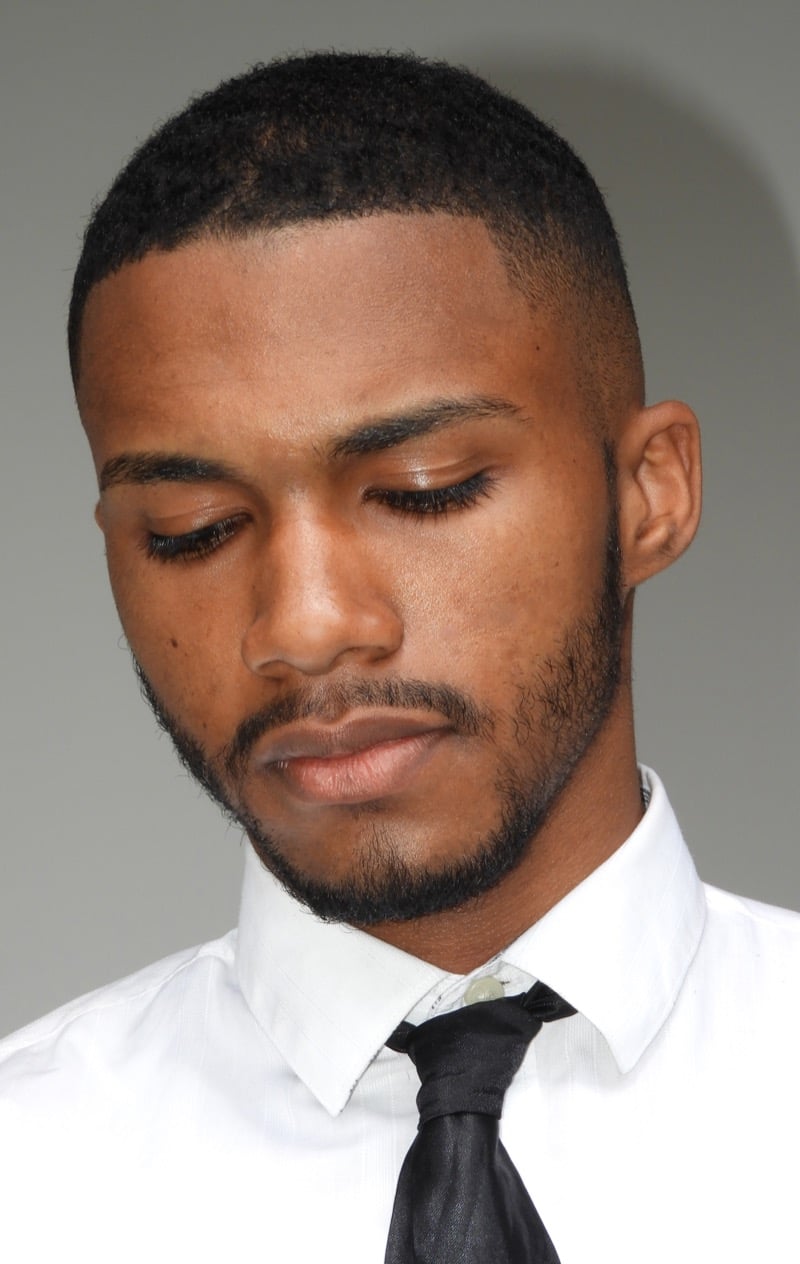
A taper buzz cut keeps the sides close to the top length, cutting shorter only around the sideburns and neckline. The transition stays localized, while a low taper fade makes those edges more pronounced.
Buzz Cuts With Added Detail
Buzz Cut With Part

A trimmer-cut part introduces a narrow line through the short hair on one side. As the surrounding hair grows, that detail loses definition and may need refreshing after a week.
Blonde Buzz Cut
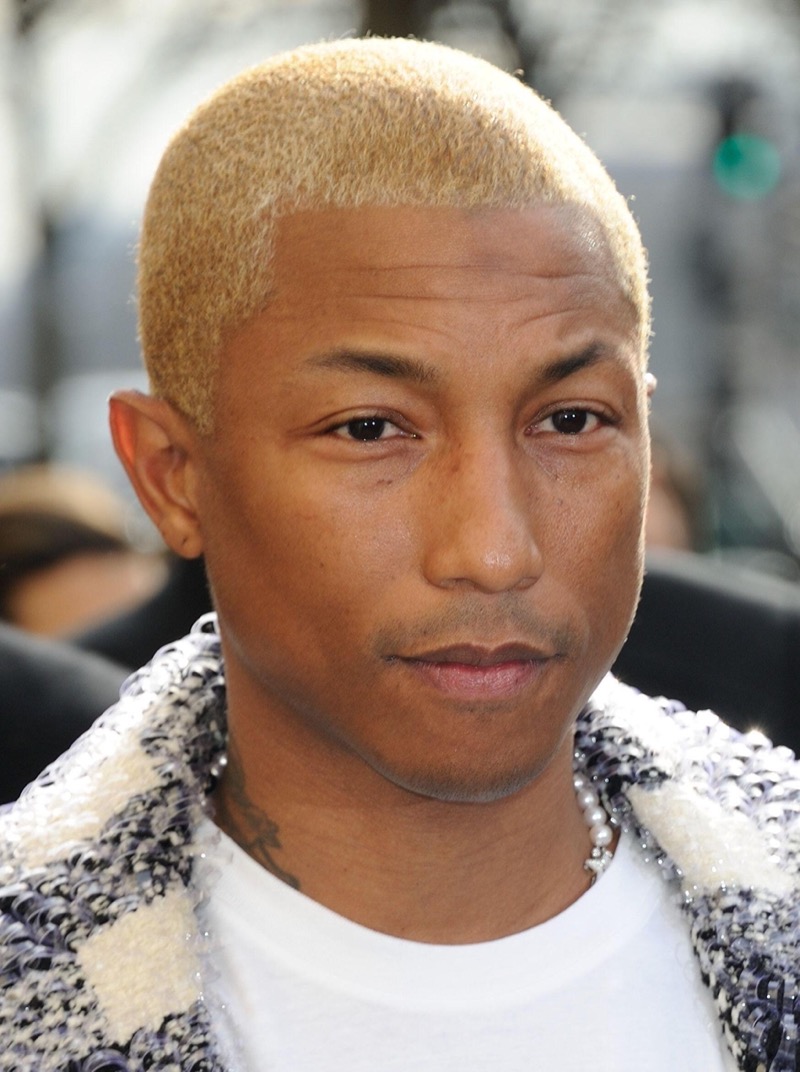
Pharrell Williams shows how blonde color changes the appearance of a close crop. Bleaching makes the curl pattern and darker roots more noticeable as hair grows. Coily hair may become more fragile after lightening, making professional coloring advisable. Other shades appear in the blonde buzz cut.
How to Keep a Buzz Cut Sharp
- The straight edges of a line-up soften as hair grows. A barber visit every two to three weeks generally keeps both the outline and a fade defined.
- Close cutting at the neckline can cause razor bumps. A guard leaves a little hair above the skin, and cutting with the grain can reduce irritation.
- A lightweight moisturizer can relieve scalp dryness, particularly where the hair is closely clipped.
- A hat or scalp sunscreen is useful where an induction cut or skin fade leaves skin exposed.