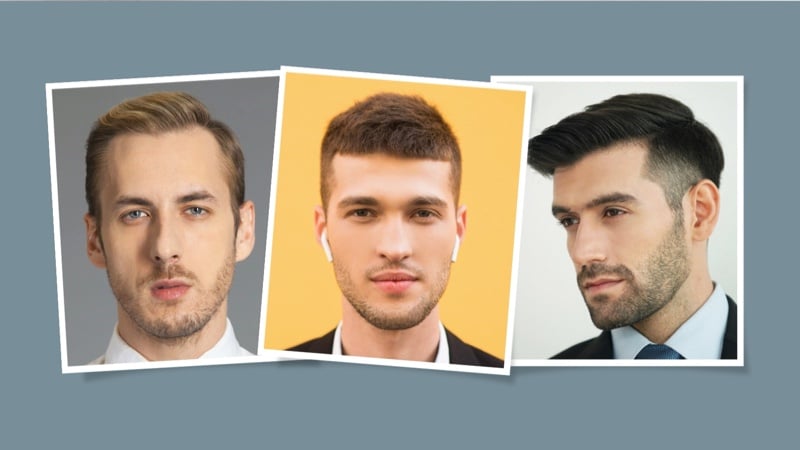
Professional hairstyles for men range from close-clipped cuts to long hair tied back. A side part or Ivy League may suit a traditional office, while a studio or creative agency may welcome a textured crop or undercut. Across these men's haircuts, the useful questions are how the hair sits, what it takes to style and whether it meets the workplace's expectations.
What Makes a Hairstyle Professional
Upkeep matters more than a single prescribed length. A defined neckline, tidy hair around the ears and a shape that holds between washes give a cut a finished appearance. Long hair gathered at the nape can meet the same standard as a short side part. Neither length alone establishes professionalism.
Dress codes determine how much latitude a cut allows. In a traditional client-facing setting, classic haircuts with tapered sides and a combed top are a useful starting point. Creative agencies, studios, tech companies and hospitality workplaces may permit greater contrast or length, though expectations vary by employer and role.
Professional Hairstyles for Men
Short crops expose the hairline, parted cuts direct length to one side and longer styles gather it at the back. Each calls for a different amount of daily styling.
Business Cut
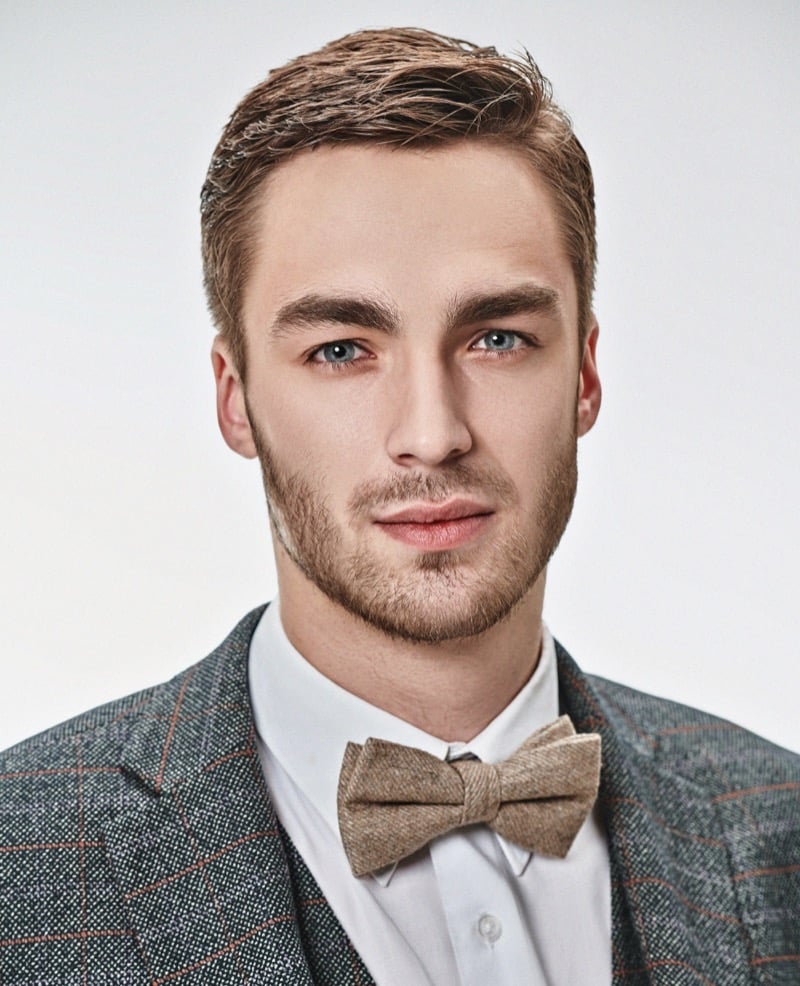
A business cut leaves enough length on top for a soft side part, with the sides and back gradually shortened toward the edges. The blend keeps the top from projecting beyond the temples. Combing along the natural part gives it a compact outline suited to a traditional office.
Buzz Cut

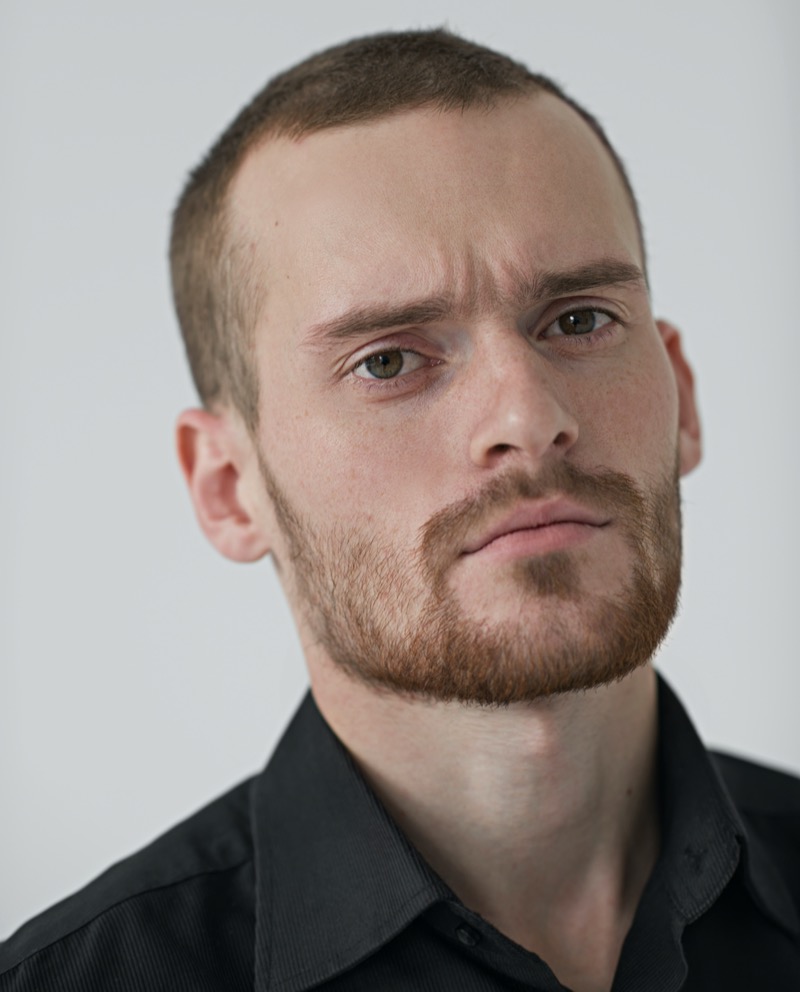
Clipped close across the scalp, the buzz cut makes the hairline and skull shape more visible. An even-length version needs little daily styling, though small changes in length show quickly around the ears and nape. The broader buzz cut family also includes cuts with a longer top.
Classic Taper
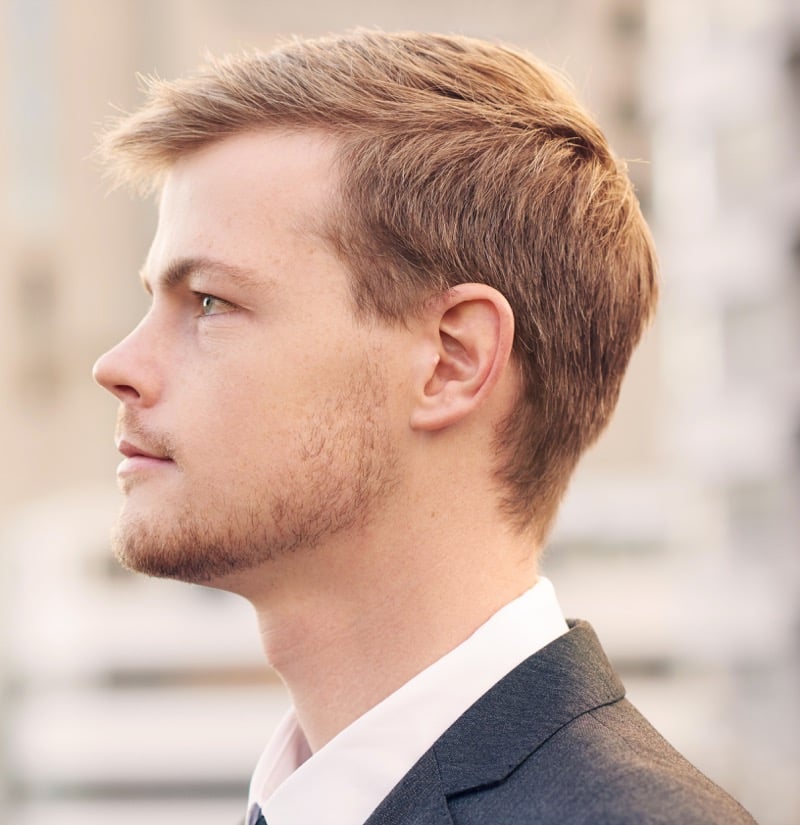
The classic taper retains visible hair along the sides, shortening gradually toward the ears and neckline. That softer graduation gives a longer top room to be combed sideways, back or forward. As it grows, the edges become fuller instead of revealing a stark boundary between bare skin and hair.
Comb Over

Length travels sideways across the top in a comb over, creating a sweep from the part toward the opposite temple. Combing close to the scalp keeps the profile low; lifting the roots adds height. Shorter sides expose the direction of that sweep, while product choice determines how firmly the strands stay together.
Crew Cut
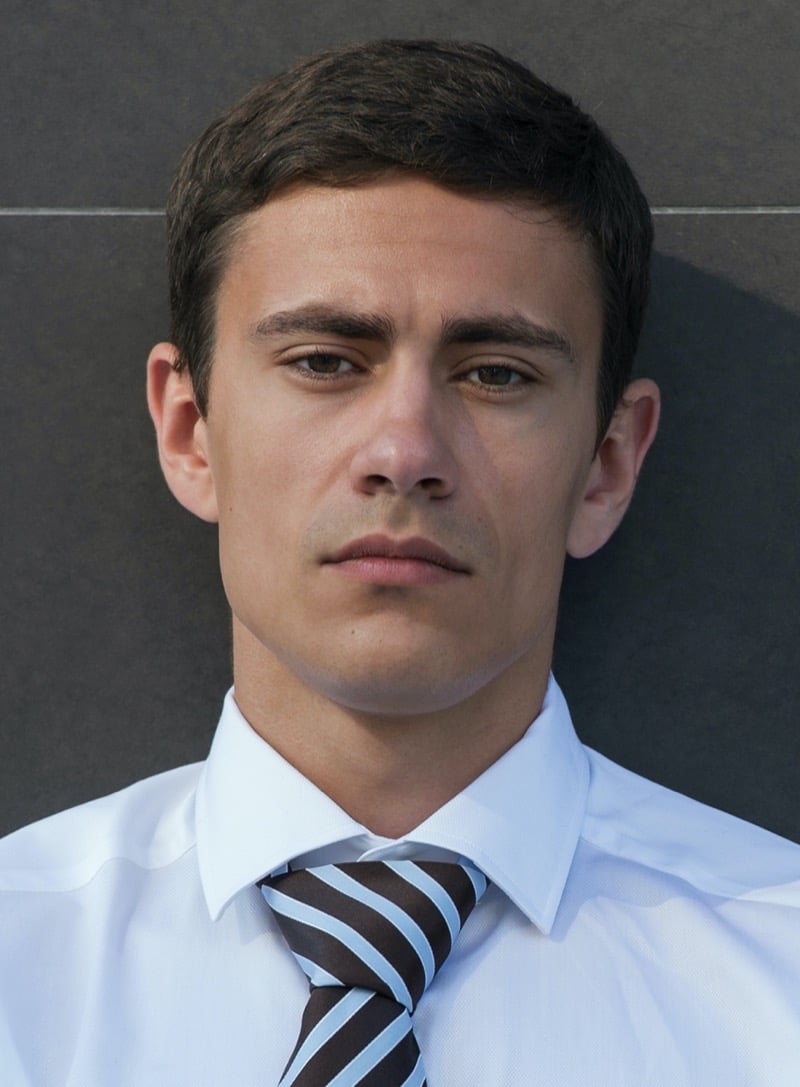
The crew cut is longest at the front and shortens toward the crown, with the sides clipped closer. That small rise above the forehead distinguishes it from an even buzz cut. Depending on growth direction, the front may stand on its own or need a small amount of styling product.
Faux Hawk

The faux hawk directs the longer top toward a narrow ridge through the center. Its short sides retain hair across a wider area than a shaved mohawk. Keeping the ridge low makes the shape less pronounced for a casual workplace; greater height emphasizes the central peak.
French Crop

A forward fringe defines the French crop, ending across the forehead above short sides and back. The front can lie close to the scalp instead of being lifted into a part or quiff. Its fringe line remains visible as the cut grows, making that edge an important point to discuss at a trim.
High & Tight
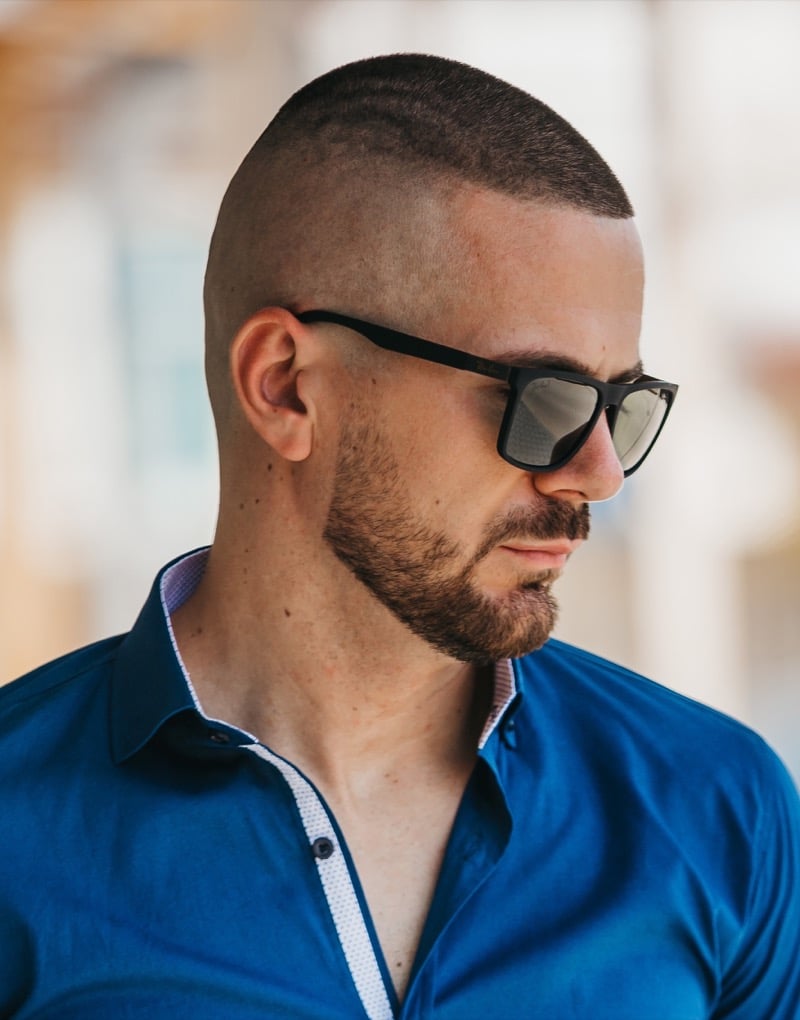
Very short sides rise high toward the top in the high and tight, leaving a compact patch of longer hair above. The exposed sides give this military-inspired cut a narrower silhouette than a crew cut with a fuller blend. Daily styling may be minimal, but regrowth soon changes the contrast.
Ivy League
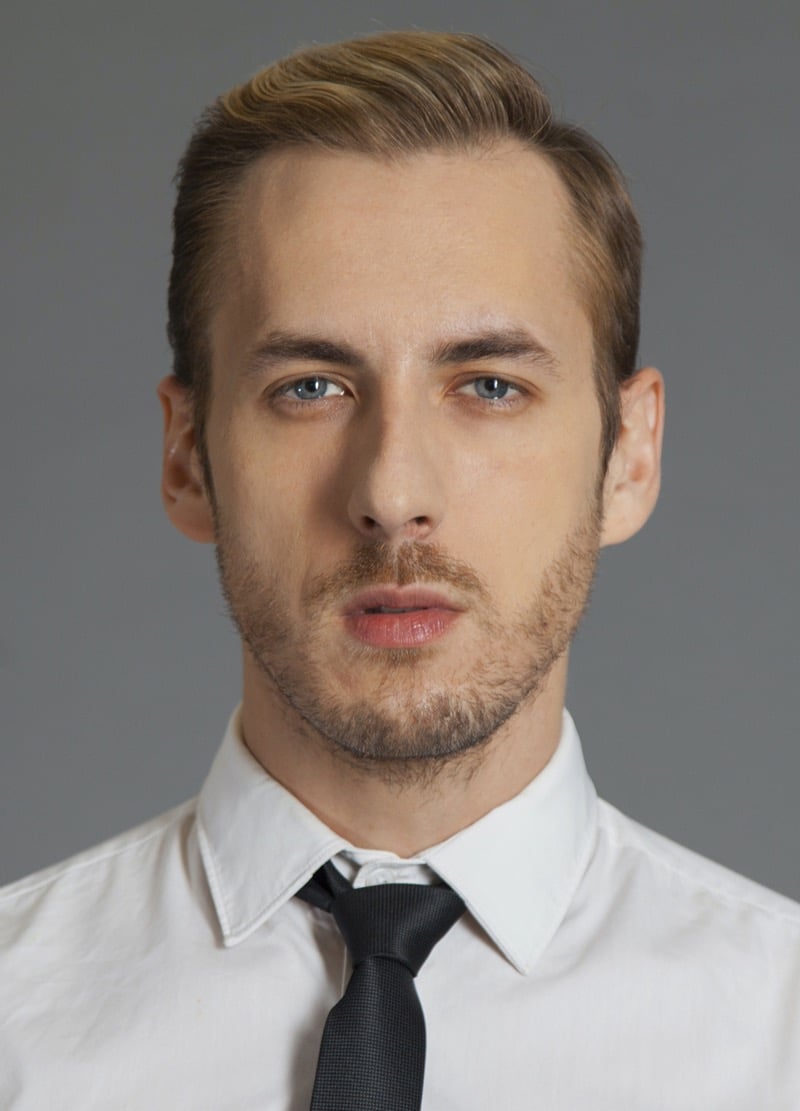
The Ivy League extends the crew cut's front enough to comb into a side part. Length still decreases toward the crown, so the top sits closer than a full comb over. Also called the Harvard clip or Princeton, it fits the short, parted end of the old money haircut range.
Pompadour

A pompadour rises above the forehead and sweeps back in a rounded mass. The front carries most of the height, with shorter sides exposing its curve. A lower version is easier to accommodate in a conservative office; a taller shape may suit a creative or sales role where the dress code permits it.
Ponytail
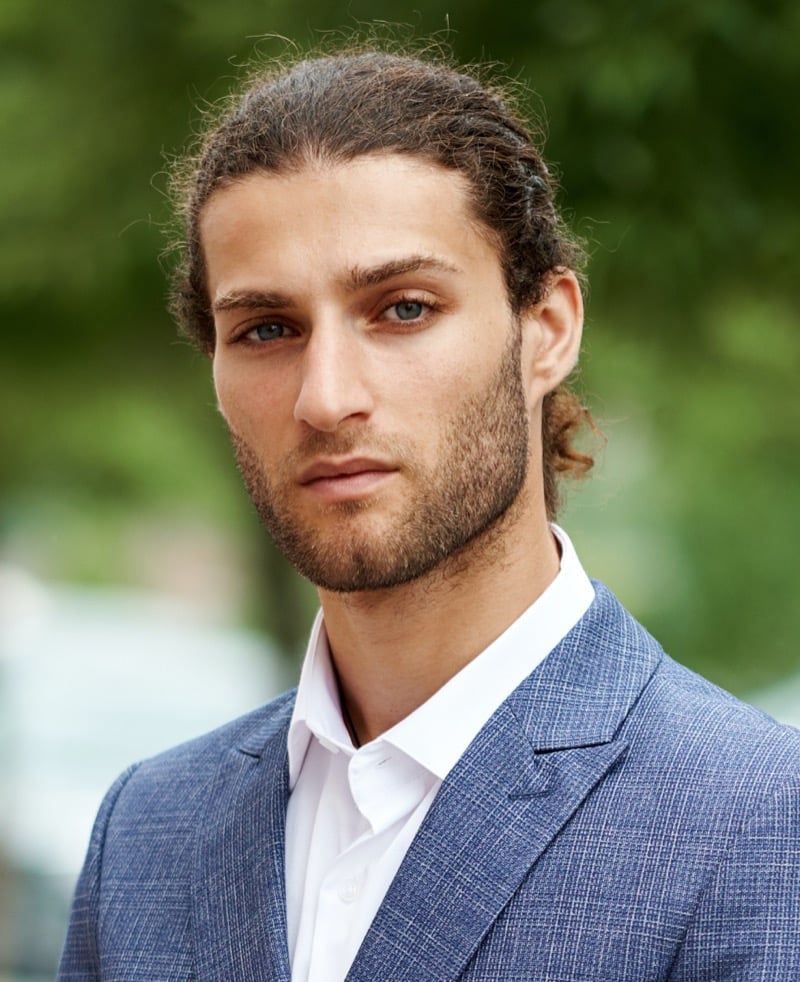
A low ponytail gathers long hair at the nape, drawing the sides back and leaving the face exposed. Enough length is needed for the front and side sections to reach the tie. A low man bun folds those lengths into a smaller shape, which can be useful when loose ends get in the way at work.
Executive Haircut
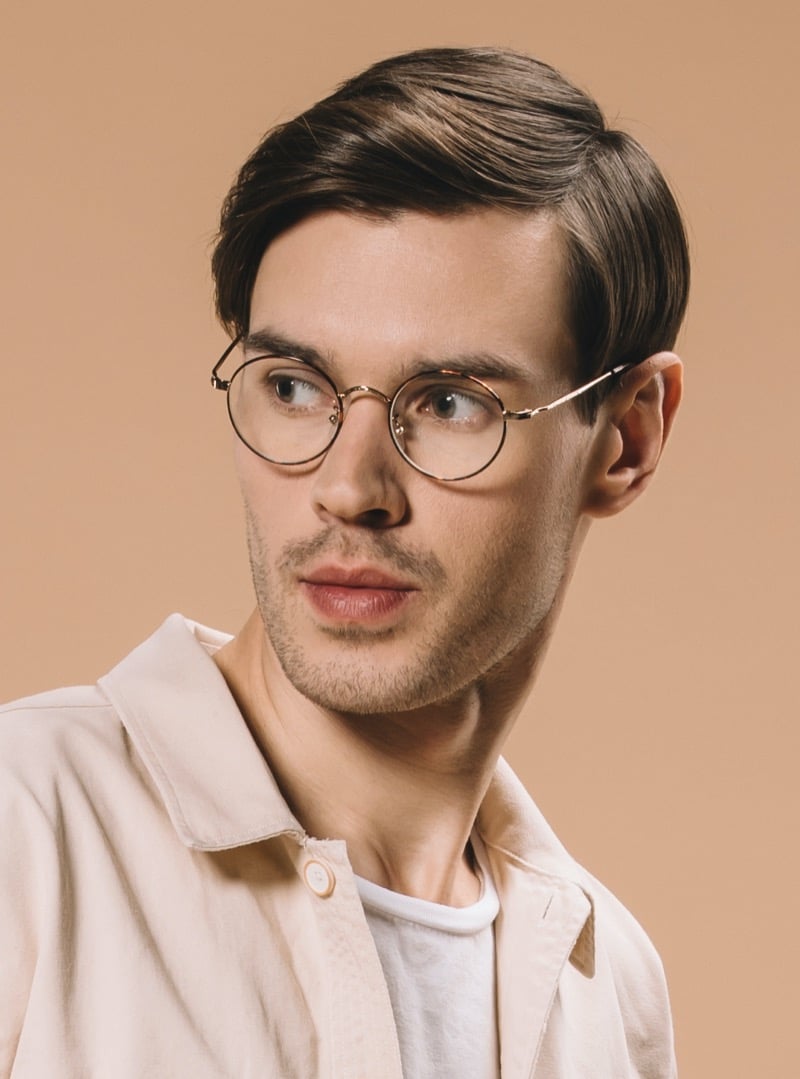
The executive haircut gives a defined side part more emphasis than the softer division of a business cut. Short sides leave the longer top visible as it sweeps across the head, with some lift near the front. A natural finish separates the strands more visibly than the flat, glossy styling of a banker haircut.
Quiff
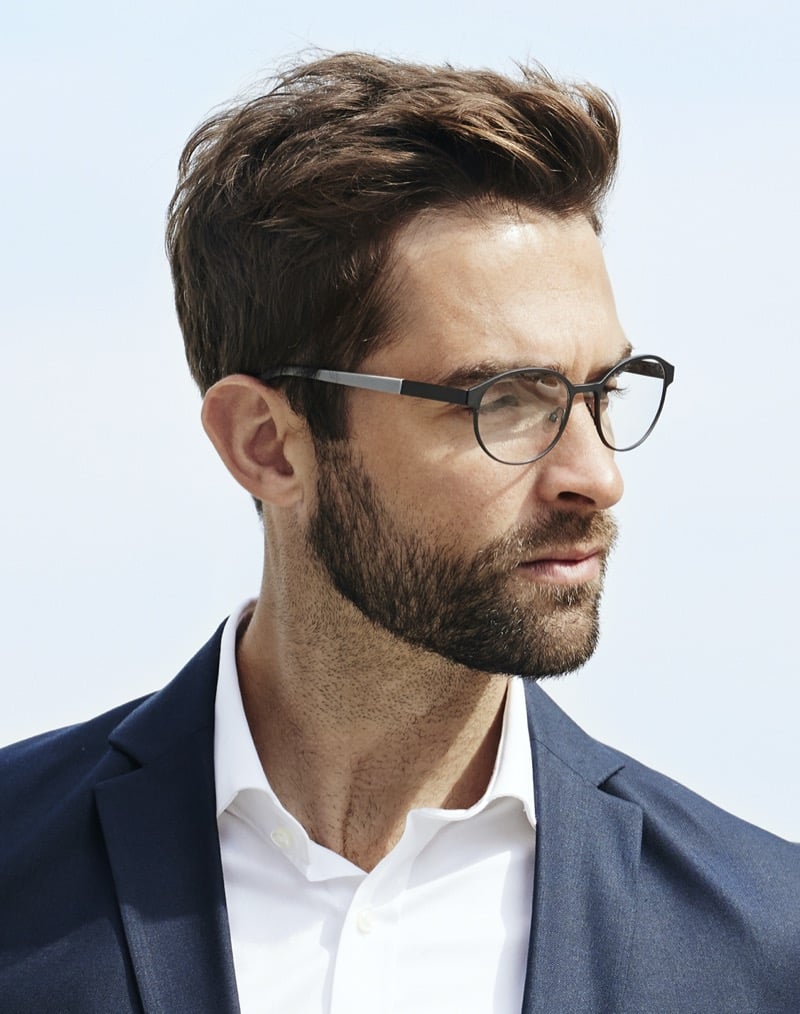
Height concentrates at the front of the quiff, where the hair lifts and bends back. The rest of the top can sit closer or show separate textured sections, distinguishing it from the fuller swept-back mass of a pompadour. A modest front lift suits a traditional office; a taller, looser version depends on the workplace.
Side Part
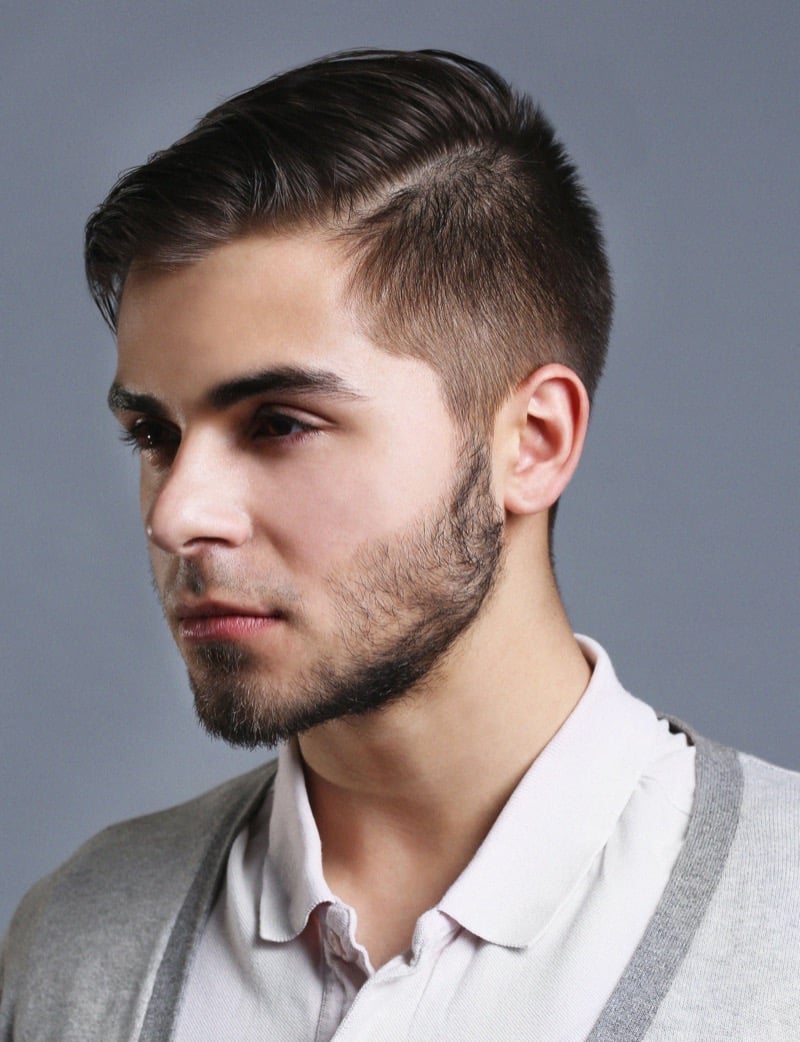
The side part divides the top into two directions, exposing a line from the hairline toward the crown. The undercut shown here creates an abrupt change between the longer top and short sides. A graduated blend would soften that transition while retaining the same parting.
Slick Back
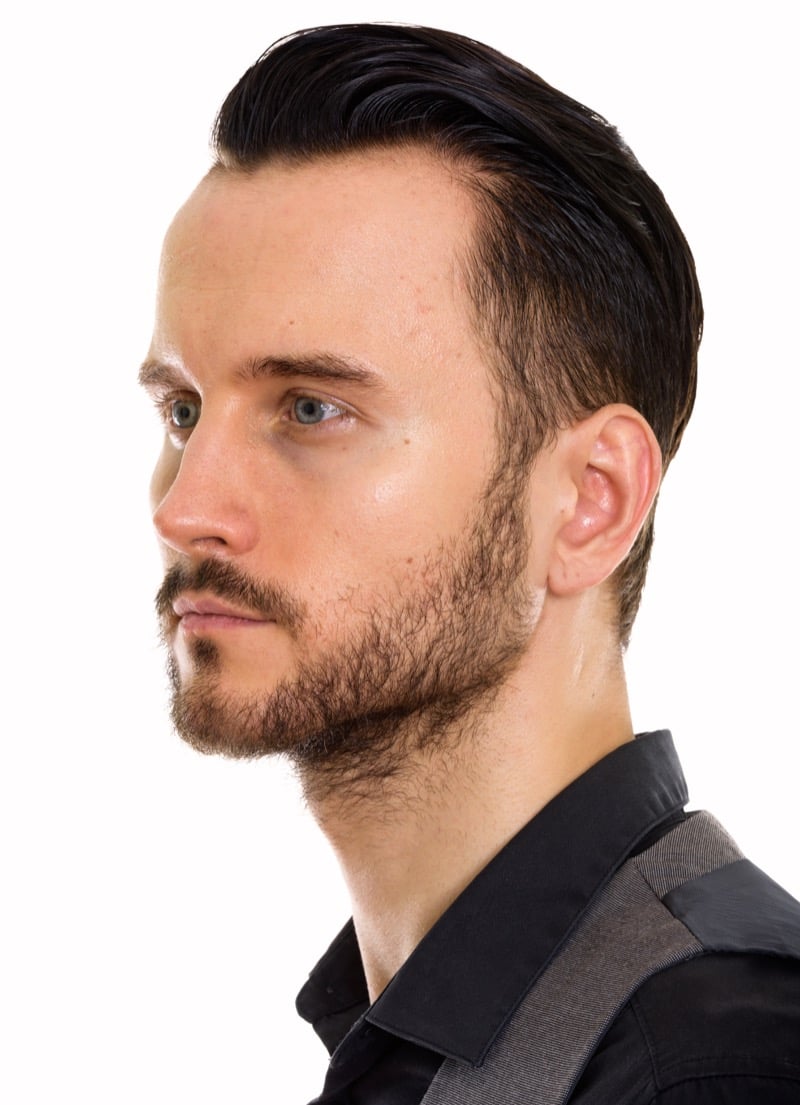
Combed straight back from the forehead, the slick back exposes the hairline and carries length toward the crown. The front needs enough length to bend back, particularly where it naturally grows forward. Pomade or gel can hold the comb lines together, with the product's finish determining the amount of shine.
Taper Fade
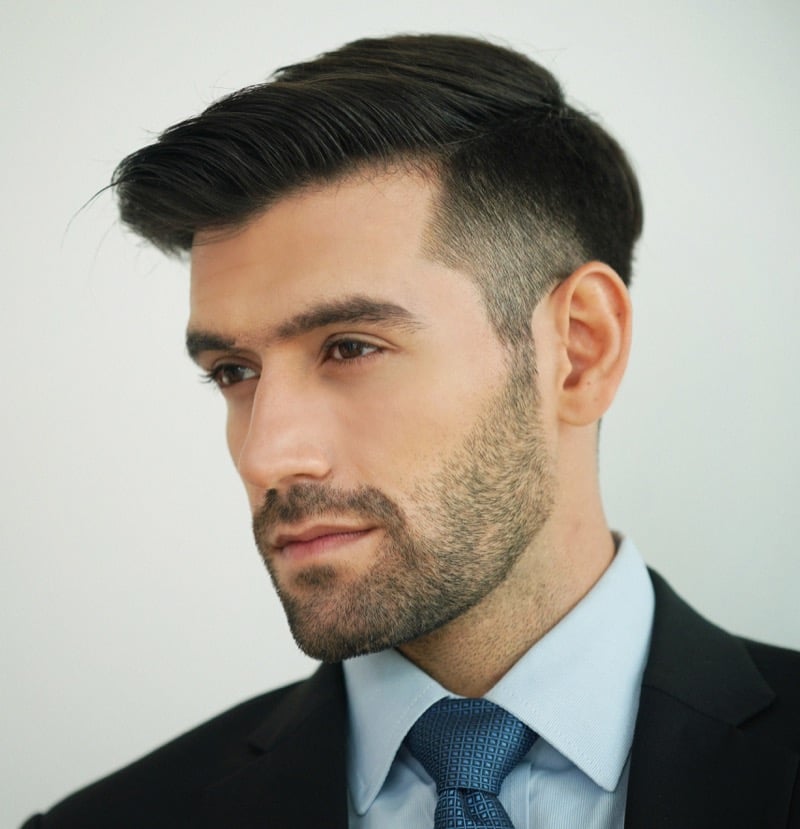
A taper fade takes the hair very short at the sideburns and nape, preserving more length higher on the sides. Skin may show at the lowest edges, but a skin finish is optional. A low taper fade keeps that close graduation near the perimeter beneath a side part or textured crop.
Banker Haircut
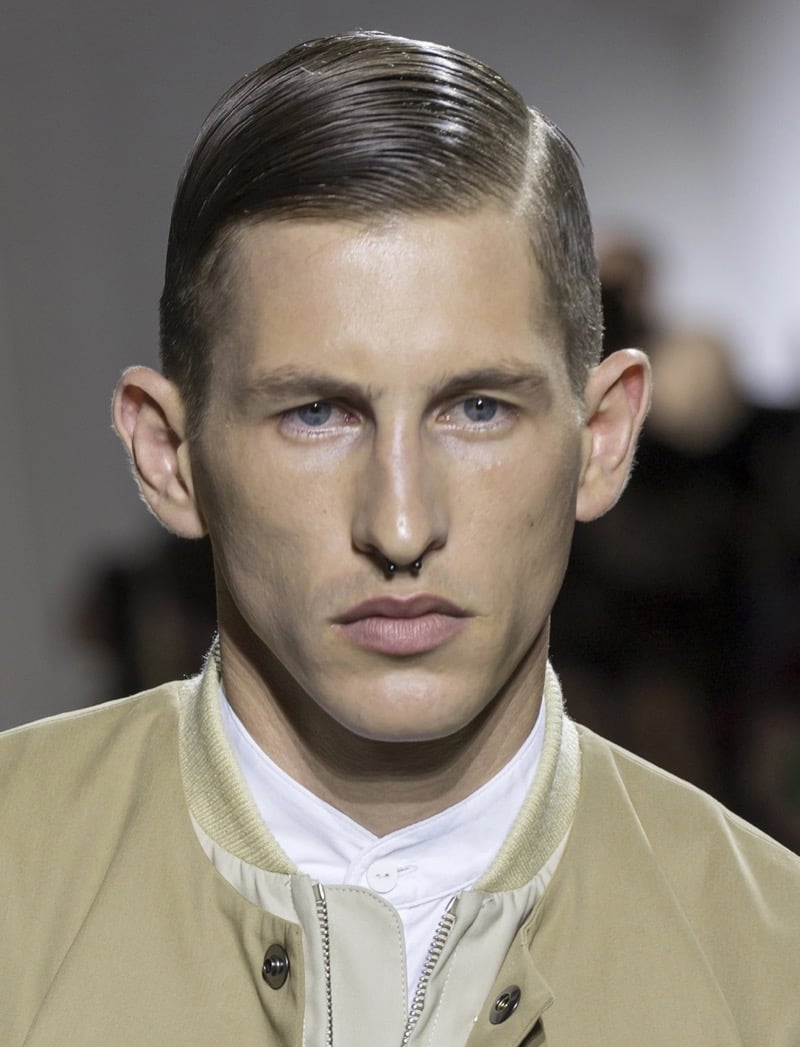
The banker haircut combs a longer top flat across a sharp side part, with short hair at the back and sides. A high-shine finish emphasizes the comb lines and keeps the profile close to the scalp. Its flat, glossy finish distinguishes it from the softer business and executive cuts.
Textured Crop
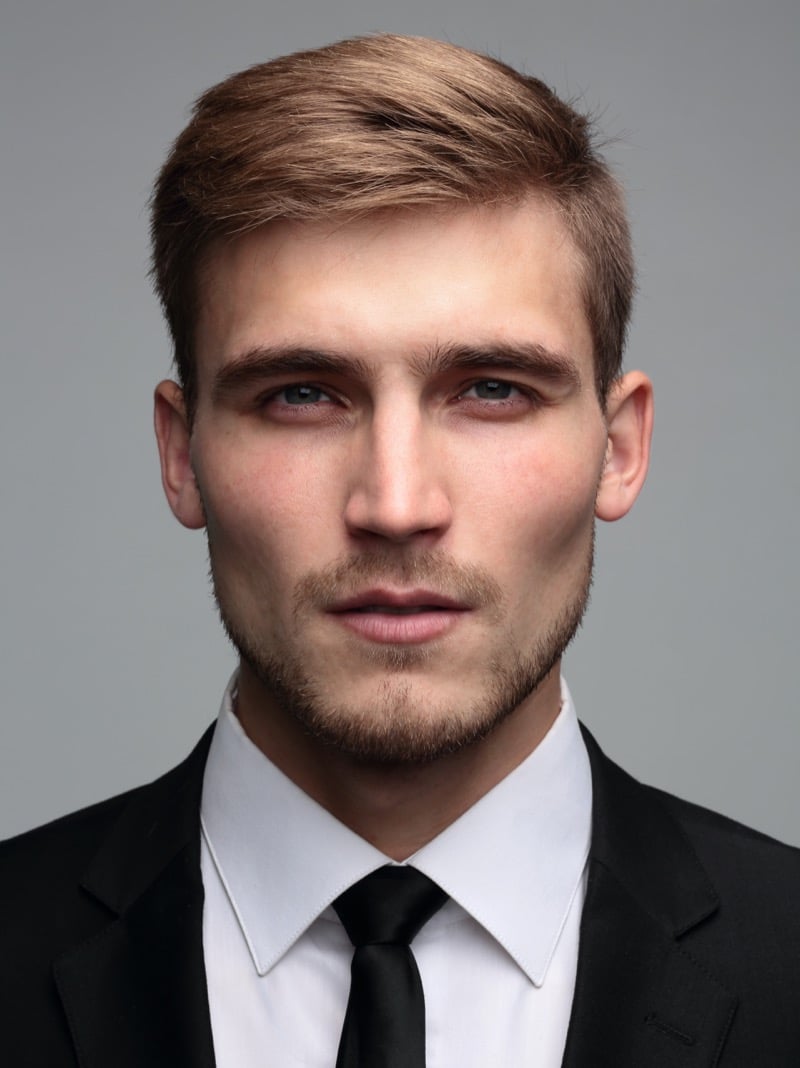
Short, uneven sections break up the surface of a textured crop, giving the top a choppier outline than a smooth side part. The sides sit closer, keeping the texture concentrated above the temples. Among short haircuts, it suits a casual or creative workplace that permits a less combed finish.
Undercut
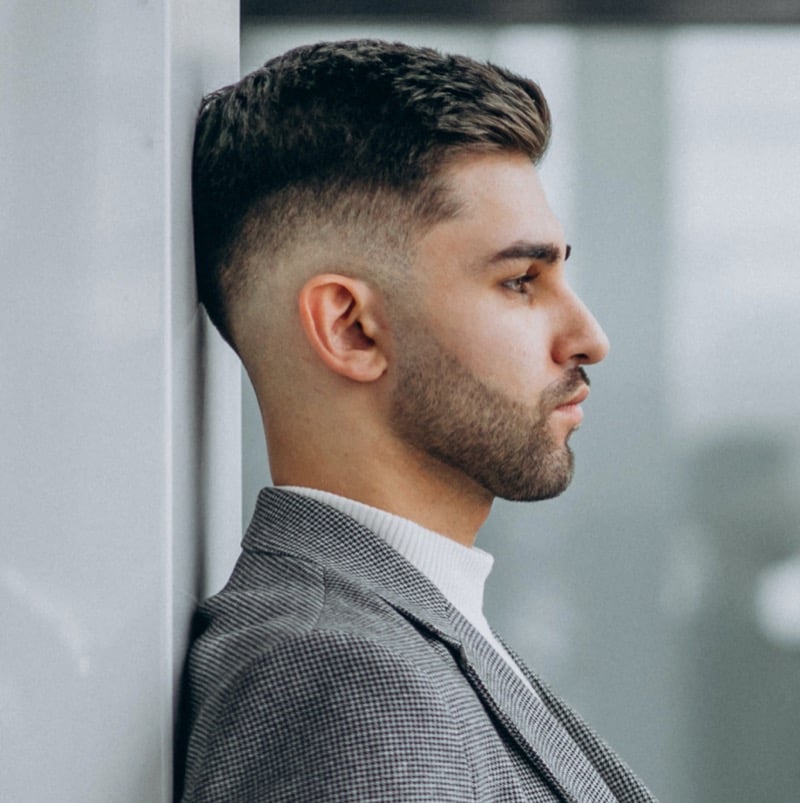
An abrupt change in length defines the undercut, separating the longer top from closely cut sides and back. Brushing the top backward exposes that junction; letting it fall sideways can cover part of it. The contrast remains even when the top is styled neatly, so the workplace dress code matters.
How to Choose a Professional Hairstyle
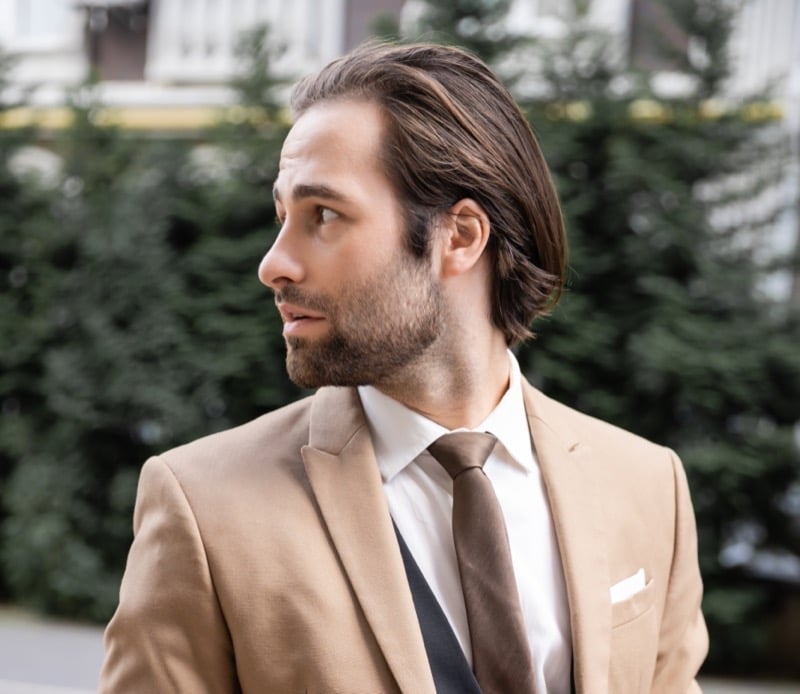
Start with the employer's actual grooming requirements and the demands of the role. A client-facing position may call for a low side part, Ivy League or business cut. A studio may allow a raised faux hawk or a disconnected undercut. Hair that must be secured for a task needs enough length to tie back reliably.
Density and growth direction affect the daily work. Dense hair can support a fuller pompadour but may need weight removed at the sides. Fine hair may sit closer in a crew cut or French crop, though cutting too short can expose more scalp. Curly hair can retain its coils above tapered edges; the fringe should be assessed dry to account for shrinkage.
A buzz cut needs little styling, while a pompadour or quiff may require drying the front into place. Set trim appointments around the feature that loses its shape first. Bare edges show regrowth sooner than a longer taper, and a fringe may reach the eyebrows before the sides need attention.





