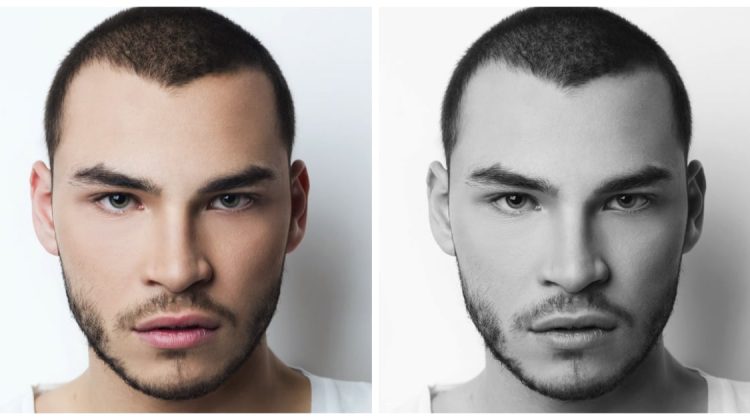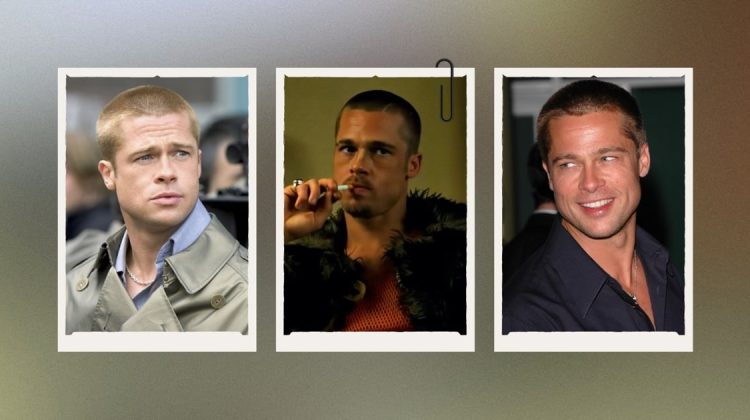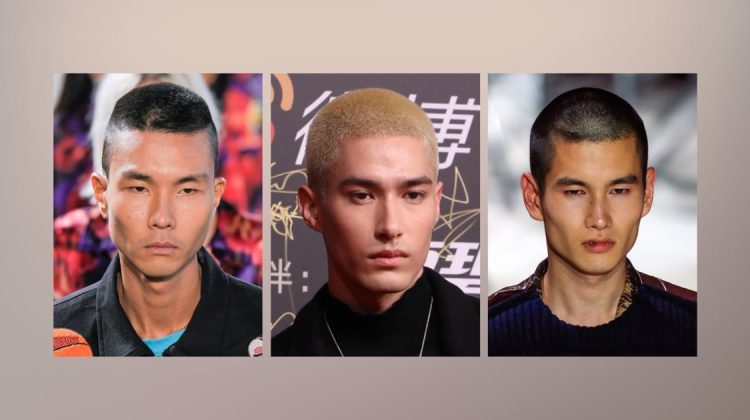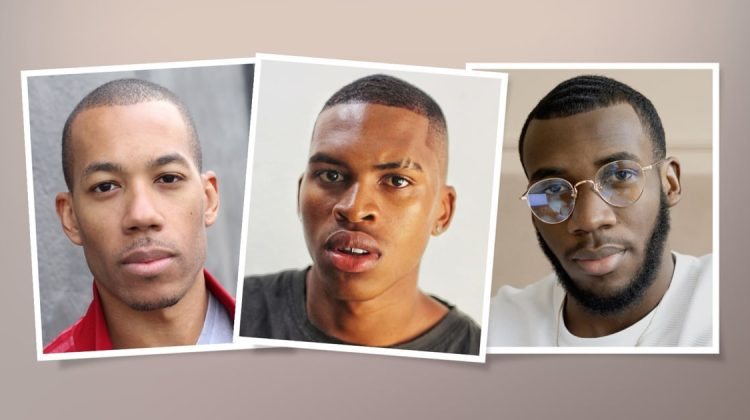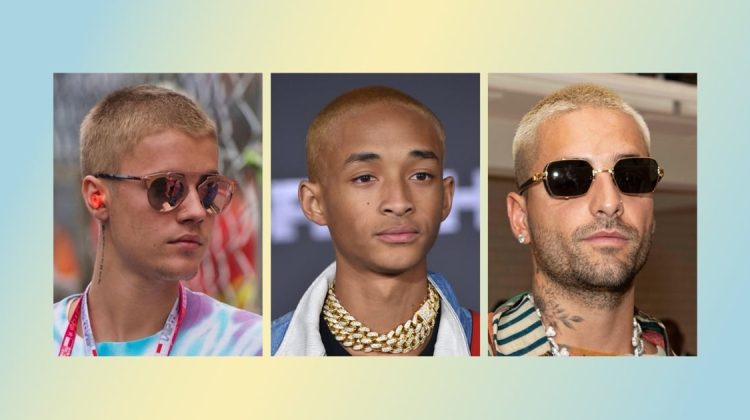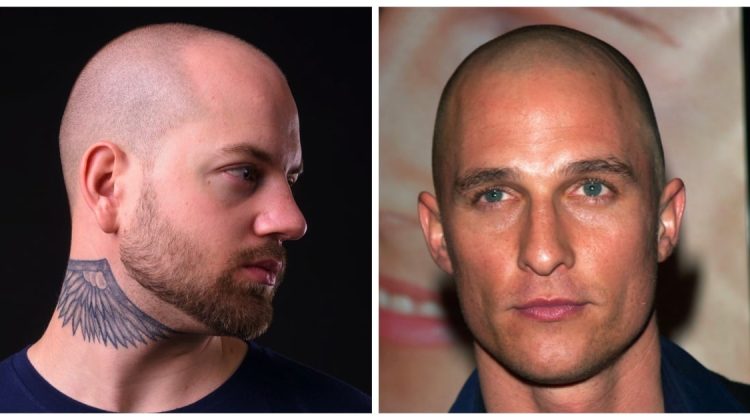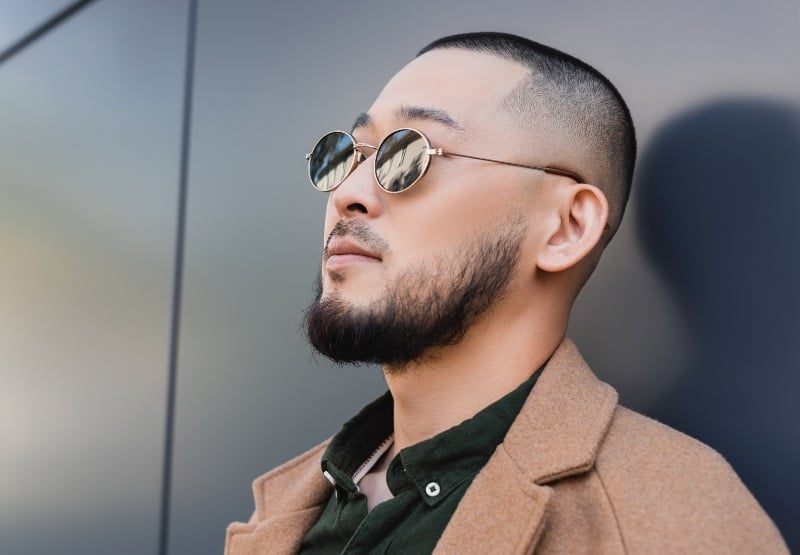
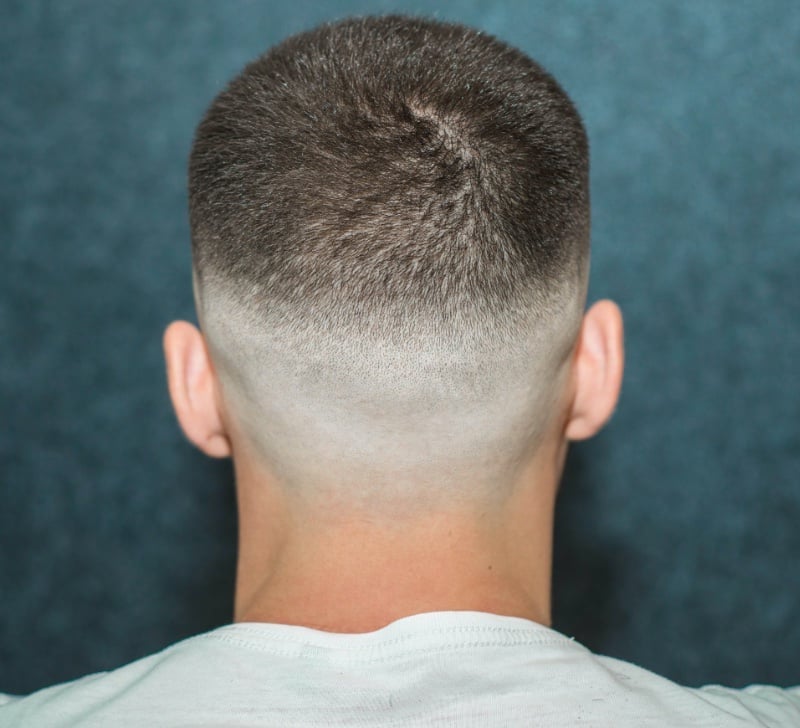
A buzz cut fade keeps the top clipped short while the sides and back graduate to shorter lengths, sometimes all the way to skin. A classic buzz cut uses one guard throughout. Fading the sides changes its silhouette.
A low fade leaves much of the sides intact. Take the blend higher and shave it to skin, and the cut becomes more graphic, with the short top standing apart.
What Is a Buzz Cut Fade?
The barber establishes the top length, generally with a #1 to #4 guard, then works through shorter guards along the sides and back. Lever adjustments soften the transitions. A trimmer or foil shaver can finish the shortest section before the edges around the ears and neckline are detailed.
Three choices shape the cut:
- Height. A low fade starts just above the ears, a mid fade around the temples and a high fade near the top of the sides.
- Finish. A skin fade, also called a bald fade, goes down to bare skin. A fade can also stop at a short guard for a softer result.
- Shape. A taper only shortens the sideburns and neckline. A drop fade curves down behind the ear, and a burst fade arcs around the ear and leaves more length at the back.
Buzz Cut vs. Fade
The terms describe different parts of a haircut. A buzz cut refers to the closely clipped top; a fade describes the transition along the sides and back. Keep one guard throughout for a buzz cut with no fade, or combine both techniques for a buzz cut fade.
Buzz Cut Fade Haircuts
Classic Buzz Cut Fade
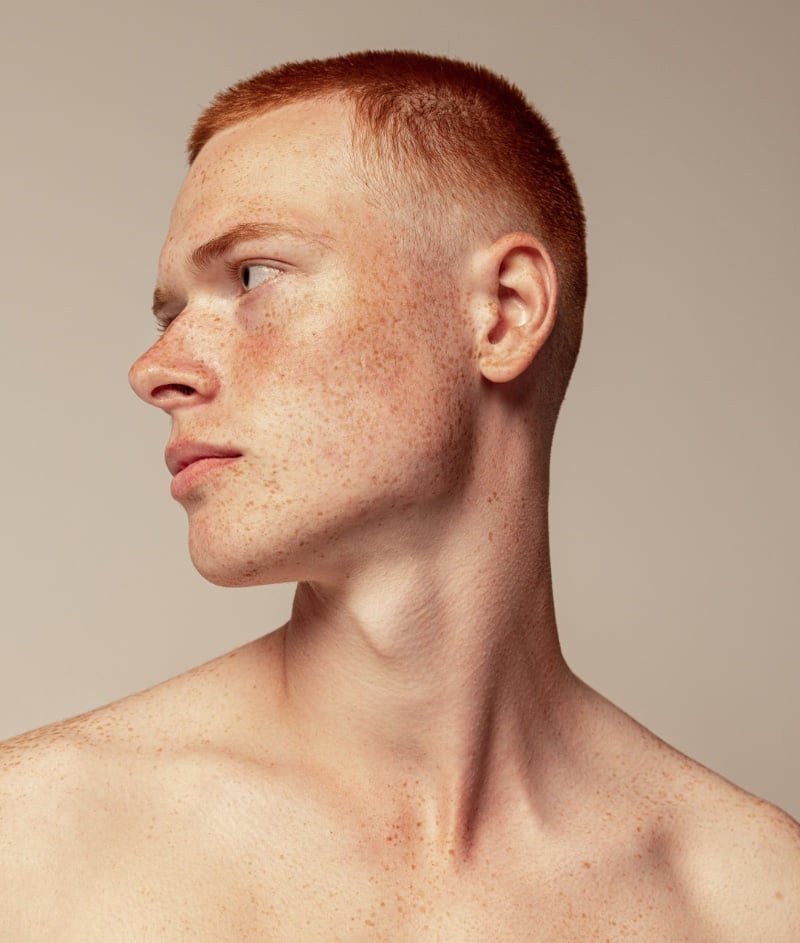
With a #2 or #3 on top and a modest graduation at the sides, the classic buzz cut fade retains the uniform look of a traditional buzz. The slight change in length is most apparent around the temples and neckline.
Buzz Cut High Fade
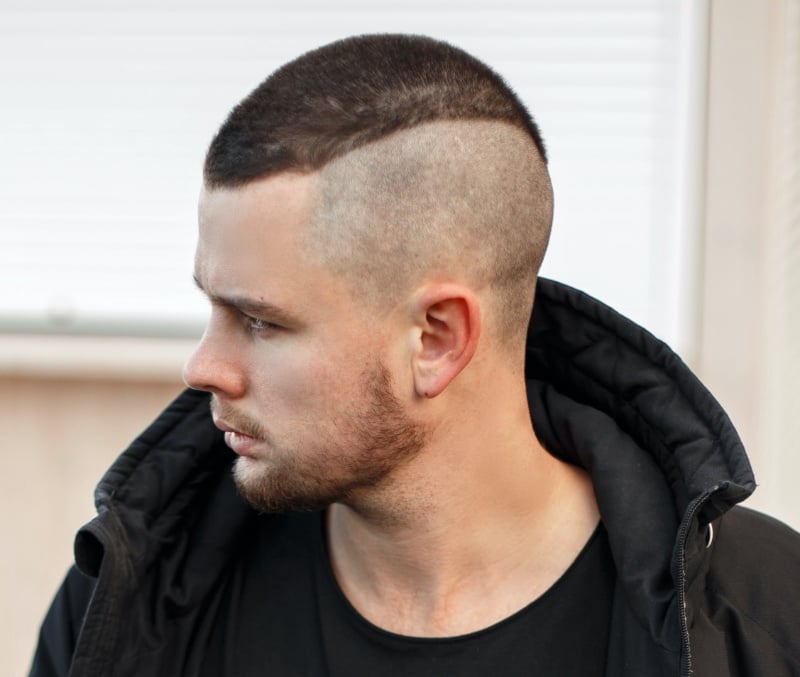
A high fade removes most of the weight from the sides, drawing the eye to the short top and the outline of the forehead. A defined line-up emphasizes the geometry. See the high fade for more.
Low Fade Buzz Cut

The blend stays close to the ears and neckline, leaving the upper sides relatively full. A low fade buzz cut changes the outline of a classic buzz without exposing much scalp.
Ask for a low transition that remains below the temples, along with the guard number for the top. See the low fade for more.
Mid Fade Buzz Cut
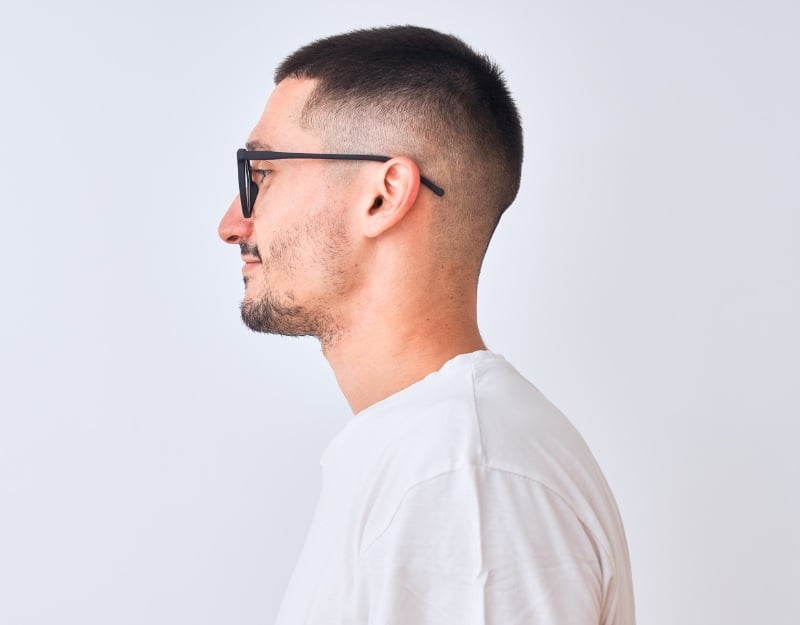
Starting near the temples, a mid fade buzz cut exposes more of the sides than a low fade while retaining some weight above the ears. It is a middle option in both height and contrast. See the mid fade for more.
Skin Fade Buzz Cut
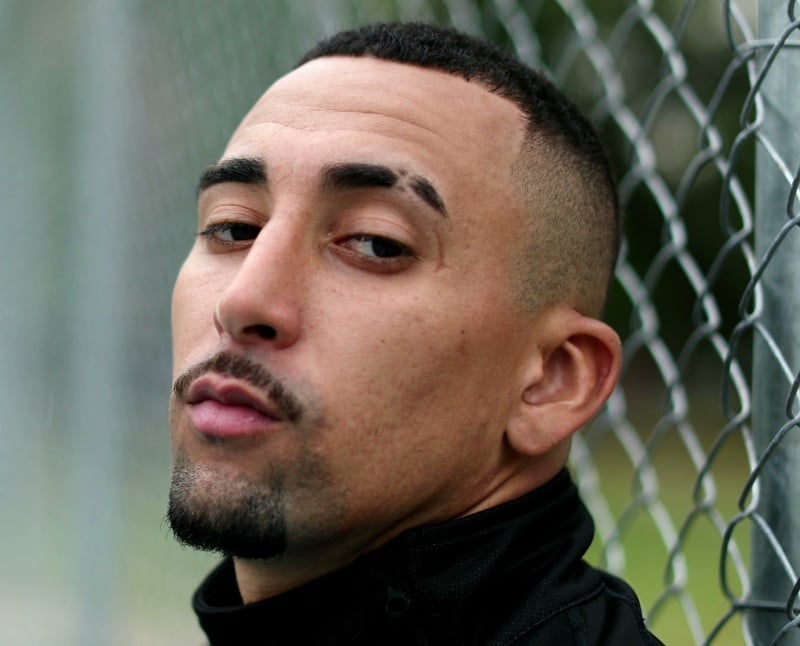
Shaving the base of the fade with a foil shaver or razor produces a skin fade buzz cut. The bare section gives the shortest guard on top greater definition, although stubble becomes visible quickly. See the skin fade for more.
Long Buzz Cut Fade
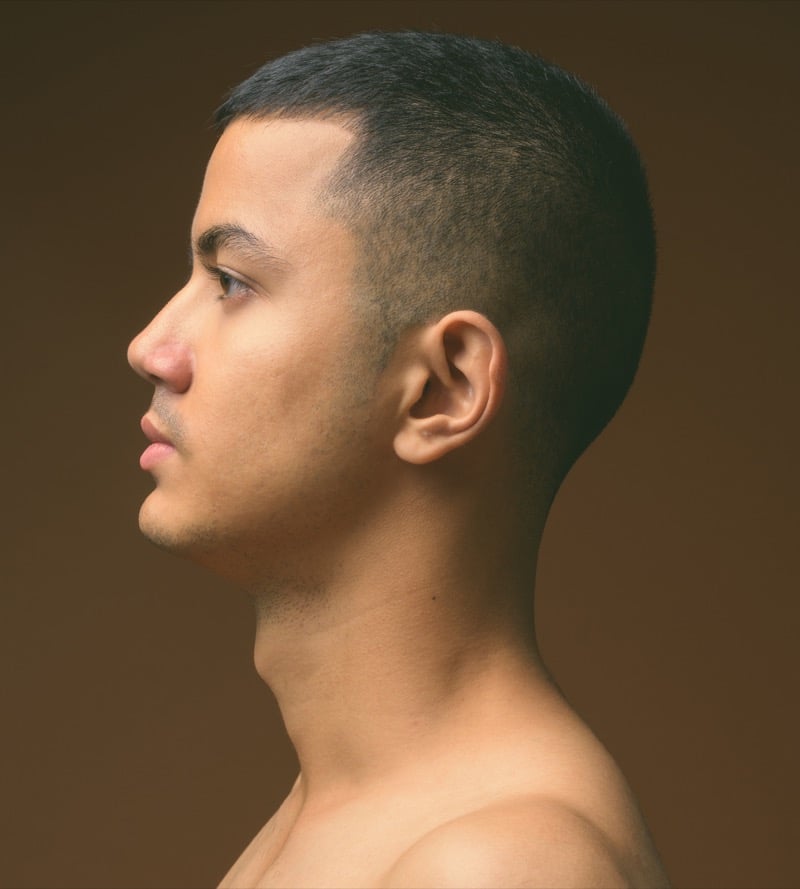
A #4 to #6 guard leaves enough hair on top to show its natural growth pattern. Against faded sides, that additional length reads as a short crop while retaining the simplicity of a buzz cut.
Bald Fade Buzz Cut
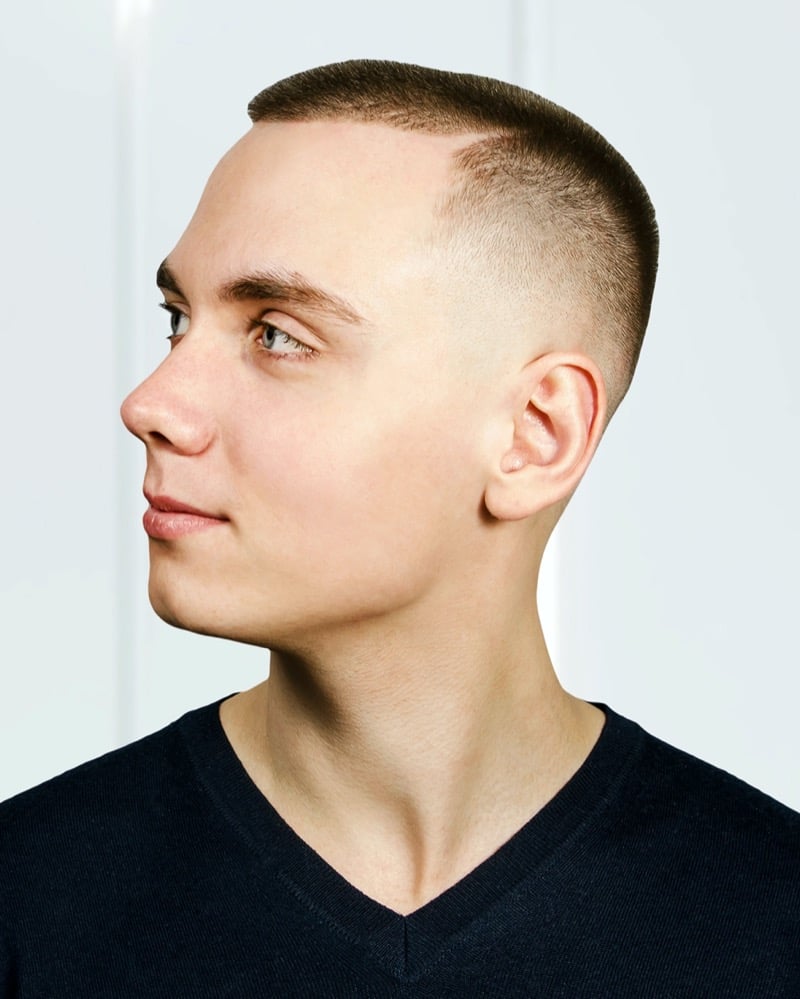
Bald fade and skin fade describe the same bare-skin finish. In this high version, the shaved section extends farther up the head, emphasizing its contours.
A hard part, shaved as a narrow line where the hair would naturally separate, adds another defined edge.
Military Buzz Cut Fade

The military buzz cut fade pairs a #1 or #2 top with closely faded sides. Its short, even length requires little attention between cuts, though the fade itself needs regular upkeep.
Short Buzz Cut Fade
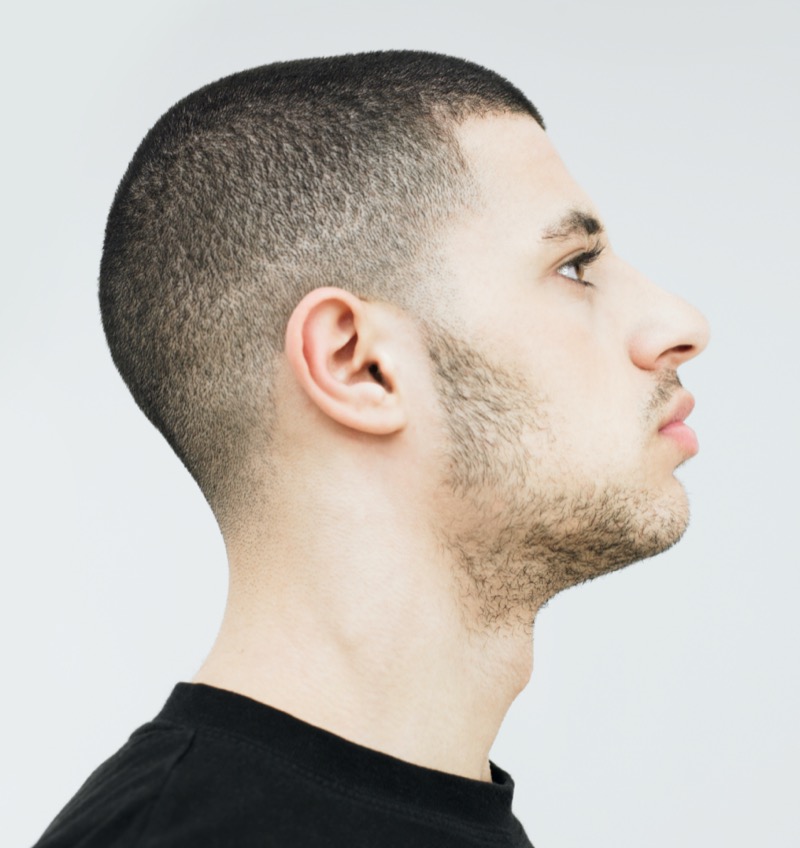
With a #1 guard or shorter on top, the short buzz cut fade has little length to contrast against the sides. The graduation is most noticeable around the temples and neckline.
Textured Buzz Cut Fade
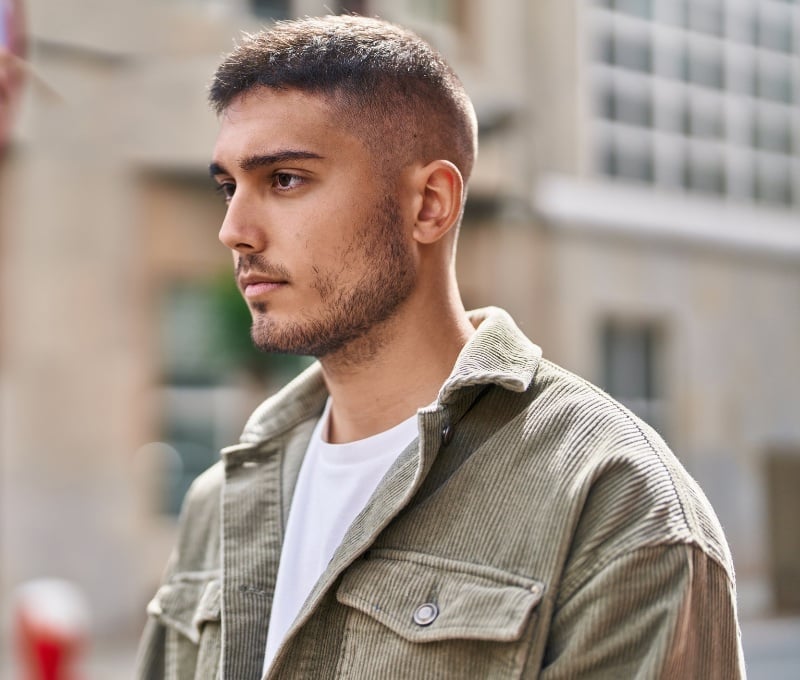
A little extra length allows the barber to point-cut the top for an uneven surface. Thick or wavy hair shows the effect particularly well, and a touch of matte clay can separate the strands.
Buzz Cut Taper
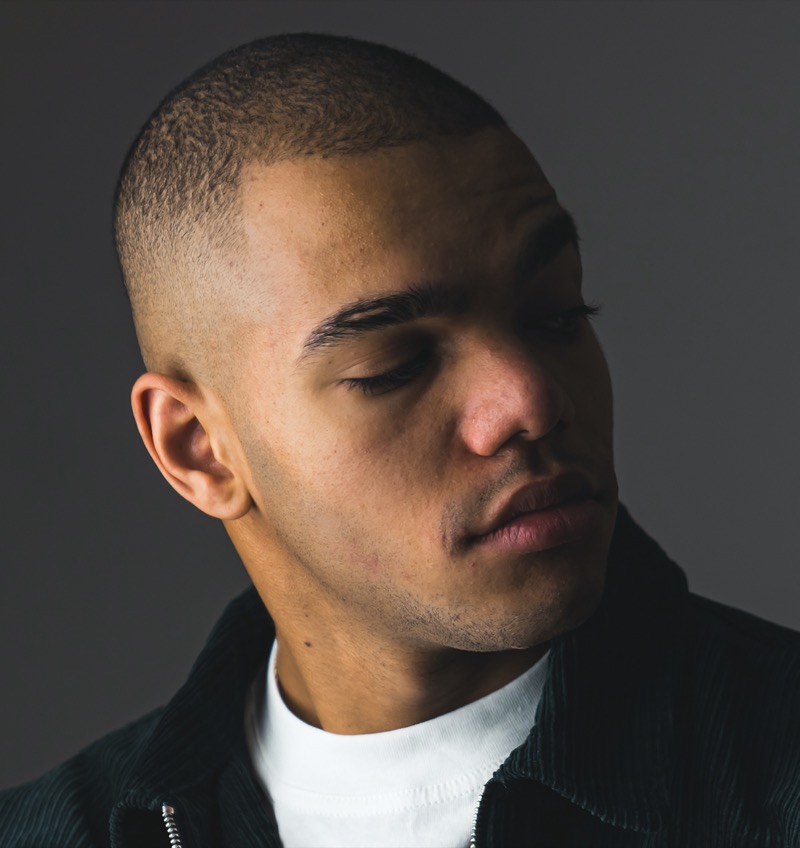
A buzz cut taper concentrates the shortening around the sideburns and neckline, leaving the rest of the sides closer to the top length. The change is localized, unlike a fade that travels across the sides and back.
The taper may stay at the hairline or rise toward the temples. More on the cut in the low taper fade guide.
Buzz Cut Drop Fade
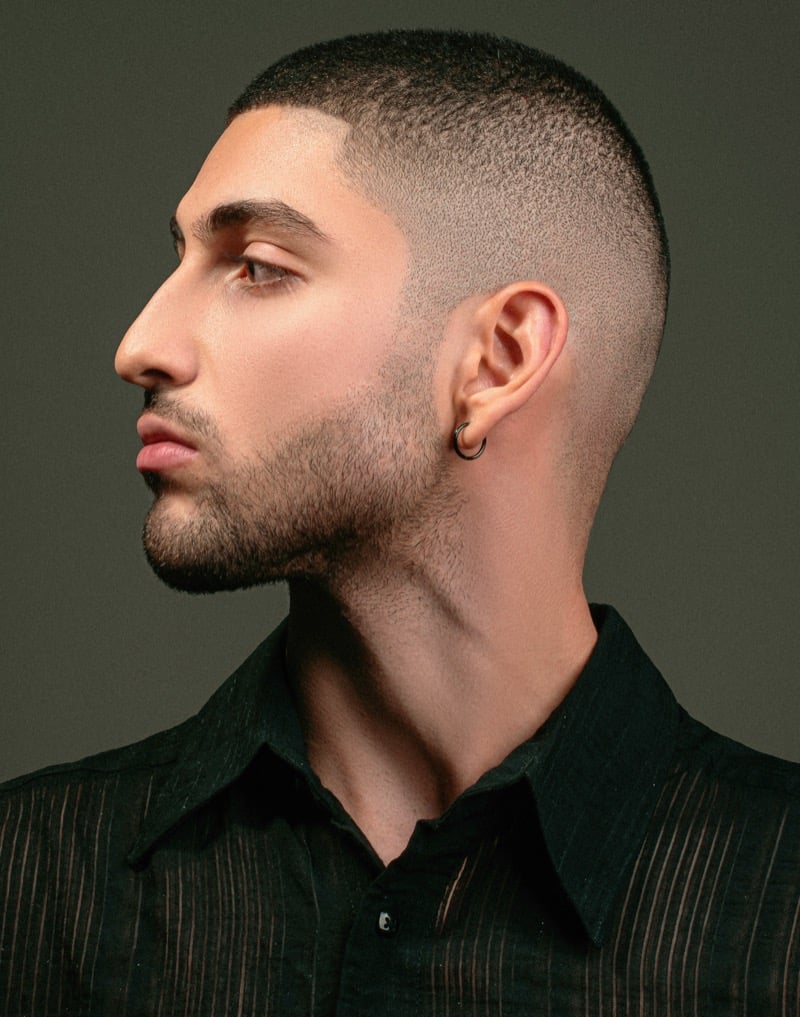
Behind the ear, the fade curves toward the nape instead of following a level line around the head. That downward sweep is especially visible in profile. See the drop fade for more.
Celebrities With a Buzz Cut Fade
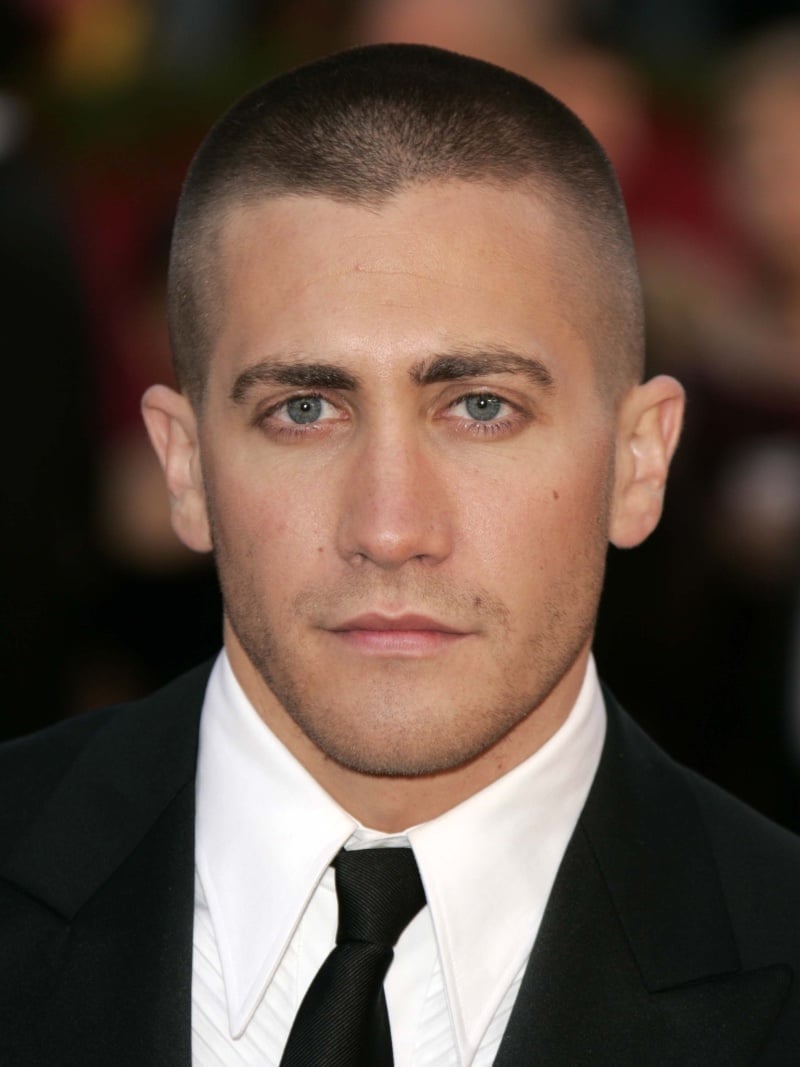
Jake Gyllenhaal has worn a buzz cut fade with a little length left on top. The gradual shortening at the sides gives the close crop a softer outline.
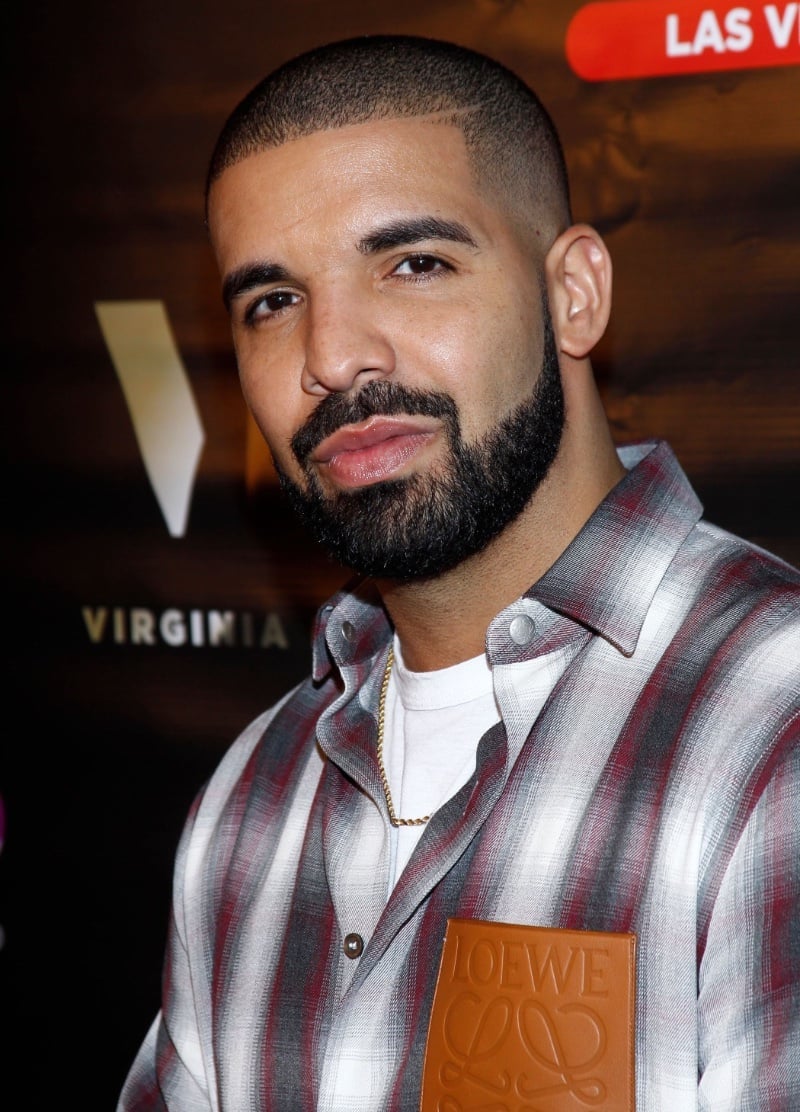
Drake pairs his short top and faded sides with a shaved part, precise hairline and full beard. The sideburns provide a transition between the haircut and facial hair.

Tom Hardy has worn a longer buzz with faded sides and a soft part, frequently alongside stubble. David Beckham and Zayn Malik have also worn variations of the cut.
How to Maintain a Buzz Cut Fade
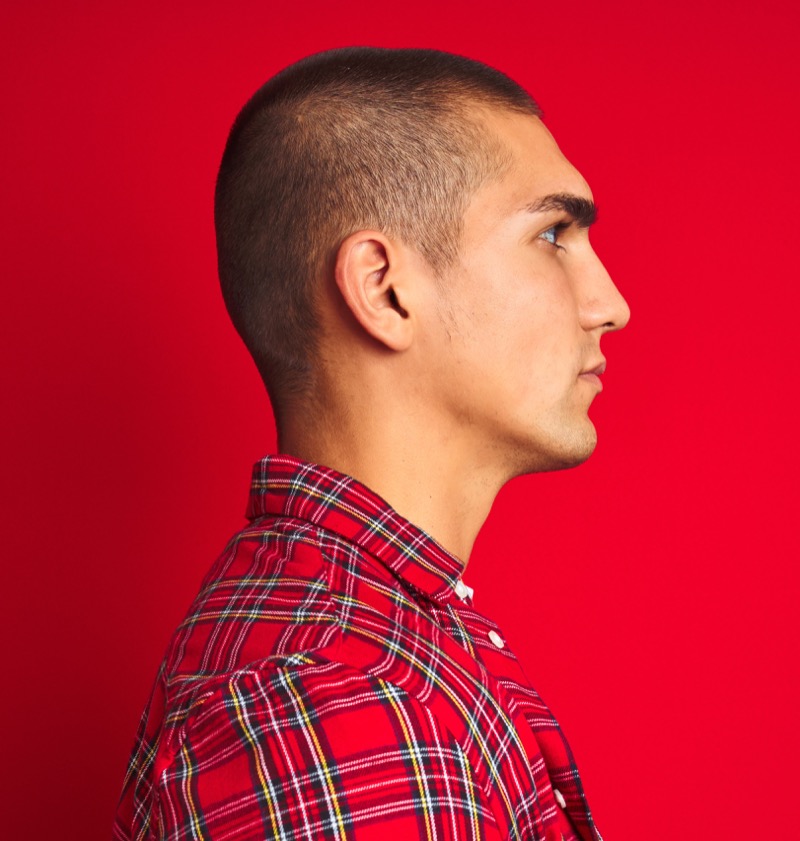
Plan on a barber visit every two to four weeks, or nearer two weeks if the fade goes to skin. The top can be clipped at home between appointments, though keeping the side blend even takes more practice.
Short tops need little product. Matte clay or pomade can separate the hair when a longer guard is used. Regular washing with a gentle shampoo keeps the exposed scalp clean.
Exposed scalp needs sun protection. Sunscreen or a hat helps prevent burning, while a light moisturizer can relieve dryness.
How to Ask for a Buzz Cut Fade

- Give the guard number for the top, such as "a #2 on top."
- Say where the fade should start: low, mid or high.
- Choose the finish: skin, or a short guard for a softer fade.
- Mention any shape, such as a taper, drop or burst fade.
- Ask for a line-up if you want sharp edges at the forehead and temples.
- Bring a reference photo.