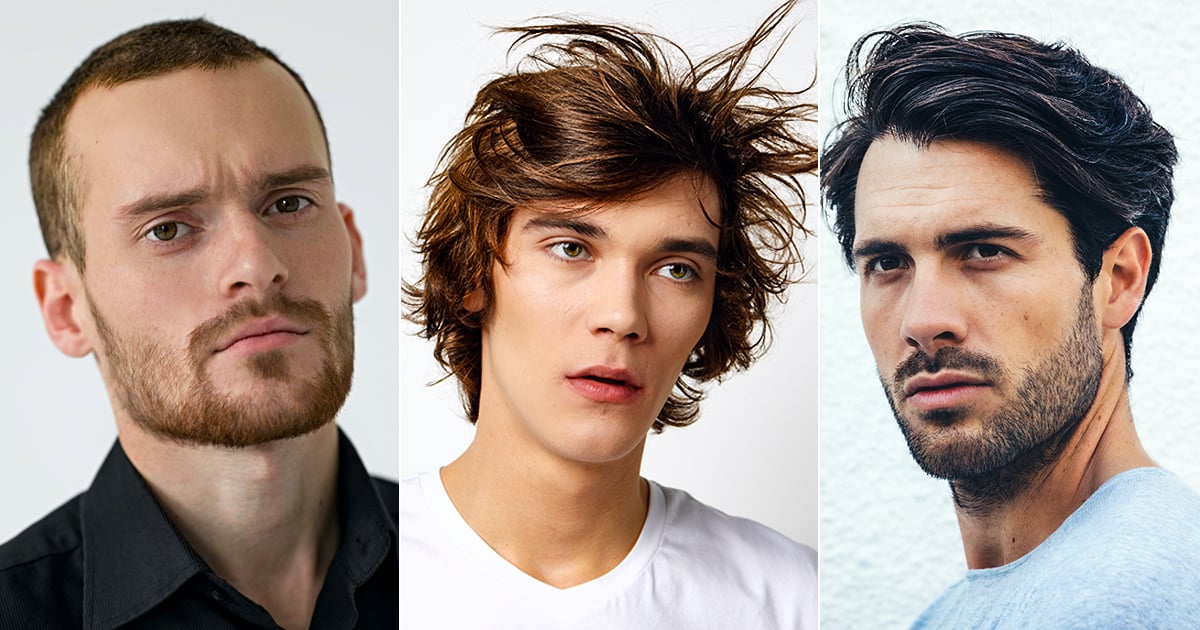
A haircut changes the proportions of the face. A high front lengthens the profile, a forward fringe covers part of the forehead, and closely clipped sides expose the temples. Choosing among men's haircuts starts with how those shapes sit on the individual.
Short crops keep the fringe close to the brow. Medium lengths can sweep back, part through the center, or fall to one side. Longer hair brings enough length for knots, ponytails, and braids. Hair density, growth direction, and the time available for styling help narrow the choice.
A reference photo is useful when its texture and density resemble the hair being cut. The barber can then adjust the length and outline to suit the hairline and the way the hair grows.
How to Choose a Men's Haircut
Face Shape
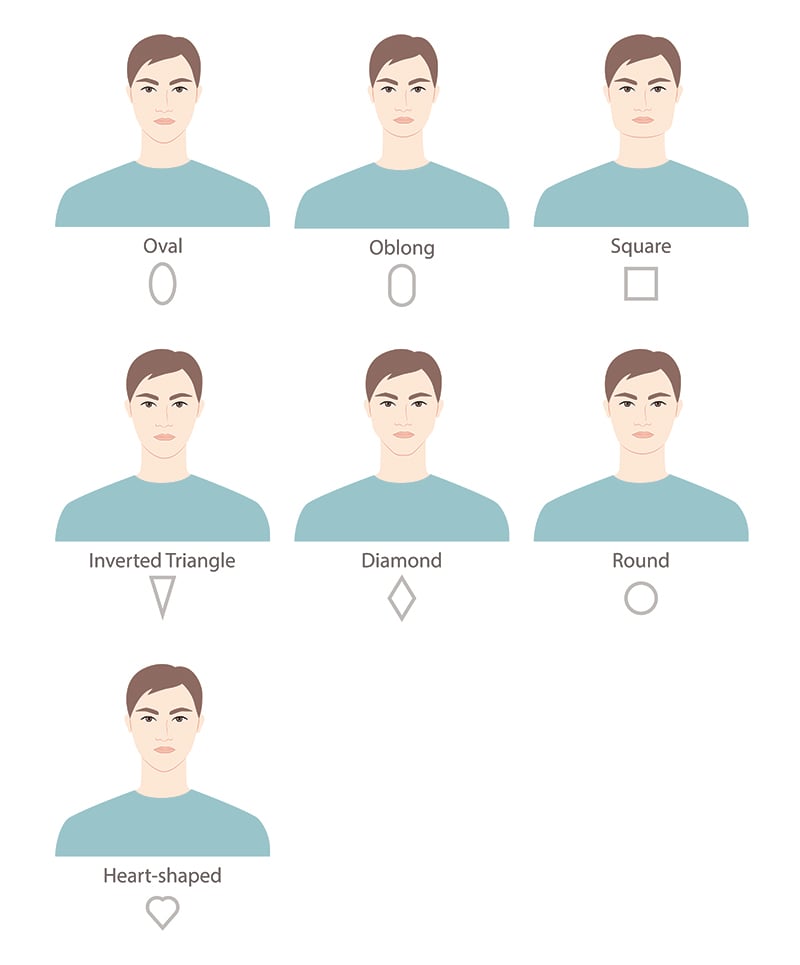
Height on top tends to make a face look longer, while fullness at the sides makes it look wider. A quiff emphasizes the vertical line; a low fringe leaves less forehead exposed. Face shape is a starting point, alongside density, texture, and the hairline. More on face shapes for men.
Hair Type
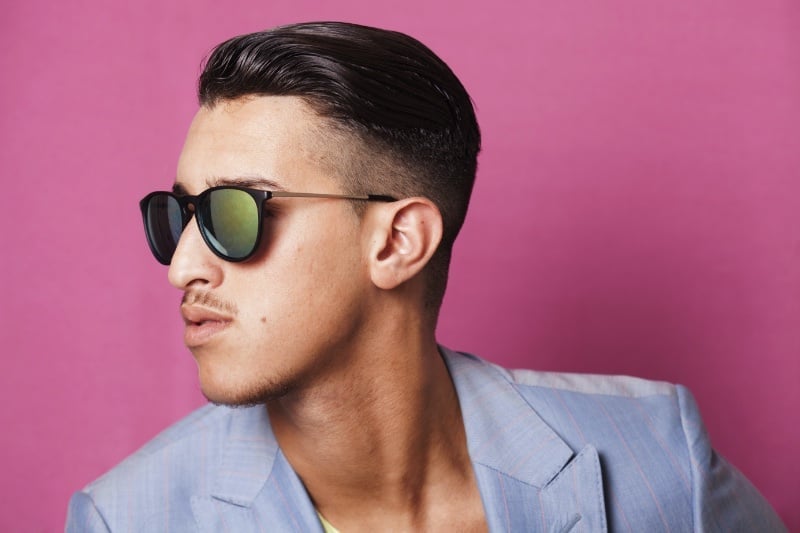
Straight hair reveals the edges of a fringe and the line of a part, though fine strands may need help holding lift. Waves bend through longer layers; curls and coils change the outline as they shrink after washing. Cutting decisions also depend on density, which can vary within any texture. More on haircuts for straight hair, wavy hair, haircuts for curly hair and thin hair.
Talking to the Barber
Bring a reference photo and specify the length to keep on top, how high the sides should be clipped, and the desired fringe. Standard guard lengths are approximately 3 mm for a number 1, 6 mm for a number 2, 10 mm for a number 3, and 13 mm for a number 4. Ask to see the proposed length before cutting. Mention cowlicks and the daily styling routine, especially if the cut needs to fall into place after air-drying.
Short Haircuts for Men
Short haircuts for men put the differences in fringe length and side treatment on display. An all-over buzz exposes the scalp evenly; a crop leaves a visible edge across the forehead. Even a little extra length at the front can make room for a part or a small sweep.
Buzz Cut
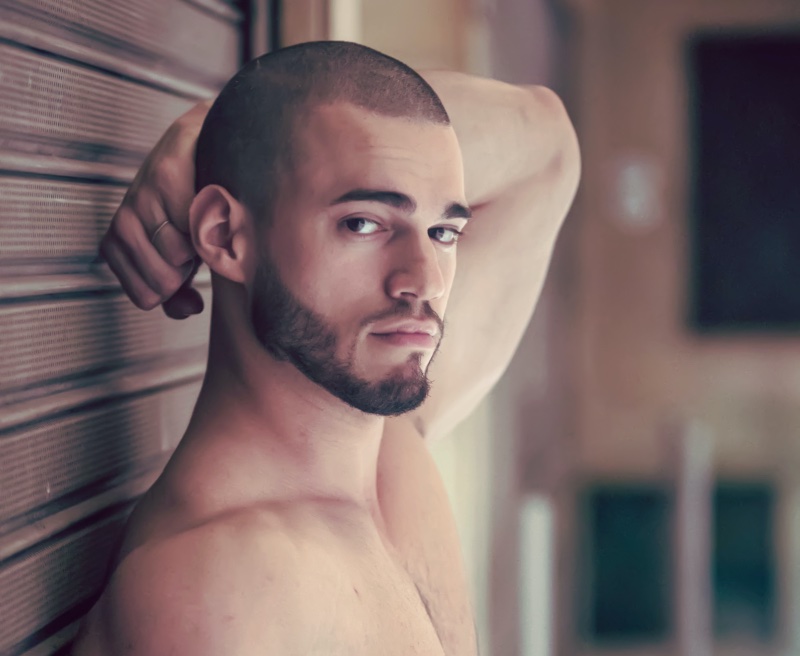
The buzz cut uses clippers to leave a short, even covering across the scalp. At a close length, the outline of the skull and the hairline become prominent. A longer guard leaves more coverage and reveals more of the hair's texture as it grows.
| The Cut | Details |
|---|---|
| Hair type | All hair types |
| Styling time | No daily styling required |
| Products | No styling product required. Protect exposed scalp from the sun |
| Ask for | An even clipper cut. A number 2 guard leaves about 6 mm, a number 1 about 3 mm, and a number 3 about 10 mm. Start longer if unsure |
Crew Cut with Tapered Sides

The crew cut leaves the front longer than the crown, creating a shallow slope across the top. Tapered sides narrow toward the ears and nape. The extra length at the forehead can stand slightly upright or sweep to one side, depending on growth direction.
| The Cut | Details |
|---|---|
| Hair type | Straight to wavy, with enough length at the front to stand or sweep aside |
| Styling time | About 2 minutes for daily styling, depending on technique and hair length |
| Products | A small amount of matte paste or light pomade to direct the front |
| Ask for | A crew cut with the front longer than the crown and sides tapering toward the ears and nape. Agree on the shortest guard before cutting |
French Crop
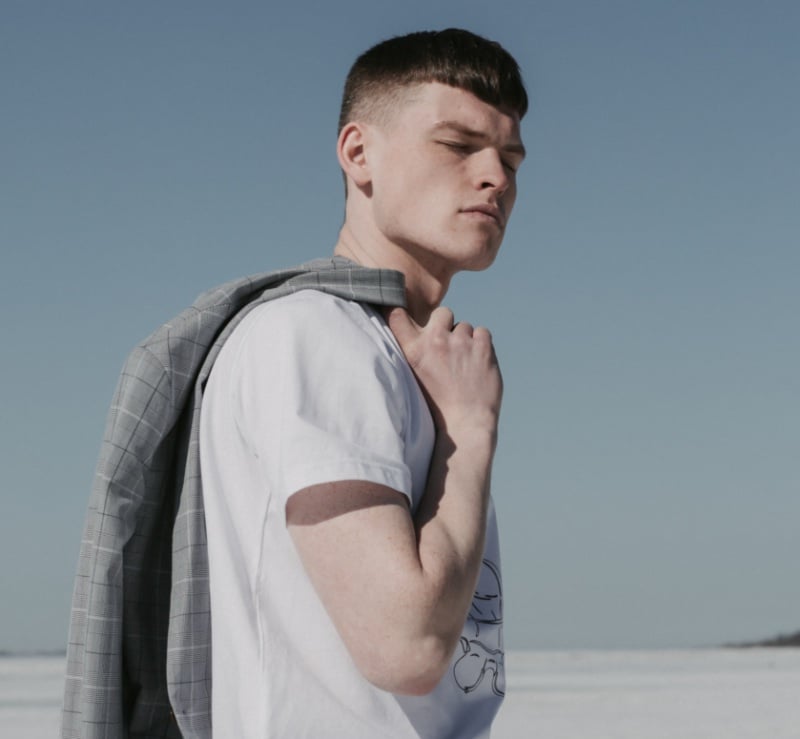
A short forward fringe defines the French crop. The back and sides sit close to the head, directing attention to the edge across the brow. That edge can be blunt or broken into small sections. Coverage at the hairline depends on how much density remains in the front.
| The Cut | Details |
|---|---|
| Hair type | Straight, wavy, or curly. Coverage depends on density at the front |
| Styling time | About 3 minutes for daily styling, depending on technique and hair length |
| Products | Matte clay or texturizing paste for hold and separation in the fringe |
| Ask for | A short crop directed forward, with a blunt or textured fringe and faded or tapered sides. Keep enough weight in finer areas |
High & Tight
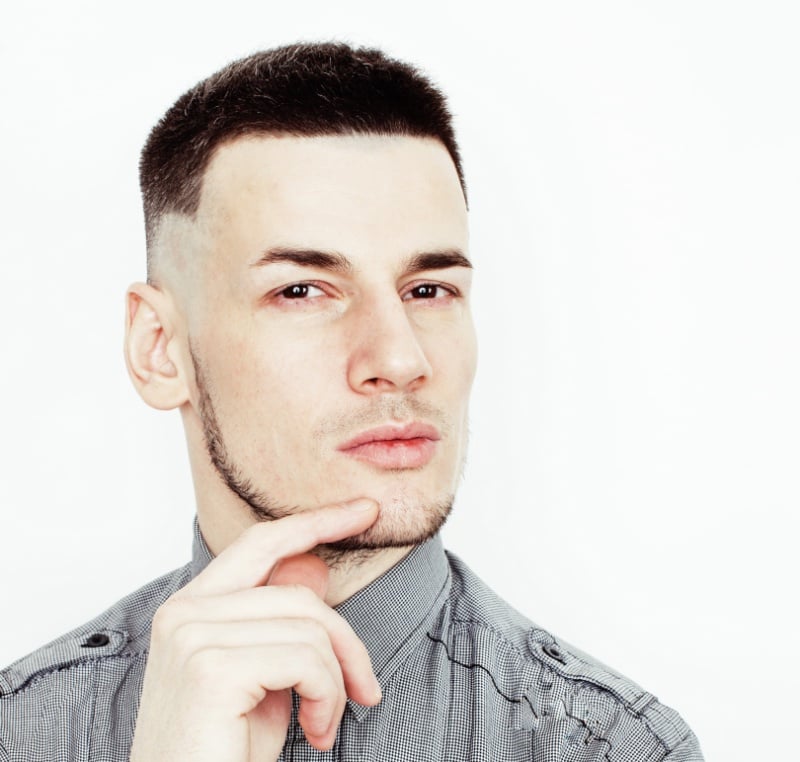
Closely clipped sides rise high toward the top in the high and tight, leaving a compact patch of longer hair above. The narrow band of transition exposes the temples and makes the upper outline prominent. Keeping the top short preserves the cut's compact proportions.
| The Cut | Details |
|---|---|
| Hair type | Straight to wavy |
| Styling time | About 2 minutes for daily styling, depending on technique and hair length |
| Products | Light pomade or styling cream to shape the top |
| Ask for | A high and tight with very short sides, a compact top, and a narrow transition near the upper sides. Specify whether the shortest point should reach skin |
Caesar Cut
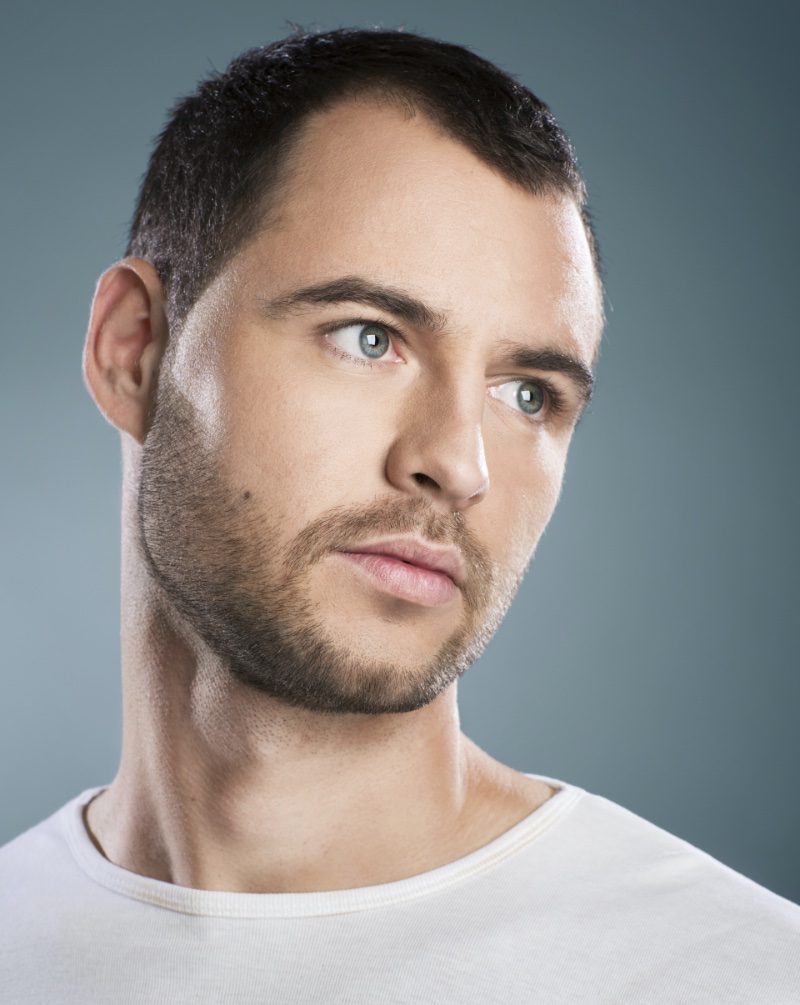
The Caesar cut sends a short, horizontal fringe forward from the top. Similar lengths through the crown and front give it a compact outline, though the sides can be tapered or faded. A fringe may cover some recession when enough hair remains behind it. More on haircuts for a receding hairline.
| The Cut | Details |
|---|---|
| Hair type | Straight to wavy, with enough front density for a short fringe |
| Styling time | About 2 minutes for daily styling, depending on technique and hair length |
| Products | A small amount of matte paste to direct the fringe |
| Ask for | A short Caesar cut with a horizontal forward fringe. Agree on top length and whether the sides should be tapered or faded |
Textured Crop
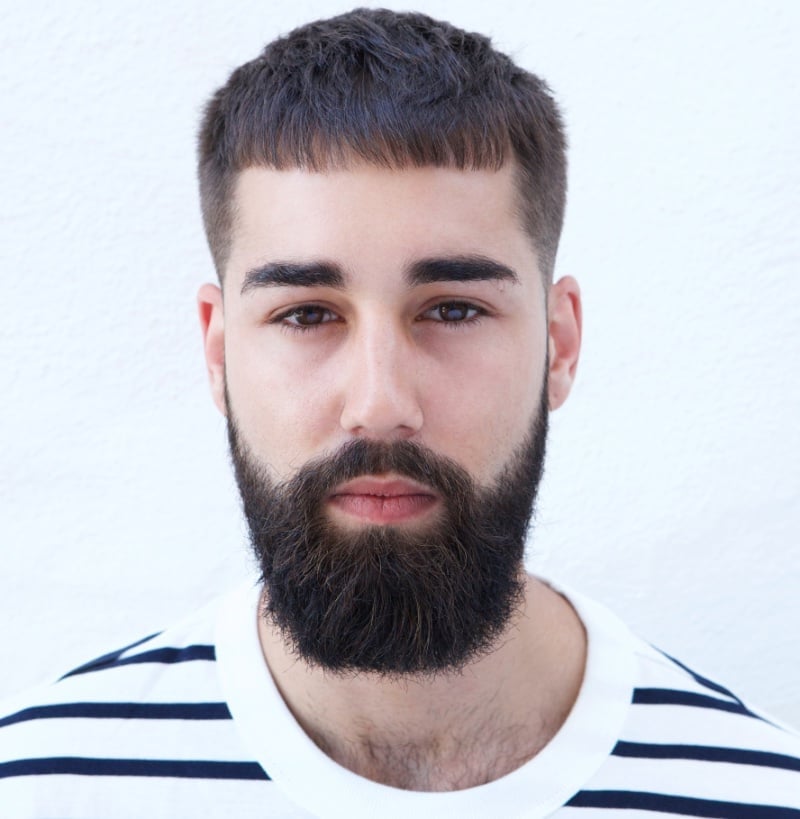
Point-cut ends give the textured crop its broken surface. Small sections separate across the top, and the fringe can fall in uneven pieces across the brow. The amount of texturing should reflect density, since removing too much weight can expose the scalp in finer hair.
| The Cut | Details |
|---|---|
| Hair type | Straight to wavy. Medium density |
| Styling time | About 3 to 5 minutes for daily styling, depending on technique and hair length |
| Products | Matte clay or texturizing powder for separation and hold |
| Ask for | A crop with point-cut ends and faded or tapered sides. Match the amount of texturing to density, using a reference photo for the fringe |
Hard Part
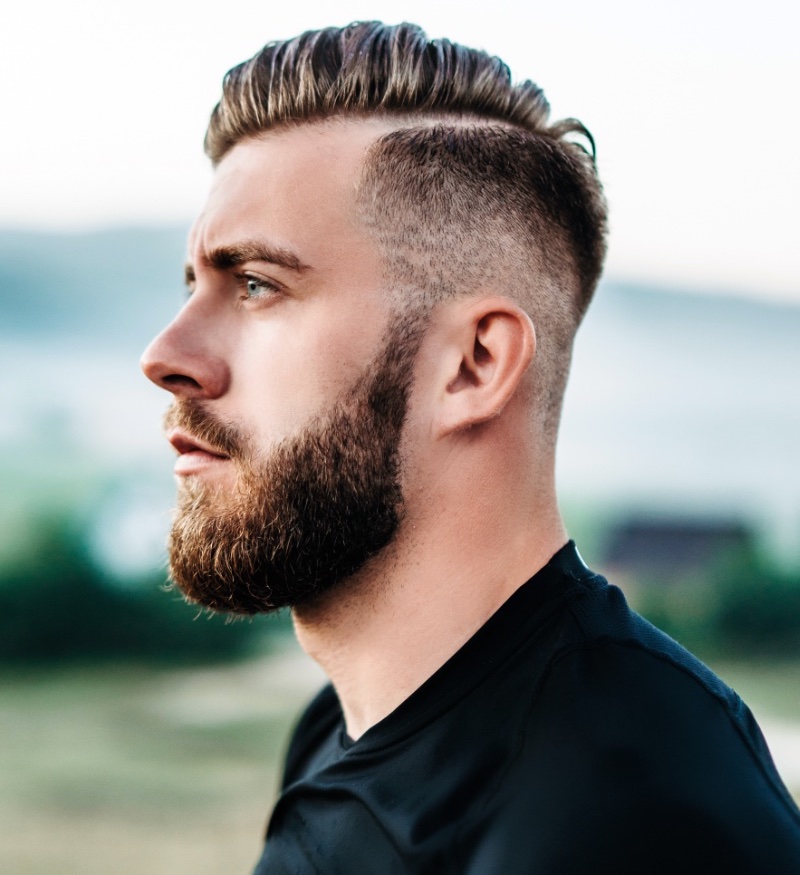
A shaved line marks the hard part, separating the longer top from the shorter side. It can sharpen a side part or comb over, but the line needs its own upkeep as stubble fills in. Its placement should follow the chosen parting so the top falls to the intended side.
| The Cut | Details |
|---|---|
| Hair type | Straight to wavy. Medium to thick density |
| Styling time | About 5 minutes for daily styling, depending on technique and hair length |
| Products | Pomade for a slick finish, or matte clay for a more textured look |
| Ask for | A narrow shaved line along the chosen parting. Agree on placement and width, and book a touch-up when the line becomes less distinct |
Ivy League Cut

The Ivy League leaves enough length at the front of a crew cut for a small side part. The crown stays shorter, keeping the profile close behind the lifted or swept fringe. Scissor-tapered sides give it a softer edge suitable for professional settings. More classic haircuts.
| The Cut | Details |
|---|---|
| Hair type | Straight to wavy |
| Styling time | About 3 to 5 minutes for daily styling, depending on technique and hair length |
| Products | Light pomade or grooming cream for a natural, side-parted hold |
| Ask for | An Ivy League with enough front length for a side part, a shorter crown, and tapered sides. Agree on length using a reference photo |
Medium-Length Hairstyles for Men
Medium-length hairstyles for men leave enough hair to bend, part, and sweep away from the forehead. Layers determine where that length settles. A cut designed to fall around the ears needs a different outline from a quiff lifted above the brow.
Bro Flow

The bro flow sweeps back from the forehead before bending around the ears. Layers help the sides turn outward or tuck back as the hair settles. Natural wave makes those bends more visible, while straighter hair may need drying in the desired direction. Longer versions become the flow haircut.
| The Cut | Details |
|---|---|
| Hair type | Wavy to straight, with medium to thick density |
| Styling time | About 2 to 3 minutes for daily styling, depending on technique and hair length |
| Products | Sea salt spray for texture and body. Light cream or mousse for hold on straight hair |
| Ask for | Enough length to sweep back around the ears, with layers that follow the growth pattern. Keep sufficient weight for the sides to bend back |
Curtains & Middle Part
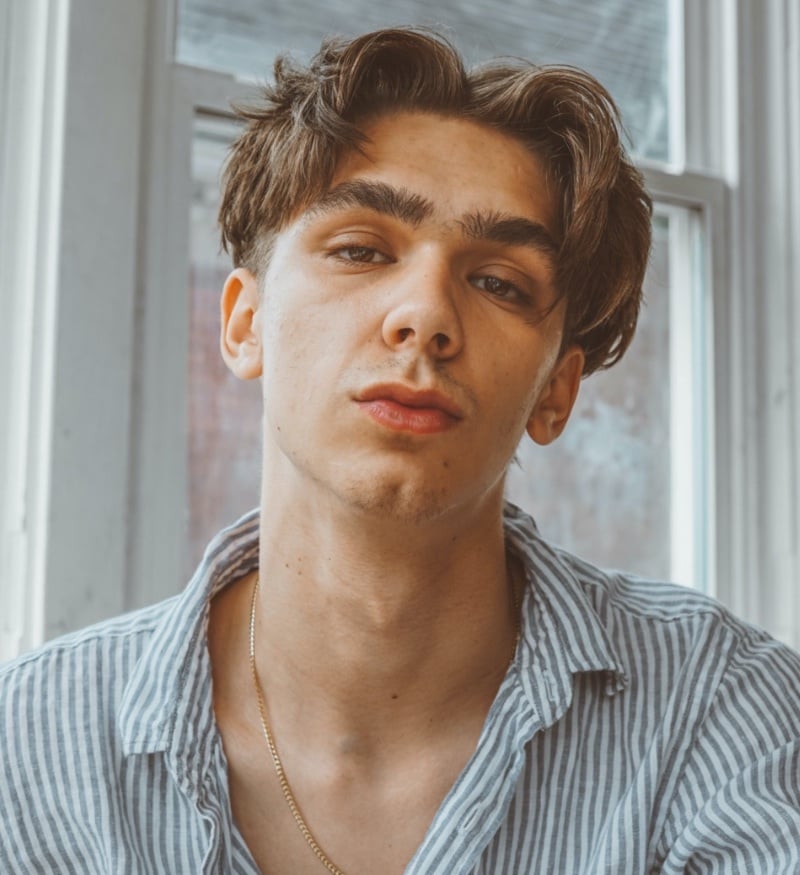
The curtains hairstyle divides a longer fringe into two sections that drape beside the face. A middle part sets the dividing line through the center, though the two sides may fall differently with the growth pattern. Layers can reduce bulk around the cheeks while retaining length near the jaw.
| The Cut | Details |
|---|---|
| Hair type | Straight to wavy |
| Styling time | About 3 to 5 minutes for daily styling, depending on technique and hair length |
| Products | Light styling cream or mousse to encourage the drape. A round brush during blow-drying adds direction |
| Ask for | A center-parted fringe long enough to drape to each side. Use layers to reduce side bulk while retaining density through the ends |
Textured Quiff
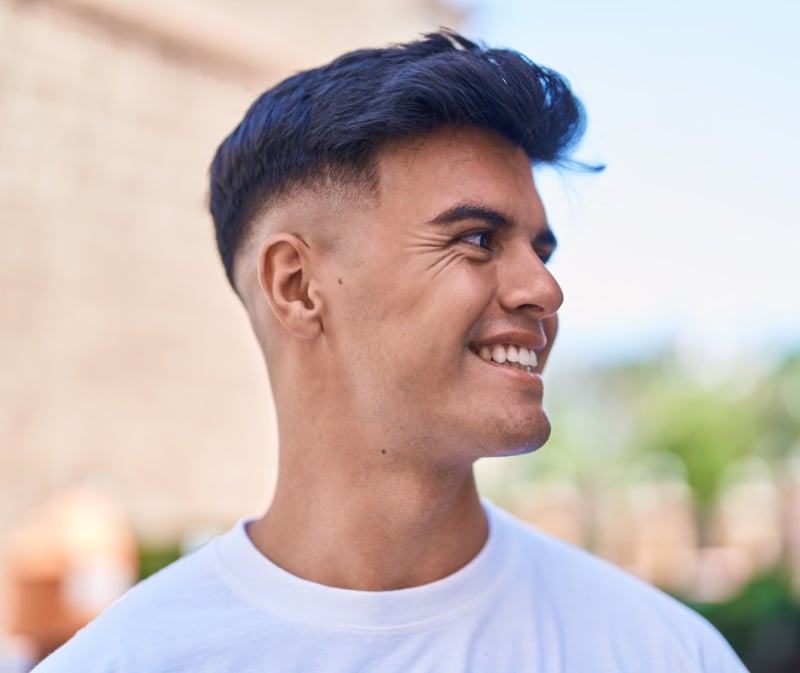
The textured quiff lifts the front and separates it into visible sections. Shorter hair behind the fringe supports the rise, while drying at the roots determines how high it sits. Point-cut ends break up the surface. A pompadour gathers that height into a smoother swept-back shape.
| The Cut | Details |
|---|---|
| Hair type | Straight to wavy. Medium to thick density |
| Styling time | About 5 to 7 minutes for daily styling, depending on technique and hair length |
| Products | Mousse before drying can help lift the roots. Finish with a small amount of matte clay, paste, or texturizing powder |
| Ask for | A longer front for a lifted quiff, shorter hair behind it, and faded or tapered sides. Use a photo to agree on height and separation |
Messy Taper
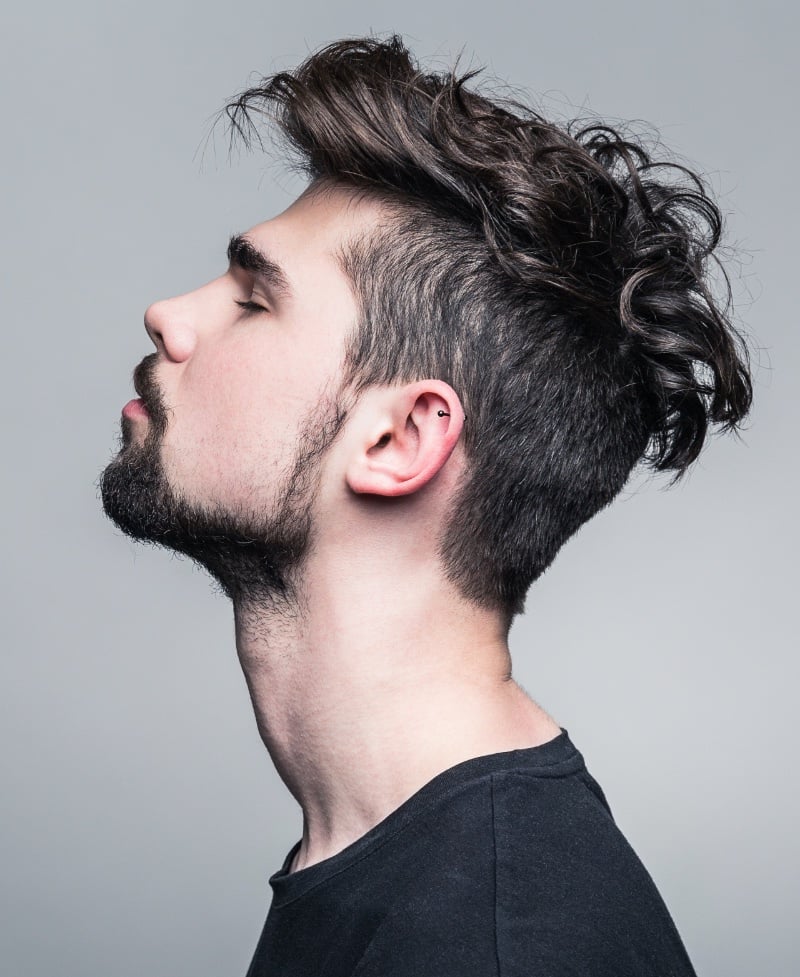
Tousled length sits above sides that shorten toward the ears and nape in the messy taper. The top can bend in several directions while the edges stay close. The low taper fade concentrates the shortest work around the sideburns and neckline, leaving more hair through the sides.
| The Cut | Details |
|---|---|
| Hair type | Straight, wavy, or curly. Texture changes how the top settles |
| Styling time | About 3 to 5 minutes for daily styling, depending on technique and hair length |
| Products | Texturizing spray or sea salt spray, worked through damp hair and left to air-dry. A matte paste adds definition |
| Ask for | Tapered edges around the ears and nape with enough top length for a tousled finish. Specify how much fullness to keep through the sides |
Side Swoop
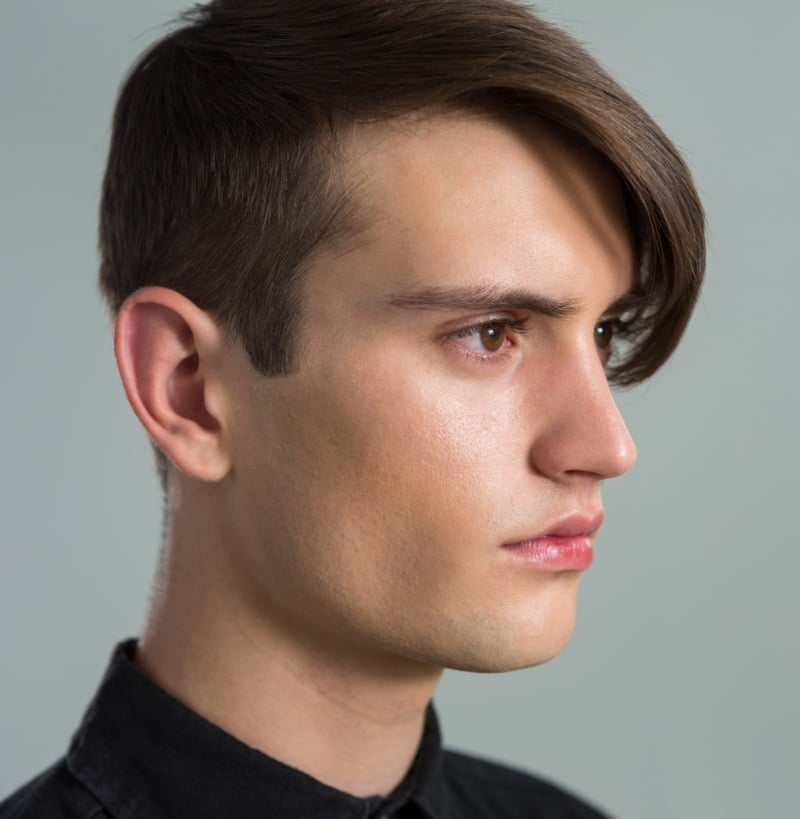
A long front section falls diagonally across the forehead in the side swoop. The sweep covers one temple and exposes more of the opposite side, giving the outline an asymmetric curve. A fade emphasizes that difference; fuller tapered sides let the fringe merge into the hair around the ears.
| The Cut | Details |
|---|---|
| Hair type | Straight to wavy |
| Styling time | About 5 minutes for daily styling, depending on technique and hair length |
| Products | Light pomade or cream for hold and direction. A blow-dryer and round brush set the sweep |
| Ask for | A longer fringe layered to sweep diagonally across the forehead. Specify the direction and how closely the sides should be cut |
Textured Shag
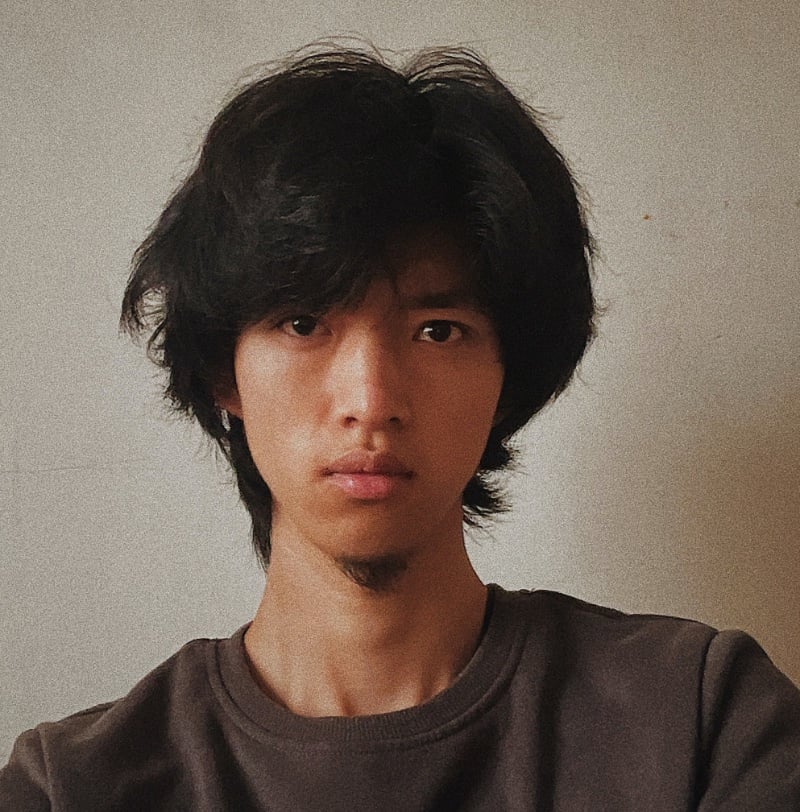
Choppy layers run through the textured shag, with a fringe near the brows and longer ends brushing the collar. Waves bend between the layers, while straight hair shows each cut edge more distinctly. The wolf cut emphasizes the crown layers, and the modern mullet makes the difference between the sides and back more pronounced.
| The Cut | Details |
|---|---|
| Hair type | Wavy to curly. Medium to thick density |
| Styling time | About 5 to 7 minutes for daily styling, depending on technique and hair length |
| Products | Sea salt spray for texture. A small amount of matte clay worked through the mid-lengths for separation |
| Ask for | A shag with choppy layers, a brow-length fringe, and longer ends near the collar. Keep enough weight for the hair's density |
Modern Comb Over
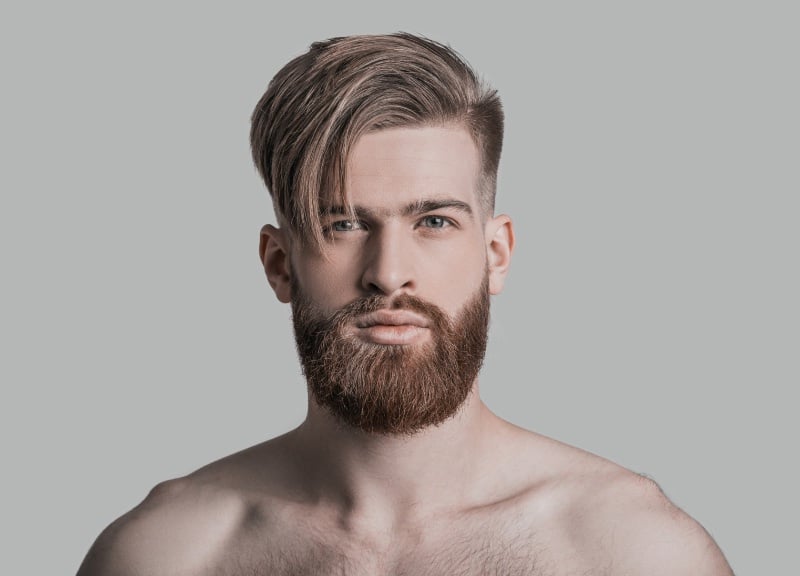
The modern comb over sweeps from a side part with a little lift at the roots. A fade exposes the side beneath the longer top, making the direction of the sweep easy to see. The part can stay natural or take a shaved line. The slick back directs the hair toward the rear instead.
| The Cut | Details |
|---|---|
| Hair type | Straight to wavy |
| Styling time | About 5 to 7 minutes for daily styling, depending on technique and hair length |
| Products | Pomade for a smoother finish or matte paste for visible separation. A blow-dryer can help set root lift |
| Ask for | A modern comb over with a mid fade, three to four inches on top, parted to one side, with a hard or natural part line |
Disconnected Undercut
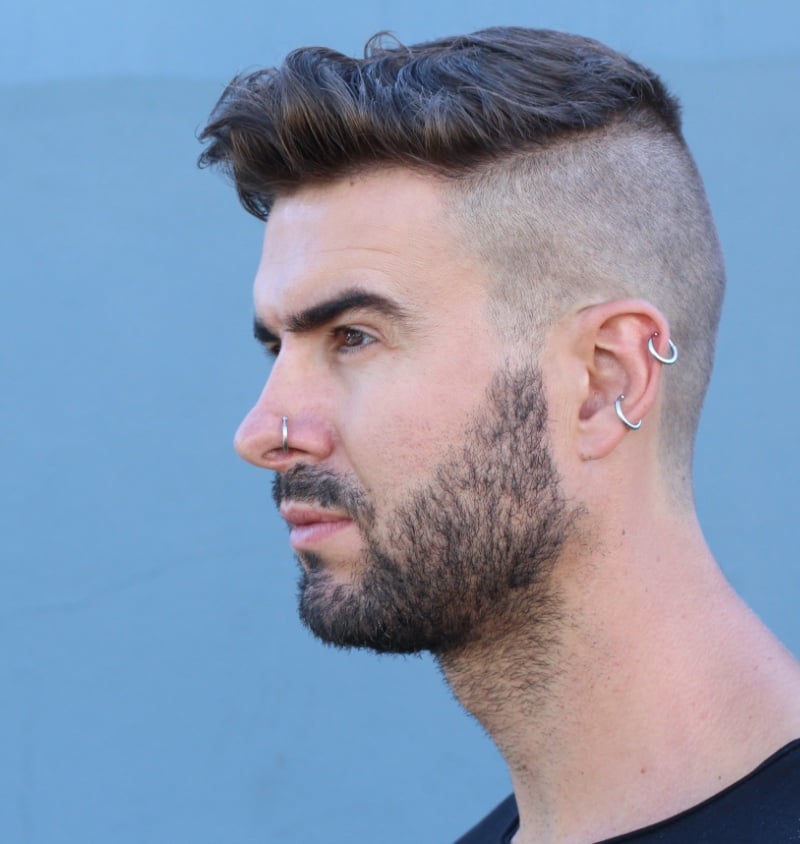
An abrupt step separates the long top from the closely clipped sides of the disconnected undercut. The barber leaves the two lengths unblended, so the top can overhang the shorter section. Sweeping it back exposes the step; letting it fall forward can partly cover it.
| The Cut | Details |
|---|---|
| Hair type | Straight, wavy, or curly. Density affects the weight of the overhanging top |
| Styling time | About 5 to 7 minutes for daily styling, depending on technique and hair length |
| Products | Strong-hold pomade for a slicked-back look, or matte clay for a textured, pushed-back style |
| Ask for | An undercut with a hard disconnect. Sides at a number 1 or 0, with four to five inches on top and no blending between the two |
Comma Haircut

The comma haircut takes its name from a curved section of fringe that turns inward over the forehead. Shorter sides leave that front curve visible, while layers through the top provide room to separate it from the rest of the hair. Styling focuses on bending the tip and keeping the curve from falling flat.
| The Cut | Details |
|---|---|
| Hair type | Straight to wavy. Front length and growth direction affect the curve |
| Styling time | About 5 to 7 minutes for daily styling, depending on technique and hair length |
| Products | A blow-dryer or suitable heated tool to bend the fringe, with heat protectant and a small amount of wax or styling cream |
| Ask for | A textured medium cut with the front left longer, around three to four inches, and tapered or faded sides. Naming the comma style helps, as the front layering needs to support the curl |
Faux Hawk Fade
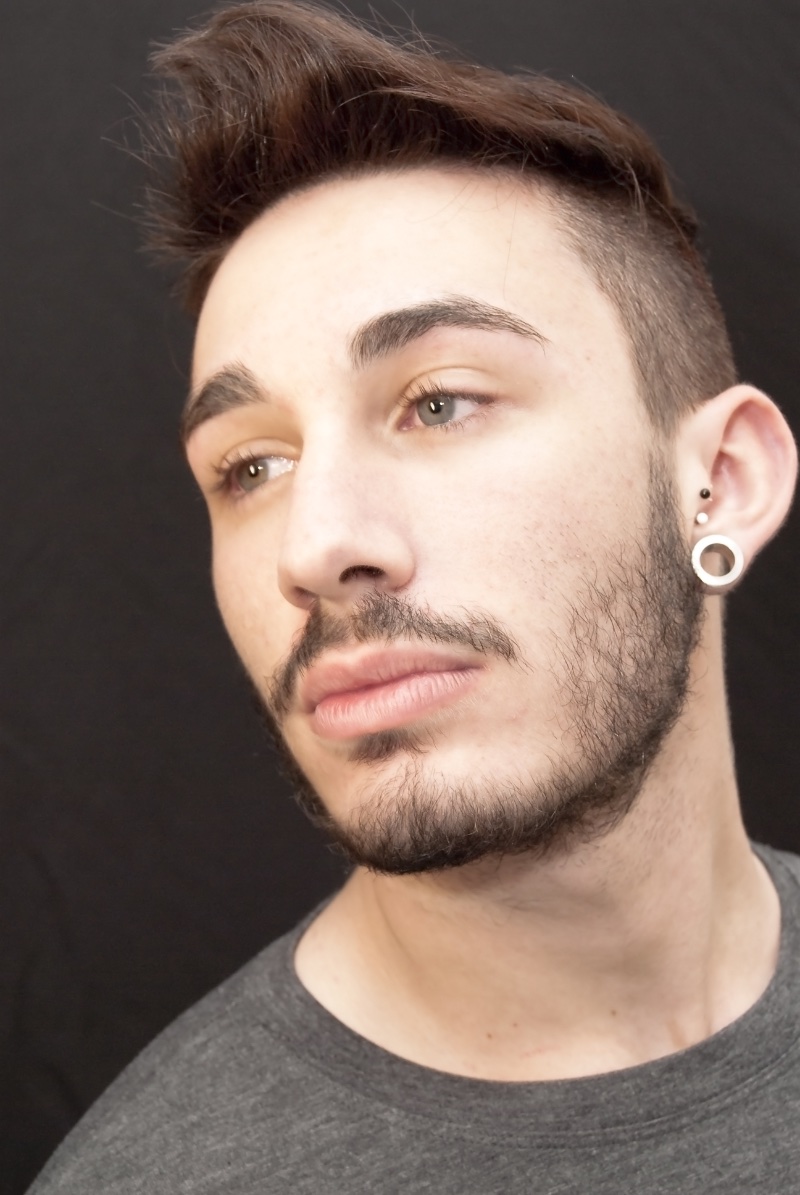
A central ridge of lifted hair distinguishes the faux hawk fade. The top stays wider than the narrow strip associated with a mohawk, with faded sides beneath it. Height usually peaks toward the front and decreases toward the crown.
| The Cut | Details |
|---|---|
| Hair type | Straight to wavy. Medium to thick density |
| Styling time | About 5 to 7 minutes for daily styling, depending on technique and hair length |
| Products | Strong-hold gel or matte clay, for a wet or dry finish. A blow-dryer pushes the center section upward |
| Ask for | A faux hawk with a lifted center that gets shorter toward the crown, plus faded sides. Agree separately on fade height and the shortest guard |
Long Hairstyles for Men
Long hairstyles for men depend on where the ends fall and which sections can reach a tie. Shoulder-length layers can hang loose, while a longer top can form a bun above clipped sides. Detangling and conditioning take on more importance as the ends age. More on the surfer haircut and long curly hair.
Man Bun
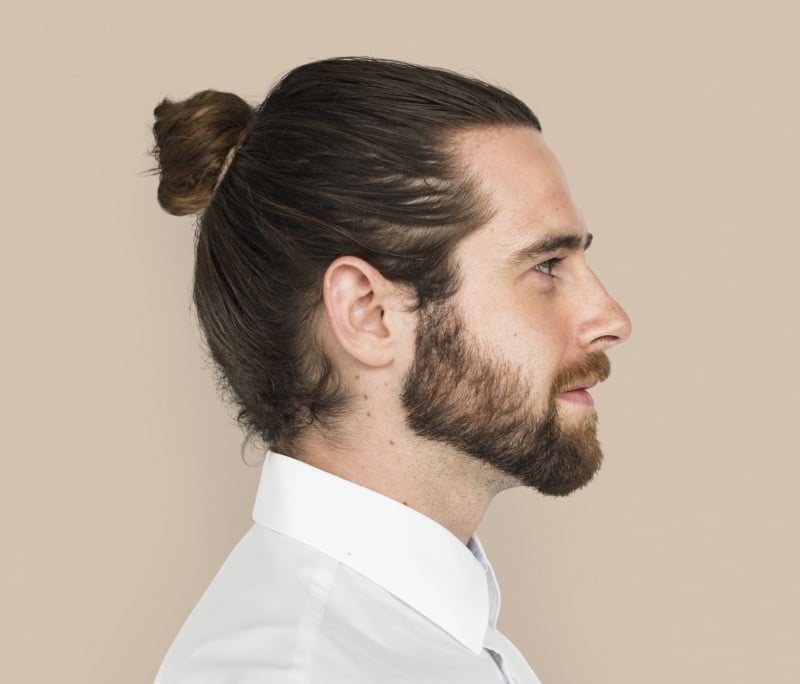
The man bun gathers the hair into a knot at the crown or back of the skull. A lower knot lets shorter sections reach the tie; a higher one lifts the outline above the crown. Enough length is needed to gather the hair comfortably, with no pulling at the hairline.
| The Cut | Details |
|---|---|
| Hair type | All hair types with enough length |
| Styling time | About 2 minutes for daily styling, depending on technique and hair length |
| Products | A comfortable hair tie. Leave-in conditioner if the lengths need it |
| Ask for | Enough length for the intended bun position. Discuss layers and trim timing based on how the ends sit and gather |
Half Bun
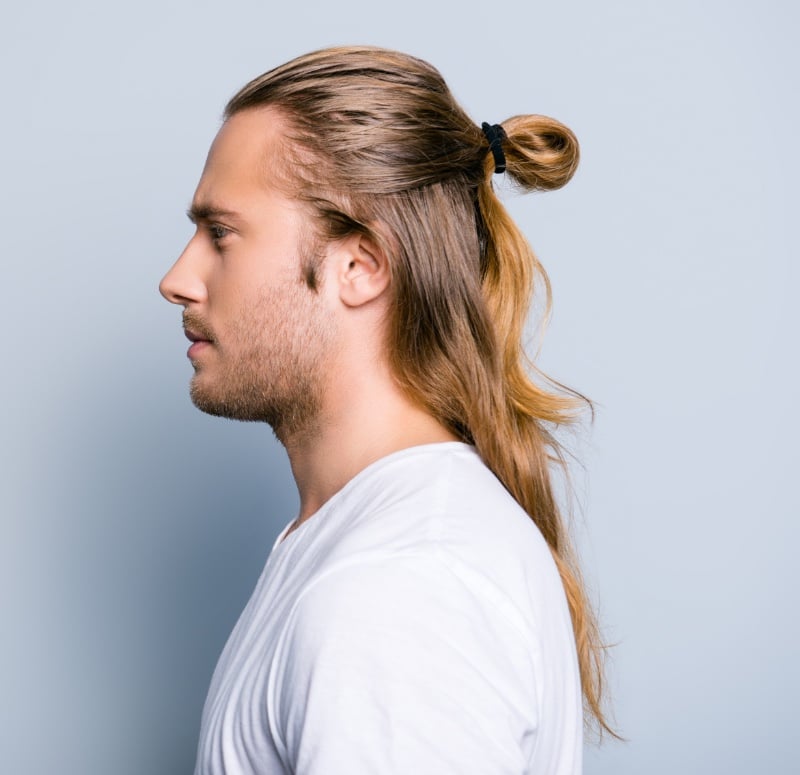
Only the upper section enters the tie in a half bun. The hair beneath it hangs loose at the sides and back, so the style keeps its length visible from the rear. This sectioning can gather a long fringe even when the lower layers are still too short for a full bun.
| The Cut | Details |
|---|---|
| Hair type | Straight to wavy. Medium to thick density |
| Styling time | About 2 minutes for daily styling, depending on technique and hair length |
| Products | A small elastic or hair tie. Texturizing spray to add body to the loose sections |
| Ask for | A top section long enough to tie back, with lower layers that fall at the desired length. Check how the sectioning looks from the side and rear |
Modern Ponytail
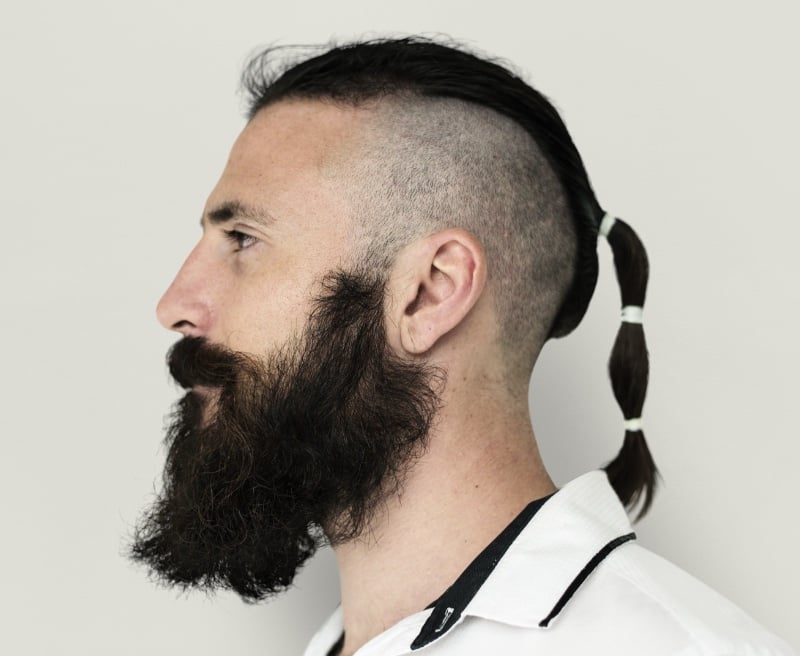
Closely clipped sides expose the ears beneath the modern ponytail's tied-back top. The remaining length hangs from the tie, creating a visible tail behind the crown. The position of the tie depends on how far the front and crown can reach comfortably.
| The Cut | Details |
|---|---|
| Hair type | Straight to wavy |
| Styling time | About 2 to 3 minutes for daily styling, depending on technique and hair length |
| Products | A comfortable hair tie. A small amount of smoothing cream if needed |
| Ask for | Faded or closely clipped sides, with the top and crown long enough to reach the intended tie position |
Dreadlocks
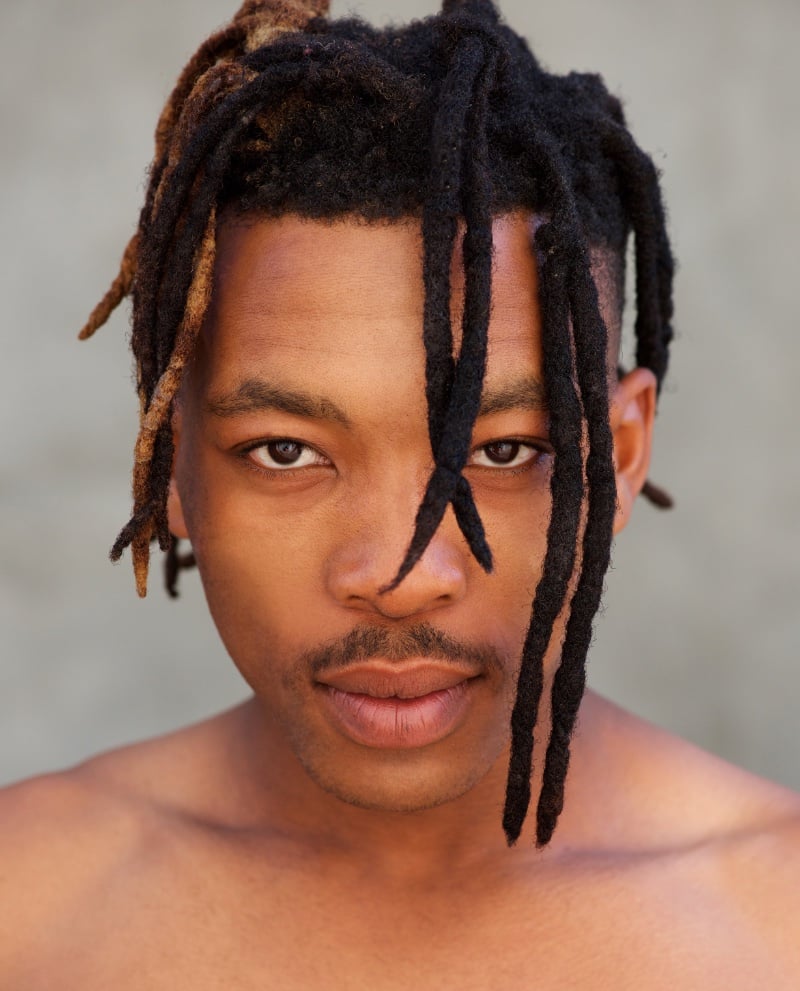
Dreadlocks form as strands intertwine into lasting sections. Starting methods vary with texture and the desired size, from twists to crochet techniques. Small sections create many narrow locs; larger sections produce fewer, thicker lengths. As locs mature, their diameter and surface texture can change.
| The Cut | Details |
|---|---|
| Hair type | Coily, curly, wavy, or straight. Starting method and maintenance vary with texture |
| Styling time | Little daily styling once established. Starting and maintenance appointments take longer |
| Products | Shampoo that rinses thoroughly. Use additional products sparingly to limit residue |
| Ask for | A loctician experienced with the hair's texture. Agree on section size, starting method, and maintenance. Maturation can take many months |
Braids
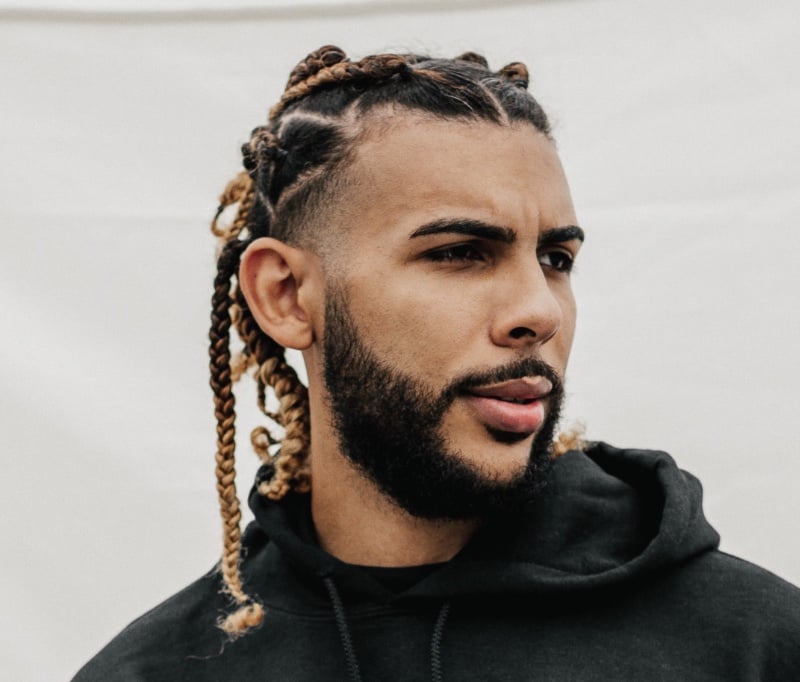
Braids for men include loose three-strand plaits, box braids, and feed-in styles. Section size determines how many braids cover the scalp, while their direction changes the visible pattern. Braiding reduces daily handling, though comfort and gentle installation matter more than pulling the roots tight.
| The Cut | Details |
|---|---|
| Hair type | Many textures can be braided. Grip, length, and installation method affect durability |
| Styling time | Little daily styling after installation, which can take several hours |
| Products | A suitable scalp-cleansing routine and a satin or silk covering at night. Add lightweight products only as needed |
| Ask for | A braider experienced in the chosen pattern. Agree on comfortable tension, washing, and removal timing based on the installation |
Cornrows
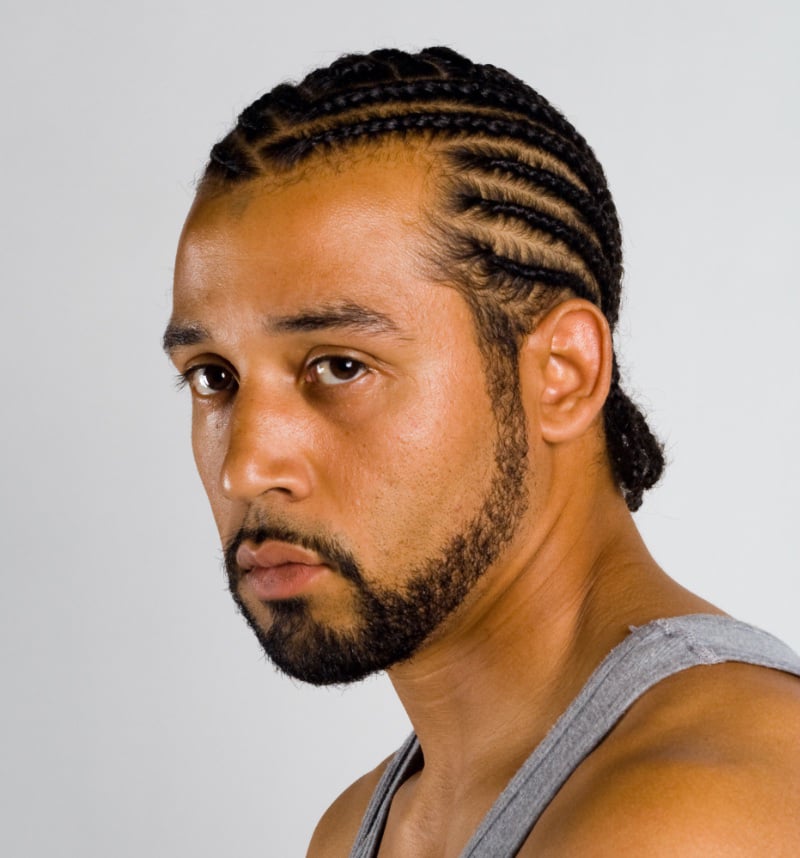
Cornrows form raised rows attached to the scalp as the braider adds hair along each section. Straight-back rows expose parallel partings; curved rows create a different pattern across the crown. The partings remain visible between the braids, making their spacing as important as braid size.
| The Cut | Details |
|---|---|
| Hair type | Coily, curly, wavy, or straight. Enough length is needed for the chosen braid size |
| Styling time | Little daily styling after installation. Appointment length varies with the pattern |
| Products | Products that allow scalp cleansing and rinse out readily. A silk or satin covering can reduce friction overnight |
| Ask for | A braider with examples of the chosen pattern. Agree on section size, comfortable tension, scalp washing, and when to redo the rows |
Natural Afro
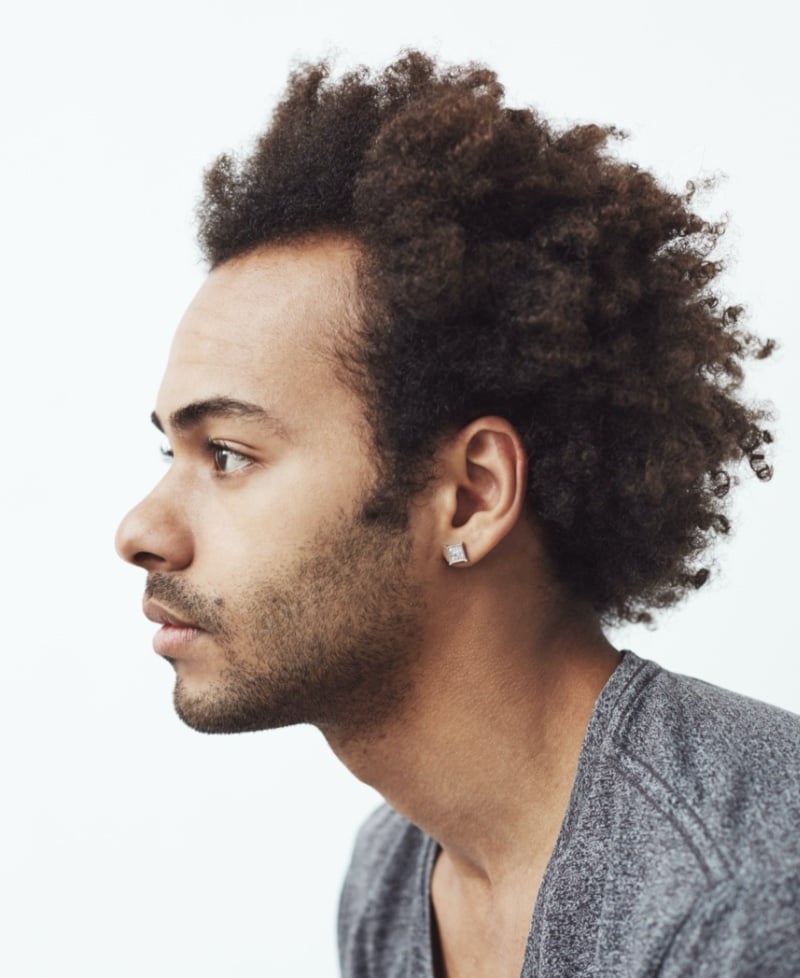
The natural afro extends outward from the scalp, with coils creating a rounded outline. A fuller crown makes the shape taller; more length at the sides makes it wider. Shaping follows how the curls sit after drying, since shrinkage can change the apparent length around the perimeter.
| The Cut | Details |
|---|---|
| Hair type | Curly to coily hair with enough density and length to form the chosen outline |
| Styling time | About 5 to 10 minutes for shaping, depending on length and routine |
| Products | Conditioner and a leave-in if needed. A pick or wide-tooth comb can shape the hair after gentle detangling |
| Ask for | A rounded or tapered outline shaped to the hair after drying. Discuss how shrinkage affects the perimeter and when it needs reshaping |
Long Fringe
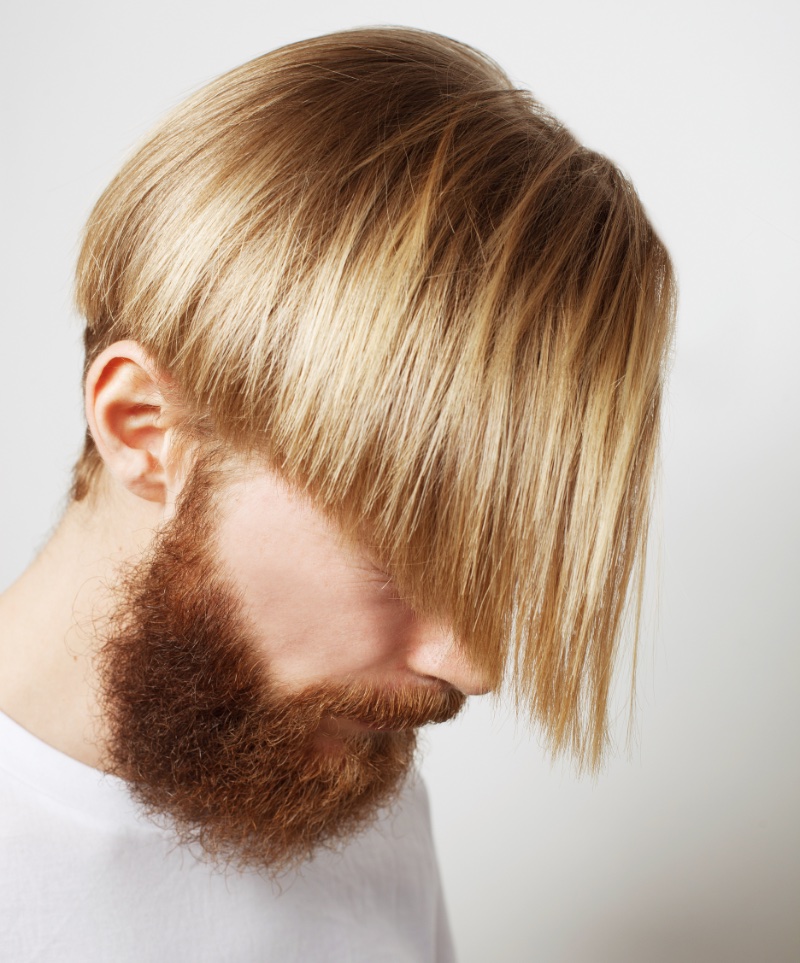
A long fringe falls past the brows and may reach the cheek or chin. Shorter sides concentrate the length at the front. Its weight determines whether it hangs straight, divides into sections, or bends to one side, and ends that fall into the eyes may need sweeping aside.
| The Cut | Details |
|---|---|
| Hair type | Straight, wavy, or curly. Texture affects how the fringe falls |
| Styling time | About 3 to 5 minutes for daily styling, depending on technique and hair length |
| Products | Light styling cream for separation. Use heat protectant if blow-drying or using a suitable heated tool |
| Ask for | A fringe that reaches the desired point near the eyes, cheek, or chin, with shorter sides and back. Agree on its direction after drying |
Top Knot
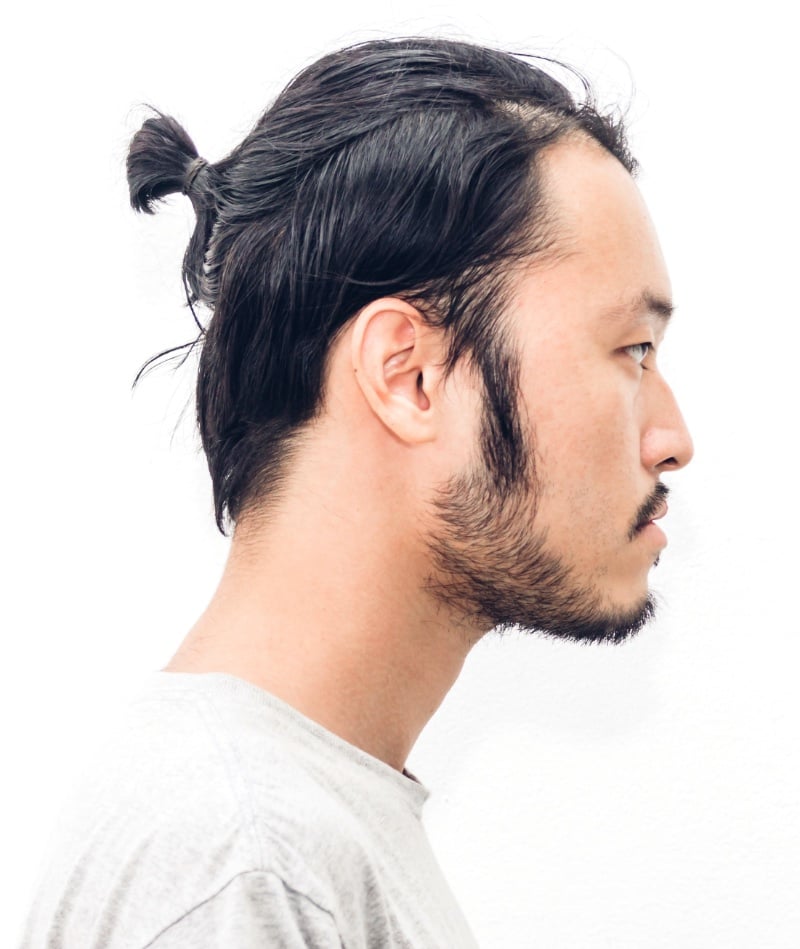
The top knot gathers the longest hair high at the crown, often above an undercut or fade. Exposed sides make the knot's position prominent in profile. The tie should sit comfortably, with enough length to secure the ends instead of pulling the front sections taut.
| The Cut | Details |
|---|---|
| Hair type | Any texture with enough top length to reach a tie comfortably |
| Styling time | About 3 minutes for daily styling, depending on technique and hair length |
| Products | A comfortable hair tie. A little smoothing product if needed |
| Ask for | A top long enough for a knot at the crown, with an undercut or fade beneath it. Check that the front reaches the tie comfortably |
More Men's Haircuts Worth Knowing
Small changes to length, finish, and sectioning can give an established cut a different outline.
Grown-Out Buzz Cut
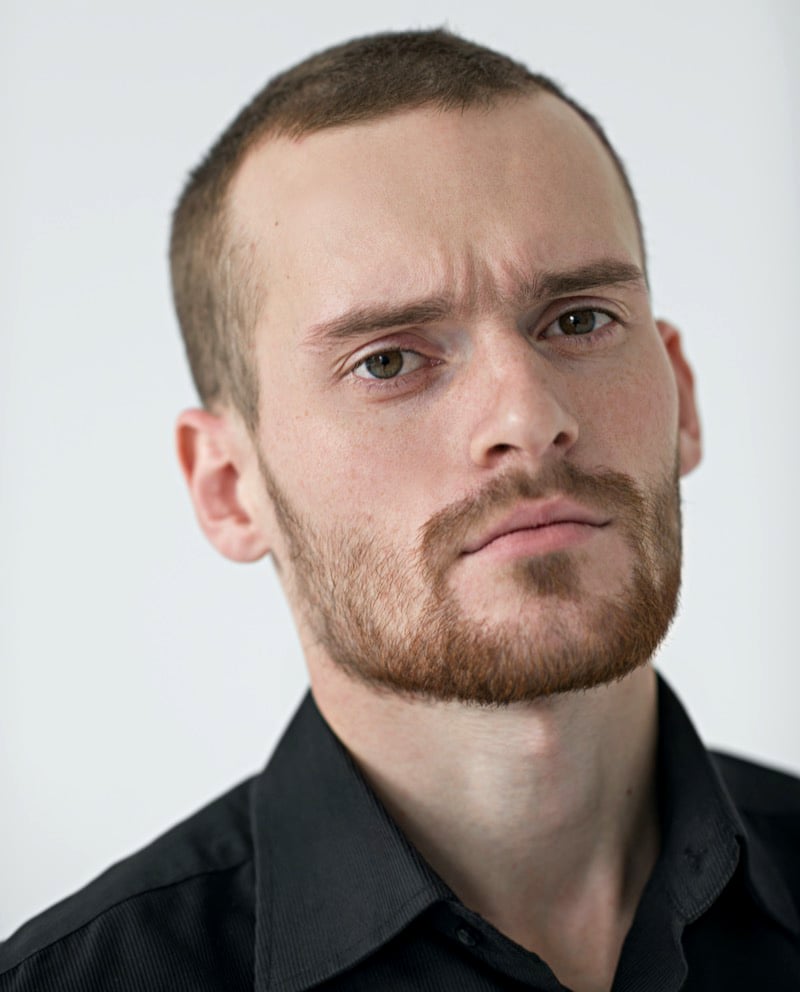
As a buzz cut grows, the top begins to reveal bends and growth patterns that were less visible at a shorter length. Hair may stand up at the crown before it becomes long enough to lie down. Tidying the ears and neckline can keep the perimeter neat while the top grows.
Soft Fade with Texture
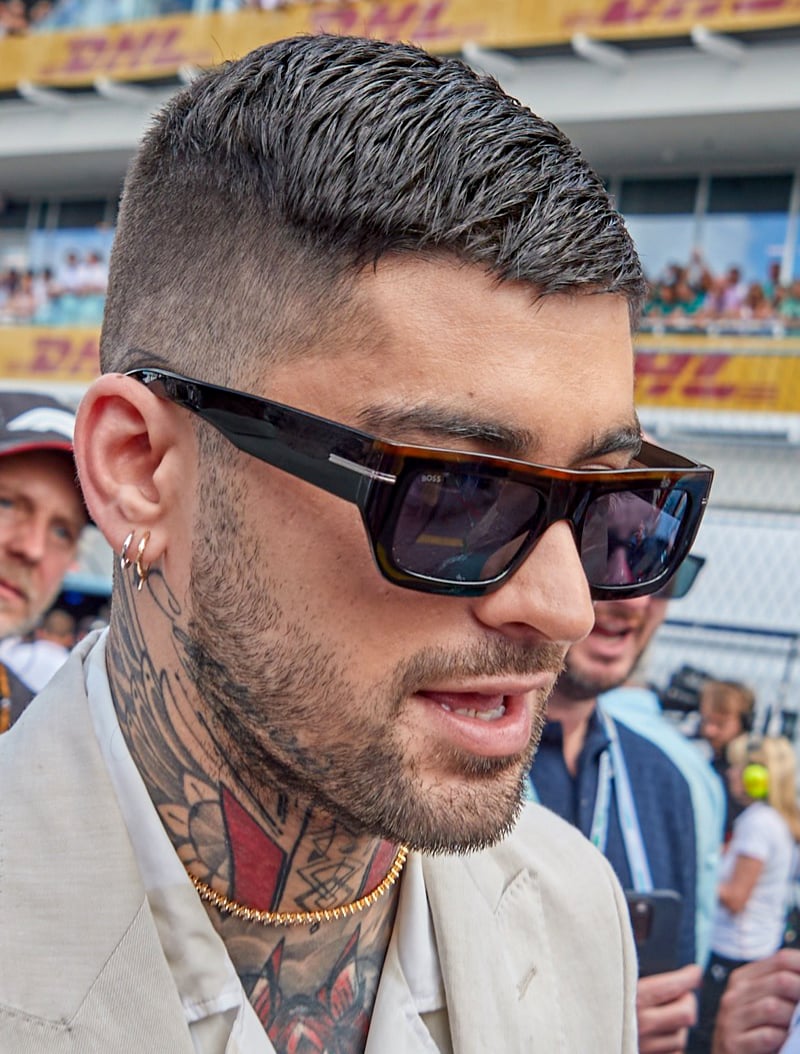
Leaving some length at the shortest point makes a fade's transition less stark than a skin fade. More weight through the upper sides lets the textured top meet the blend gradually. The shortest guard and the height of the fade are separate choices. More on fade haircuts and the low fade.
Matte Side Part
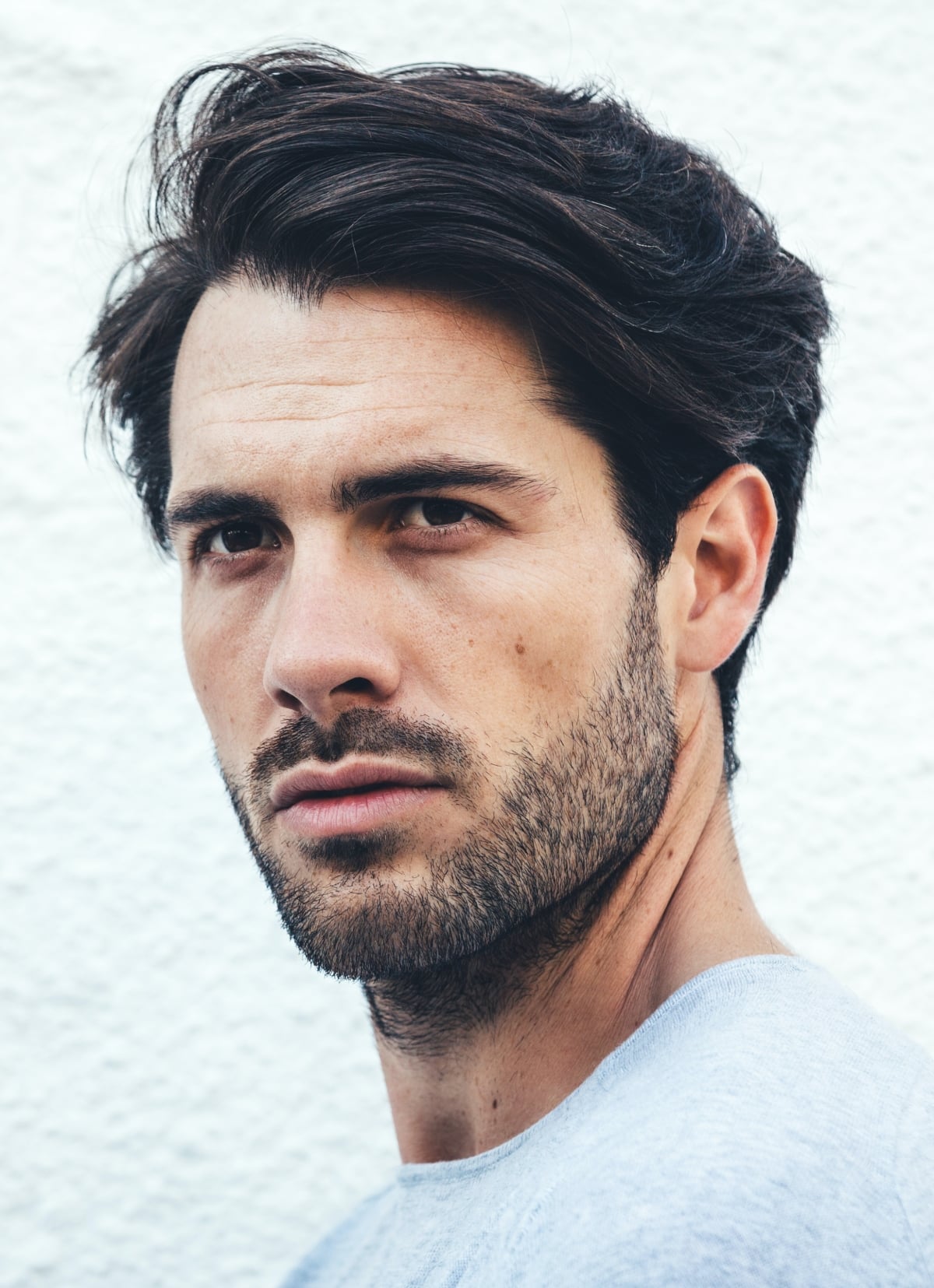
A side part with a matte finish shows the direction of the combing while leaving individual strands visible. A small amount of paste can separate the top instead of coating it with shine. The parting stays distinct even when the ends bend or lift away from it.
Textured Mid-Length with a Fringe
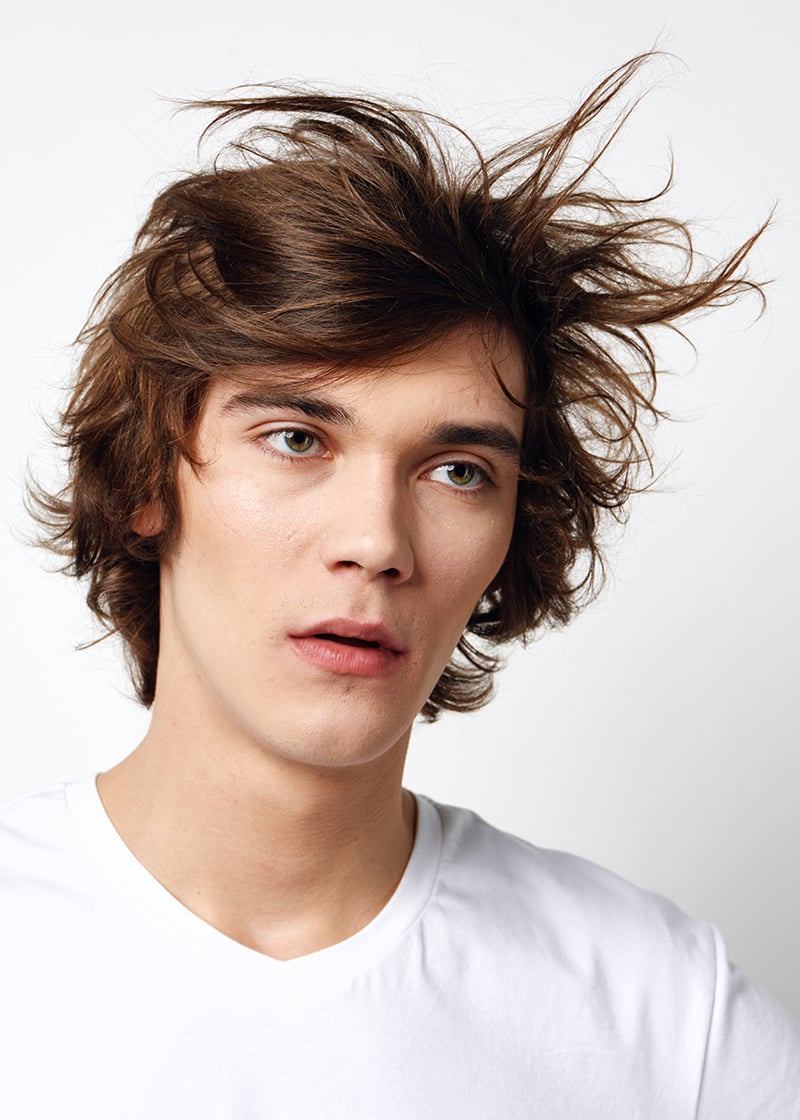
Layers let a medium-length fringe fall in separate sections near or past the brow. The front can shift across the forehead instead of dividing evenly at the center. Taking weight from the interior reduces bulk, but the ends need enough density to retain their outline. More fluffy hair styles.
Protective Styles
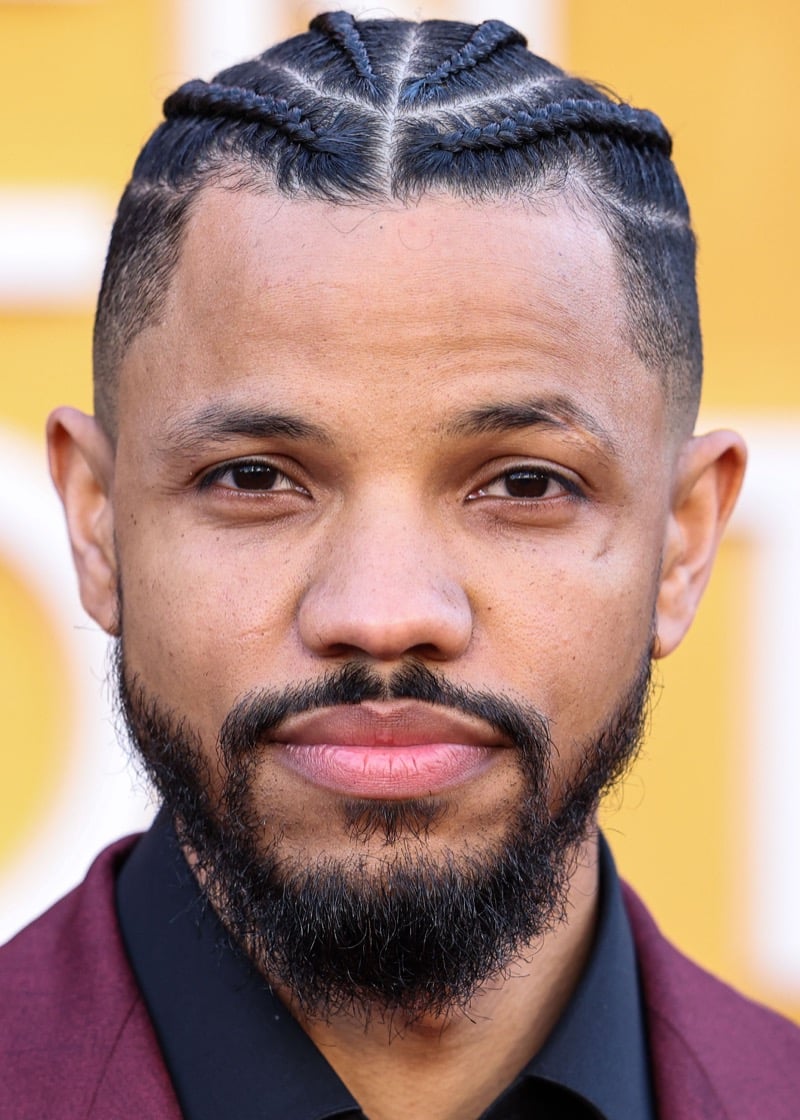
Braids, twists, locs, and cornrows reduce how often loose hair needs combing or restyling. Their patterns depend on the size and placement of the sections. The protective benefit depends on installation and care, including comfortable tension and continued scalp cleansing.
Styling Products for Men
Choose styling products by the hold and finish needed, then adjust the amount to density and length. Formulas vary within each product category. More on hair products for men.
Pomade
Pomade helps gather hair into a defined sweep or part. Oil-based formulas tend to stay pliable and take more effort to wash out; water-based formulas vary in how firmly they set. Check the stated finish, since pomade can range from matte to high shine.
Wax
Wax separates and shapes individual sections, particularly through short ends. A small amount worked between the palms is easier to distribute than a thick dab. Finish and hold vary, so add gradually to avoid coating fine hair too heavily.
Clay
Clay adds grip and usually a matte finish to crops and quiffs. Applying it to dry hair makes separation more visible. Dense formulas can be difficult to spread through fine strands, so begin with a small amount.
Paste
Paste gives short and medium lengths direction while leaving room to reshape them. It can define a side sweep or separate a fringe. Choose a lighter formula when the hair collapses under heavier products.
Gel
Gel sets hair into place as it dries. Some formulas leave a firm cast and shine, making them useful for a fixed sweep or lifted center section. Repeated combing after setting can disturb the finish.
Mousse
Mousse spreads through damp hair as a foam, adding body before drying. Applied near the roots, it can help lift curtains or a longer swept-back top. The amount of hold depends on the formula.
Sea Salt Spray
Sea salt spray adds grip and a rougher surface to loose waves and tousled styles. Scrunch it through damp lengths or use it before drying, following the product directions. Reduce the amount if the ends feel dry or stiff.
Heat Protectant
Use a heat protectant suited to the tool and follow its application directions. Some formulas go on damp hair before blow-drying; others are designed for dry hair. Hair should be dry before using a conventional flat iron or curling iron, and the lowest effective temperature limits unnecessary heat exposure.
Finding the Right Men's Haircut
The useful choice is the cut that falls well at the required length and fits the daily routine. A fringe that needs drying each morning asks more of its wearer than an even clipper cut. Longer styles exchange frequent edge work for more washing and detangling time.
At the appointment, agree on how the cut should look as it grows as well as on the day it is finished. The related cuts and grooming topics offer more detail.
- Fades. fade haircuts, low fade, mid fade, high fade, skin fade, low taper fade
- Short cuts. buzz cut, crew cut, French crop, fringe haircut
- Classic styles. quiff, pompadour, side part, slick back, undercut
- Longer styles. middle part, curtains, flow, wolf cut, modern mullet, man bun
- Curly & textured hair. haircuts for curly hair, afro hairstyles, braids, cornrows, dreads
- Grooming. beard styles, hair color





