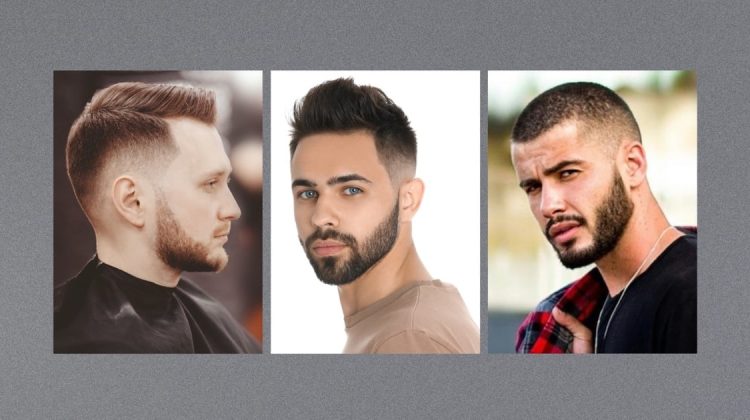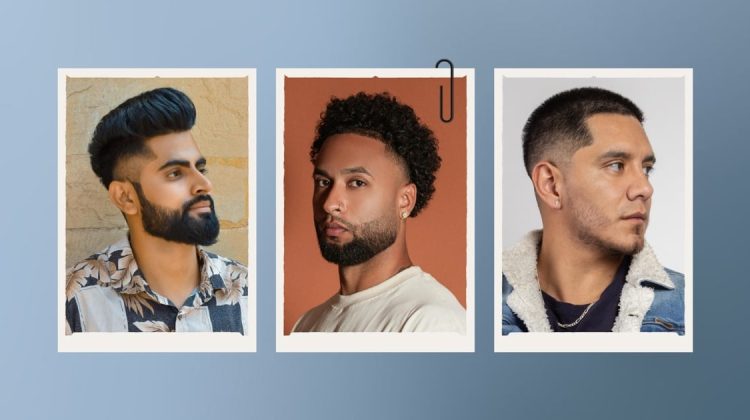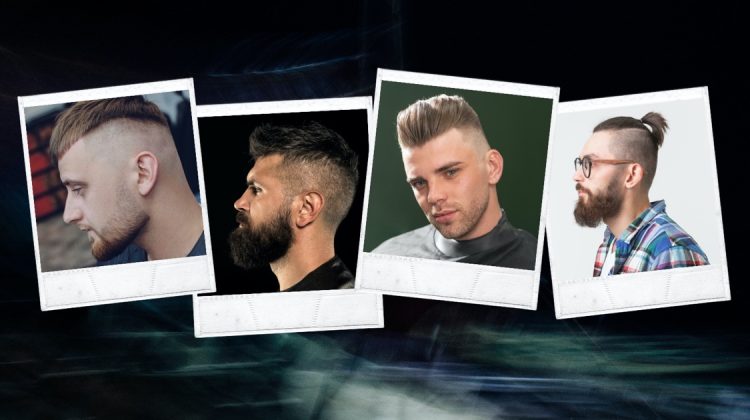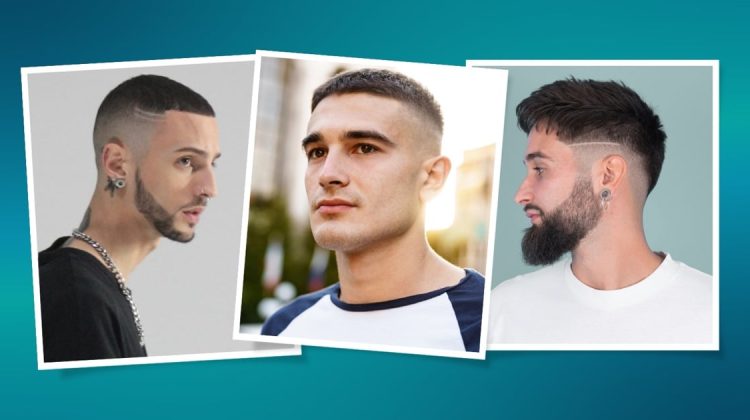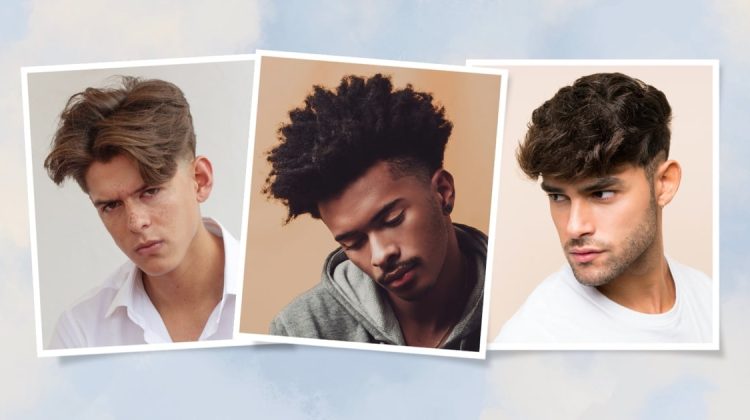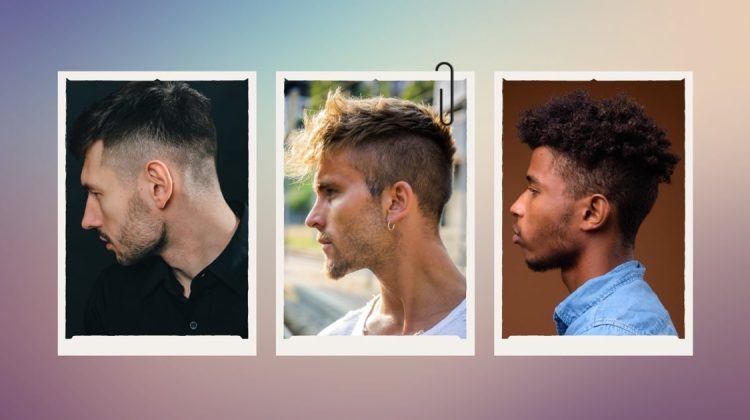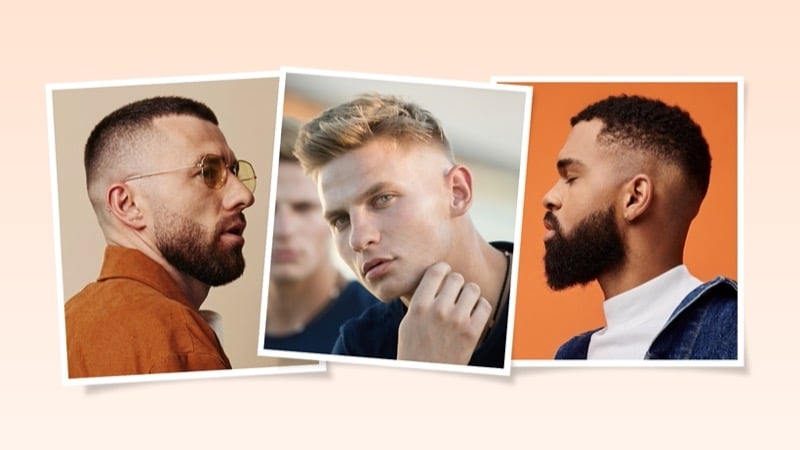
A razor fade takes the lowest part of a fade down to smooth skin with a straight razor or foil shaver. Above the shaved area, the hair gradually increases in length toward the top.
The close shave creates a pronounced difference between the bare skin and the hair above it. Regrowth shows quickly, making the finish especially demanding to maintain.
What Is a Razor Fade?
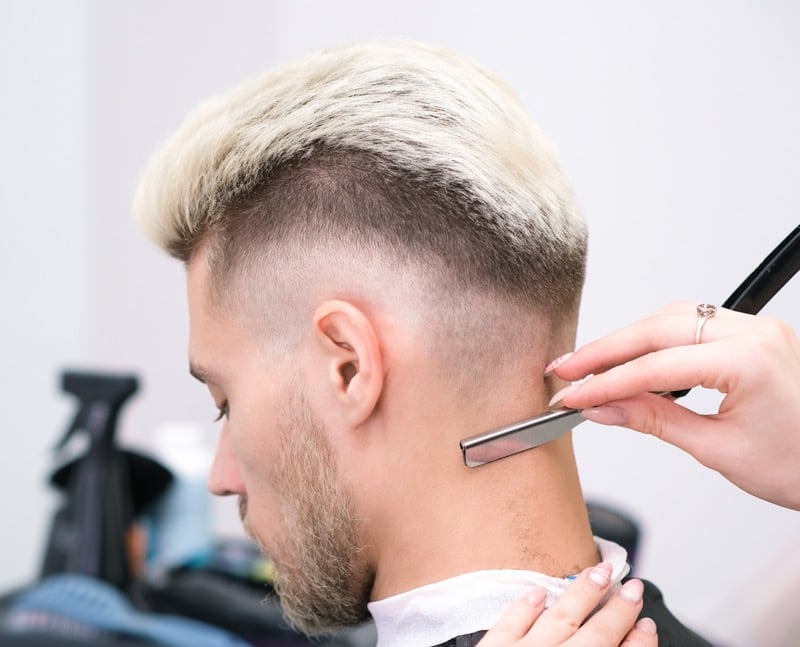
The barber establishes the blend with clippers, then shaves the lowest section with a straight razor and shaving cream or a foil shaver. A straight razor can also define the hairline around the ears and neckline. The method matters as much as the height of the fade.
The shaved section can sit at three different heights.
- Low razor fade. The transition stays close to the ears and neckline, leaving more hair along the upper sides.
- Mid razor fade. The blend begins around temple height.
- High razor fade. The transition starts farther up the head, exposing more of the sides.
For how these heights compare, see our low fade, mid fade and high fade guides.
Razor Fade vs. Skin Fade vs. Zero Fade
| Fade | Shortest point | Finish |
|---|---|---|
| Zero fade (0 fade) | Clippers with no guard | Very short stubble, a shadow is still visible |
| Skin fade (bald fade) | Bare skin | Close to the scalp. Barbers get there with zero-gap clippers, a foil shaver or a razor |
| Razor fade | Bare skin, shaved | The smoothest finish, with razor-sharp edges |
A razor fade belongs to the skin fade family. Both expose bare skin at the base, but the razor or foil-shaver finish removes the stubble that clippers may leave behind.
Razor Fade Haircuts
Brush Cut Razor Fade
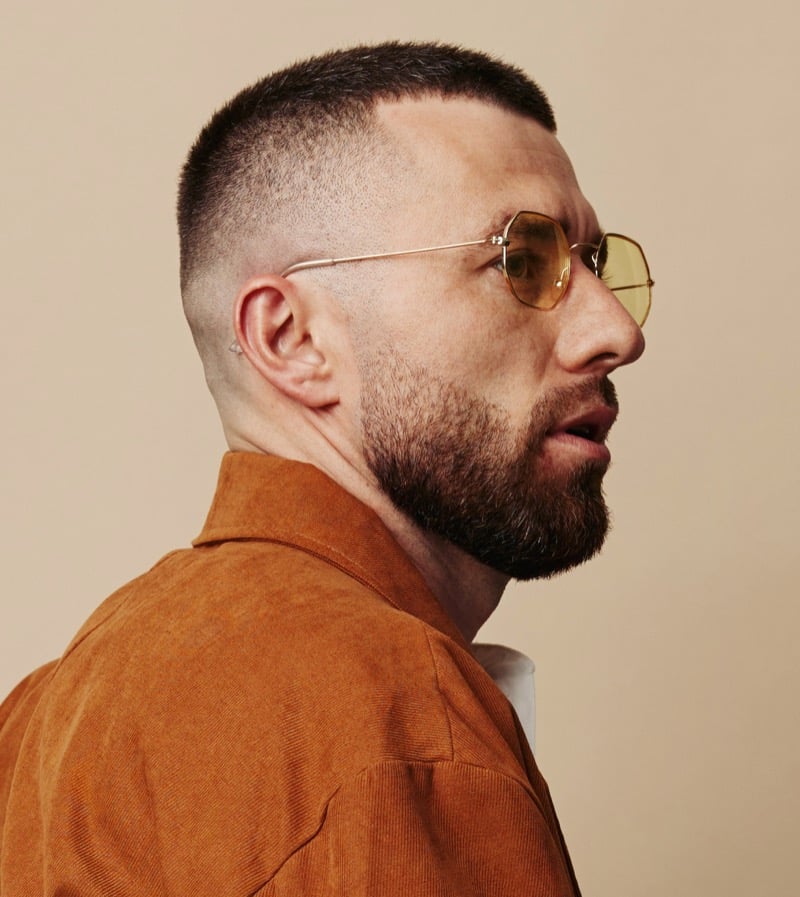
A brush cut is a short, even cut on top, a little longer than a buzz cut, so the hair stands up like bristles. A razor fade gives it a defined edge without adding any styling.
The top needs little attention in the morning. Keeping the shaved area distinct usually means returning to the barber every week or two.
Crew Cut Razor Fade

A crew cut is short on top, slightly longer at the front, and shorter on the sides. A straight razor fade takes the sides down to smooth skin, so the short top looks fuller by contrast.
A dab of matte paste can lift the slightly longer front or direct it to one side.
Curly Hair Razor Fade
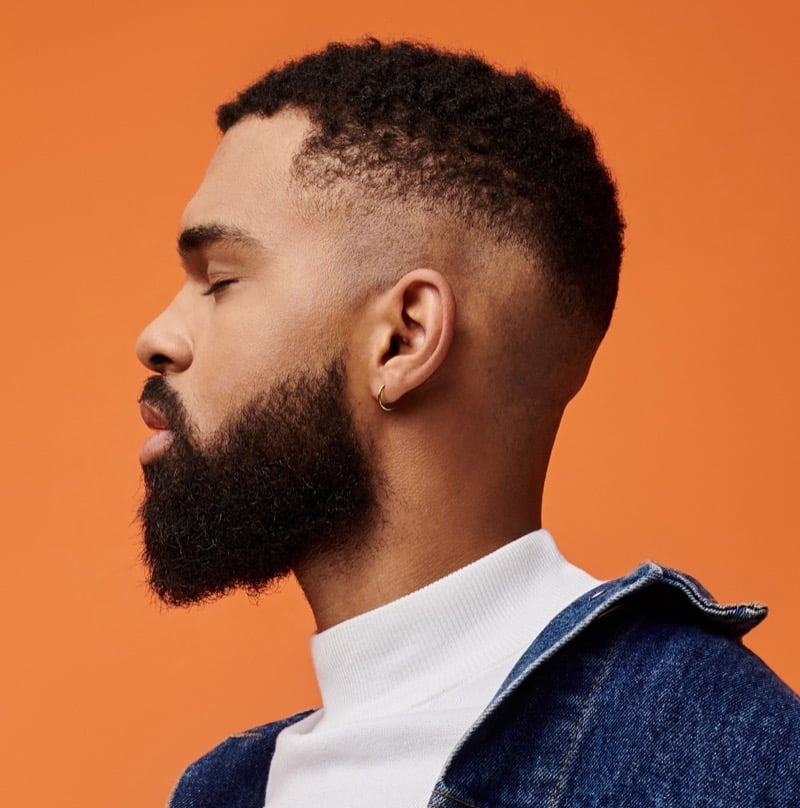
A razor fade keeps the sides of curly hair clean and close, so all the volume sits on top. The contrast between the curls and the shaved sides makes the texture stand out.
Apply curl cream while the hair is damp, then let the curls dry naturally.
French Crop Razor Fade
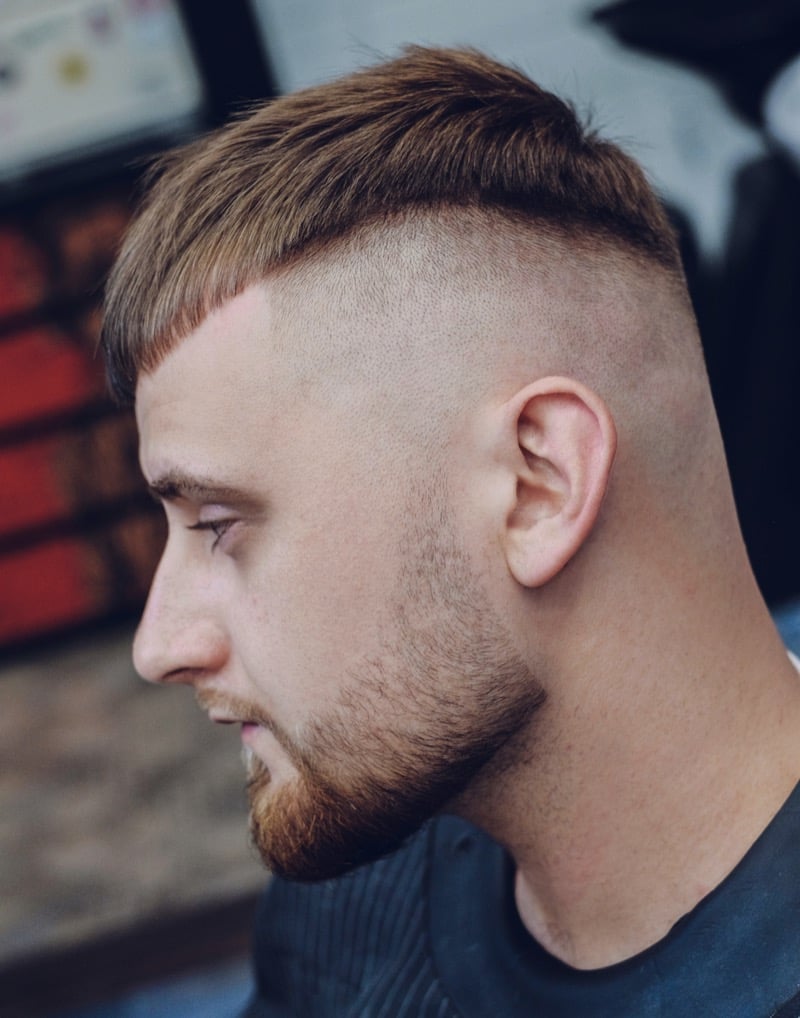
A French crop is short on top with a blunt fringe cut straight across the forehead. A razor fade gives the sides the same clean, hard edge as the fringe.
A little matte clay separates the short layers; the blunt fringe does most of the work.
Pompadour Razor Fade
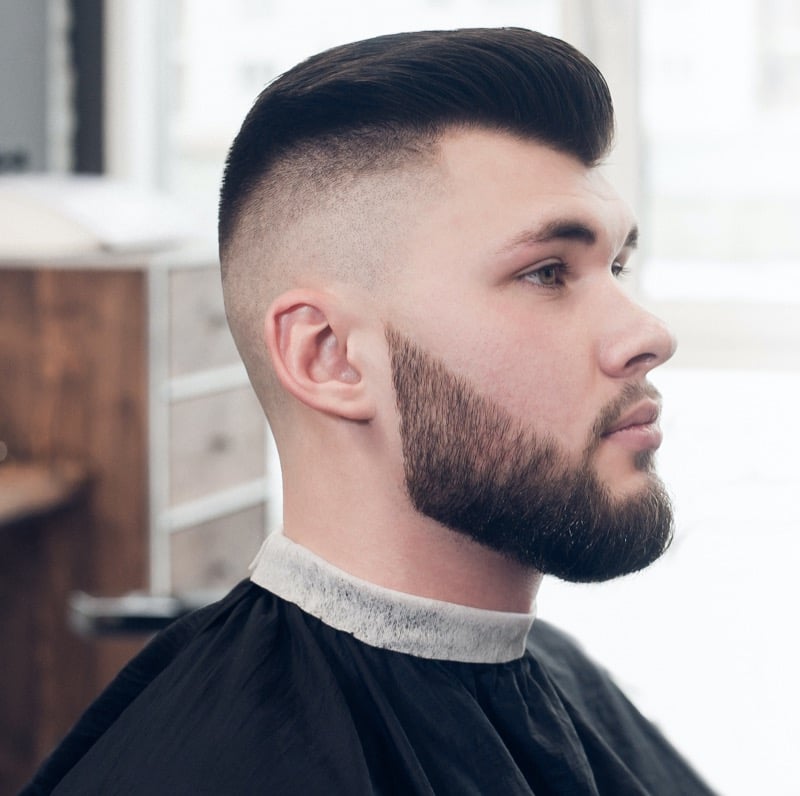
A pompadour sweeps the front up and back for height. With a razor fade, the sides are smooth and close, so the volume on top stands out even more.
Use a round brush to lift the front while blow-drying, then work in pomade to hold the height.
Quiff Razor Fade
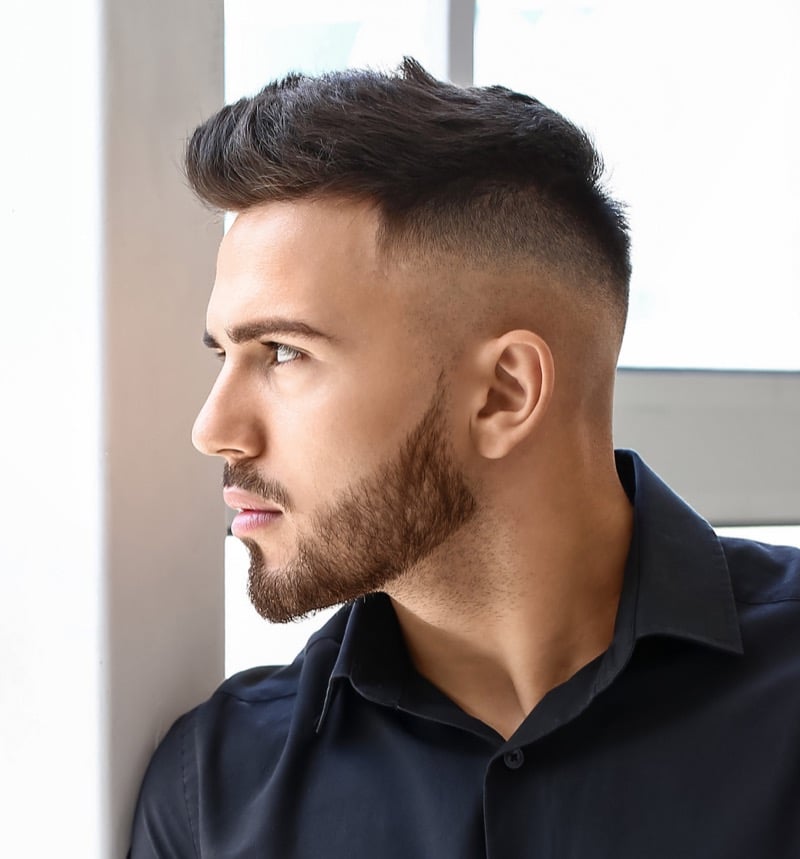
A quiff lifts the front up and back, like a pompadour but looser and less structured. A razor fade keeps the sides tight so the height at the front is the focus.
Matte paste or clay keeps the lifted front pliable, with less shine than a traditional pompadour.
Slick Back Razor Fade
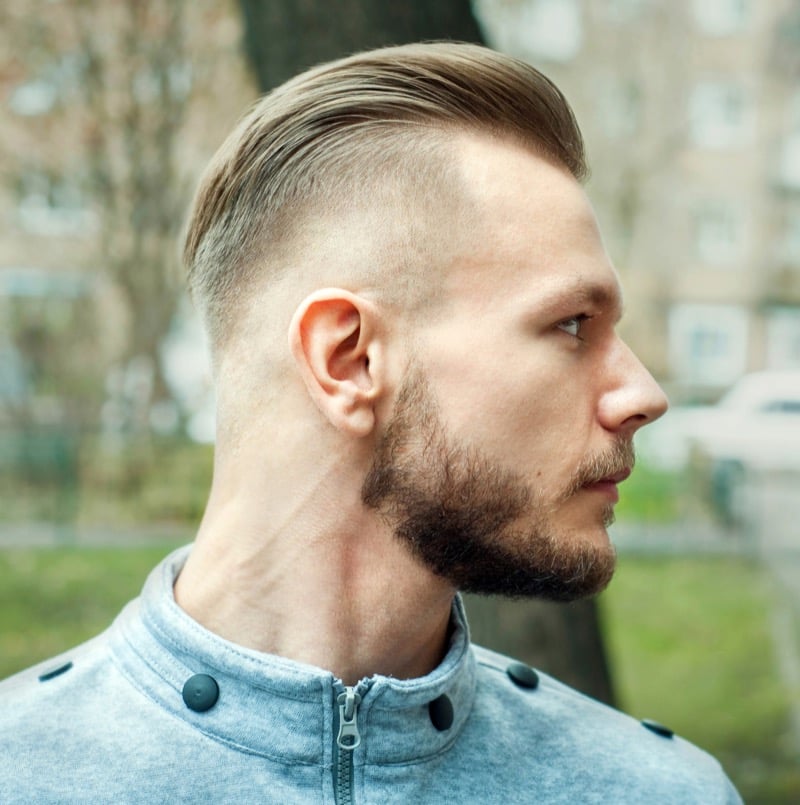
A slick back combs longer hair straight back off the face. With the sides shaved smooth, the combed-back top looks sharper.
Pomade gives the combed-back hair a glossy finish. Styling cream offers a less reflective alternative.
Textured Crop Razor Fade
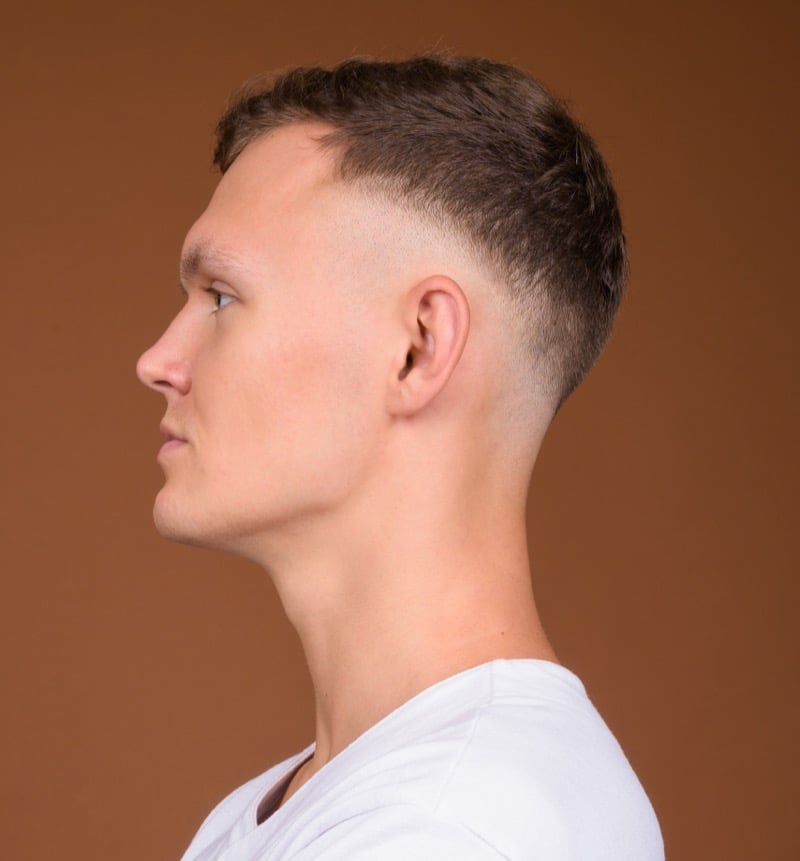
Choppy layers and a forward fringe give the textured crop an irregular outline. Shaving the sides to skin makes that uneven top more noticeable.
Rub a small amount of matte clay between the fingers and separate the layers on dry hair.
How to Ask for a Razor Fade
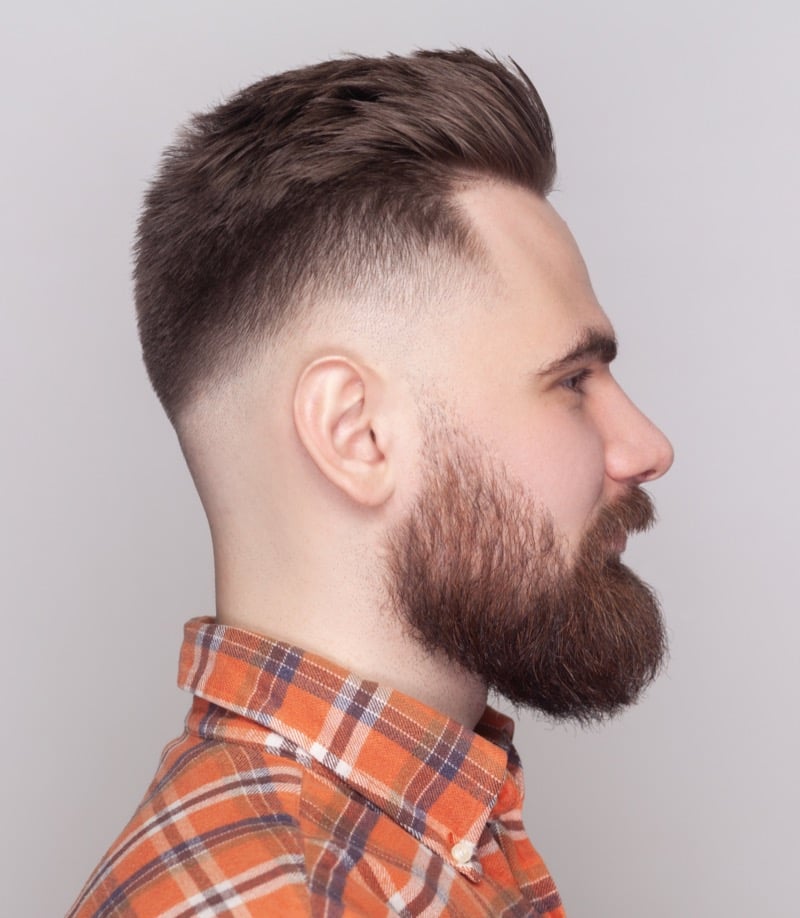
- Ask for a razor fade, then specify whether the transition should be low, mid or high.
- Choose a straight razor or foil shaver for the finish. Discuss irritation or razor bumps with the barber before shaving to skin.
- Specify the length to leave on top, either in inches or by naming the haircut.
- Explain how you want the edges around the ears and neckline finished.
- Bring a reference photo to show the fade height and the amount of skin you want exposed.
The shaved finish is most apparent during the first week. Touch-ups every one to two weeks help preserve the contrast.