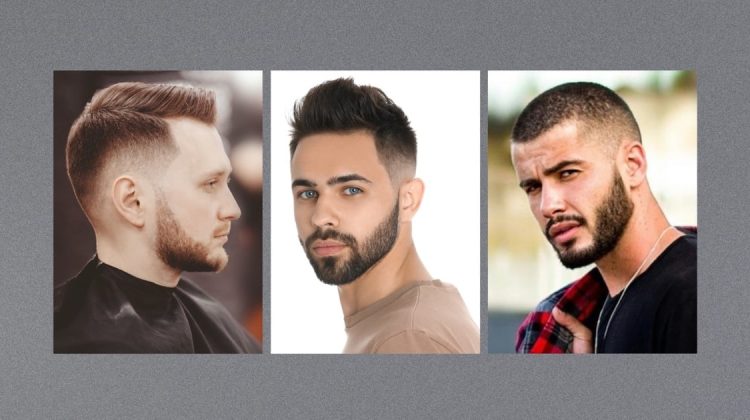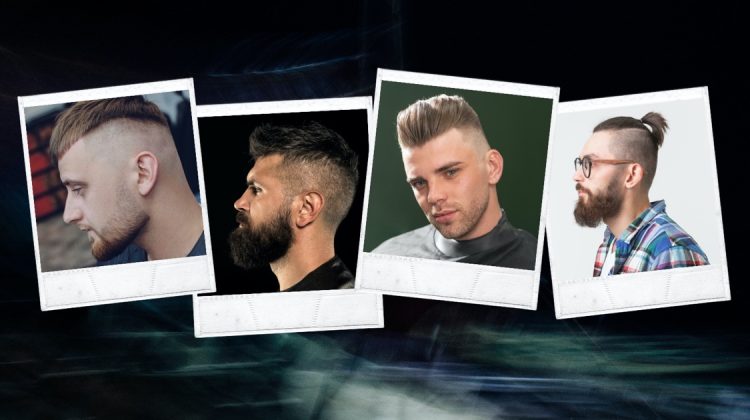
A temple fade, often called a temp fade, concentrates the shortest hair at the corners of the forehead. The blend moves from skin or close stubble into longer hair within a small area, leaving most of the sides untouched.
That small detail can change the outline of an entire haircut. Especially common with short coily hair and a defined line-up, the temple fade also suits straight, wavy and curly styles. Its appeal lies in the contrast between a precise hairline and the length surrounding it.
What Is a Temple Fade?
The barber works at the point where the front hairline meets the sideburn, using clippers and trimmers to blend upward and backward over roughly an inch or two. A trimmer can then define the hairline, making the corners especially prominent.
The details come down to three choices.
- Height. A low temple fade stays close to the sideburn. A mid or high temple fade climbs further up the side of the head.
- Spread. Some temple fades stay at the temples only. Others run down behind the ear and fade the nape too, which brings it close to a low taper fade.
- Line-up. A defined line-up across the forehead and temples emphasizes the corners. The combination is sometimes called a Brooklyn fade.
Temple Fade vs. Taper Fade
A taper shortens the hair gradually at the sideburns and the neckline, where hair naturally grows out. A temple fade focuses on the temple corners and leaves more length on the rest of the sides. The two are often combined, and barbers call that a temple taper. For a fade that runs all the way around the head, see our guide to the types of fade haircuts.
Temple Fade Haircuts
Buzz Cut Temple Fade

A buzz cut keeps the hair one short length all over. A close guard exposes more scalp, while a longer one leaves a denser surface.
The temple fade gives an otherwise uniform cut more definition at the corners. The top requires little styling, although the hairline benefits from regular touch-ups.
Comb Over Temple Fade

With the hair parted and swept to one side, a comb over has a distinct direction. A temp fade tidies the temples while keeping enough hair through the sides to maintain the cut’s traditional proportions.
It suits straight hair, which can be directed neatly along the part. Comb it into place with a little pomade or cream.
Cornrows With a Temple Fade

Cornrows braid the hair close to the scalp in rows. A temple taper cleans up the hairline around them, leaving the braid pattern uninterrupted at the edges.
Cutting the fade before braiding gives the barber clear access to the temples. The edges can then be refreshed between braiding appointments.
Curly Hair Temple Fade

A temp fade keeps the corners of a curly haircut tidy while leaving most of the volume at the sides. The result preserves width through the curls, with a tighter outline at the forehead.
Apply curl cream or leave-in conditioner to damp hair, working it through the longer curls while keeping product off the closely clipped temples.
Curly Mohawk With a Burst Temple Fade

A mohawk leaves a strip of longer hair down the center of the head. Here, the fade starts at the temple and curves around the ear in a semicircle, which is a burst fade.
The longer curls form the central strip, while the curved fade exposes the area around the ear. From the side, that arc is the defining detail.
Dreads With a Temple Fade

A temple fade frames dreads at the hairline. Because it only takes hair from the temple corners, the locs can be worn up, down or tied into buns, like here.
With the locs left intact, upkeep centers on the exposed hairline. A touch-up every two to three weeks can maintain its definition.
Pompadour Temple Fade

A pompadour sweeps the front up and back for height. The small fade at the temples leaves fullness along the sides to support the height on top.
Blow-dry the front upward to establish height, then use pomade to hold the sweep in place.
Textured Crop Temple Fade
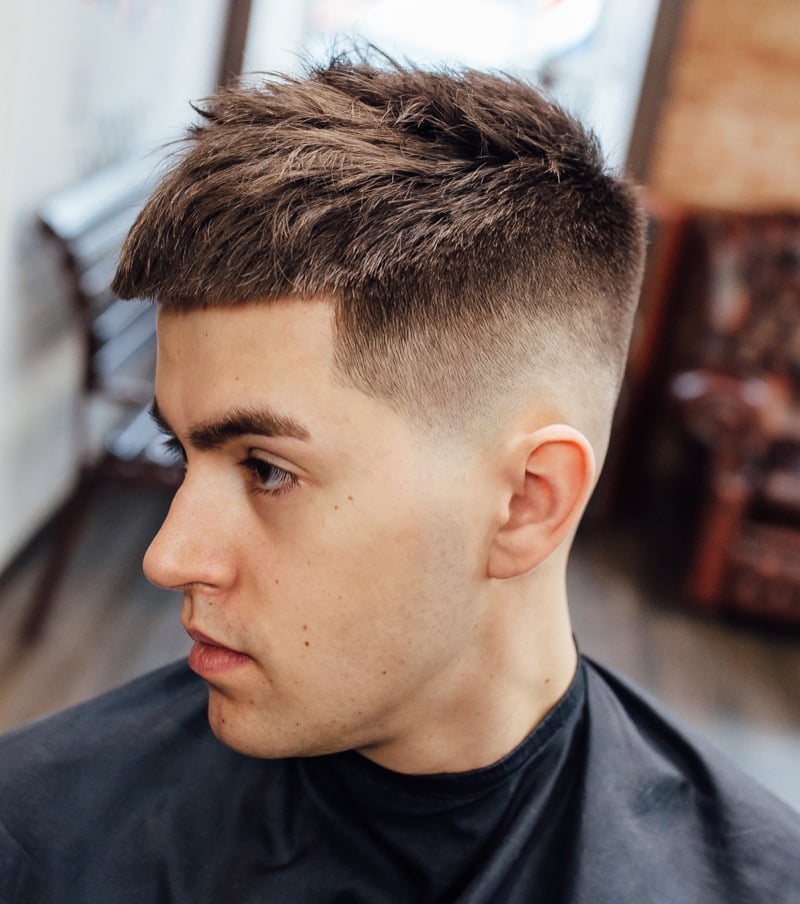
A textured crop is short on top, cut in layers and pushed forward into a short fringe. A temple taper sharpens the corners of the hairline and the sideburns, against the deliberately uneven layers on top.
A small amount of matte clay worked through dry hair separates the cropped layers and keeps the fringe from lying flat.
How to Ask for a Temple Fade
- Say "temp fade" or "temple fade." Most barbers know both.
- Choose the height. Low (at the sideburn), mid or high.
- Choose the finish. Skin, or a short guard for something softer.
- Decide on the spread. Temples only, or connected down to the nape like a taper.
- Ask for a line-up if you want sharp edges.
- Bring a photo. Temple fades vary a lot from one barber to another.
Because the shortest hair sits at the edges, regrowth is noticeable there first. A touch-up every two to three weeks is typical.