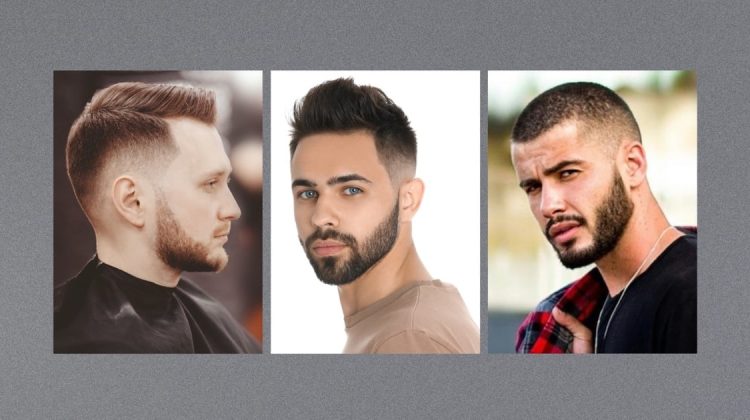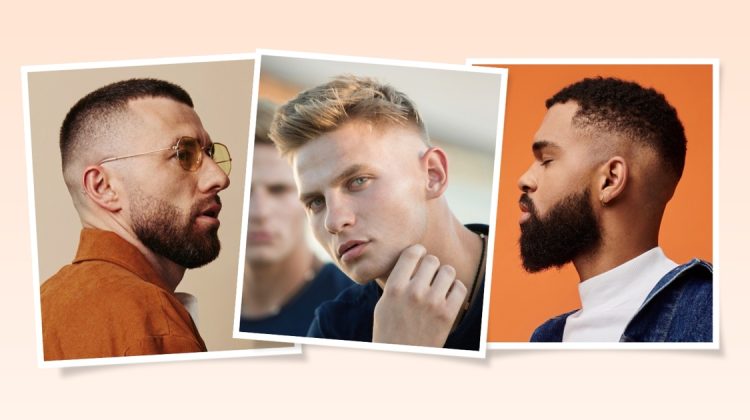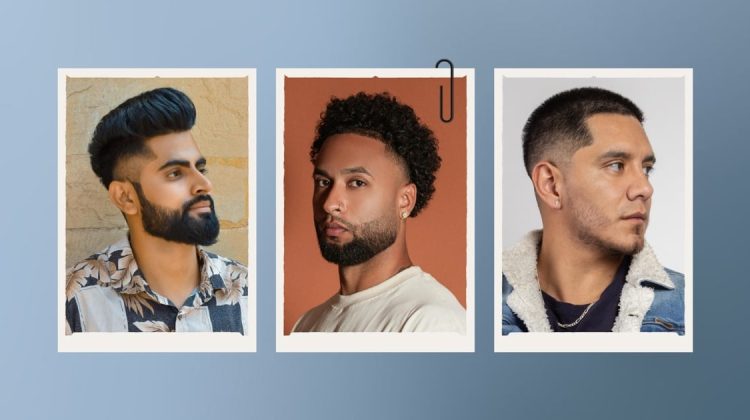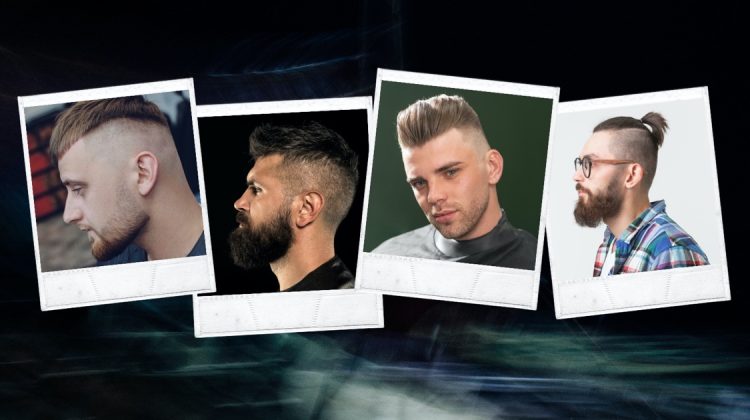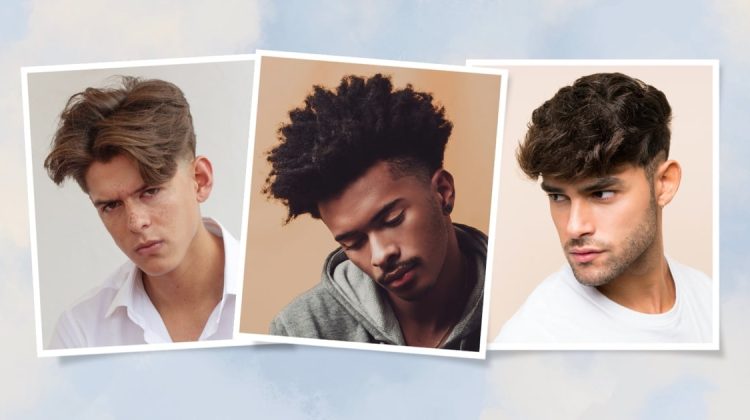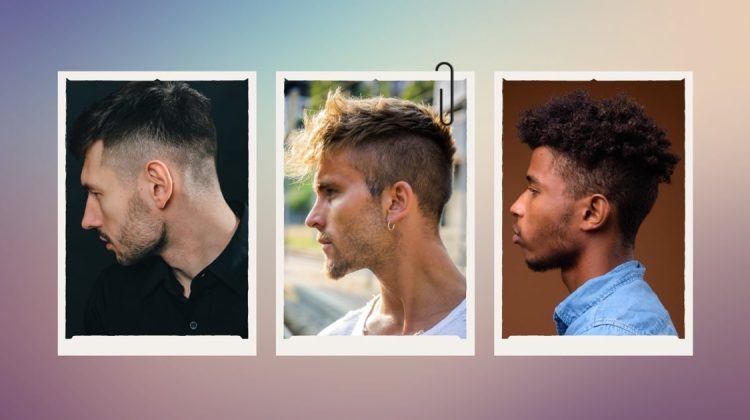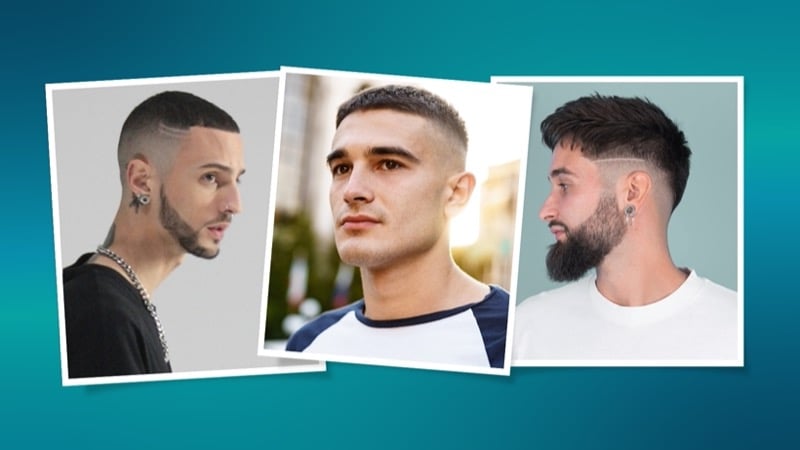
A skin fade takes the sides and back down to bare skin, leaving no visible hair at the base. Also called a bald fade, it creates a pronounced difference between the scalp and the length above.
The clean edge is part of its appeal, but it does not last long. Even a few days of regrowth can soften the finish. The height of the fade determines how much scalp is exposed and how dramatically the top stands apart.
What Is a Skin Fade?
A barber works from longer hair into progressively shorter clipper lengths, then removes the remaining stubble at the base with a foil shaver. A straight razor may be used for a razor fade. The transition needs careful blending because any uneven line becomes conspicuous against the scalp.
The height changes the effect:
- Low skin fade: bare skin stays close to the ears and nape, leaving most of the sides covered.
- Mid skin fade: the transition rises toward the temples, exposing more scalp beneath the hair on top.
- High skin fade: the bare section reaches toward the upper sides of the head, leaving a narrow area of longer hair above.
The same skin-short finish can follow a burst or drop shape. A skin taper confines it to the sideburns and neckline.
Skin Fade Haircuts
Low Skin Fade
Short Afro
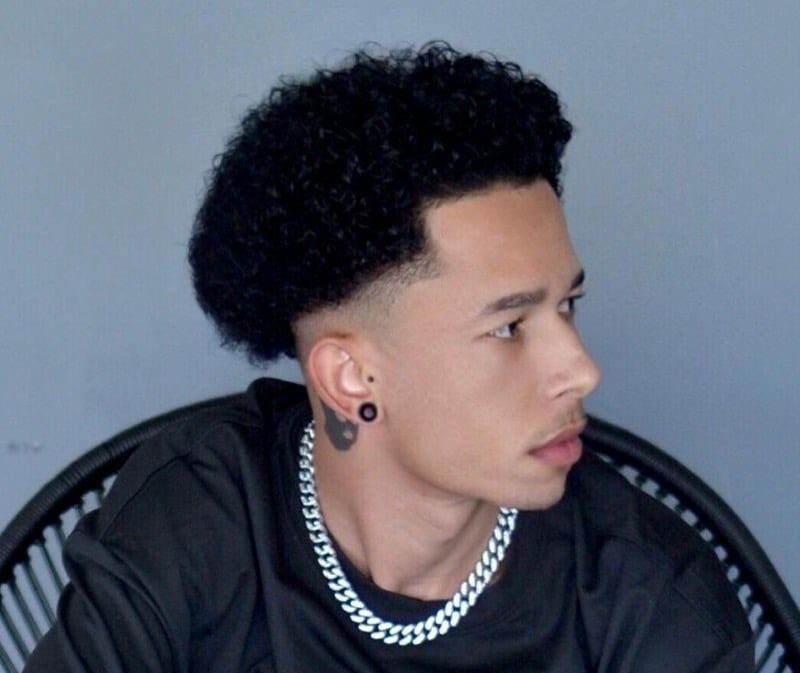
A low skin fade follows the lower edge of a short afro, keeping the rounded silhouette full above the ears. The exposed strip of scalp makes the density of the coils more apparent.
A line-up can define the forehead and temples. Moisturizer helps prevent dry coils, while a curl sponge can give the top more separation.
Mid Skin Fade
Crew Cut
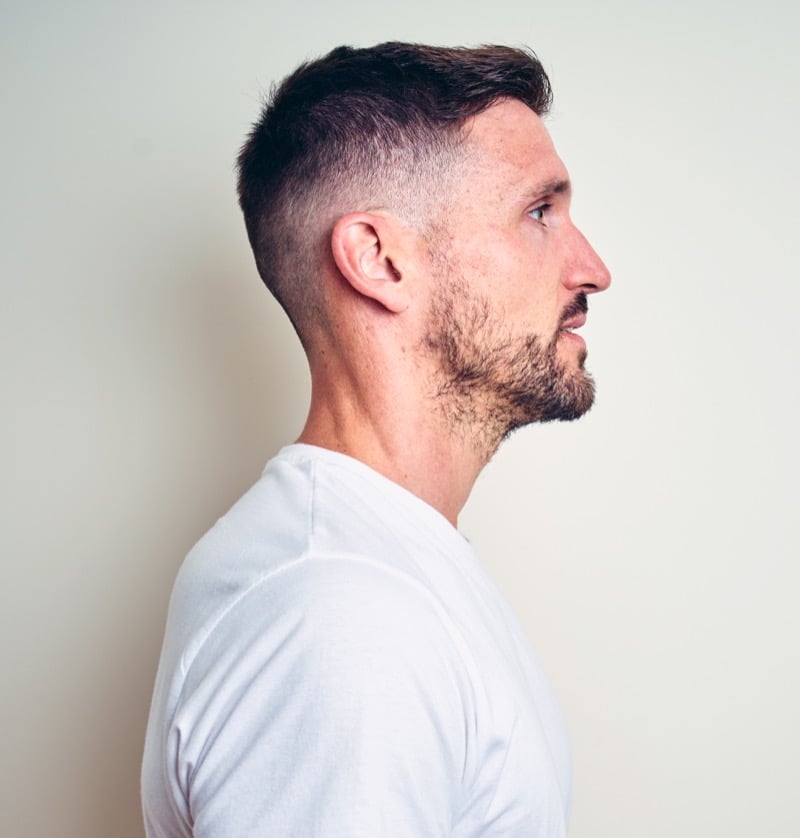
The crew cut leaves slightly more hair on top, particularly toward the forehead. Taking the sides to skin at mid height accentuates that modest difference in length.
The short front can be lifted with a touch of matte paste or brushed to one side.
Pompadour
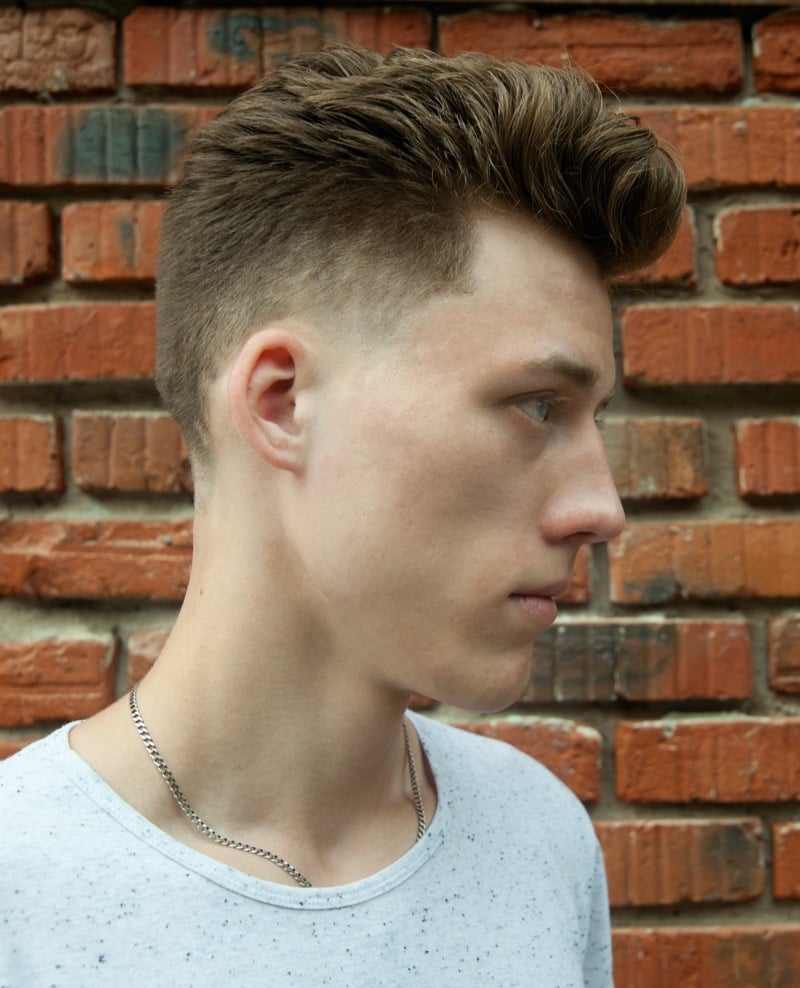
The pompadour lifts the hair away from the forehead and sweeps it back. Bare sides make the height at the front more pronounced, particularly in profile.
Use a round brush and blow-dryer to raise the front, then choose pomade for shine or styling cream for a softer surface. A razor-cleaned hairline adds definition.
Textured Top
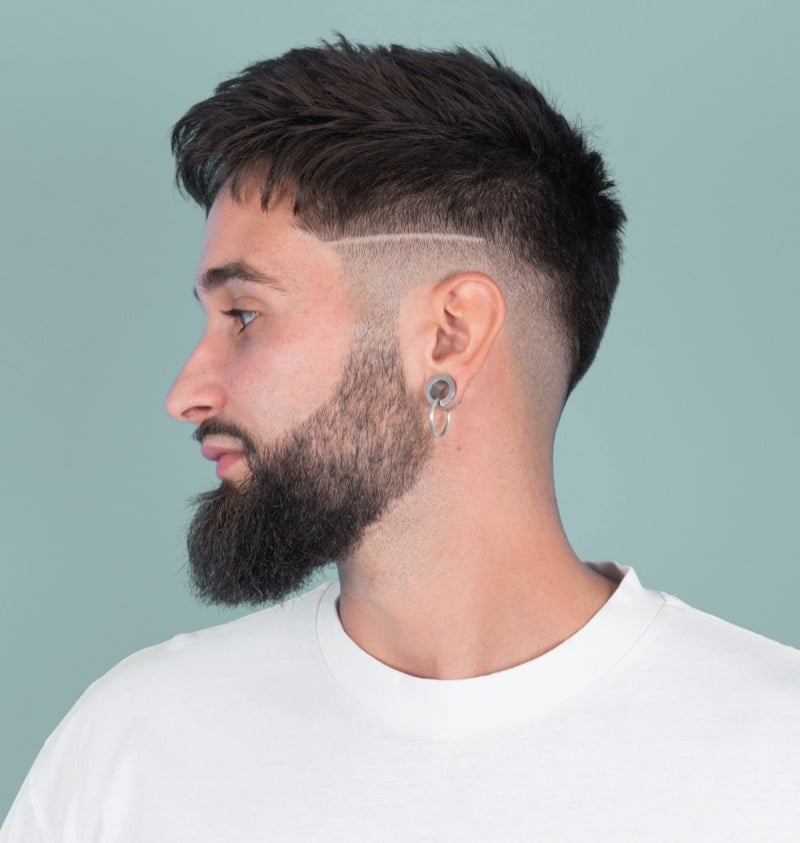
Layers give the longer top an irregular surface, with individual pieces falling in different directions. A mid skin fade removes bulk at the sides and draws attention to that separation.
Work matte clay through dry hair with your fingertips. Its grip helps keep the pieces distinct while limiting shine.
High Skin Fade
Brush Cut
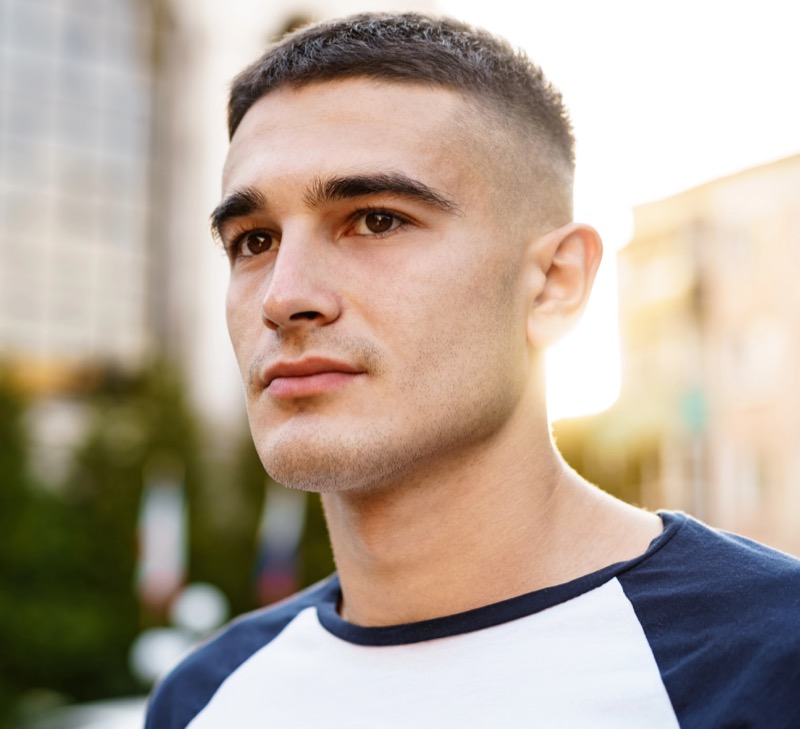
The brush cut gets its name from the short, upright hair on top. With the sides shaved high, that bristled surface becomes the cut’s defining feature.
Its short length calls for little daily styling, although the exposed sides show new growth quickly.
Buzz Cut
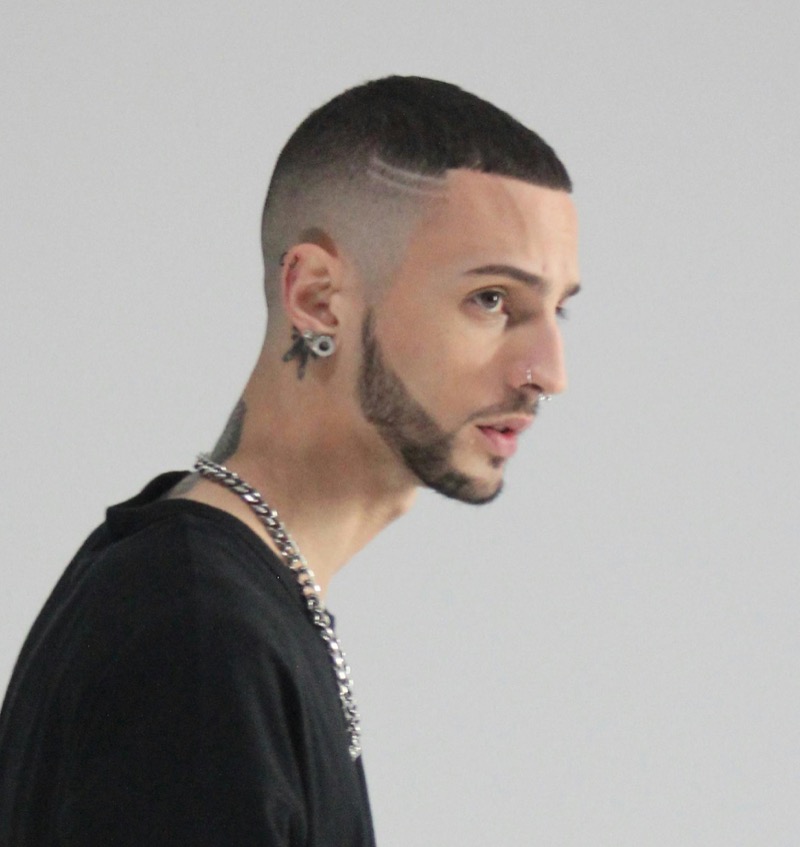
A skin fade buzz cut keeps the top at a uniform clipper length while shaving the sides to the scalp. The difference in length gives a basic buzz cut a more defined outline. The buzz cut fade has additional variations.
It works with straight, curly or coarse hair. Among short haircuts, it asks little of a morning routine, but the contrast fades as the sides grow in.
Comb Over
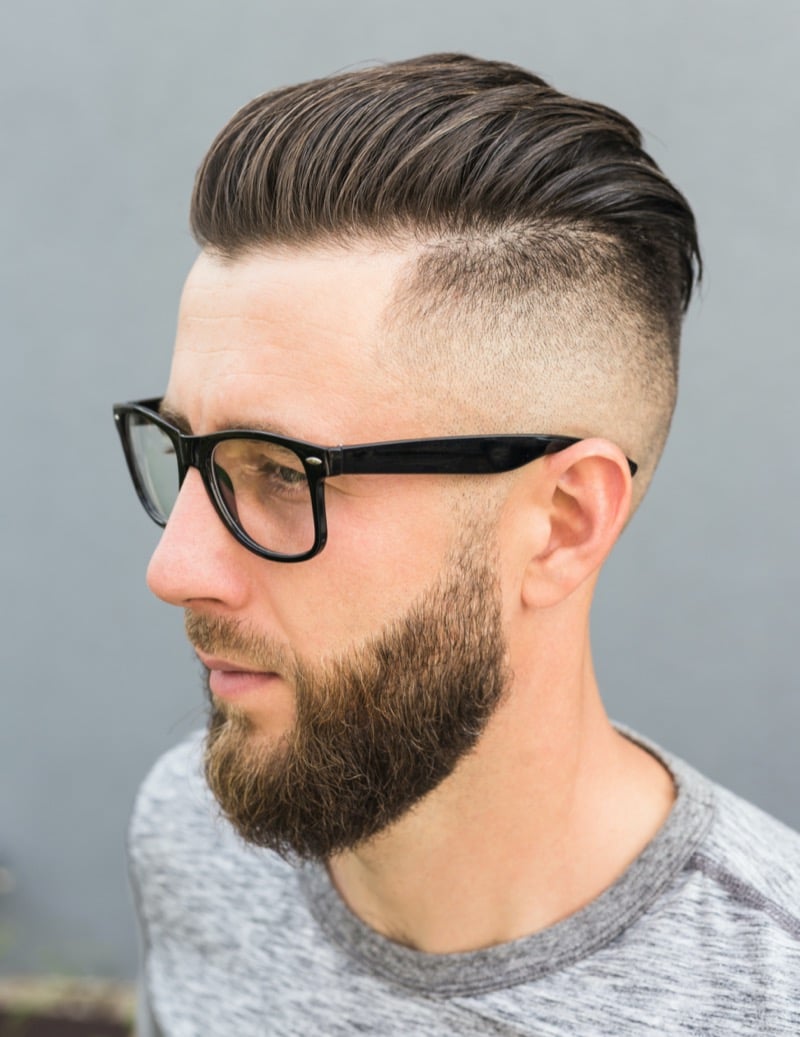
A skin fade comb over keeps roughly two to four inches on top, with the hair parted and directed across the head. Shaving the sides high makes the part and the swept length especially prominent.
Blow-dry along the part and finish with pomade or molding paste. Choosing a lower fade leaves more hair at the temples and softens the profile.
Curly Top
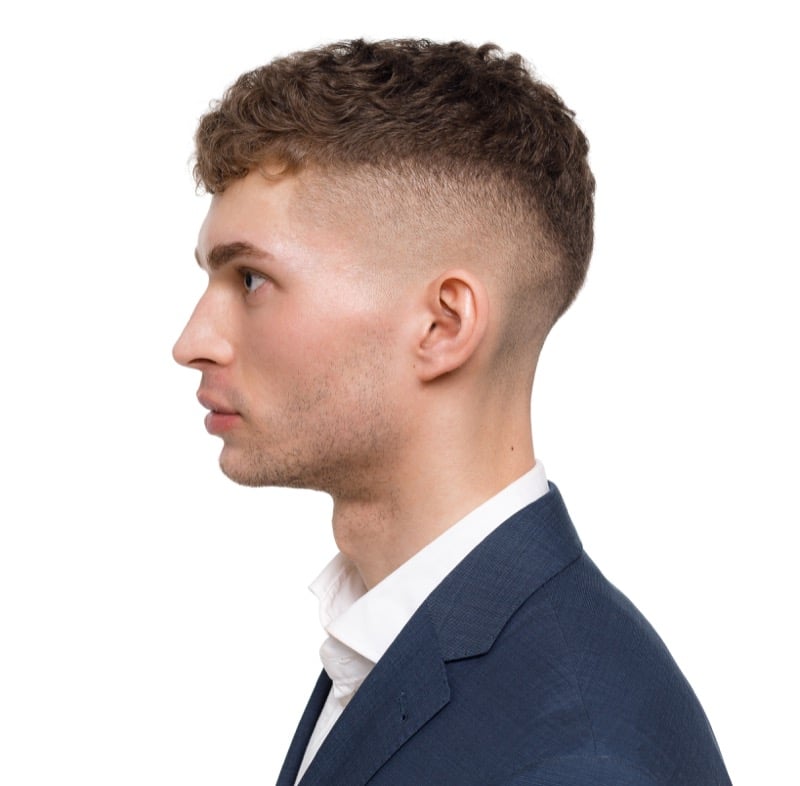
Curls gain prominence when the sides are shaved close. A high skin fade narrows the silhouette beneath the fuller top; a mid version retains more width around the temples.
Apply curl cream to damp hair, then let the curls dry with minimal handling to help retain their shape.
French Crop
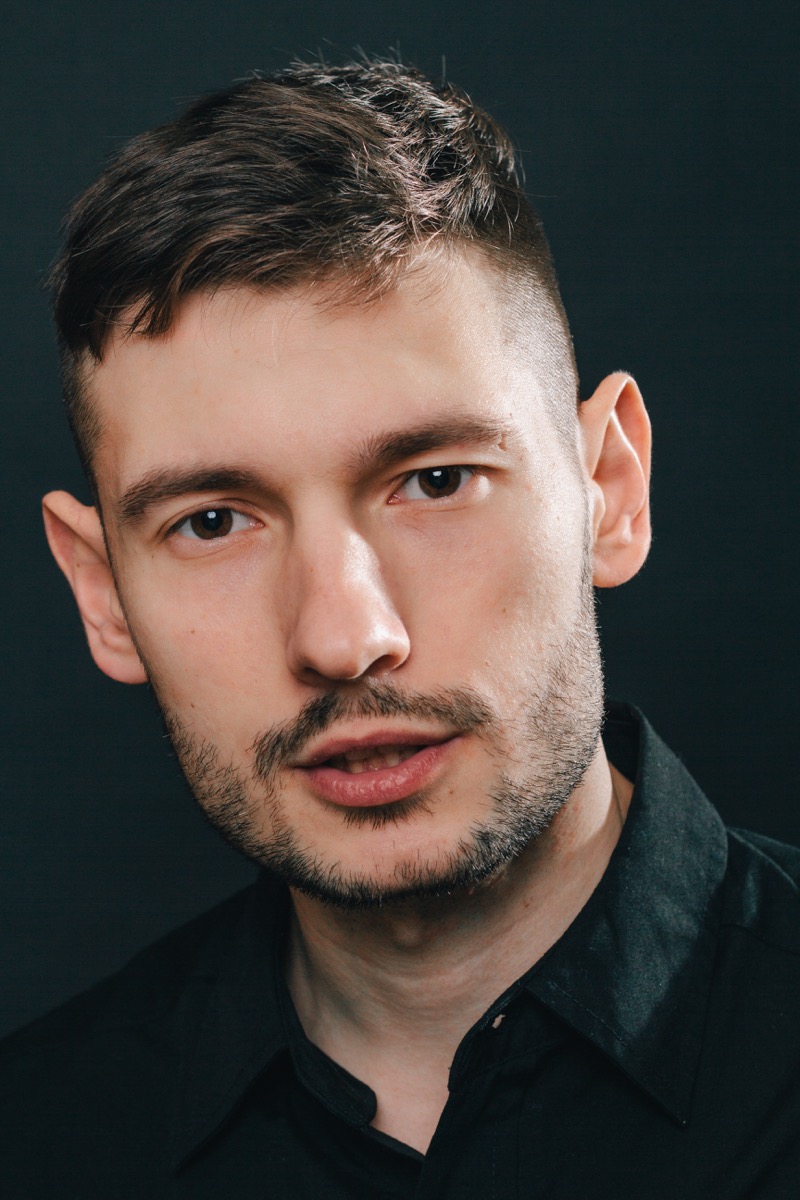
The French crop brings short hair forward into a fringe. Skin-short sides emphasize the horizontal line across the forehead and the compact shape above it.
Matte paste or texture powder can separate the fringe into small pieces. The short top needs little daily work.
High and Tight
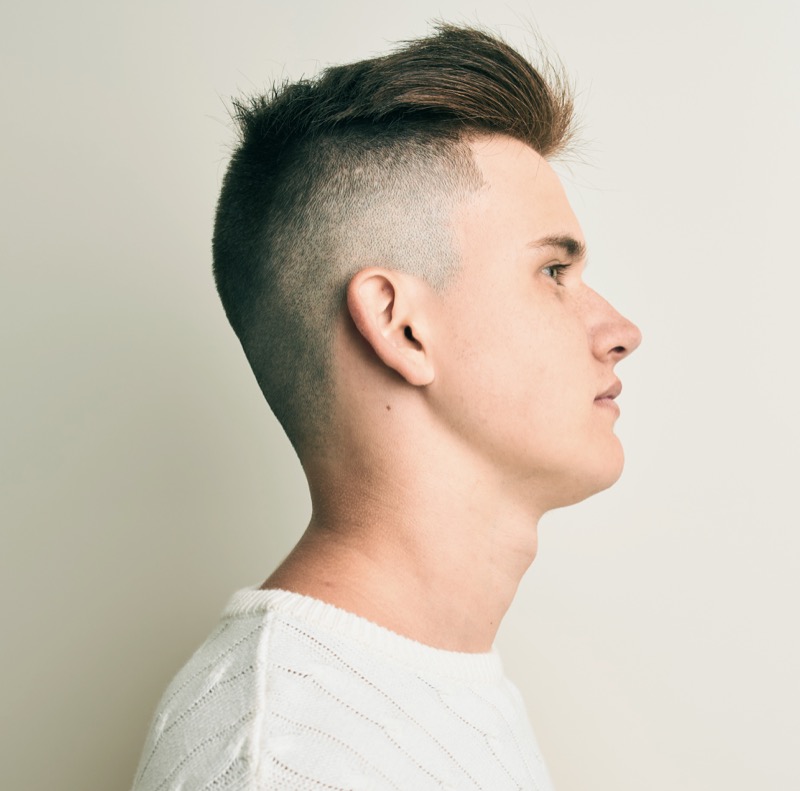
The high and tight comes from military barbering, with a small area of short hair left on top and the sides clipped high. Finishing those sides at bare skin makes the division especially stark.
There is little to style, though frequent barber visits are needed to retain the narrow top and close sides.
Slick Back
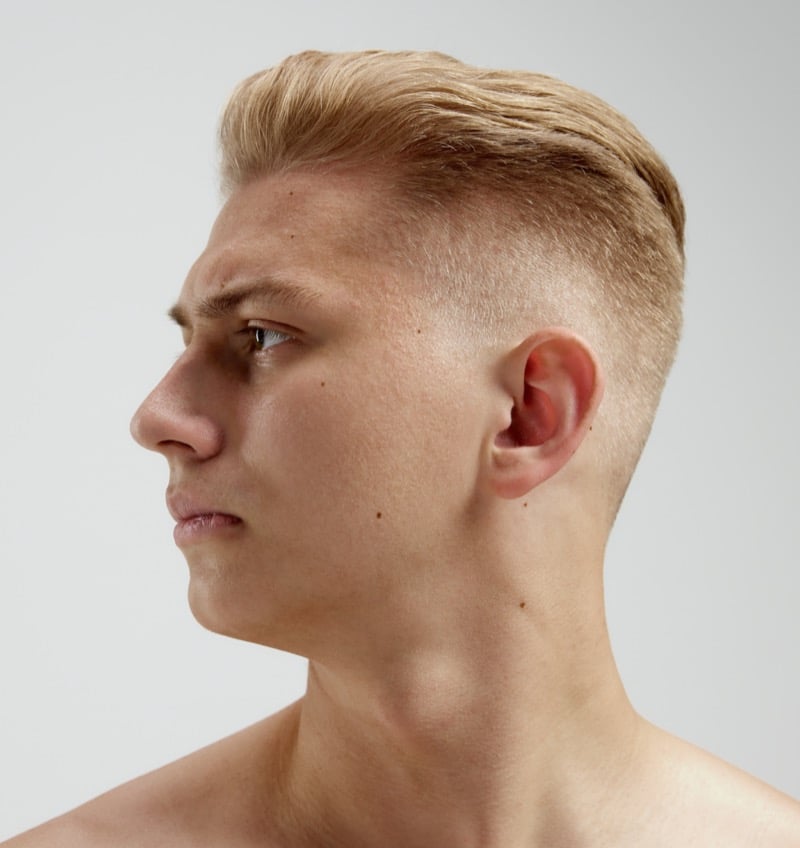
A slick back directs longer hair away from the forehead. Against bare sides, the combed-back length creates a pronounced line from the hairline toward the crown.
Medium to thick straight hair holds the shape readily. Pomade gives a glossy finish; matte cream produces a more relaxed surface.
Textured Crop
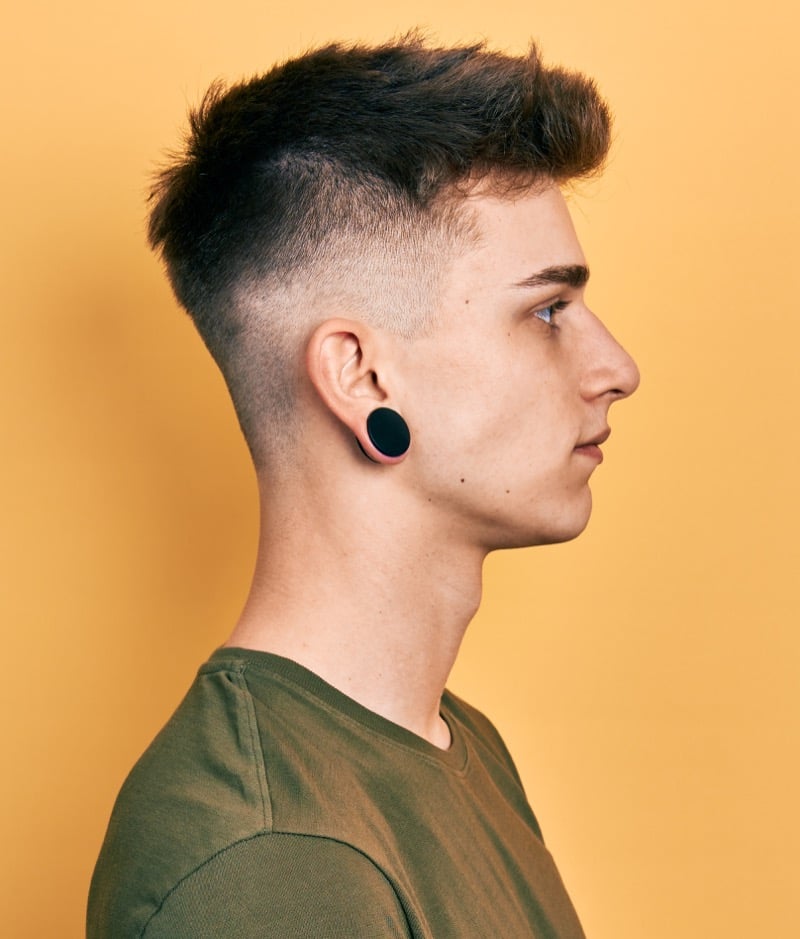
The textured crop leaves short, uneven lengths on top, often with a fringe cut into distinct pieces. A high skin fade sharpens the difference between that choppy surface and the bare sides.
Use a little matte clay on dry hair, separating the ends with your fingers.
How to Ask for a Skin Fade
- Ask for a skin fade and specify low, mid or high. Indicate where the exposed scalp should begin.
- Explain how gradual you want the transition into the longer hair above.
- Mention a burst, drop or taper shape if you want one.
- Specify the length and style to keep on top.
- Bring a reference photo to show the height and shape you have in mind.
A touch-up every 10 to 14 days keeps the shaved section distinct, though visible regrowth often appears sooner. Related options include the types of fade haircuts, low fade, mid fade and high fade.