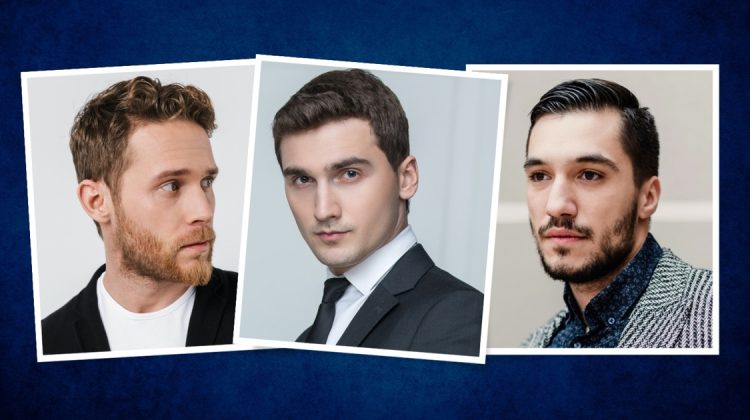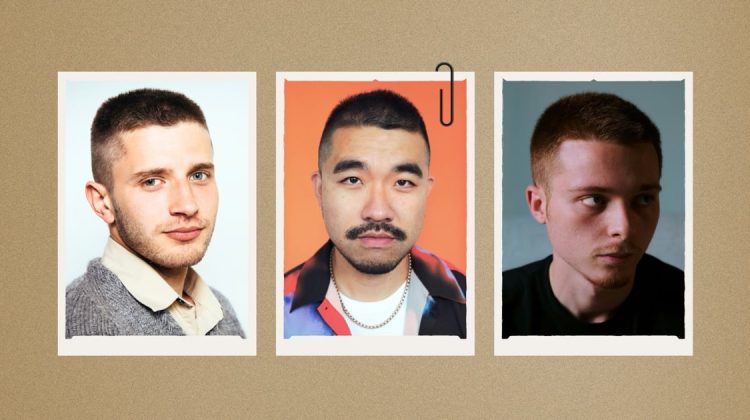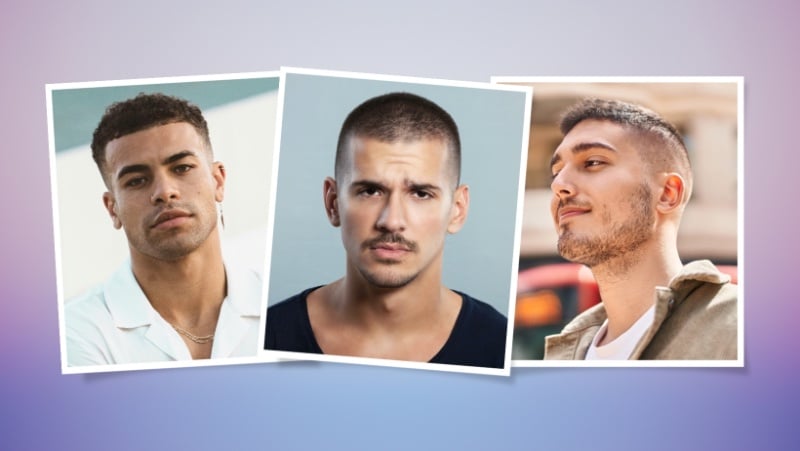
Short haircuts for men put small differences in length on display. A clipped top exposes the hairline, a crop drops toward the brow, and a quiff lifts away from it. Closely cut sides emphasize those changes. These men's haircuts range from an even buzz to longer fronts that need drying and shaping.
What Counts as a Short Haircut
Short haircuts generally leave about one to two inches on top, though the boundary varies with texture and the intended shape. Very short cuts may stay under an inch. At the longer end, two to three inches at the front can provide enough length for a small quiff, pompadour, or side part.
A fade graduates through the sides and back, with skin or a longer guard at its shortest point. A localized taper concentrates the shortest work around the sideburns and neckline. A disconnected undercut leaves an abrupt step beneath the longer top. Each gives the same front length a different side profile.
Short Haircuts for Men
These 21 short haircuts differ in fringe direction, the weight left through the crown, and how the top meets the sides.
Brush Up
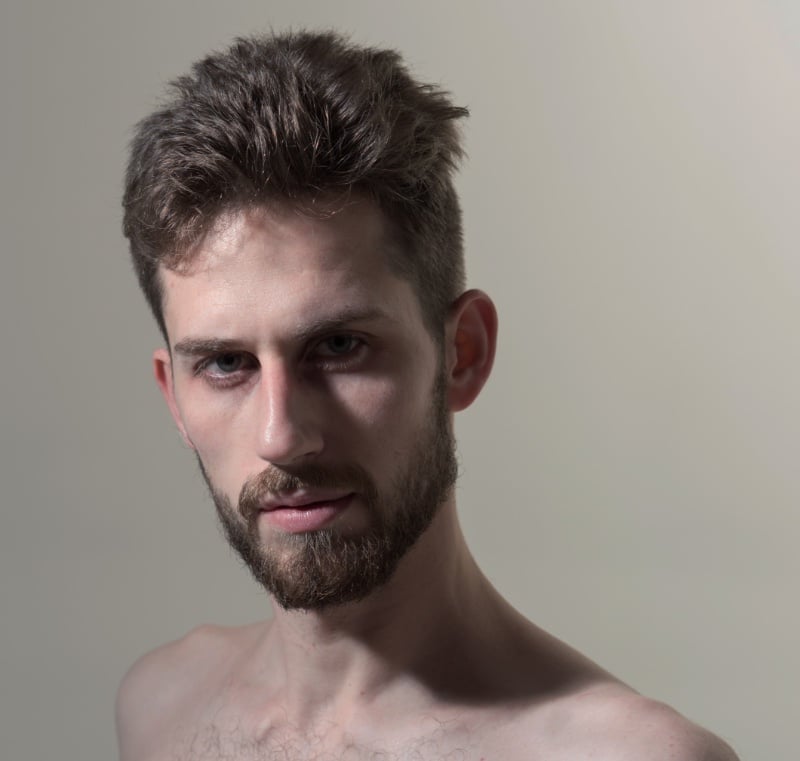
The brush up lifts short sections upright across the top, making their tips visible against the forehead. Tapered or faded sides narrow the outline beneath them. Drying at the roots helps the hair stand before a small amount of firm-hold product separates the ends.
Buzz Cut
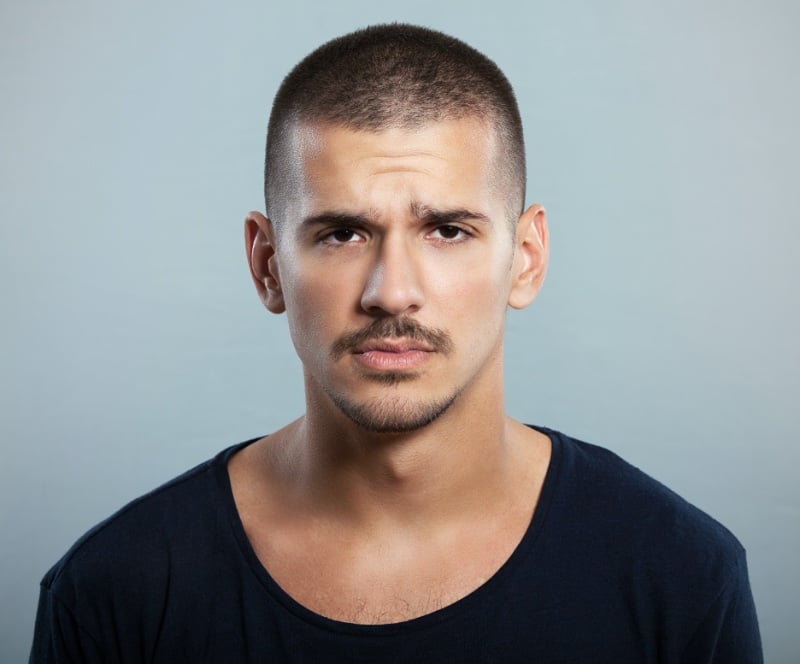
An even buzz cut leaves a short covering across the scalp. A close guard exposes more of the hairline and the contours above the ears; a longer one retains more coverage. Styling is usually unnecessary, though the outline changes visibly as the hair grows.
Caesar Cut
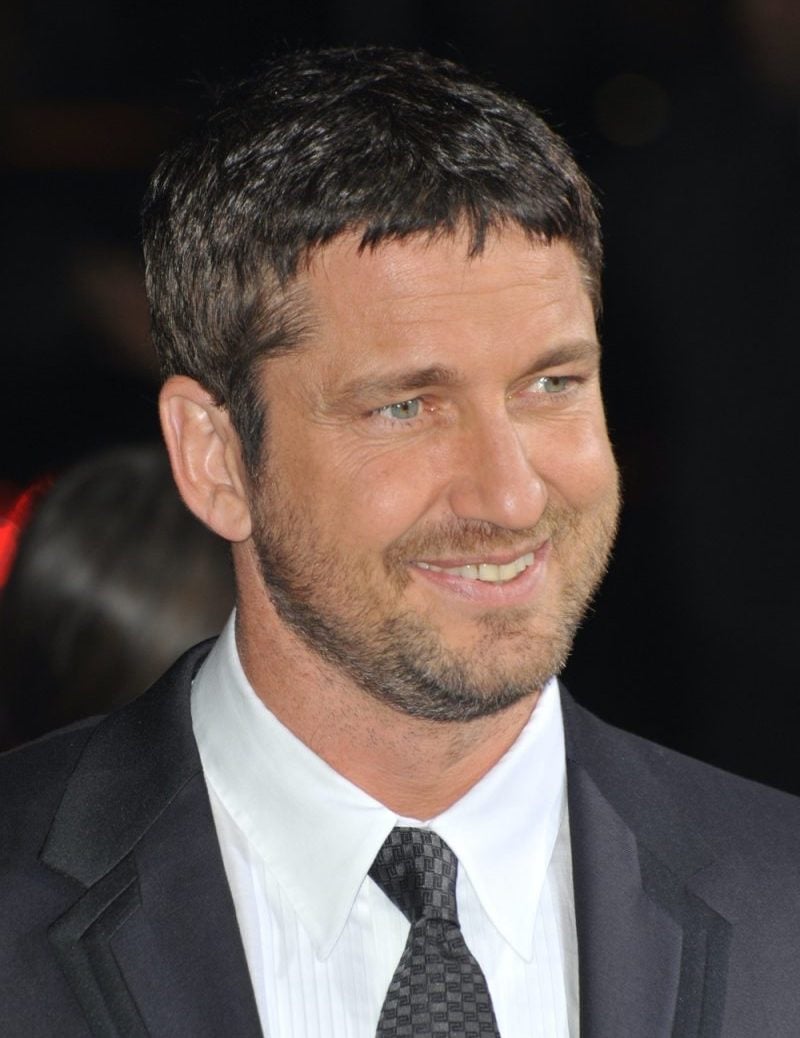
A short horizontal fringe gives the Caesar cut its compact front edge. The top brushes forward, with similar lengths through the front and crown. Coverage depends on the density remaining near the hairline. More on a haircut for thin hair.
Comb Over

The comb over sweeps the longer top across from a side part, often with a little lift at the roots. Faded sides expose the sweep; tapered sides let it merge more gradually into the profile. On straight hair, combing makes the direction of individual strands particularly visible.
Crew Cut
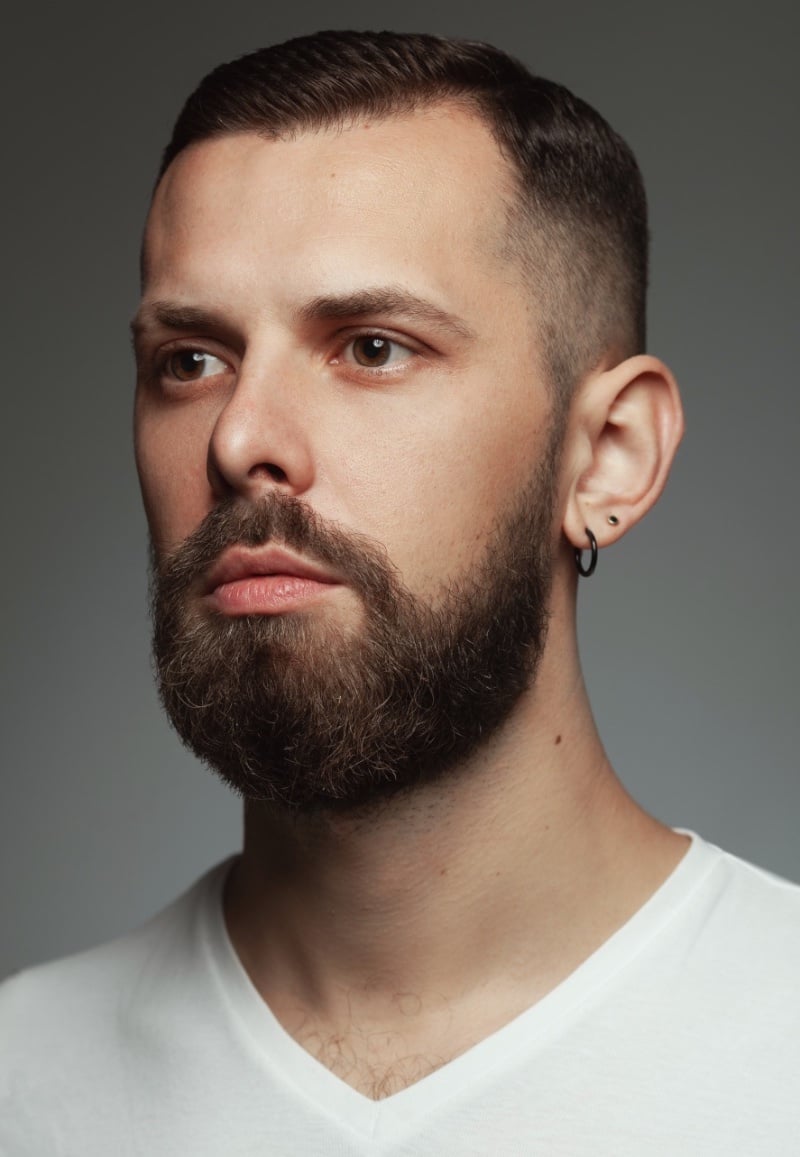
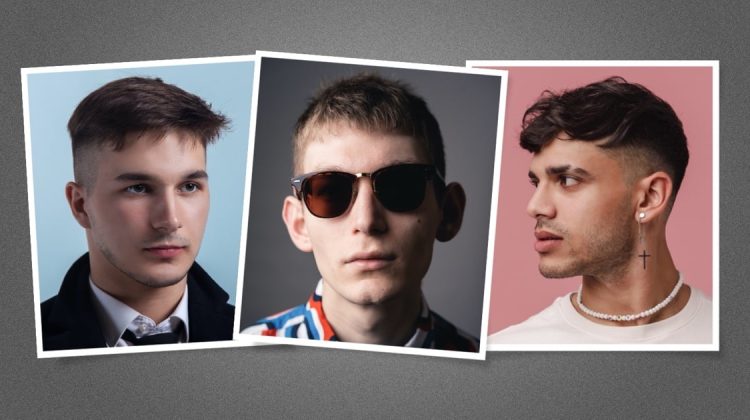
The crew cut slopes from a slightly longer front toward a shorter crown. That extra front length can stand upright or bend into a small side sweep. Keeping the crown close prevents the rear of the top from becoming as tall as the front.
Curly Fade
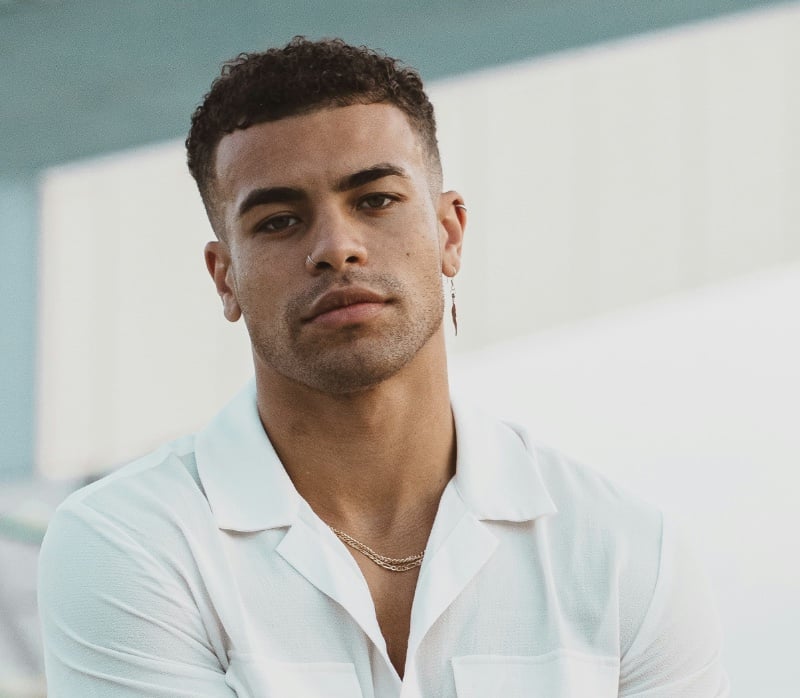
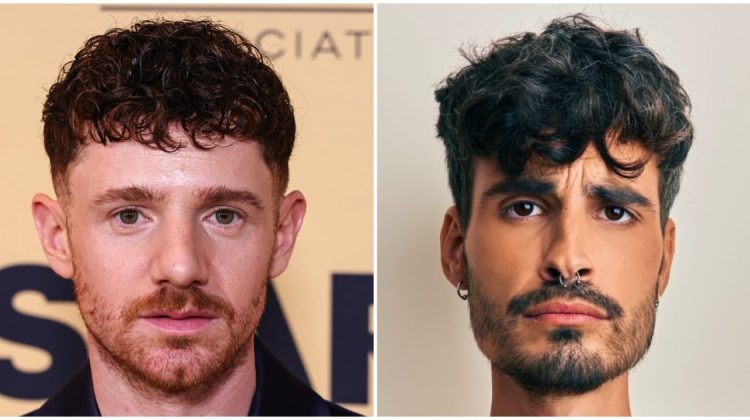
Short curls form a rounded top above the graduated sides of a curly fade. The barber can retain weight at the upper sides so the curls meet the blend, or clip higher to expose more of the temples. Judge the top after drying, when the curls have shortened into their usual shape. More haircuts for curly hair.
Faux Hawk
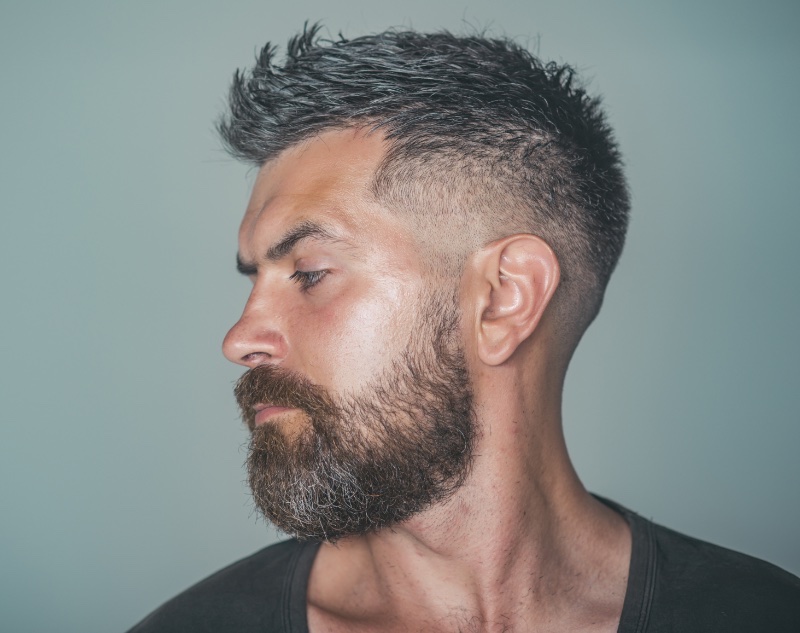
A broad central ridge gives the faux hawk its raised outline. The shorter sides retain more hair than a narrow-strip mohawk typically does. Direct the top inward and upward, letting the height decrease toward the crown.
French Crop

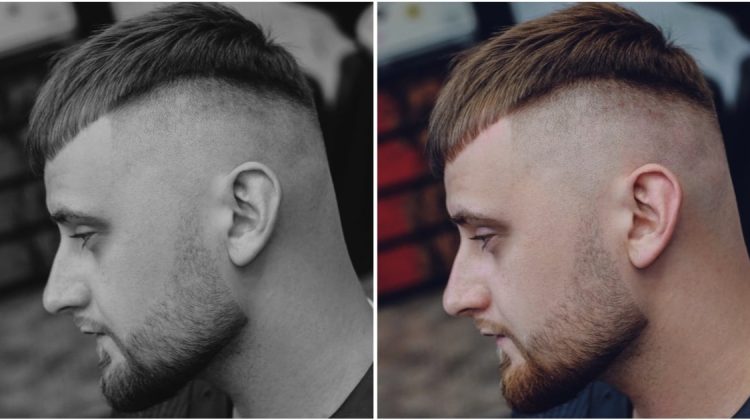
The French crop sends the top forward into a short fringe above closely cut sides. A blunt edge makes a distinct line across the brow; textured ends divide it into smaller pieces. Enough weight at the front helps the fringe retain its outline.
High & Tight

Very short sides rise high toward the top in the high and tight. A compact section of longer hair remains above, with a narrow transition near its outer edge. Regrowth becomes visible first along the closely clipped sides, even when the top still sits in place.
Ivy League
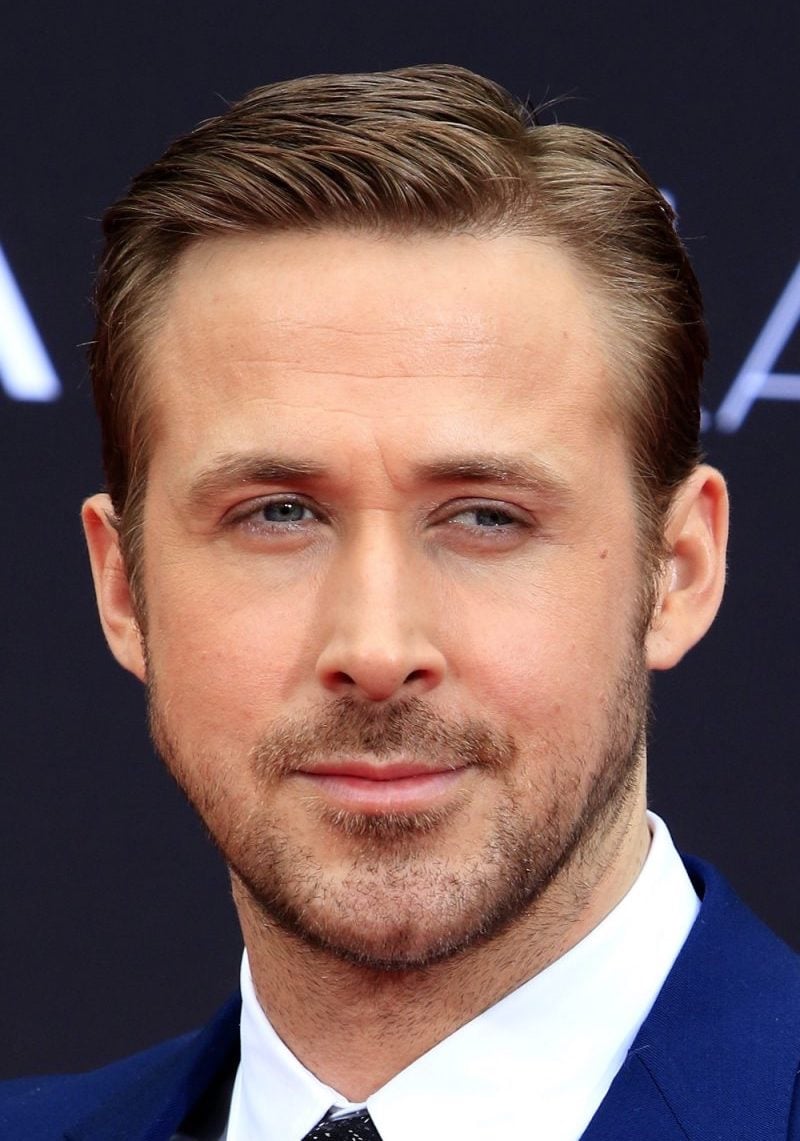
The Ivy League, also called the Harvard clip or Princeton, leaves enough length at the front of a crew cut for a side part. A shorter crown keeps the sweep close behind the forehead, while tapered sides expose the ears. More on Ryan Gosling's haircuts.
Middle Part
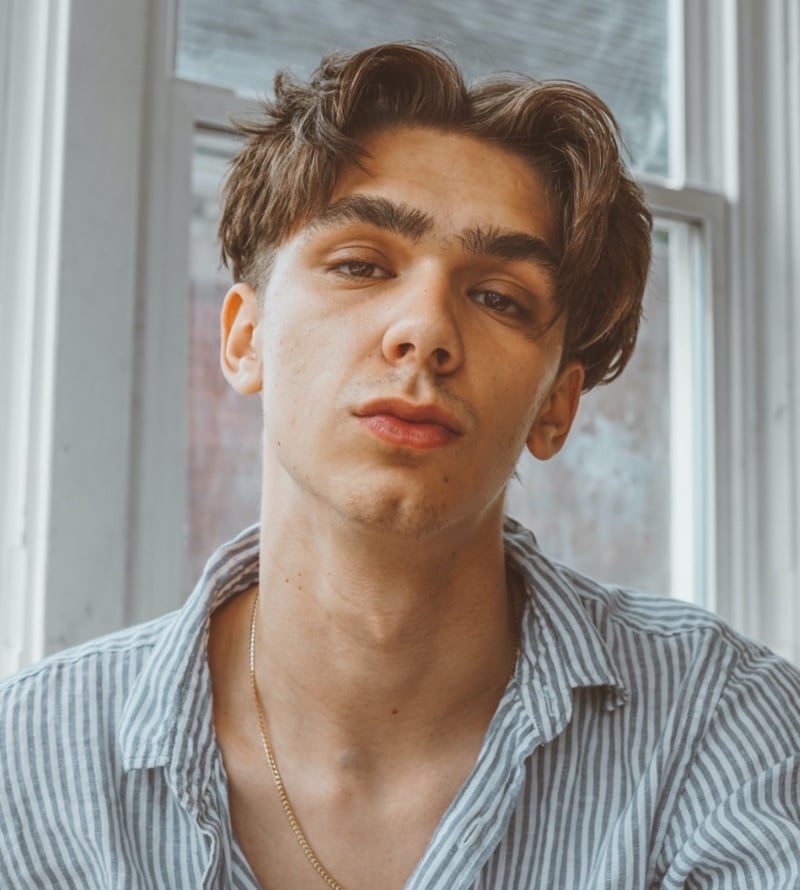
A short middle part divides the front into two sections that bend away from the center. The ends may sit above the brows or turn toward the temples. On wavy hair those bends are more pronounced, though the growth pattern can give one side more lift.
Pompadour
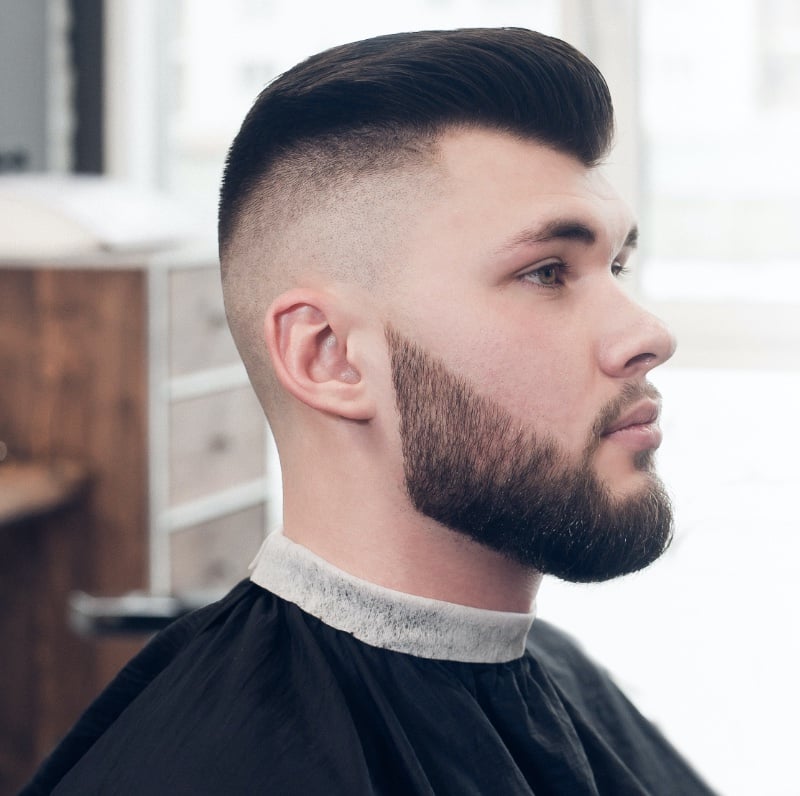
The modern pompadour gathers front length into a raised curve that sweeps backward. Shorter hair behind it supports the shape, while faded or tapered sides expose its height in profile. Drying at the roots establishes the lift before the surface is combed into place.
Quiff
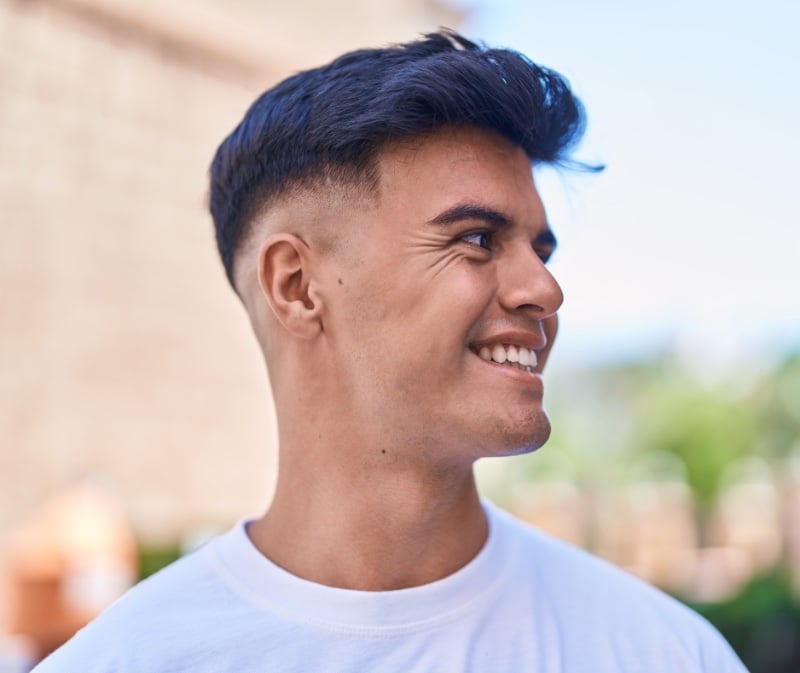
The quiff concentrates height at the front, leaving the crown shorter. The tips can sweep back or separate into small lifted sections. A mid skin fade exposes the temples beneath the front, with the blend reaching skin at its shortest point.
Side Part
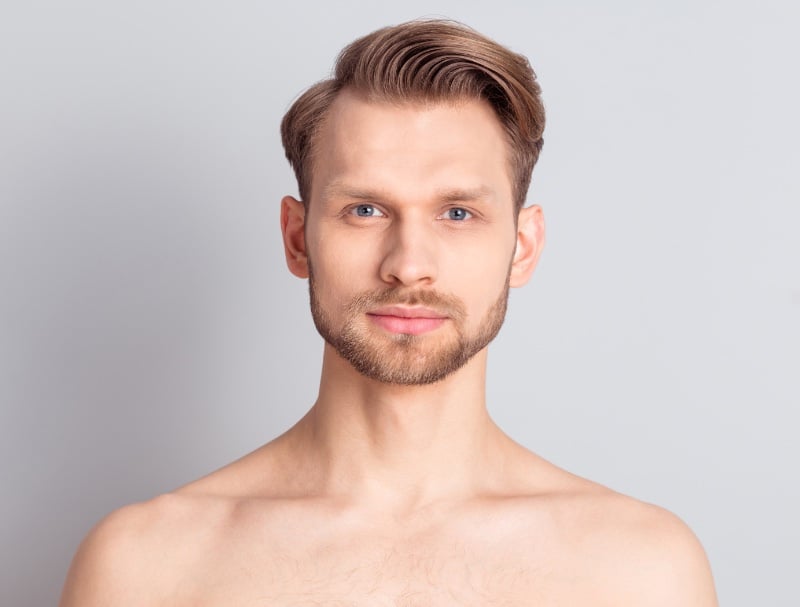
The side part establishes a dividing line for hair combed across the top. In a flatter version with scissor-cut sides, the sweep stays closer to the head than a lifted comb over. The parting and side treatment are separate choices, so faded sides are possible too.
Slick Back
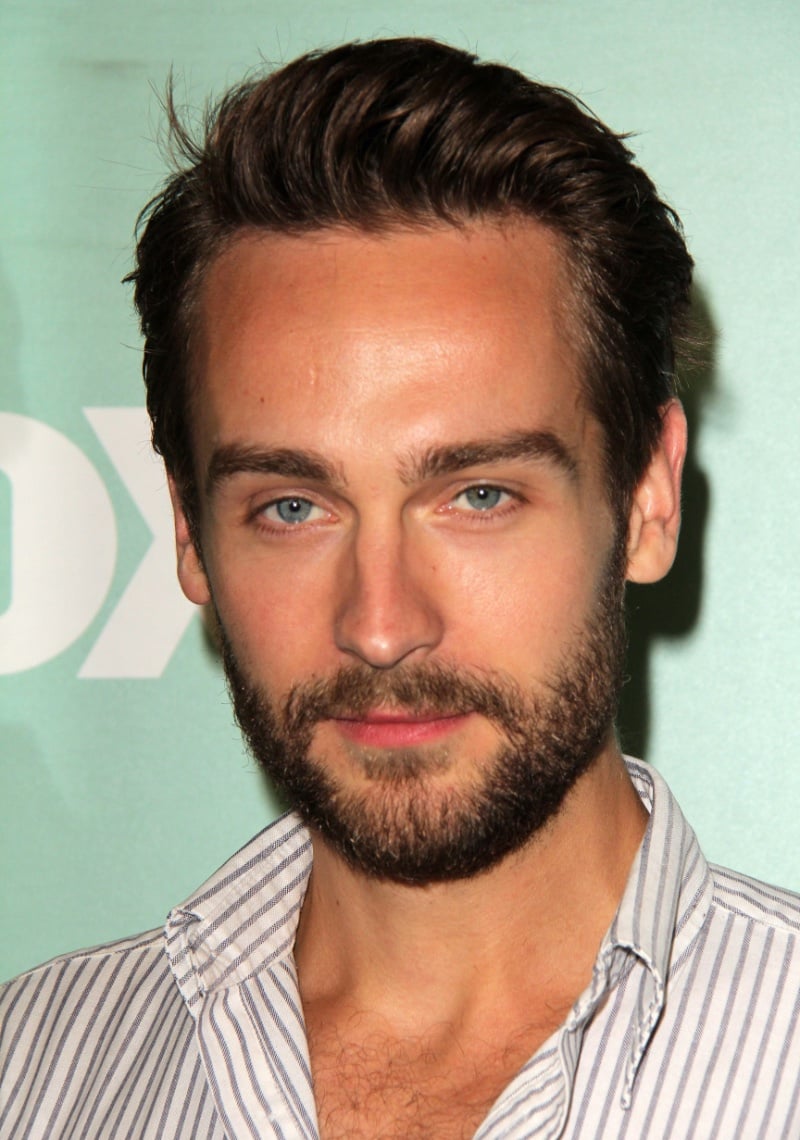
The slick back directs the top straight toward the rear, exposing the forehead. Enough front length is needed for the ends to lie back instead of standing up. Combing through pomade gathers the strands for a smoother, glossier surface.
Spiky Hair
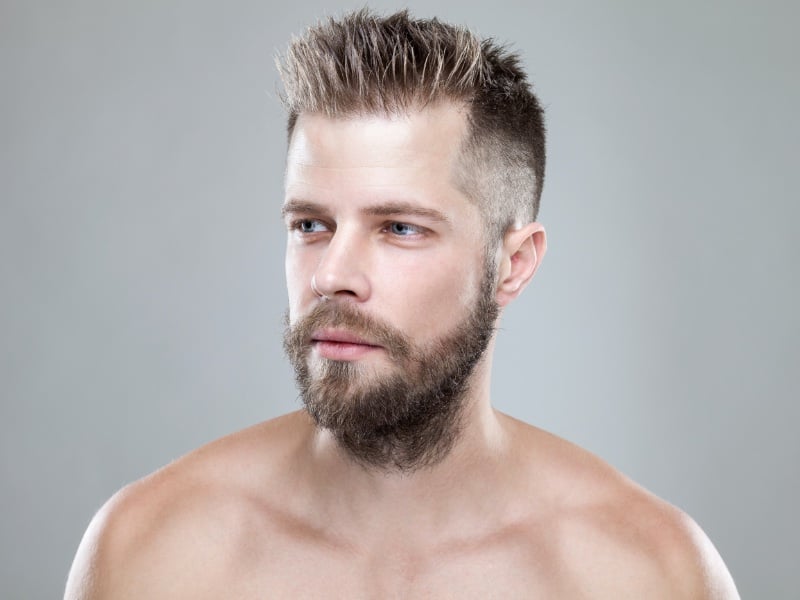
Short spikes separate the top into individual points. Keeping the lengths close allows several sections to stand at similar heights, while a longer front makes the outline rise toward the forehead. Pinch a little wax or gel through the tips to set their direction.
Tapered Haircut
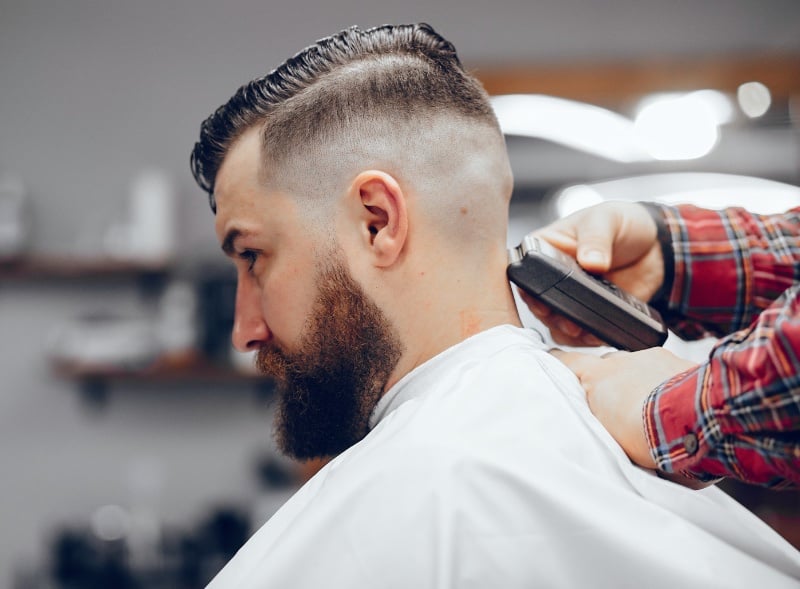
A tapered haircut shortens gradually toward the ears and neckline, leaving more fullness higher on the sides. That retained length makes the transition from top to sides less abrupt. The perimeter softens as it grows, especially around the ears. More on the low taper fade.
Textured Crop with Bangs

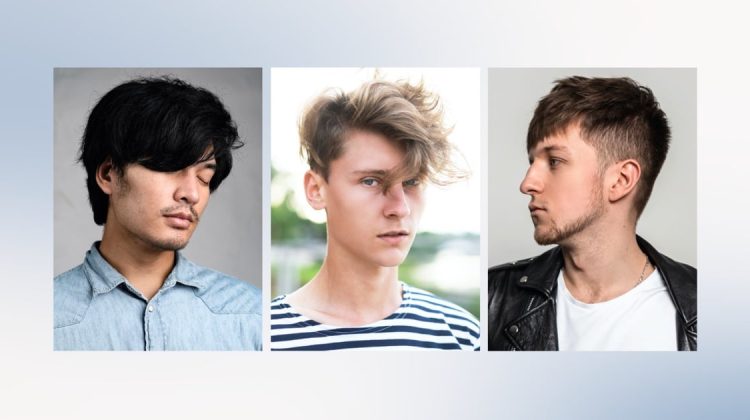
A textured crop with bangs leaves a longer, broken edge across the forehead. Shorter layers through the crown keep the extra length concentrated at the front. Removing weight selectively lets the ends separate while retaining coverage where the hair is finer.
Textured Fringe

A textured fringe falls in loose sections instead of one even line. Waves and curls create gaps between those sections naturally; straighter hair shows the point-cut ends. Work a little light paste through the tips if the fringe needs more separation.
Textured Top
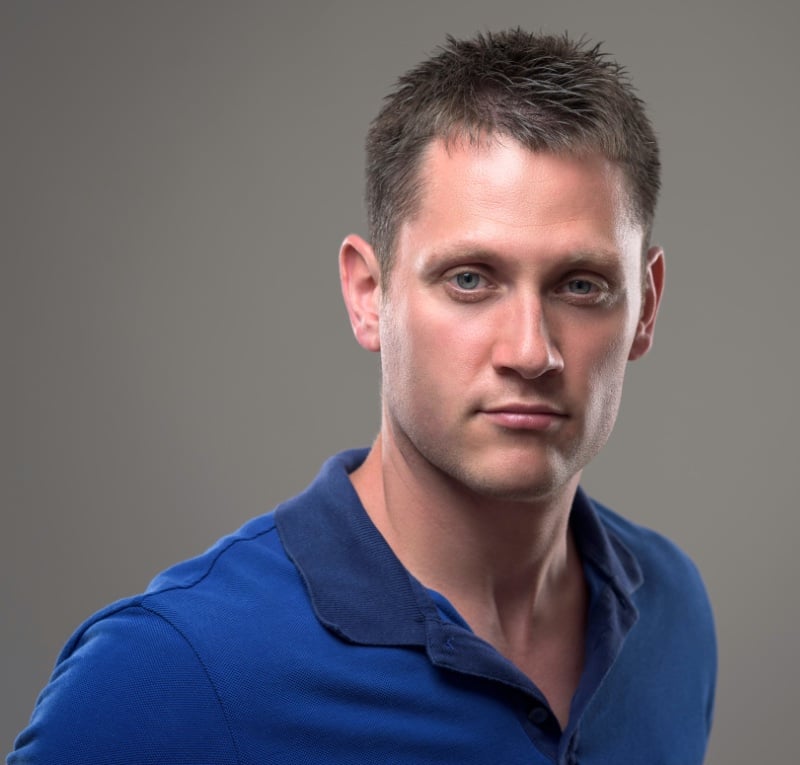
Layers break a short textured top into pieces that can point in different directions. More length at the crown reveals bends and cowlicks, while shorter sections stand closer to the scalp. Follow those growth patterns when styling so the top does not need constant reshaping.
Undercut
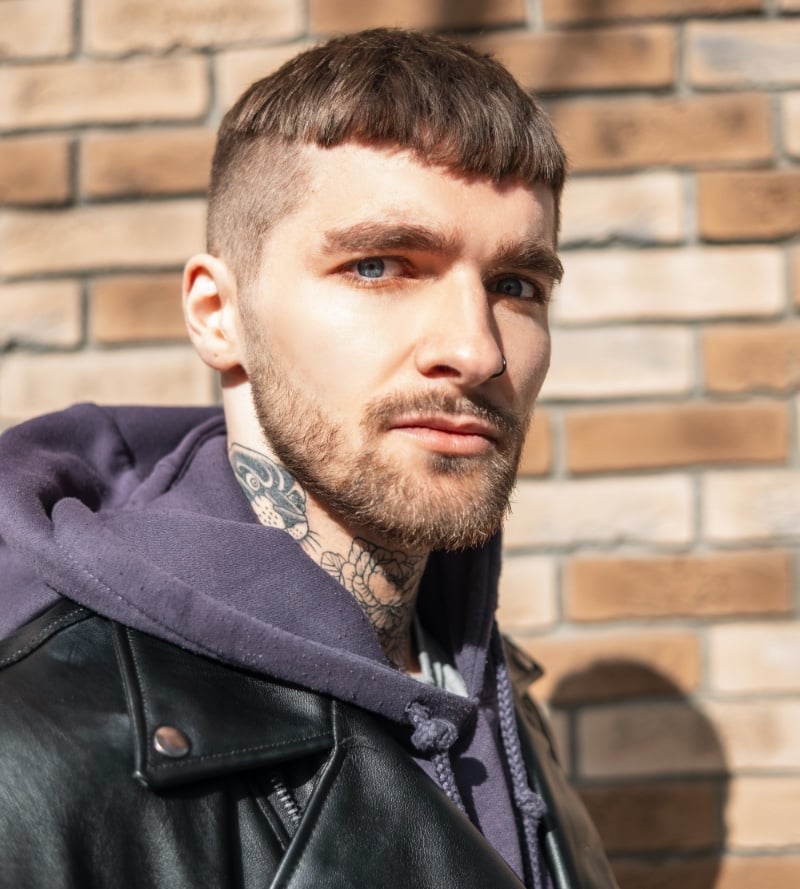
The undercut leaves an unblended step between closely clipped sides and a longer top. Sweeping the top back exposes the edge; letting it fall forward can partly cover it. The difference in length stays visible as the sides grow in.
How to Choose a Short Haircut

Choose according to which part of the cut needs attention each morning. A buzz usually needs no styling, while a quiff or pompadour may need drying at the roots to hold its height. Barber frequency depends on how close the sides should remain, since skin fades show regrowth sooner than fuller tapers.
Texture and density help determine where to leave weight. Waves can bend through a short part, curls need room to settle after drying, and fine hair may need a fuller fringe instead of extensive texturing. Bring a reference photo with similar density and agree on how the cut should look as it grows.