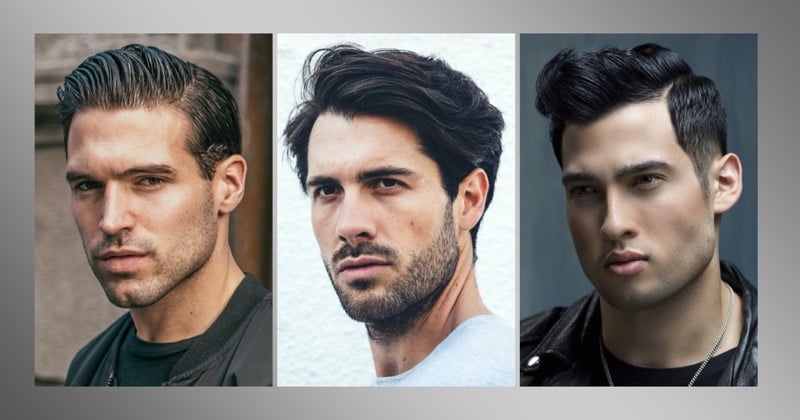
A side part haircut divides the top off-center, sending the larger section across or back and the smaller section toward the side. Shorter sides expose that division; longer hair can fall over it. Among men's haircuts, the part changes how the top's weight sits even when little length is removed.
What Is a Side Part Haircut?
The line often sits above the outer corner of an eye, near the curve of the head, though its position should follow the hair's growth. A comb separates a natural part during styling. A barber cuts a hard part into the hair with a trimmer or razor, leaving a strip of scalp that stays visible after the hair is disturbed.
The sides may be cut with scissors, tapered or faded. Combing the larger section across produces a comb over; lifting the front and directing it back brings the shape toward a pompadour or quiff. The part describes the division, while those names describe how the longer hair is worn.
Side Part Haircuts for Men
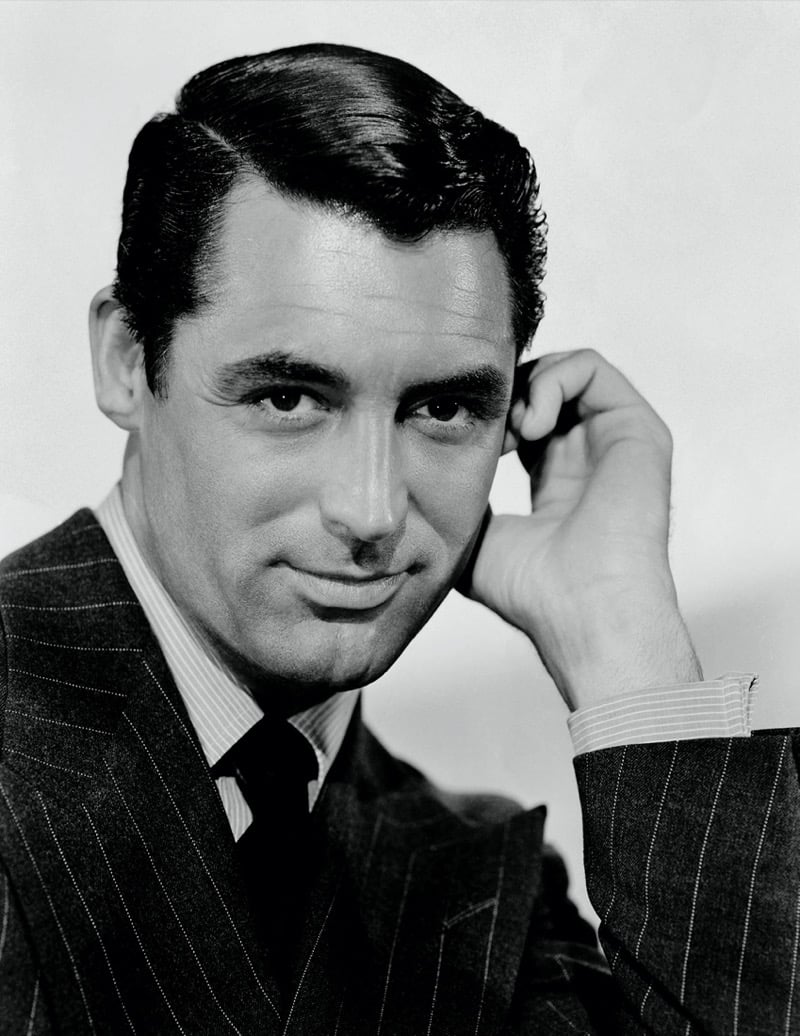
Cary Grant's 1941 publicity portrait shows the part as a narrow division beside a close, combed sweep. Longer waves, clipped sides and raised fronts change the proportions of that same arrangement.
Classic Side Part

Parallel comb lines travel across the top of a classic side part, with a slight rise above the forehead. Short sides keep the division visible, and the larger section follows one continuous direction toward the opposite temple.
Choose product for the finish and hold needed. Pomade can emphasize the comb marks with shine; a lighter application leaves more separation between strands.
Ivy League

The Ivy League leaves just enough length at the front to separate and brush aside above short sides. Straight or wavy hair reveals that short sweep, which sits lower than a quiff.
As the top grows, the front becomes easier to part but may start to fall onto the forehead. Keep that length if a looser finish is wanted, or shorten it to retain the compact outline.
Medium-Length Wavy Hair

Medium-length waves turn away from the part in broad bends, lifting near the forehead before falling toward the temples. Separate them with the fingers while drying so the bends remain visible. The line can be slightly irregular where the roots change direction.
Side-Swept Fringe

The fringe crosses the forehead diagonally from the side part, covering more of one brow. Shorter hair at the opposite temple exposes the starting point of that sweep. Enough front length allows the ends to lie across instead of springing upward.
Side Part Fade
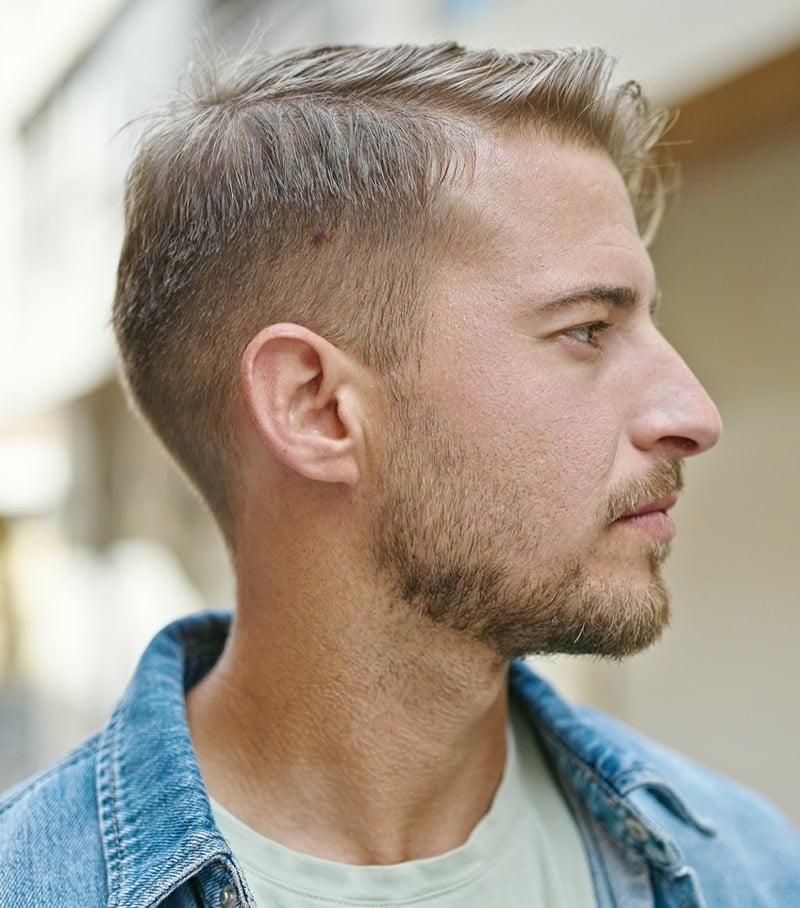
A side part fade graduates the sides beneath the longer, combed top. A mid fade takes that transition higher than a low fade, leaving less dark coverage around the temples. Either can end in skin or a longer guard.
As the fade grows in, stubble darkens the lower sides before the top changes much. Plan the next trim around that change in contrast instead of a fixed schedule.
Comb Over

The larger section of a comb over travels across from the part, with comb marks tracing its path. On straight hair, that continuous surface is especially visible. Dry the roots in the intended direction before adding product so the sweep does not depend on hold alone.
Asymmetrical Fringe

Longer front pieces hang over one side of the forehead, while the opposite edge ends nearer the temple. The side part makes that unequal length apparent. Ask the barber to check the fringe as it falls naturally before deciding how short to cut the longer edge.
Medium-Length Straight Cut

Straight lengths fall toward the ears on either side of the part, with a broad sweep at the front. Among medium-length hairstyles, this version retains enough side length to tuck back. The part remains visible at the roots even when the ends shift forward.
Pompadour
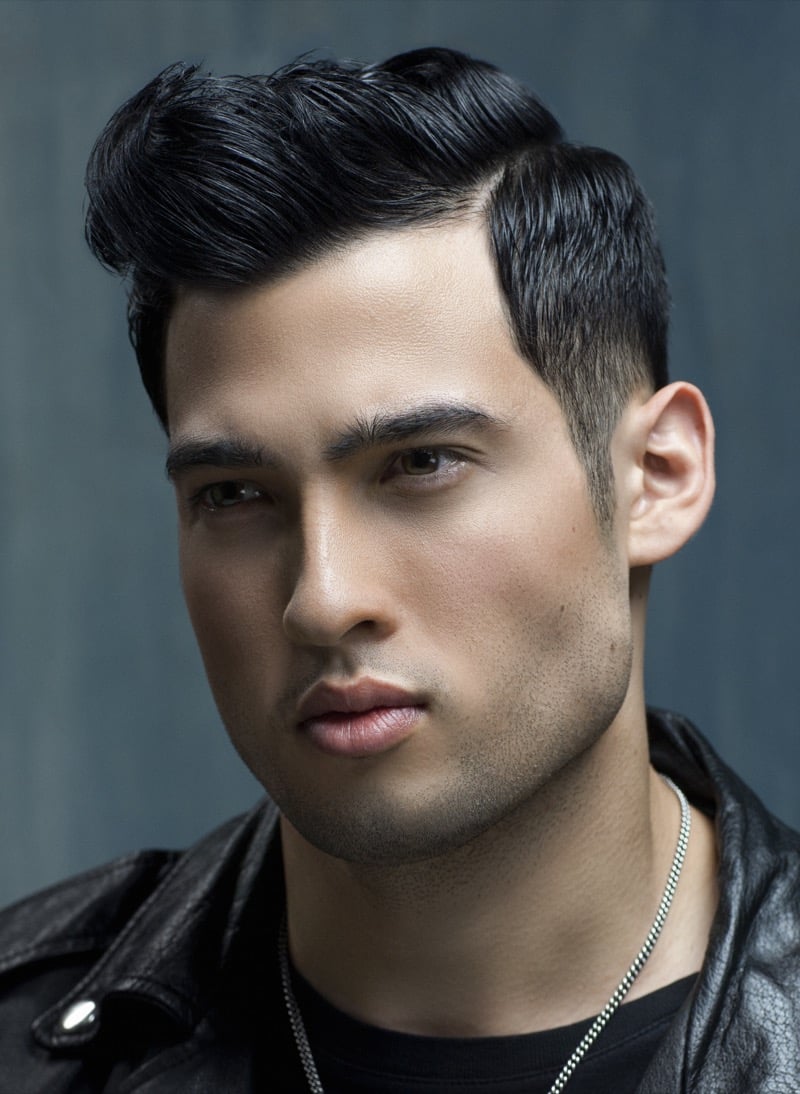
A side part marks the boundary beside a pompadour, whose raised front curves back above it. The smaller section lies close to the head, making the roll appear taller. Lift the roots with a dryer and brush before shaping the surface.
Slick Back
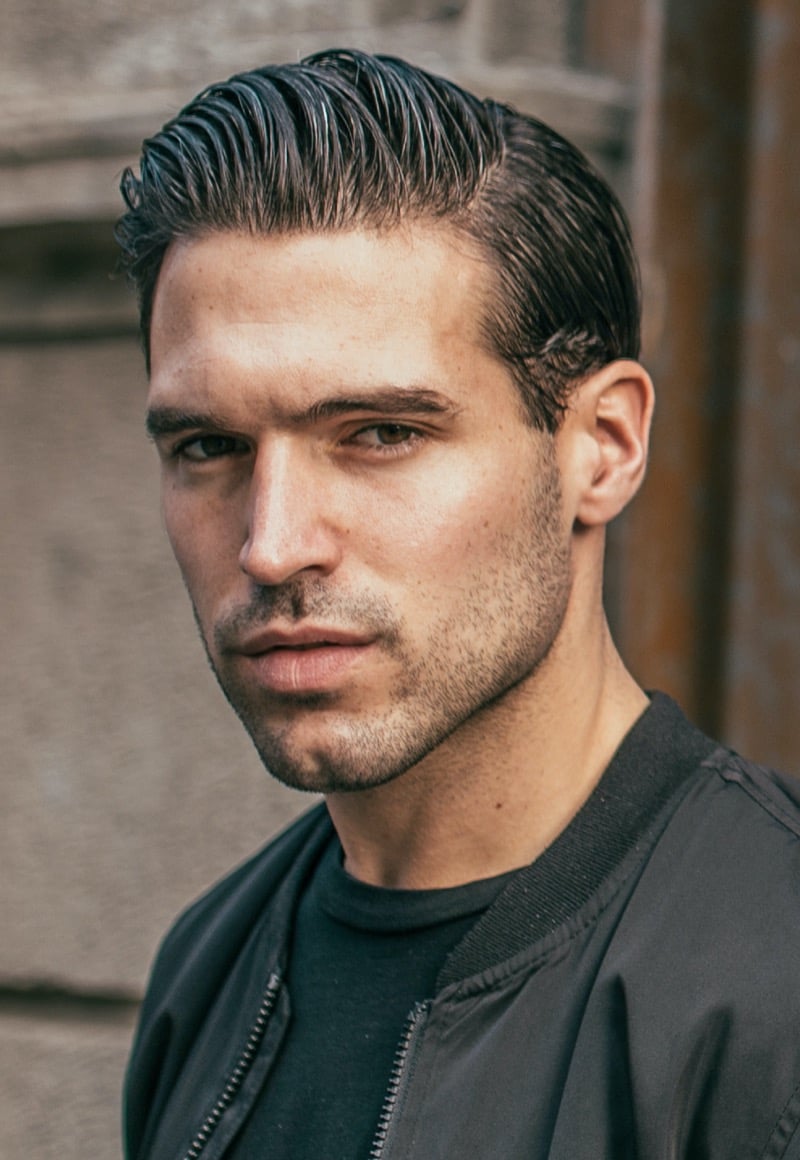
Hair travels backward and slightly across in a slick back side part. The forehead stays exposed, and comb lines converge toward the crown. A product with shine emphasizes the surface; choose its hold according to the length and weight of the top.
Textured Quiff

The quiff's rise begins at the forehead, where separate sections lift and bend back. The part divides that raised front from a lower side section. Leave gaps between the ends when shaping them with the fingers so the top retains its broken outline.
Hard Side Part

A hard side part leaves a narrow strip of exposed scalp beside the longer top. Its width and position are fixed until the shaved hair grows back, so agree on both before cutting. Regrowth gradually blurs the line, which may need refreshing before the top needs a trim.
Long Hair

A side part sends long hair toward one side, leaving more coverage around one temple and cheek. The lengths can tuck behind an ear or fall forward again as they dry. Follow the roots' natural direction to reduce the need to reset the division throughout the day.
Curly Hair
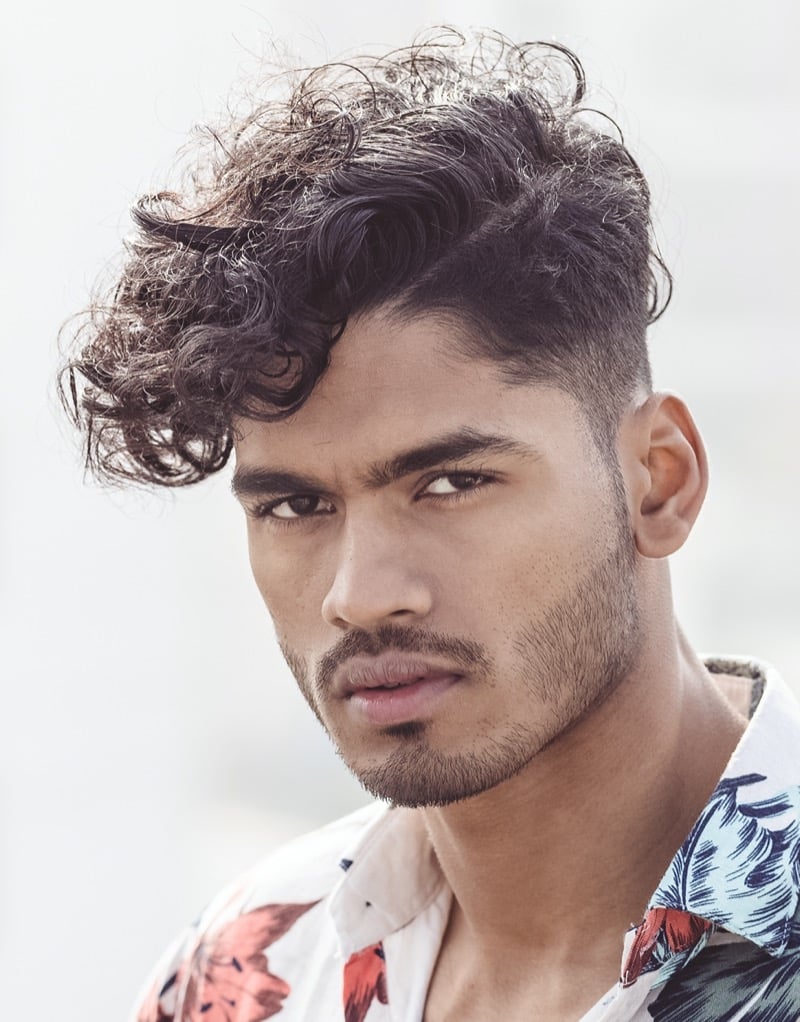
Curls spread from the part in separate loops, forming an uneven edge above the forehead. Different curl patterns change how clearly the line shows. Set the division while the hair is damp, then let the curls settle before separating any sections that have joined across it.
Side Swept

The longer top sweeps over one temple in this side-swept version, with a broad bend near the roots. Shorter sides sit beneath the overhanging ends. Compared with a fringe drawn across the brows, the front lifts farther off the forehead before falling sideways.
Why Choose a Side Part?

A part redistributes the top's weight, carrying more hair toward one side and exposing the other temple. It can separate a short, combed top or set the direction of long hair.
Changing the finish alters how strongly the line shows. A comb and a little pomade make a distinct division; fingers separate broader sections and leave a less exact edge.
Choosing the Part

Start with damp hair combed back, then gently push it forward to see where the roots separate. The crown's growth pattern can suggest a direction, though the front may fall differently. A barber can help place the line where both sections settle readily.

Setting the part farther toward the temple sends a larger section across the top. A line closer to the center divides the weight more evenly. Using the fingers makes a less exact division than drawing a comb through the roots.

Waves may cross the part as they bend, especially near the temples. Keep enough side length for those bends to sit naturally, and judge the fall after drying before cutting away hair that appears bulky while damp.
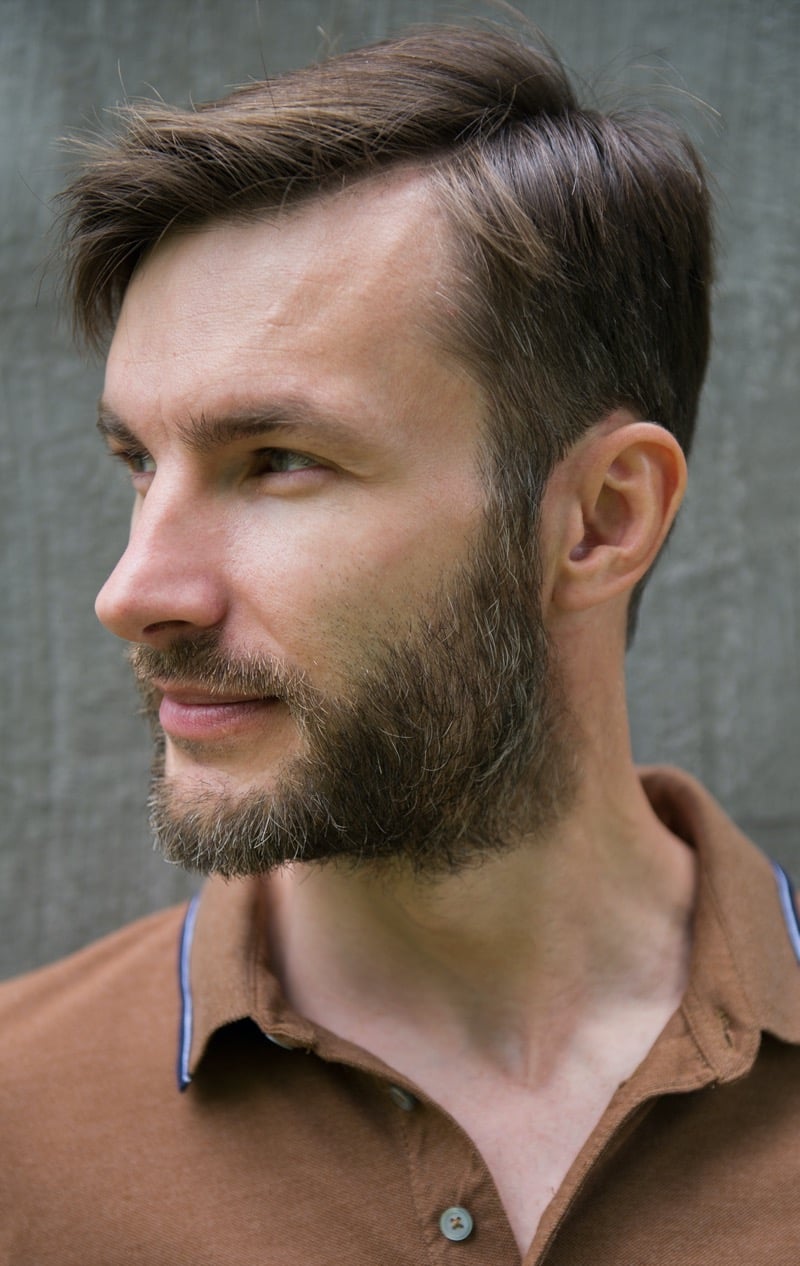
A part can run front to back or angle toward the crown. The diagonal line changes how much hair joins the larger section along its length. Check its path from above as well as from the front so it meets the crown's growth pattern comfortably.
The Side Part Today
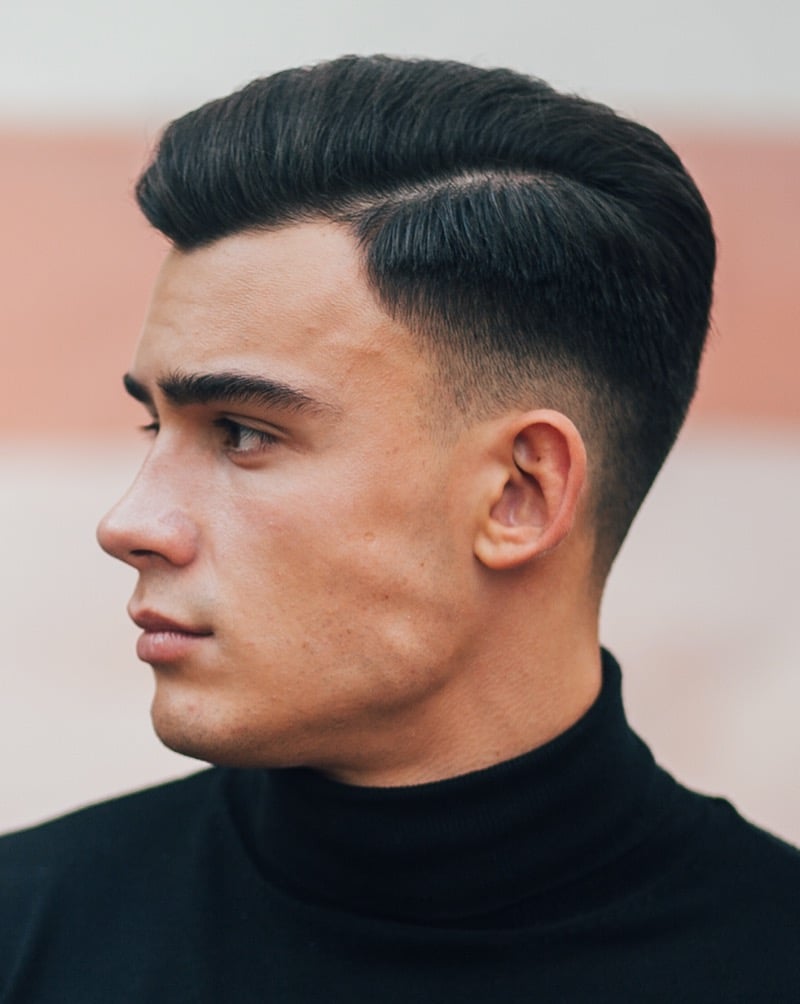
A change in the part's position can reveal clipped sides, shift a fringe across the forehead or send longer hair behind an ear. Its placement matters as much as the lengths on either side.






_01_Crisco_edit.jpg)