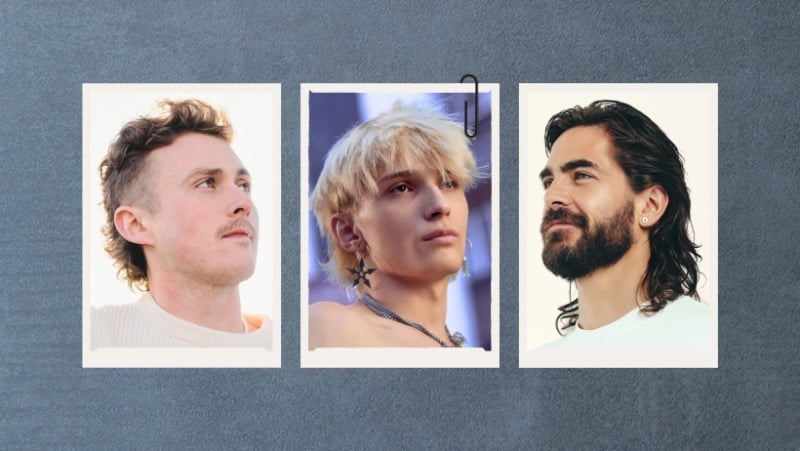
A mullet is short at the front and sides and longer at the back. The modern mullet varies that contrast with tapered edges, faded sides, or a layered crown. Length at the nape gives it a distinct side profile among long hairstyles for men.
What Is a Modern Mullet?
A full crown, short sides, and a heavy back distinguish the classic rock-era mullet. Modern versions often break up the back with layers, letting shorter crown pieces overlap the length at the nape. The difference lies in how the two lengths connect, as much as how far the back extends.
Clippers can narrow the sides with a fade or tidy only the edges with a taper. Scissors leave a fuller outline around the ears. A textured top and fringe alter the front view, with the layering adjusted to the hair's density and curl pattern.
Layering brings some modern mullets close to the wolf cut. A mullet emphasizes the short sides and longer back; a wolf cut spreads more layers through the sides for a shaggier outline.
Modern Mullet Haircuts for Men
The sides account for much of the mullet's range among men's haircuts. Bare skin around the ears, a disconnected top, or loose scissor-cut layers each changes how strongly the back stands out.
Modern Mullet Fade
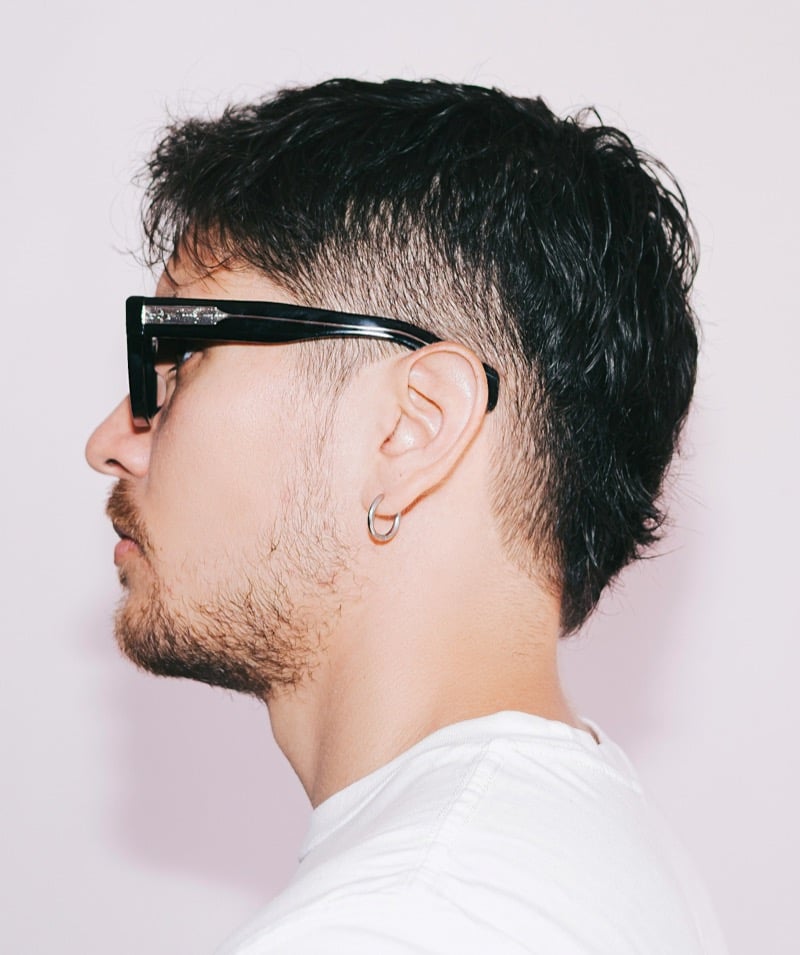
Close sides expose the outline of the modern mullet fade, separating the textured top from the hair at the neck. A fade can finish at skin or a longer guard, depending on how much scalp should show.
Keep enough length through the crown to connect it to the nape. A little matte clay on the top can separate the pieces while the longer back falls naturally.
Straight Hair Mullet
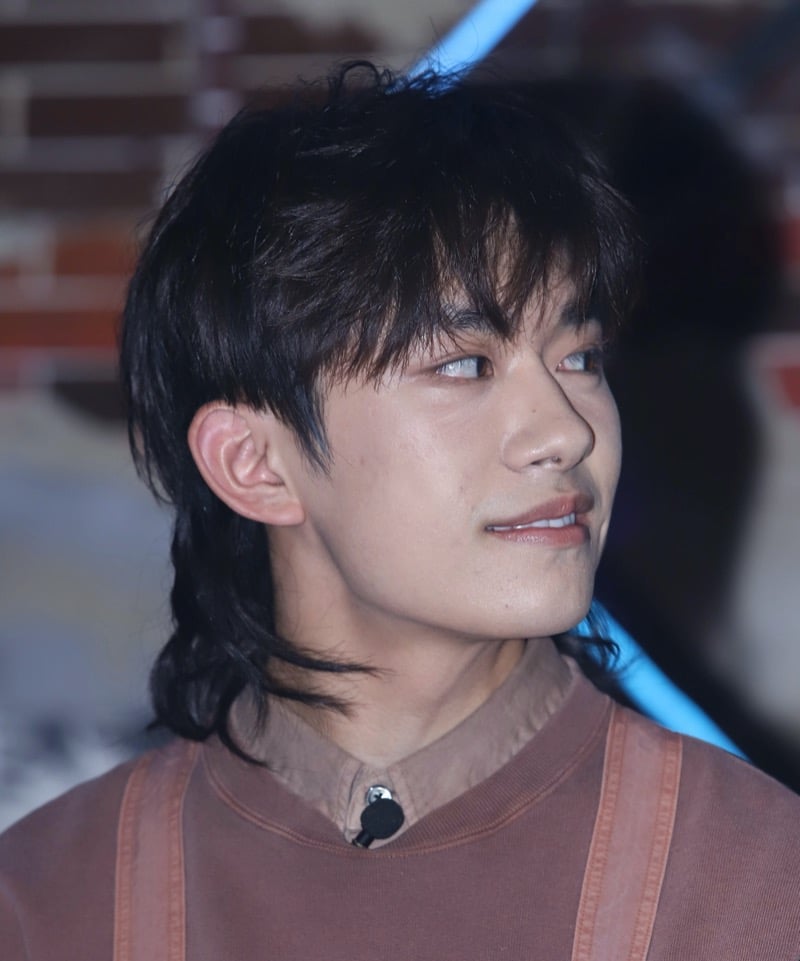
Straight hair makes the change in length especially visible in Jackson Yee's mullet. The top and sides lie close to the head before the hair extends at the nape. A small amount of lightweight cream can settle flyaways that interrupt the outline.
Taper Fade Mullet
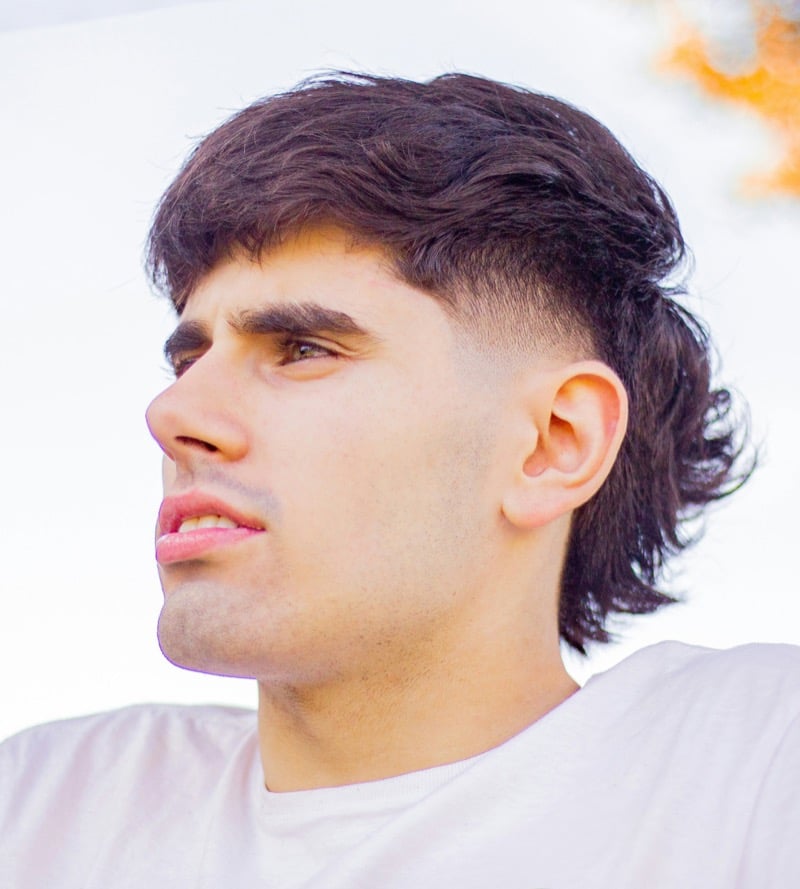
The taper fade mullet graduates the hair around the temples and edges while preserving the longer back. A low taper fade keeps the shortest area low; taking the taper higher exposes more of the side near the temple.
Agree on how far the clipped area should extend behind the ear. Keeping it localized leaves more fullness above it, while a broader fade makes the difference between the sides and back more pronounced.
Middle Part Mullet
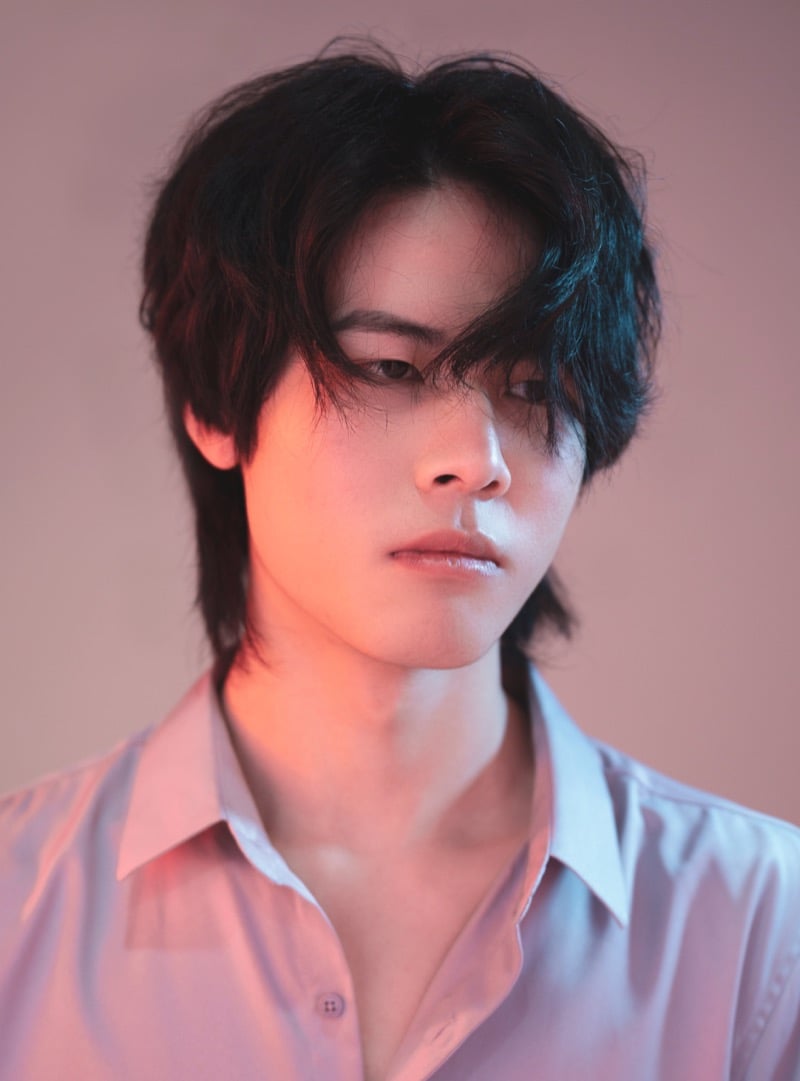
Parting the front down the center opens the fringe into two sections that fall beside the face. The middle part mullet retains length at the back, making the parted front appear distinct from the longer nape.
The front needs enough length to fall to either side. Dry it along the part, then use a small amount of cream on the ends if they need separation.
Faux Hawk Mullet
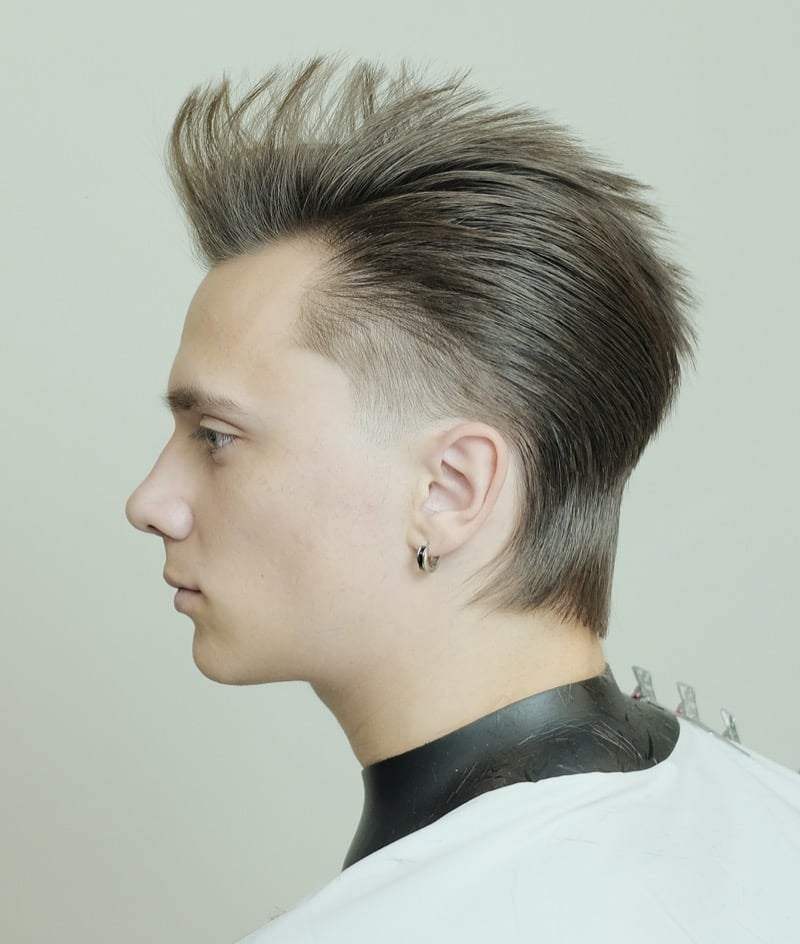
A lifted ridge runs through the top of the faux hawk mullet, with shorter hair at either side. Styling the crown upward and slightly forward makes the ridge visible above the longer back.
Work wax or pomade through the top in small amounts, directing the pieces toward the center. The ridge depends on both the cut's length and the hold of the product.
Curly Mullet
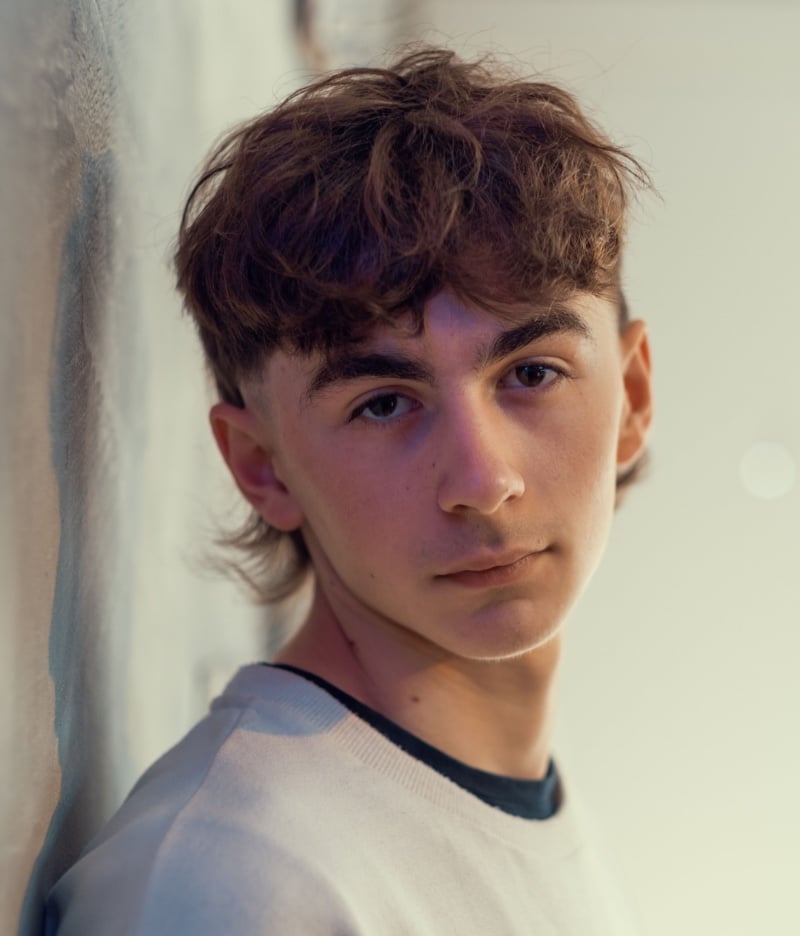
Natural curly hair texture gives the curly mullet a rounded top and separate coils at the nape. Shorter sides reduce the width around the ears, so the back can retain length as the curls spring up.
Judge the fringe and back at their dry lengths before cutting them shorter. Curl cream can help the coils gather into distinct clusters, with the amount adjusted to their density.
Mullet Two Block Haircut
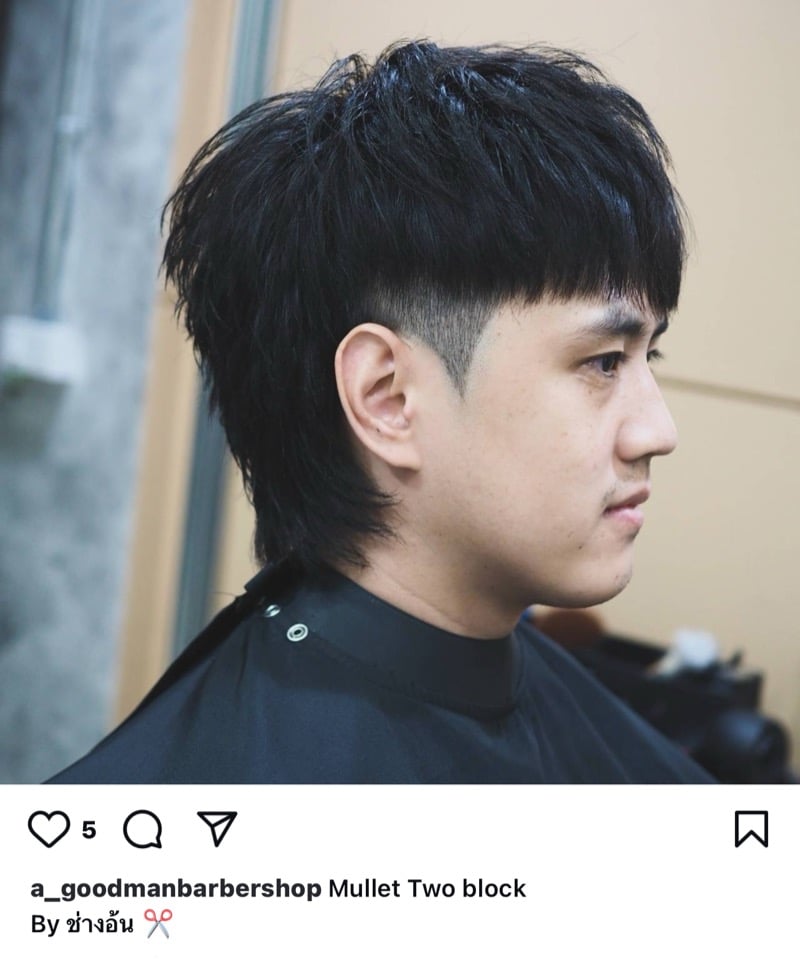
A heavy top over tightly clipped sides gives the mullet two block haircut its stepped profile. The disconnection remains visible above the ears, while the longer back extends the shape toward the neck.
This Korean street-style variation retains weight along the top's lower edge. A little wax can separate that edge into pieces; extensive blending would soften the defining step between the two lengths.
Short Mullet Haircut
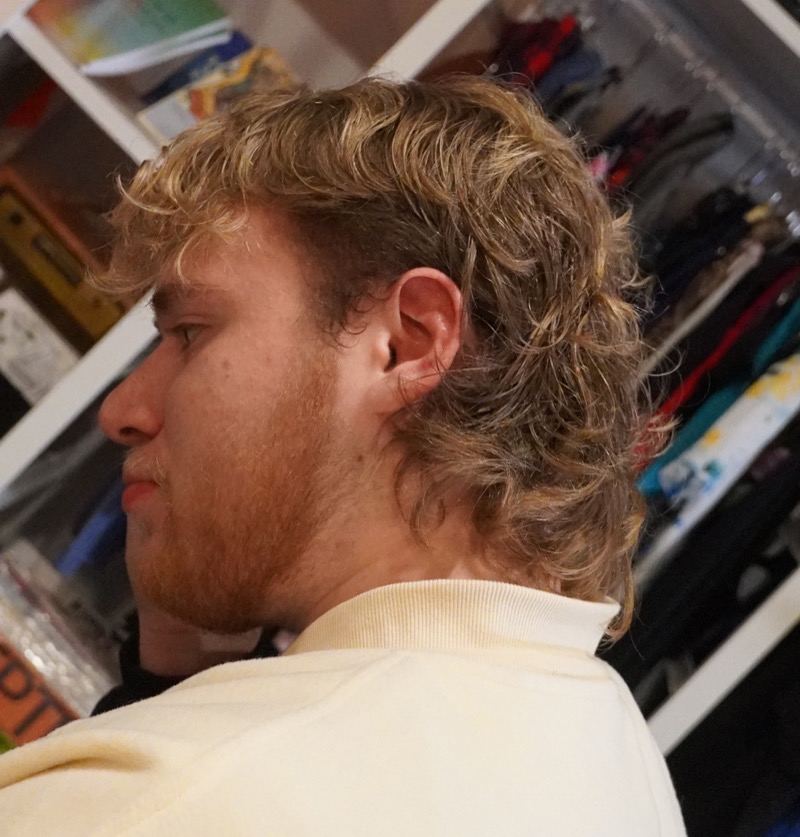
The short mullet leaves a small extension at the nape beneath a cropped top and trimmed sides. Its proportions become clearest in profile, where the back projects past the shorter hair around the ears.
Keeping that extension compact limits the change in length. As it grows, the nape becomes more prominent even if the front still looks like a short haircut.
Fringe Mullet
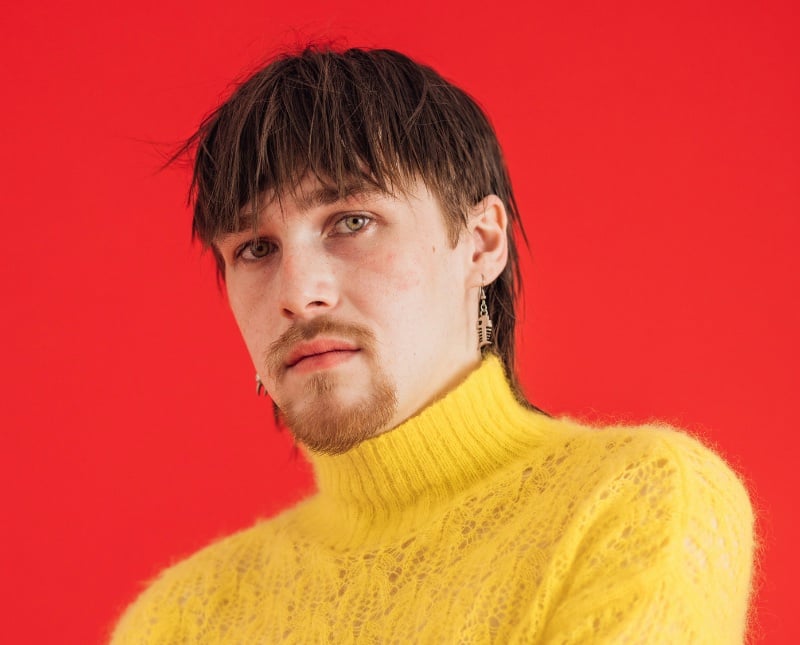
A choppy fringe brings the fringe mullet forward over the forehead. Its uneven tips repeat the broken ends at the back, while shorter sides keep the two textured areas distinct.
On straight hair, pinch a few fringe tips with a little wax or pomade to emphasize the cut line. Leave the back looser so the styling stays concentrated at the front.
Medium Mullet
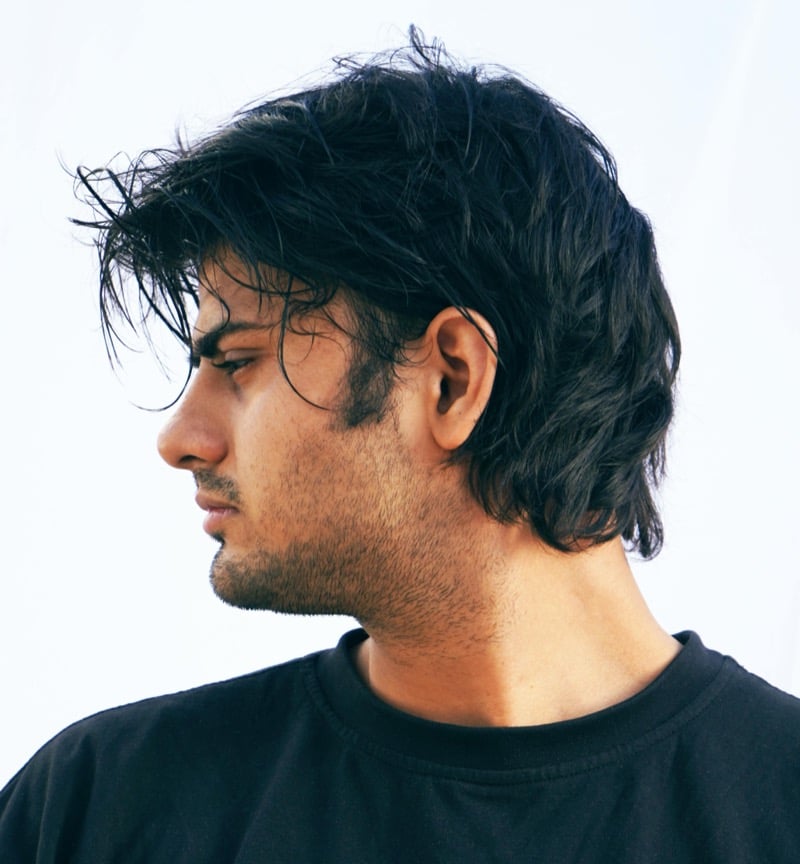
The medium mullet leaves enough length through the top and sides for the layers to overlap. The back extends below them, giving the cut a longer profile while retaining fullness around the crown.
Waves can bend along those layers instead of stopping at a closely clipped side. Keep enough weight near the ends to prevent the lower lengths from looking sparse.
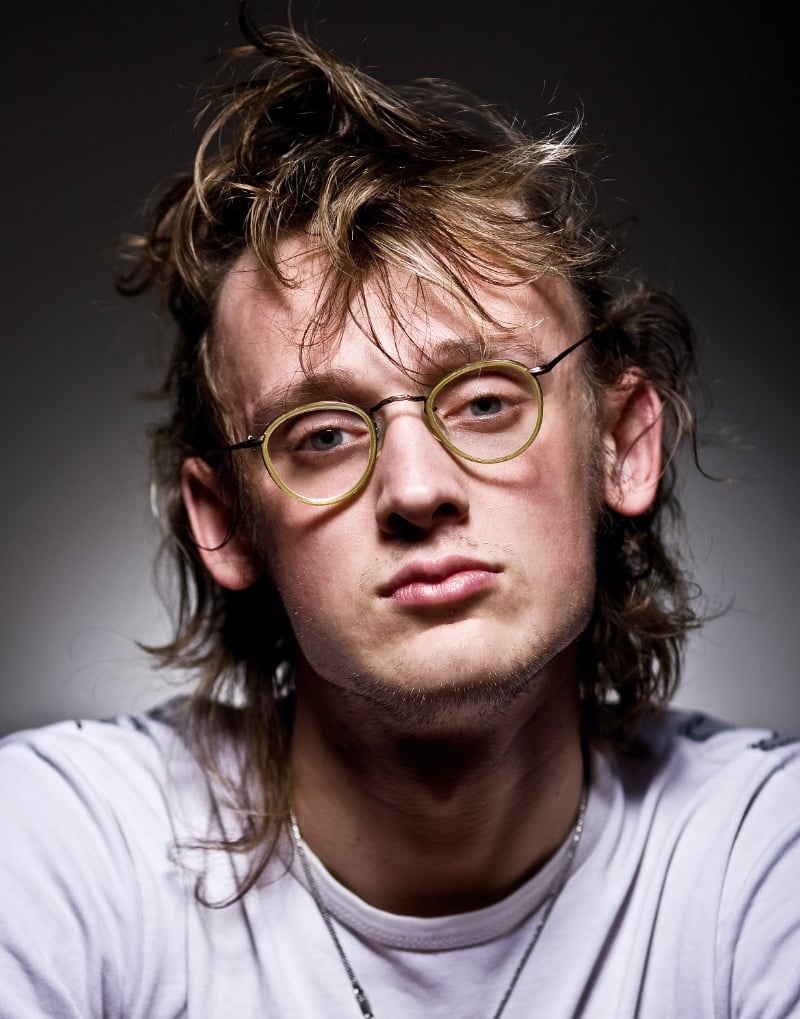
Shaggy Mullet
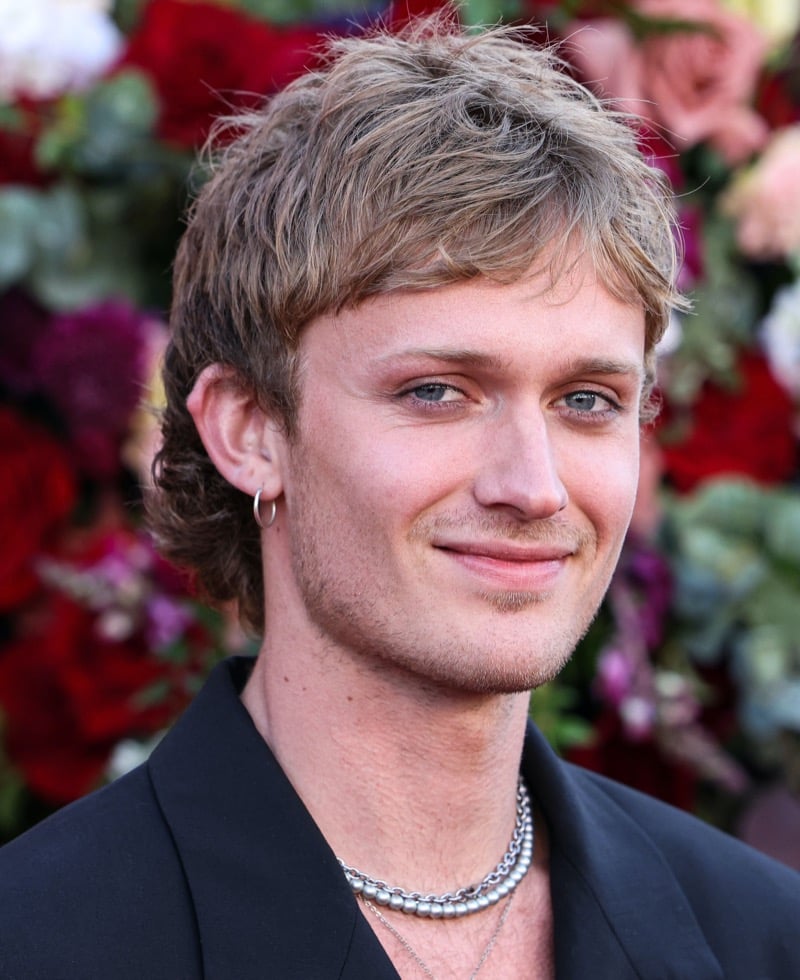
Loose fringe pieces fall over Freddie Dennis' forehead, with choppy layers continuing through the sides of his shaggy mullet. The back is only slightly longer, so the eye follows the layers through the whole cut.
The uneven ends give it a rock-inspired finish. Light cream can separate pieces that fall together, particularly where the fringe joins the side layers.
Burst Fade Mullet
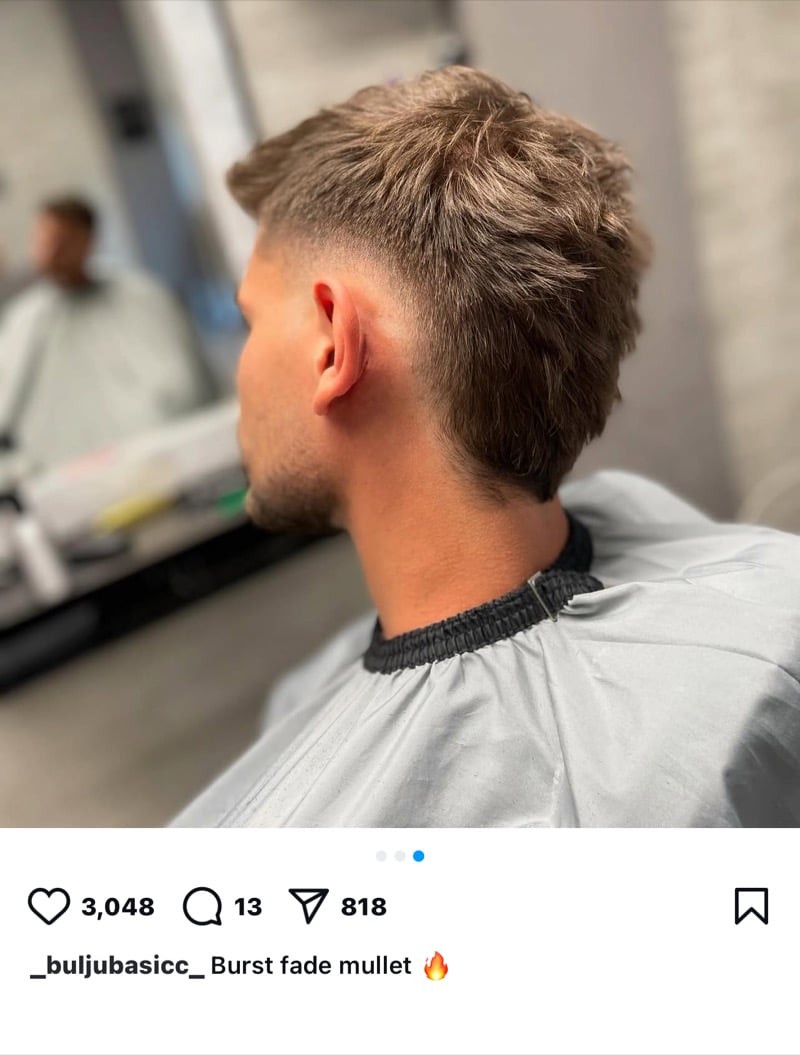
The burst fade radiates around the ear in a curved band, leaving the central back long. That semicircle distinguishes a burst fade mullet from a fade that continues evenly across the back of the head.
Its side profile depends on the width of the curved fade and the amount of hair left above it. Matte paste can separate the top if the longer pieces settle into a heavy ridge.
Messy Mullet

Tousled layers spread over the crown and into a loose, full back in the messy mullet. The extra fullness brings it close to a wolf cut.
Waves or curls lift the surface at different angles. Scrunch damp hair into place, then allow it to dry before separating a few pieces with the fingers.
Flow Mullet Haircut
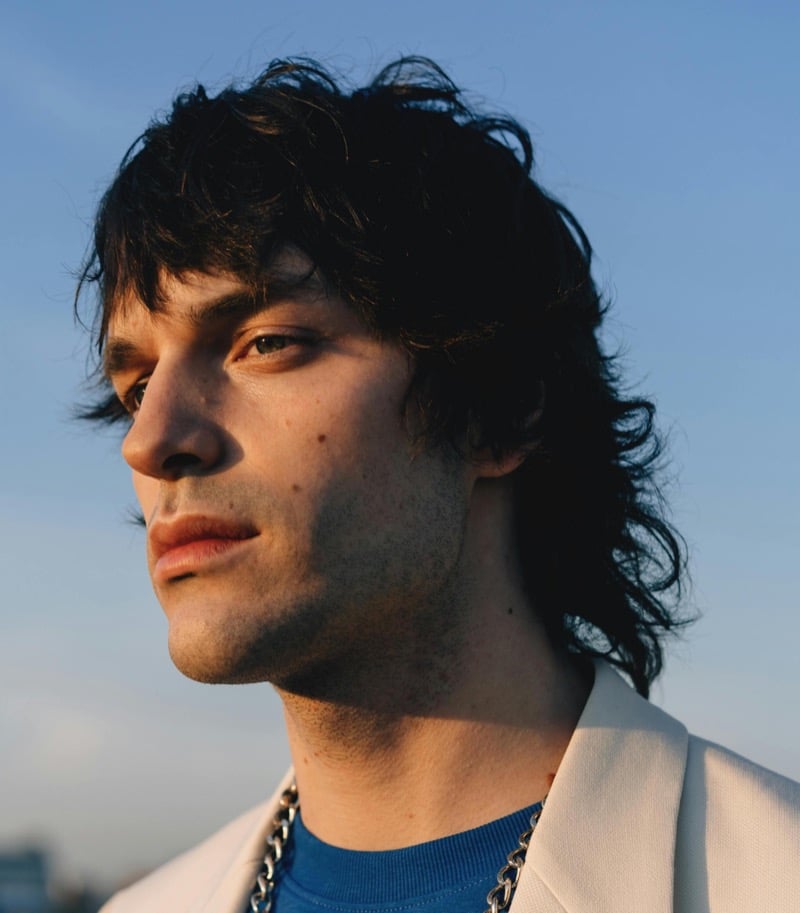
The flow haircut contributes longer, overlapping layers to this mullet. Hair sweeps through the top and sides before falling into the extended back, with less exposed scalp around the ears than a faded version.
Natural bends make those layers turn away from the face. Straight hair may need directional drying to produce a similar sweep, especially when the front tends to fall forward.
Curly Mullet Fade
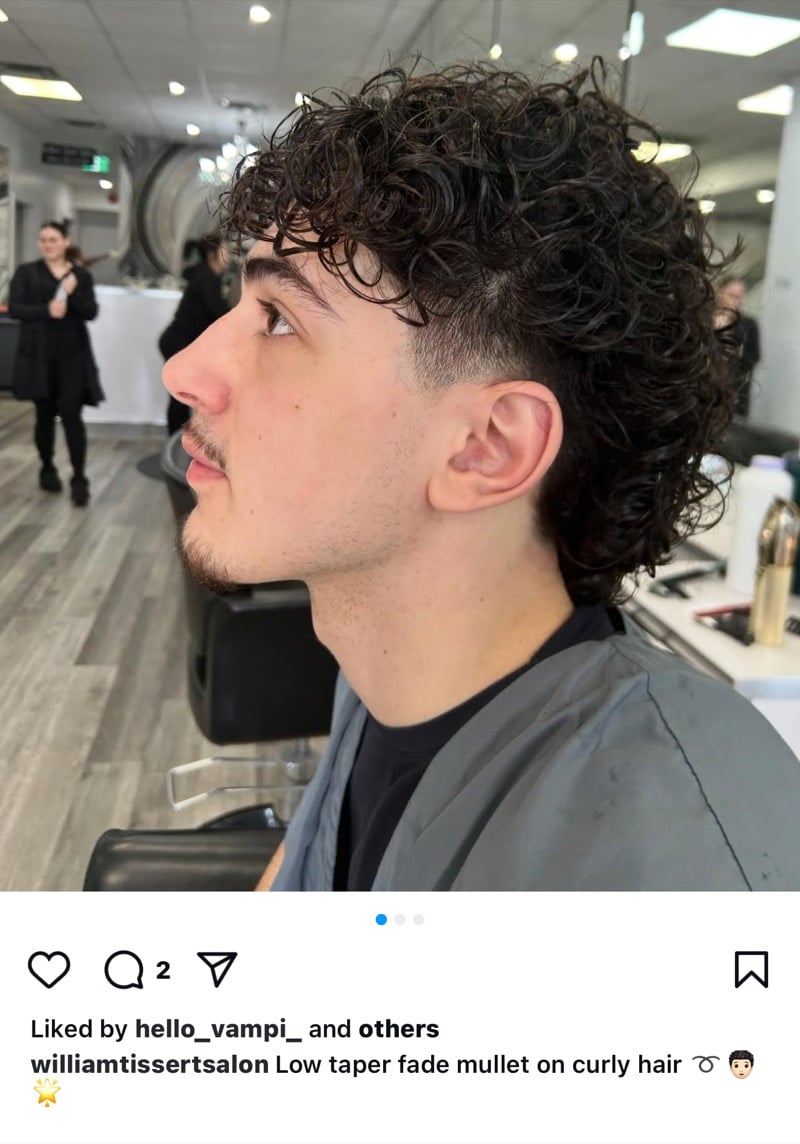
Curls rise above close sides in the curly mullet fade, then gather into longer pieces at the back. Keep the shortest work around the edges for a taper, or extend the fade through more of the sides for a narrower profile. A little curl cream can define the longer coils.
Old School Mullet
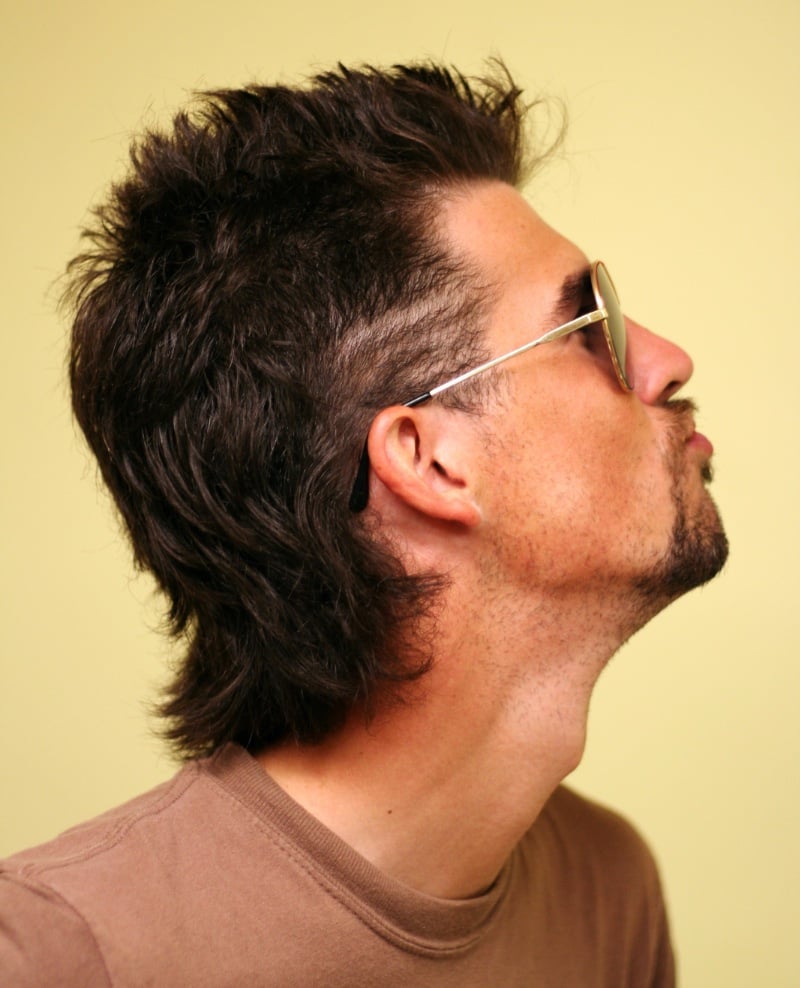
Short sides make the full crown and long back of the old school mullet especially pronounced. The top stands high above the ears, while the back drops as a heavier section toward the collar.
Lift the roots during blow-drying to support that height. Mousse may help a crown that falls flat, with the amount adjusted to the hair's thickness.
Permed Mullet
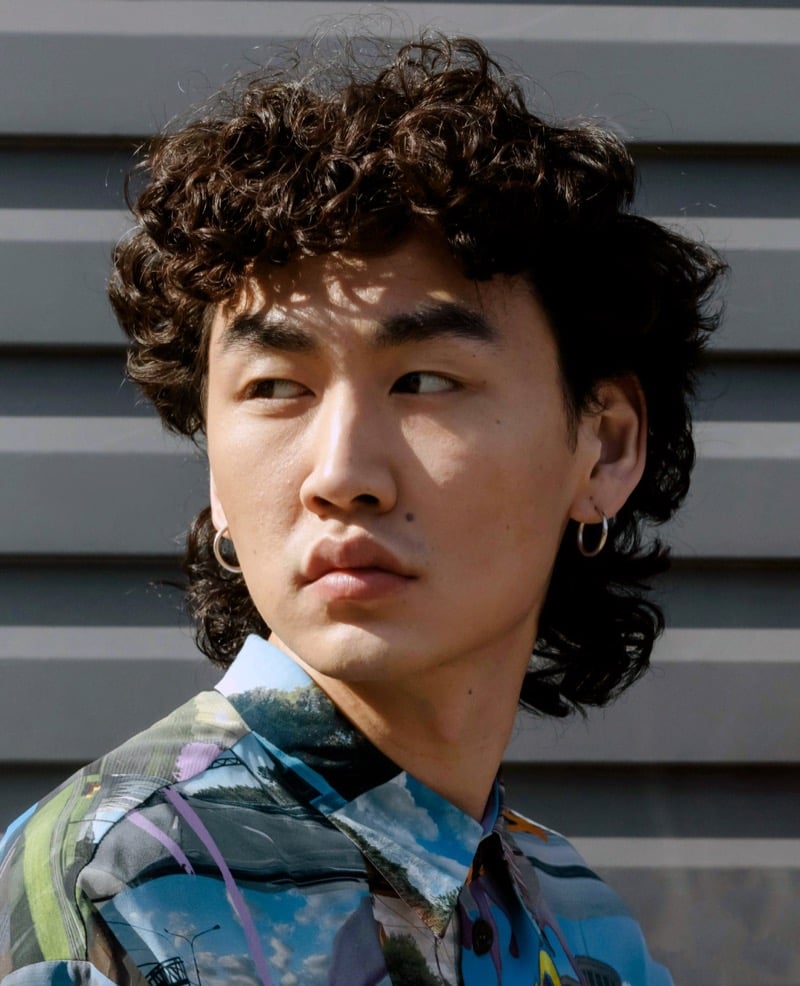
A perm gives this mullet a repeated curl pattern through the top and back. Tight curls make the crown look fuller and shorten the apparent length of the hair at the nape.
Agree on the curl size and finished dry length before the service. Conditioner and a suitable curl product help define the permed lengths; styling needs depend on how the treated hair dries.
Modern Mullet
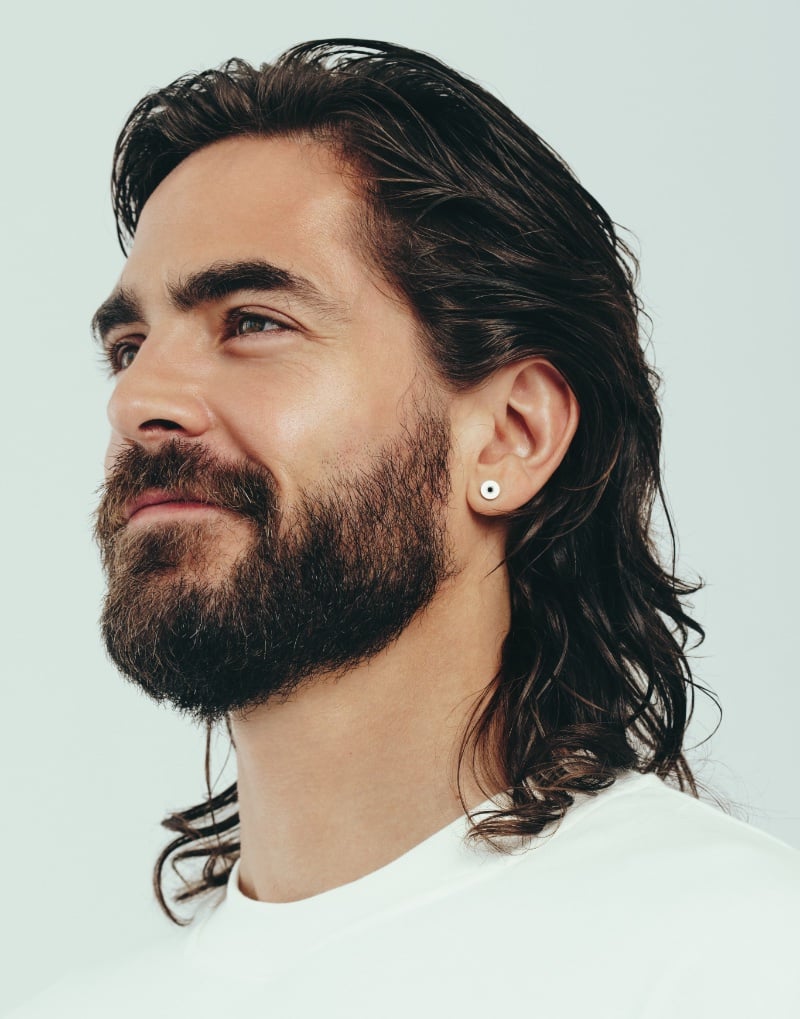
This modern mullet connects a textured top to a layered back, reducing the abrupt step between the two. The long nape remains visible, but the upper layers soften its outline.
Scissor work shapes the transition through the crown, while clippers can shorten the sides. Styling the front more neatly draws attention to the looser ends at the back.
Tapered Mullet Haircut
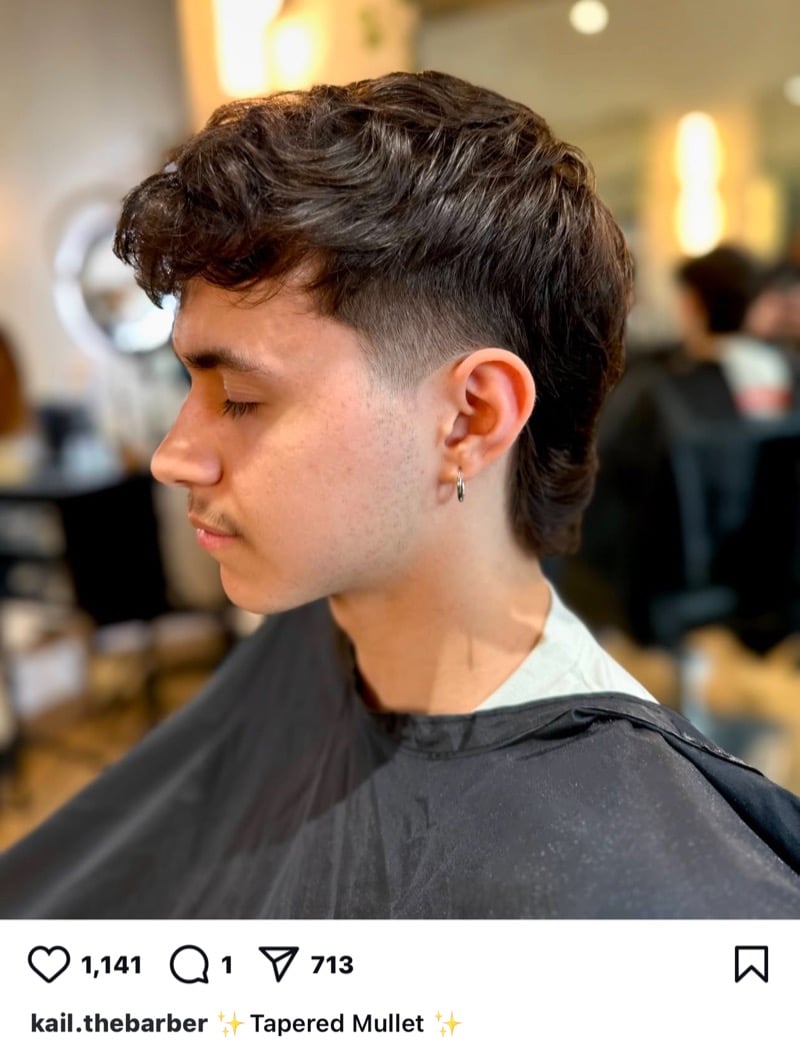
A gradual blend narrows the sides of the tapered mullet as they approach the ears. More hair remains above the taper, letting the textured top overlap the side sections before the back extends toward the nape.
Specify the areas to be tapered as well as the shortest length. Tidying the perimeter as it grows can preserve the longer crown and back.
Skin Fade Mullet With Fringe
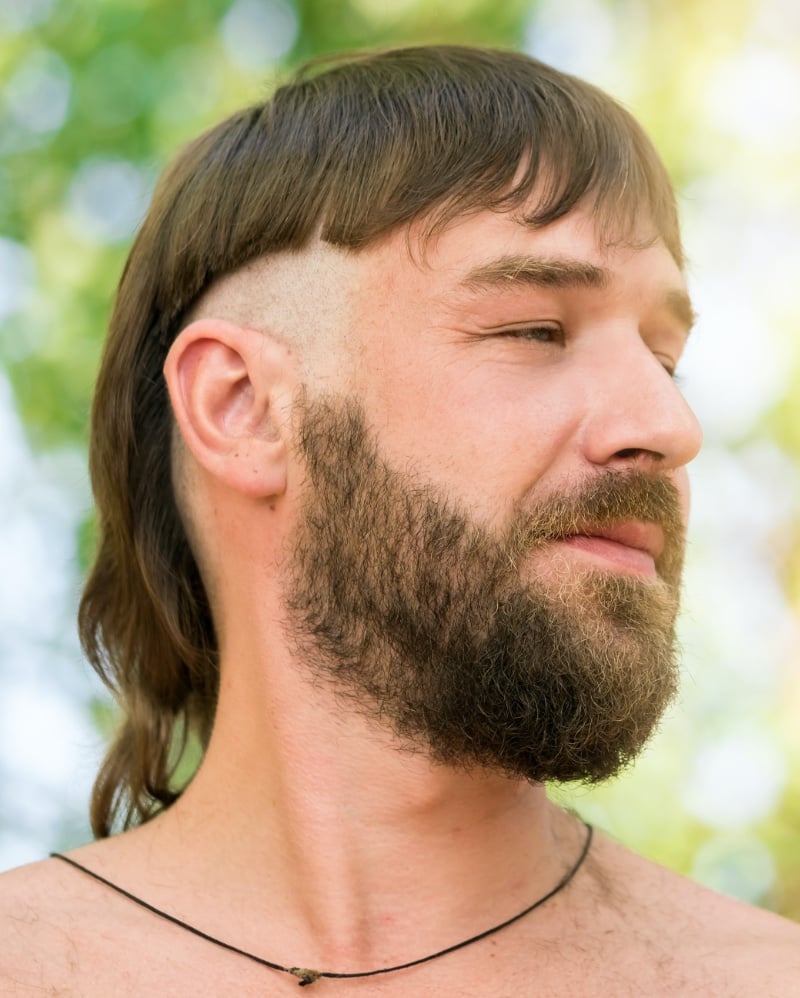
Bare skin at the sides makes the long back of this mullet more conspicuous. Skin describes the fade's shortest finish; the height determines how far that exposed area rises toward the temples.
A low, textured fringe adds weight across the forehead above the closely faded sides. Use a little cream or wax on the tips to keep its uneven edge visible.
Mohawk Mullet
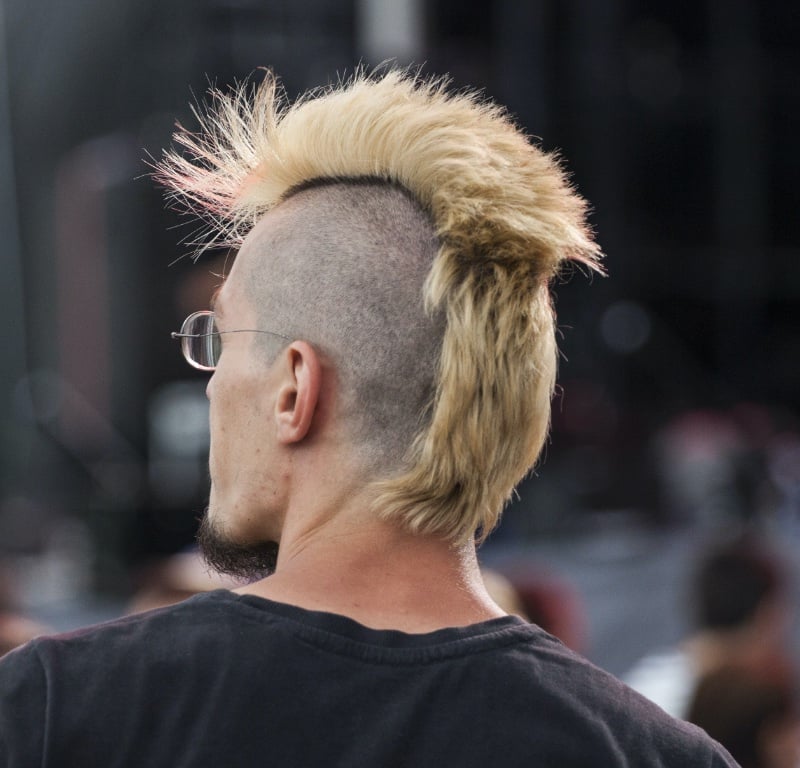
The mohawk mullet extends the central strip of the mohawk into a long back. Closely cropped or faded sides expose the strip from the temples toward the nape, emphasizing its punk silhouette.
Style the strip upward in sections for height, or separate the ends for a more tousled finish. Longer sections need enough hold to stay raised.
Spiky Mullet
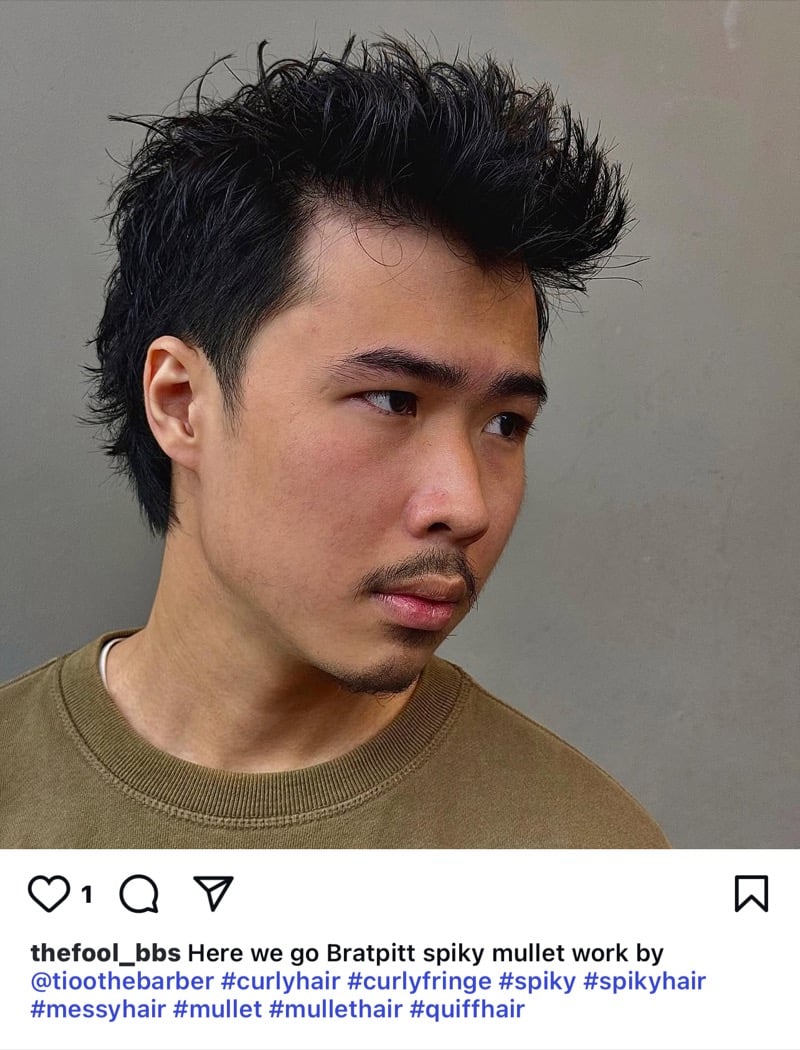
Separate spikes rise across the top of the spiky mullet above the length at the back. Their direction can vary across the crown, giving it a broader, more scattered surface than a central mohawk strip.
Work gel or wax into dry sections and pinch the tips upward. Leave the back loose so the upright top remains the main styling detail.
Mullet Undercut
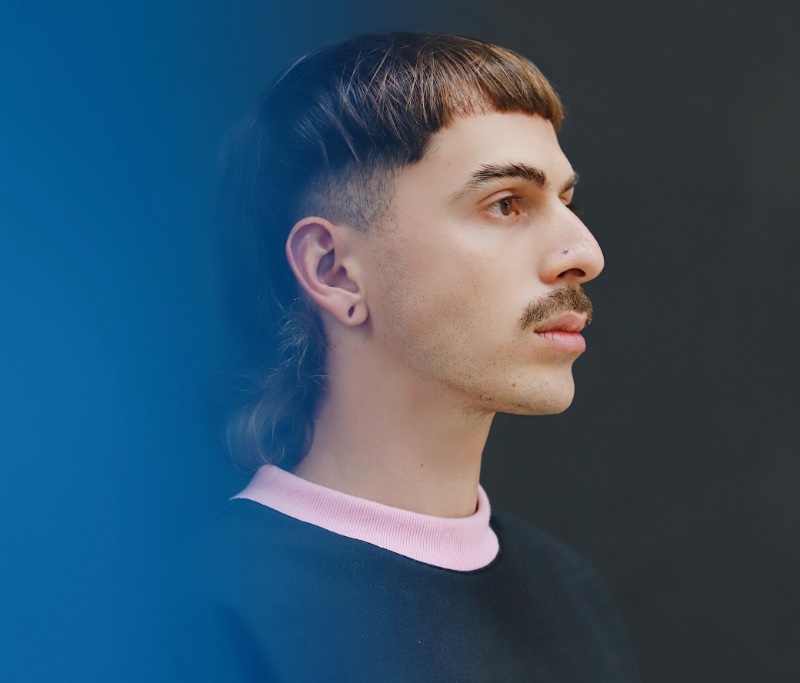
The mullet undercut leaves a visible break between the longer top and closely cropped sides. The back retains its length, continuing the disconnection behind the ears.
Keep enough top length to overlap the clipped section. As the sides grow, that break becomes less pronounced; trimming them restores the contrast while leaving the upper lengths intact.
Textured Mullet
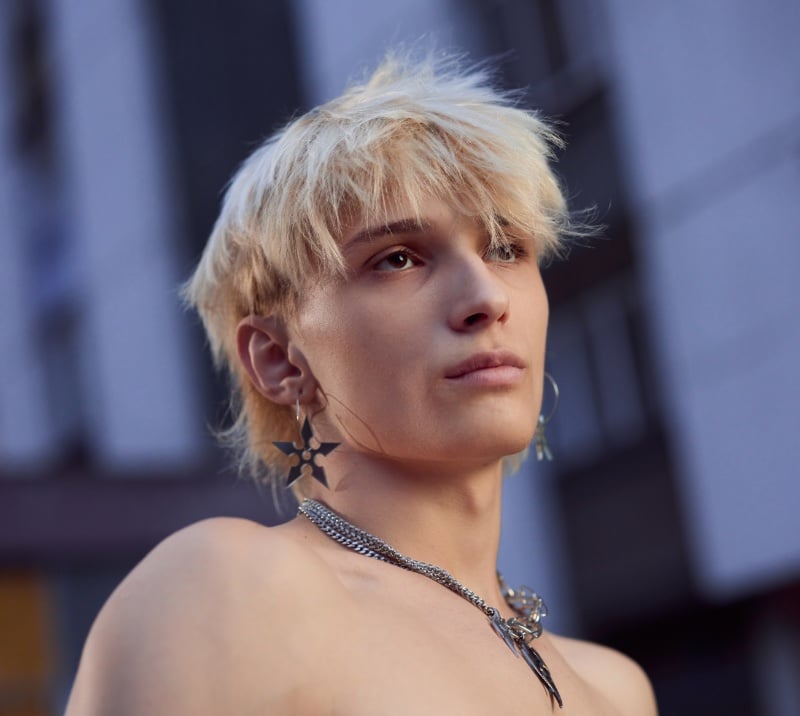
Varied layer lengths give the textured mullet distinct points through the top and back. Shorter pieces sit over longer ones, breaking up the surface while the nape retains its length.
Point-cutting can soften the ends; thinning shears remove weight as well as changing texture. The barber should choose the technique according to density, keeping enough hair at the perimeter. A little wax can emphasize selected tips.
Wavy Mullet

Waves turn outward through the top and back of the wavy mullet, giving the ends an uneven line at the neck. Shorter sides make those bends more visible from the side.
Trim according to how the waves settle. If extra length pulls the crown flat or gathers heavily at the neck, refreshing the layers can restore the shape.
Temple Fade Mullet
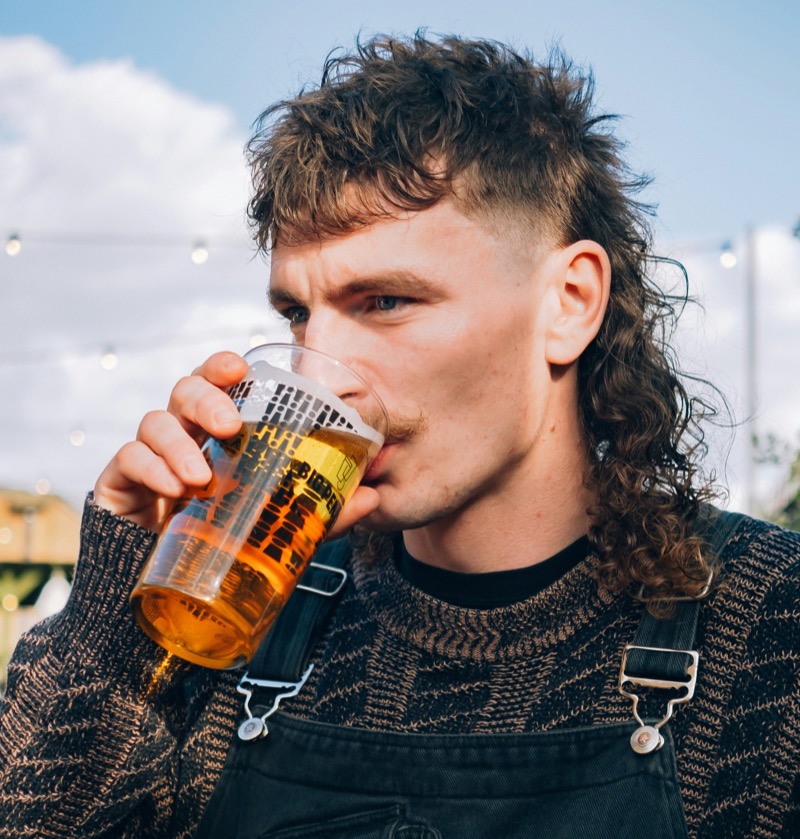
A temple fade shortens the hair at the temples above the sideburns, exposing a small area beside the textured top. The curly back retains its length, so the contrast stays concentrated near the front of the ear.
Keep the extent of the temple work clear in the reference photo. Carrying the clipped area much farther around the ear changes the side profile; curl cream can define the longer back separately.
Wet Look Mullet
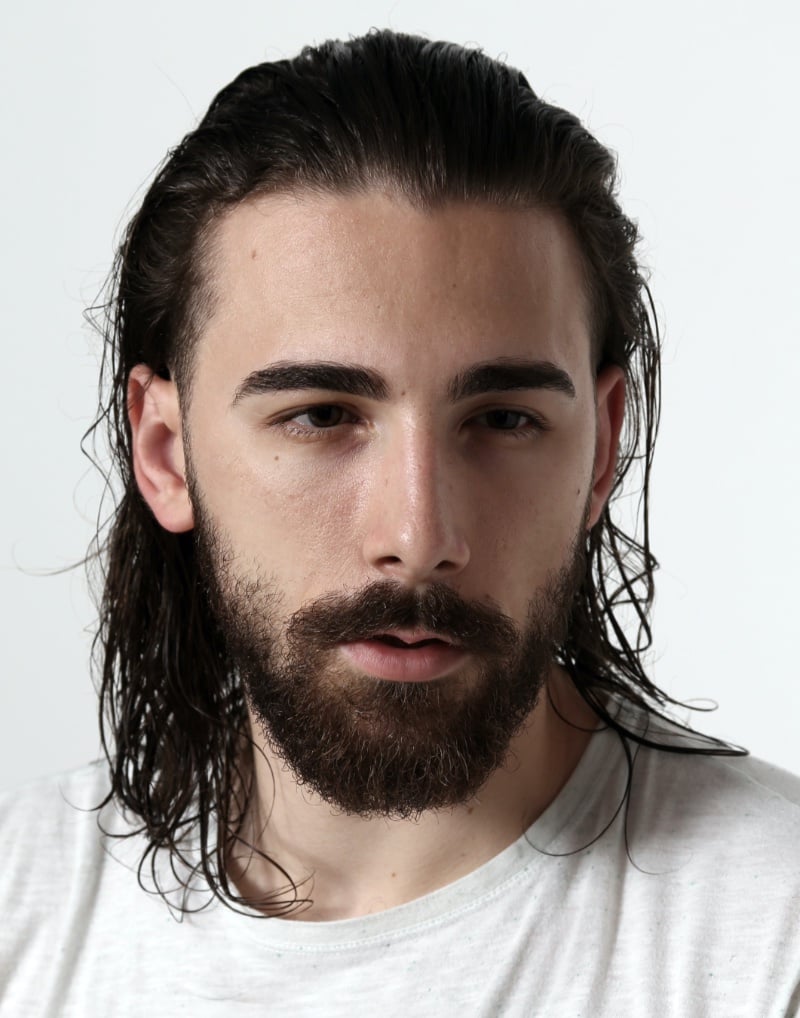
The wet look mullet takes its combed direction from the slick back haircut. A shine-producing styling product gives the top its damp appearance, with the longer nape continuing the backward sweep.
Comb the top close to the head, then separate the longer back into strands. Choose a pomade or gel suited to the desired shine and hold, since a matte wax will produce a different finish.
Feathered Mullet
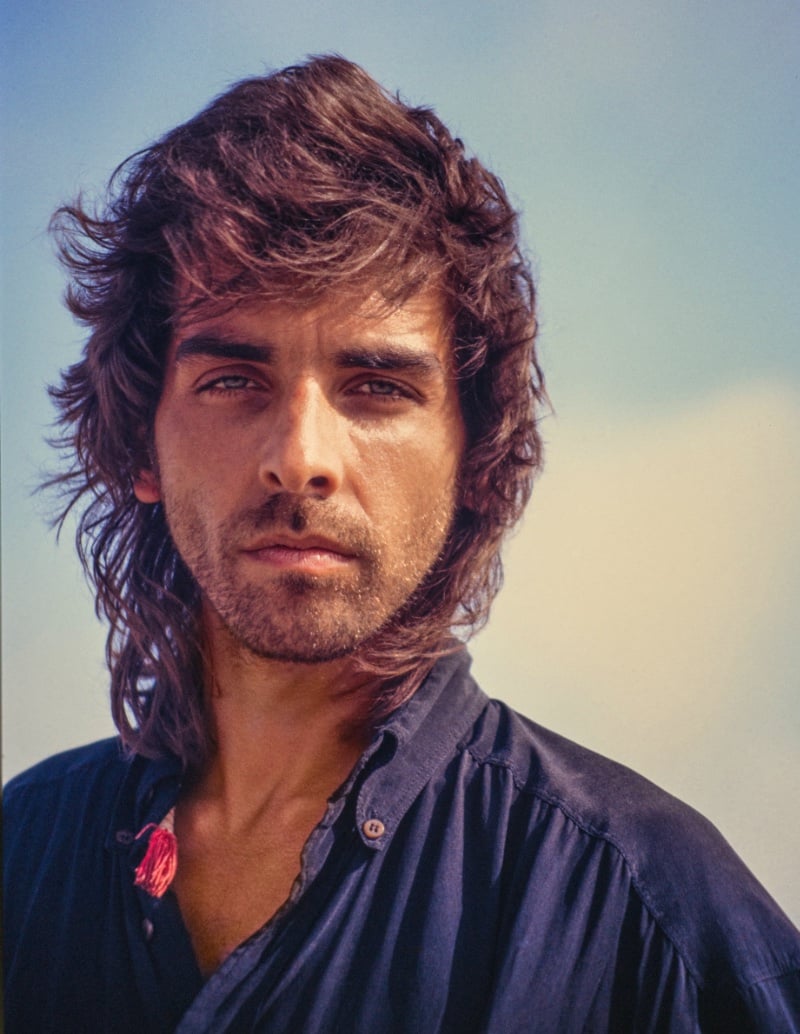
Layers sweep away from the face in the feathered mullet before falling past the collar. The ends flick outward along the sides and nape, giving the outline its windswept, late-'70s character.
A blow-dryer and round brush can turn straight or wavy layers back from the face. Direct the ends outward as they dry to emphasize the feathered edges.
Famous Mullets
A full crown links Billy Ray Cyrus' mullet to its older rock references. The layered versions worn by actors show how differently the cut reads when the sides retain more length and the back falls in softer pieces.
Billy Ray Cyrus
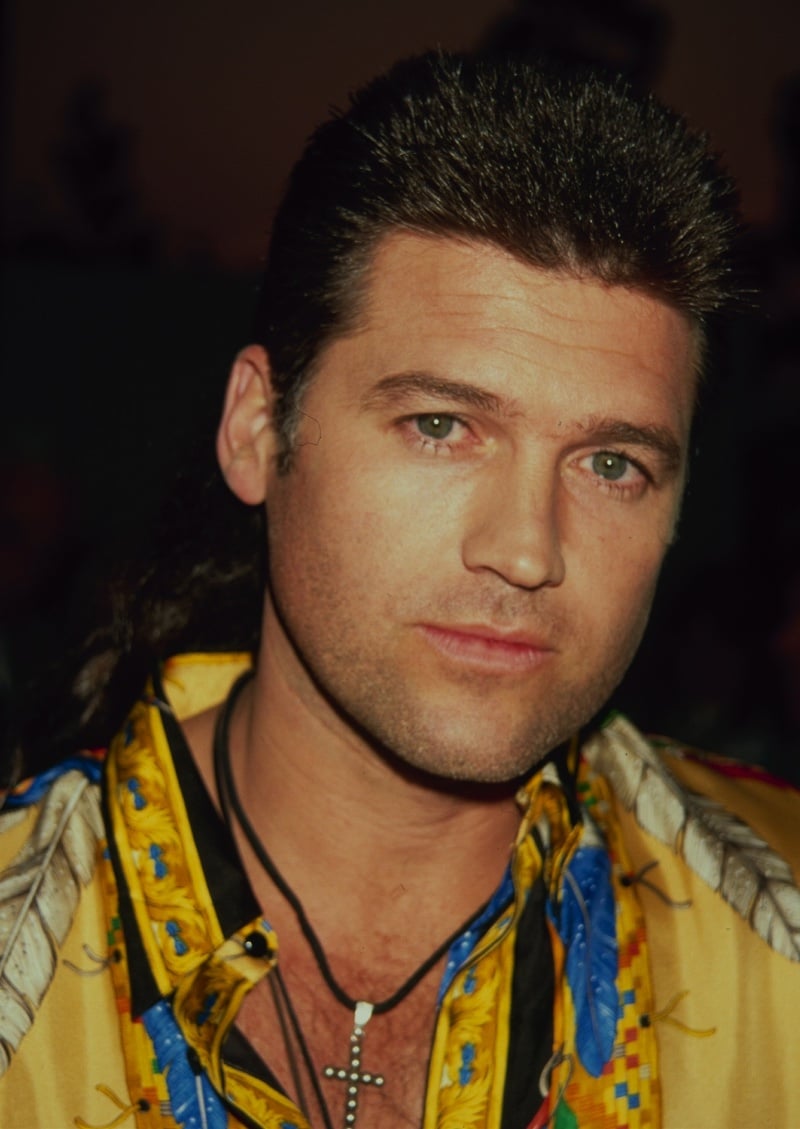
Among 90s haircuts for men, Billy Ray Cyrus' mullet stands out for its full, textured top and long back. Around the "Achy Breaky Heart" period, that heavy lower length made the difference between the sides and nape especially pronounced.
Brad Pitt
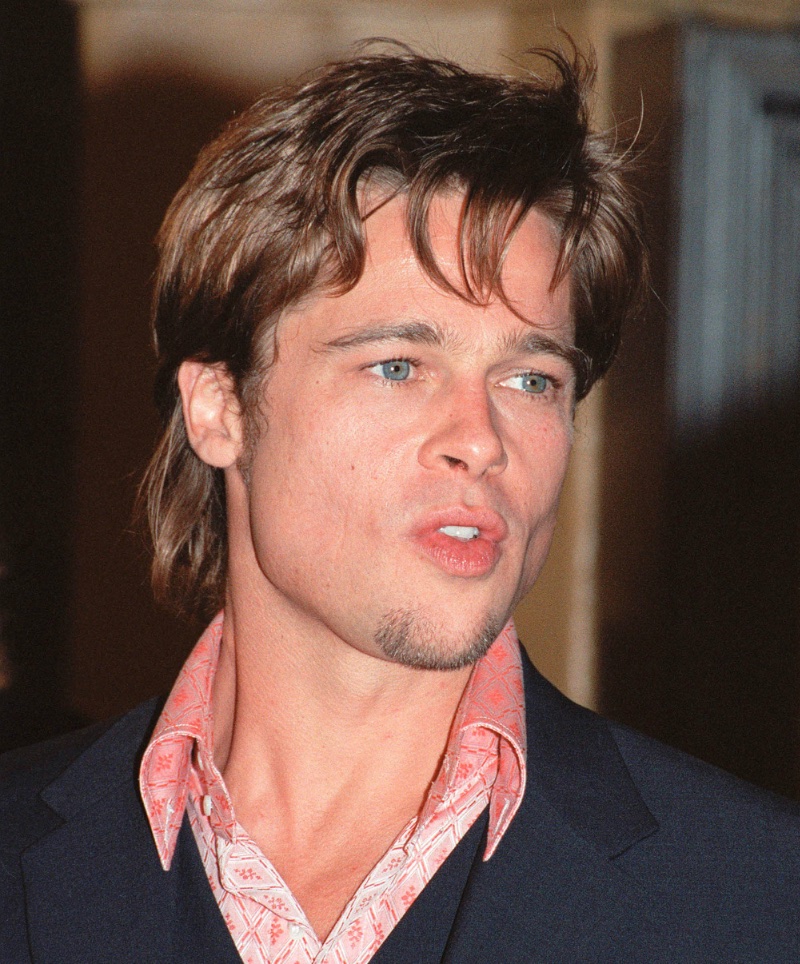
Brad Pitt's hair in 1999 had a softer mullet shape, with textured layers connecting the shorter front and sides to the longer back. The ends separated into pieces, reducing the solid, heavy outline of an old school version.
David Bowie

David Bowie's red Ziggy Stardust mullet made the short crown and long nape a defining part of his early-'70s silhouette. The 1987 version shown here has softer layers and a natural-looking color, giving the back a less angular outline.
Jacob Elordi
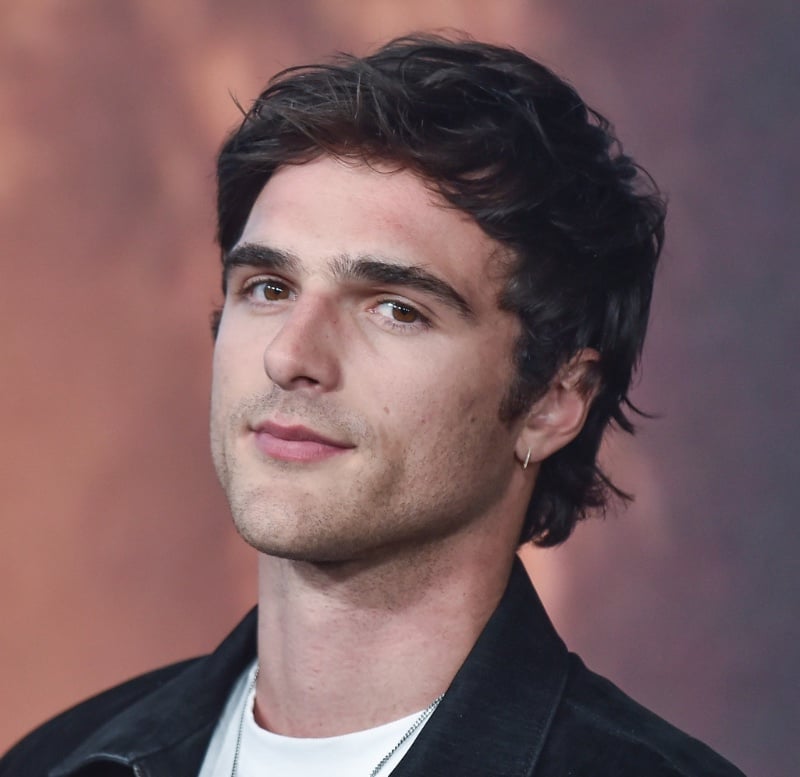
Jacob Elordi, known for Euphoria and Saltburn, wears a shaggy mullet with loose layers around the ears and nape. Its fuller sides connect the top to the back, complementing his wider style.
Joe Keery
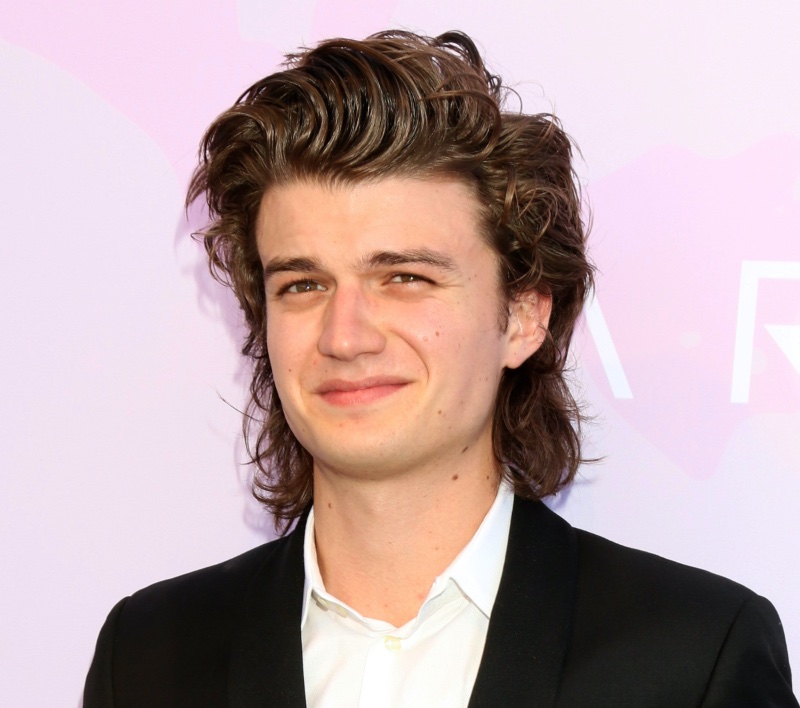
Joe Keery, known for Stranger Things, wears a mullet with full waves swept back from the forehead. The sides retain enough length to join the crown in a gradual blend, while the textured ends collect at the neck.
Paul Mescal

Gentle waves run through Paul Mescal's graduated mullet, with the side layers shortening gradually near the ears. The back extends into loose ends at the nape, a softer variation associated with his refined style.
The Modern Mullet Today
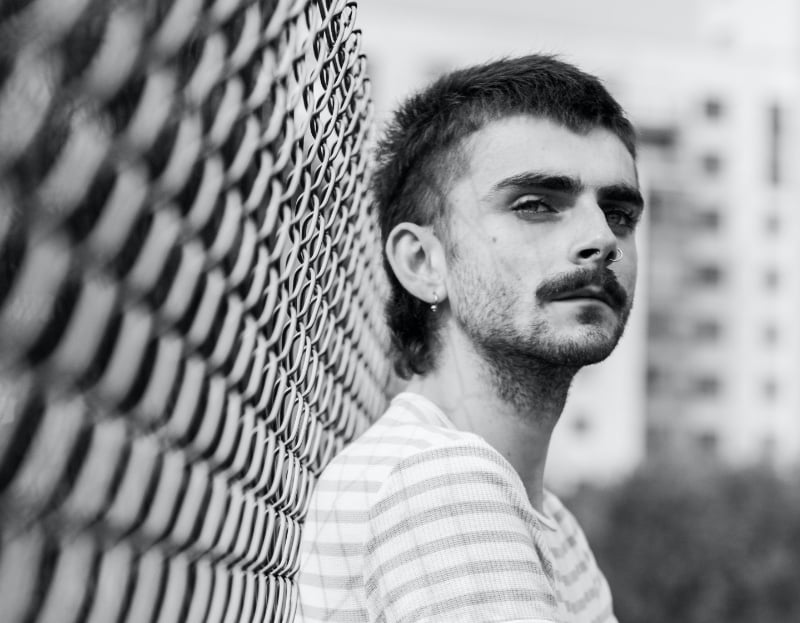
The modern mullet's character depends on the hair left around the ears as much as the length at the back. Fades expose the difference, tapers narrow the edges, and scissor-cut layers leave a fuller connection. Decide where the shortest section should sit before settling on the nape length.





