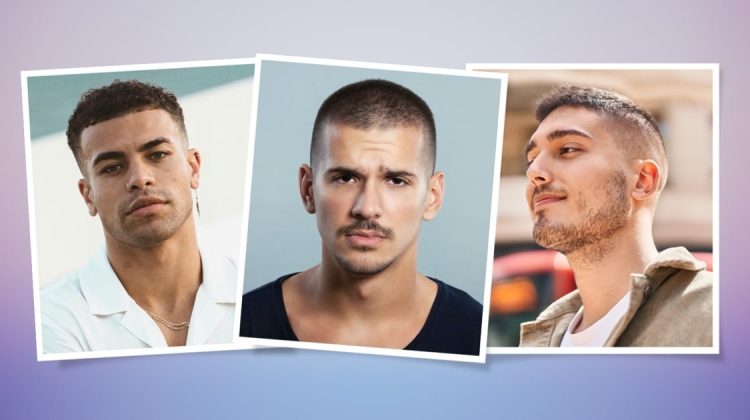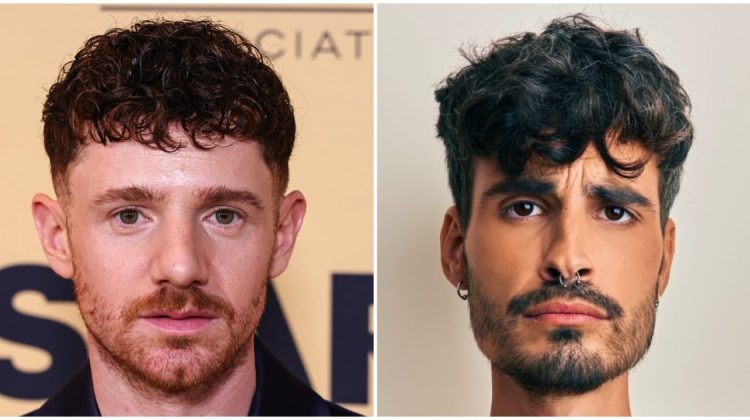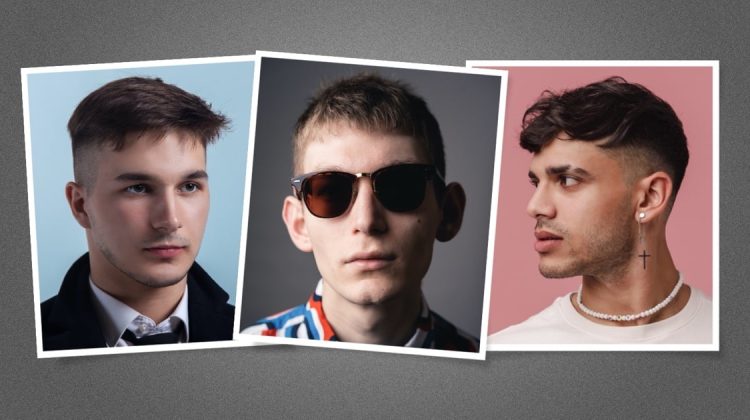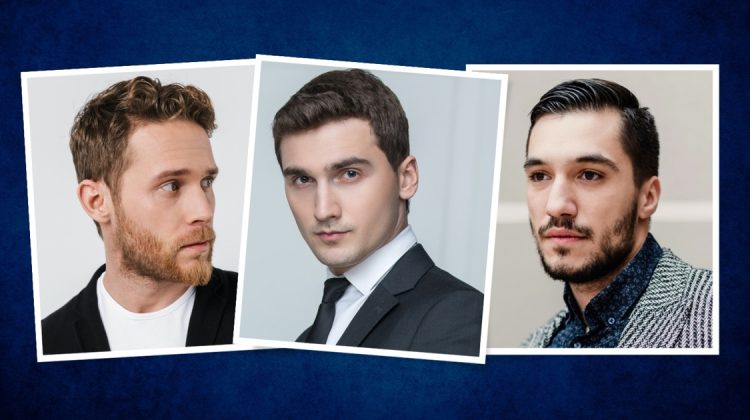
A crew cut fade pairs the short, front-weighted top of a crew cut with sides clipped progressively closer toward the skin. The height of that transition determines how much hair remains above the ears and how strongly the top stands apart.
Its military roots are apparent in the close sides and compact silhouette. The top needs little attention, though the shortest fades show regrowth within a week or two.
What Is a Crew Cut Fade?
The barber leaves the top longest at the front, gradually shortening it toward the crown with scissors or a longer guard. Clippers then blend the sides and back through progressively shorter lengths, sometimes finishing at bare skin.
A crew cut with no fade retains more hair along the sides, tapering gently toward the neckline. A fade exposes more of the head, with its starting height determining the proportion.
Crew Cut Fade Styles
Crew Cut Low Fade
Starting just above the ears, the low fade leaves a broad area of hair along the upper sides. The transition stays close to the neckline, making regrowth less obvious than on higher versions.
Mid Fade Crew Cut
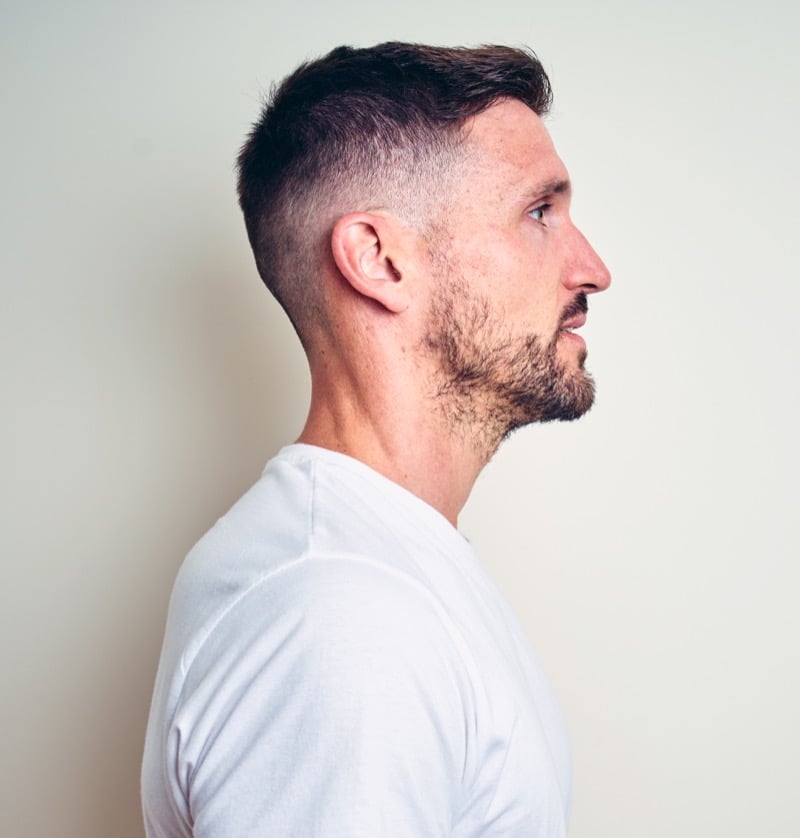
With a mid fade, the blend begins around the temples. The shorter area reaches farther up the sides, giving the top a more pronounced outline while retaining some coverage above the ears.
High Fade Crew Cut

A high fade removes much of the hair along the sides, beginning near the upper curve of the head. Against that close finish, the extra length at the front becomes particularly visible.
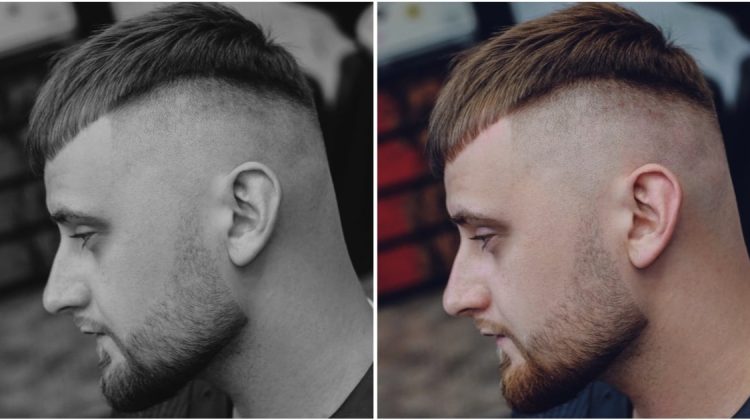
High Skin Fade Crew Cut

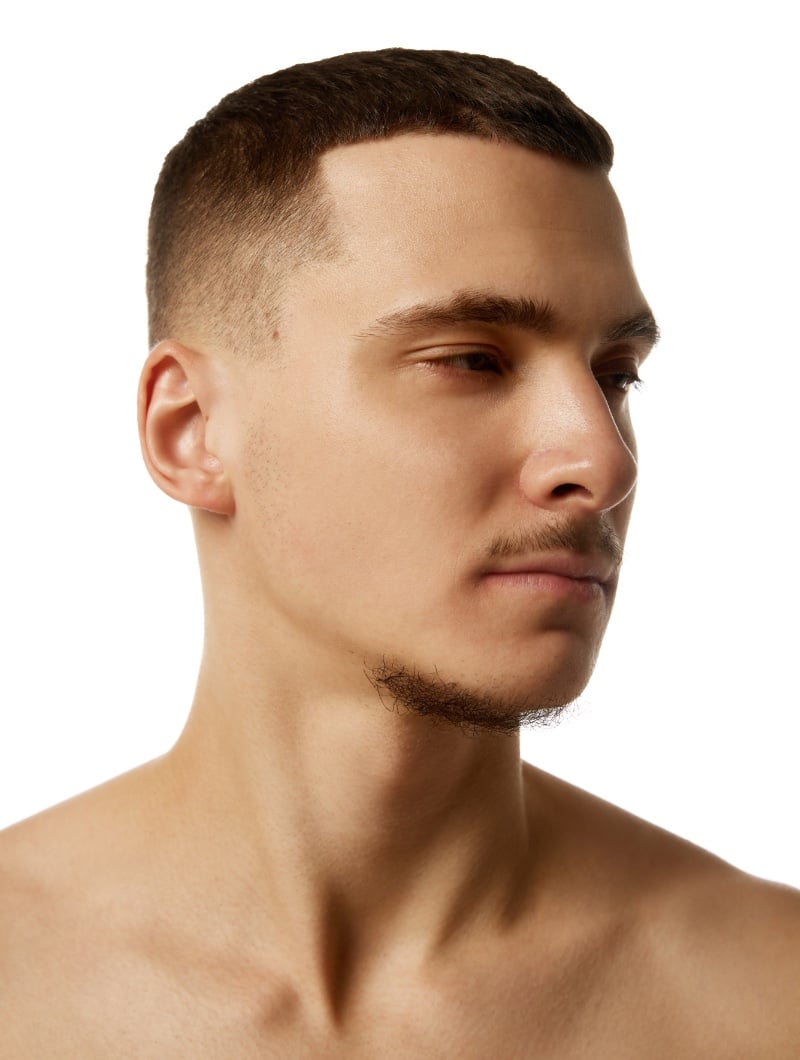
The high skin fade crew cut pictured above has a short, nearly flat top that tips slightly forward. Bare sides rise high before the fade drops behind the ear, concentrating the hair at the crown and front hairline.
Straight or gently wavy hair with enough density can hold that compact top between trims. The exposed sides give this version its military character and make regrowth especially apparent. See the skin fade for more.
Crew Cut Taper Fade

The crew cut taper fade concentrates the shortest hair at the sideburns and nape. More length remains across the sides, keeping it closer to the traditional crew cut. See the low taper fade for more.
Textured Crew Cut Low Fade
Point-cutting or light layering breaks up the short top, allowing individual pieces to separate above a low fade. A dab of matte paste brings out that uneven surface, particularly through the longer front.
Military Crew Cut Fade

The military crew cut fade crops the top close while retaining its slight front-to-back graduation. A high or skin fade exposes the sides, bringing the silhouette close to a high and tight.
How a Crew Cut Fade Grows Out
Day one is not what day ten looks like. As a high or skin fade grows, the transition loses definition first around the ears and neckline. By the second week, the contrast has already softened.
Around week three, the sides begin to resemble those of a traditional crew cut. After a month, the longer top and grown-in edges move closer to a short scissor crop.
A low fade or taper conceals new growth for longer. High and skin fades typically need attention every two to three weeks, compared with three to four for lower versions. The cropped top generally needs little or no product.
How to Ask for a Crew Cut Fade
- Say where the fade should start: low, mid or high.
- Say whether it should go to skin or stop at a short guard.
- Give the length on top, longest at the front, and whether to cut it with scissors or a guard.
- For texture, ask for the top to be point-cut.