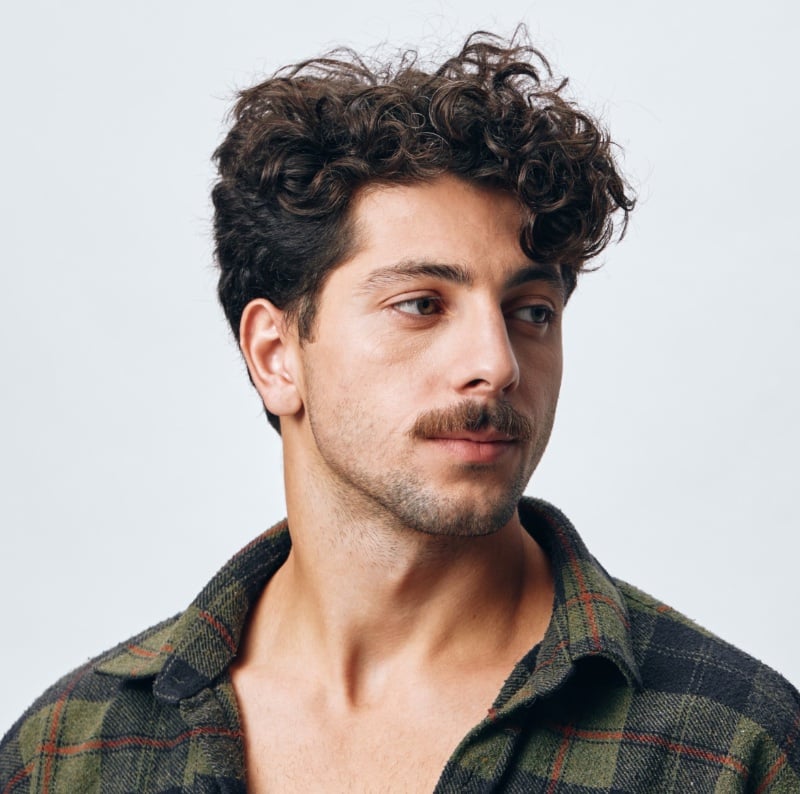
A taper fade on curly hair shortens the sideburns and neckline while retaining fullness through the sides and top. The small clipped areas expose the edges beneath a rounded mass of curls. Among haircuts for curly hair, it preserves more side width than a full fade. The taper's height and finish can be adjusted to the curl pattern, density and outline.
What Is a Taper Fade on Curly Hair?
Both techniques graduate hair from short to long. A full fade carries that graduation through more of the sides and back. A taper fade confines it to the sideburns and nape, leaving longer hair between those areas. Either can finish at skin or retain a short guard length at its shortest point.
That placement lets curls remain visible around the ears and upper sides. The barber can shape the top with scissors and blend the edges with clippers, adjusting how the curls sit above the shortened sections. The amount removed from the longer hair determines whether the overall silhouette stays rounded or narrows at the temples.
As the cut grows, the short hair at the sideburns and neckline becomes visible first. The longer sides retain their fullness, though the edges will need attention sooner if a close finish is wanted.
Taper Fade Curly Hair Styles
Taper height changes how much of the temple is exposed; the length and direction of the curls determine the shape above it.
Low Taper Fade on Curly Hair
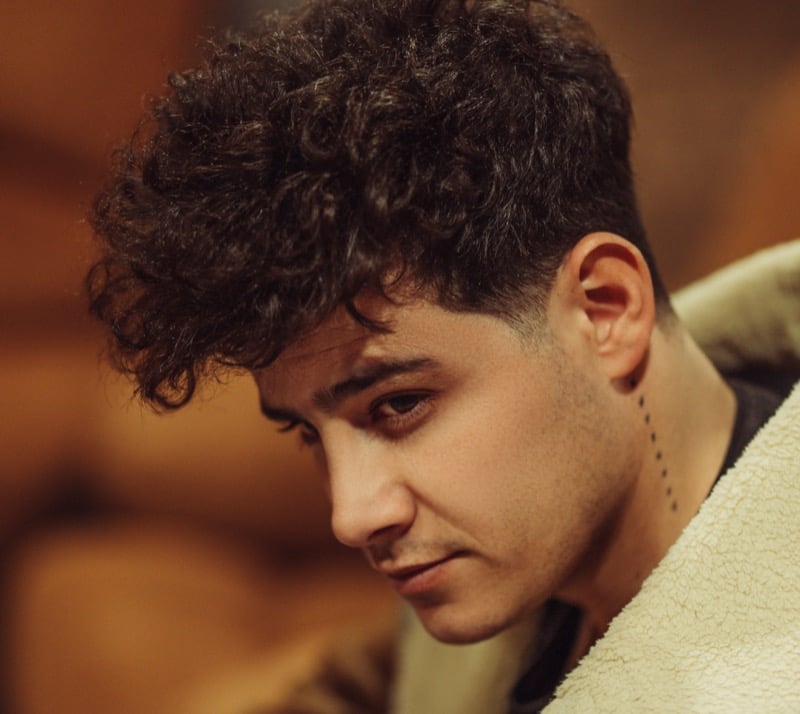
The low taper fade keeps the shortened sections near the base of the sideburns and nape. Curls remain low around the ears, so the side profile retains most of its width. A short curly top gives a compact outline, while longer curls can extend over the taper's upper edge.
Mid Taper Fade on Curly Hair
A mid taper extends farther up the sideburn area, exposing more of the temple beneath the curls. It removes additional hair locally while leaving length behind the ear. On dense curls, the barber may also need to shape the longer sides to keep them from spreading beyond the top.
High Taper Fade on Curly Hair
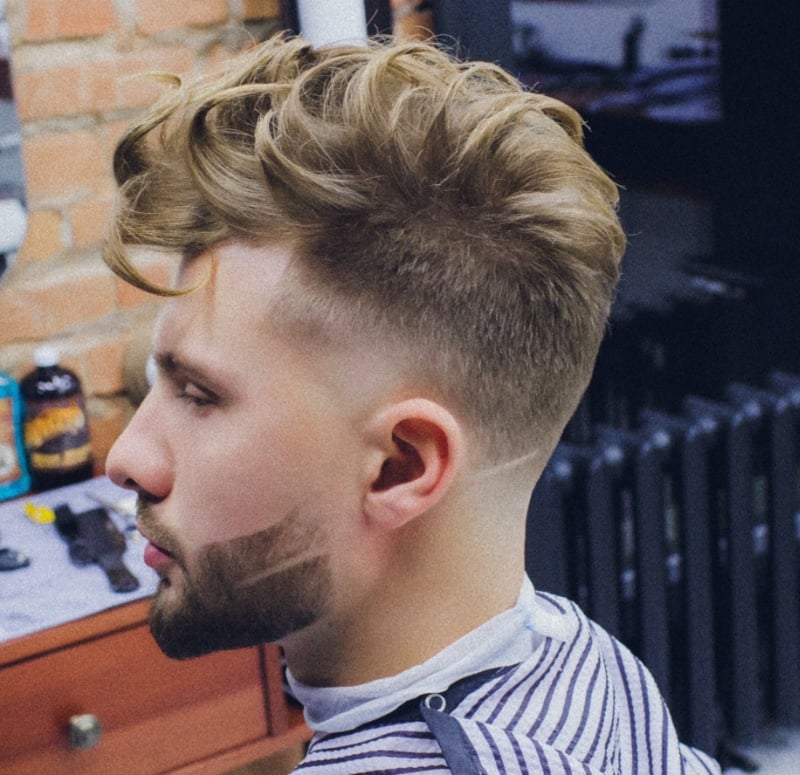
A high taper extends toward the upper temples, creating a larger clipped area beneath the top. It remains localized at the sides and nape; a high fade carries the graduation around more of the head. Here, the front rises and bends back into a curly pompadour.
Blowout Taper on Curly Hair
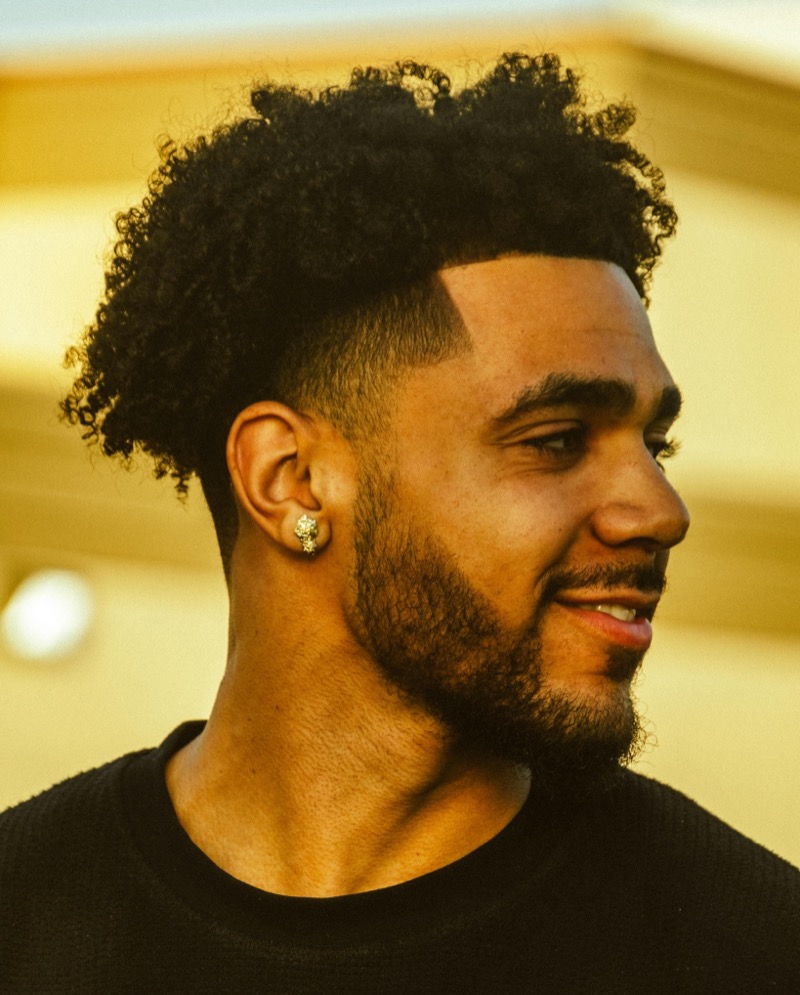
A blowout taper has an expanded top, with curls lifted up and outward above shorter edges. Blow-drying with a diffuser, or lifting at the roots with a pick, can increase fullness while retaining curl texture. A brush stretches and separates the curls further, giving a fuller, less defined surface. The method depends on the finish wanted.
Taper Fade with a Curly Fringe
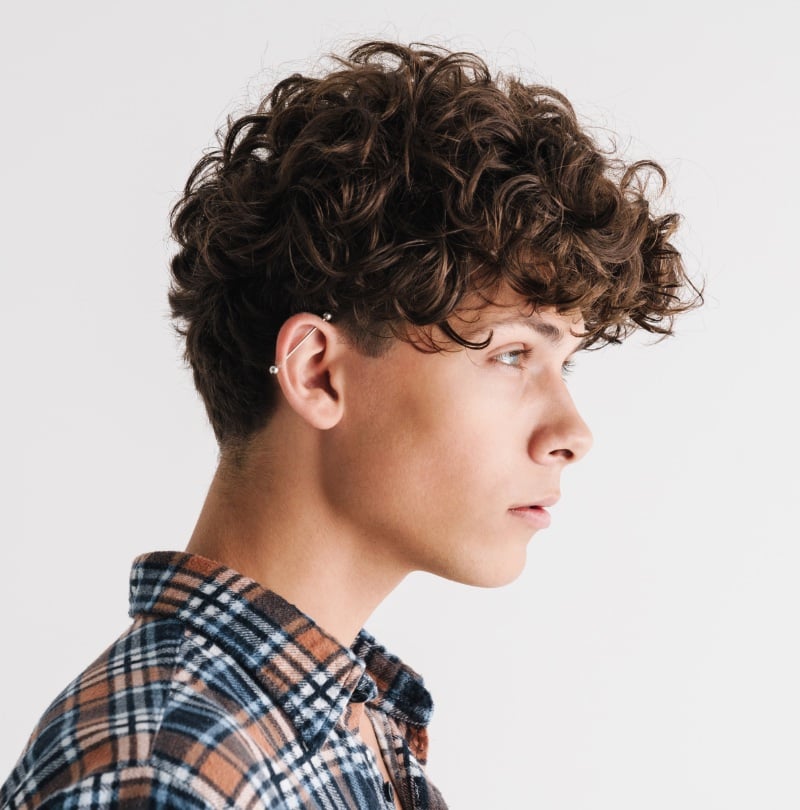
Extra length at the front lets separate curls fall onto the forehead in a curly fringe. The taper shortens the edges beneath that forward-falling top. A curly French crop keeps the fringe shorter, with a more compact outline around the forehead.
Long Curly Hair with a Taper
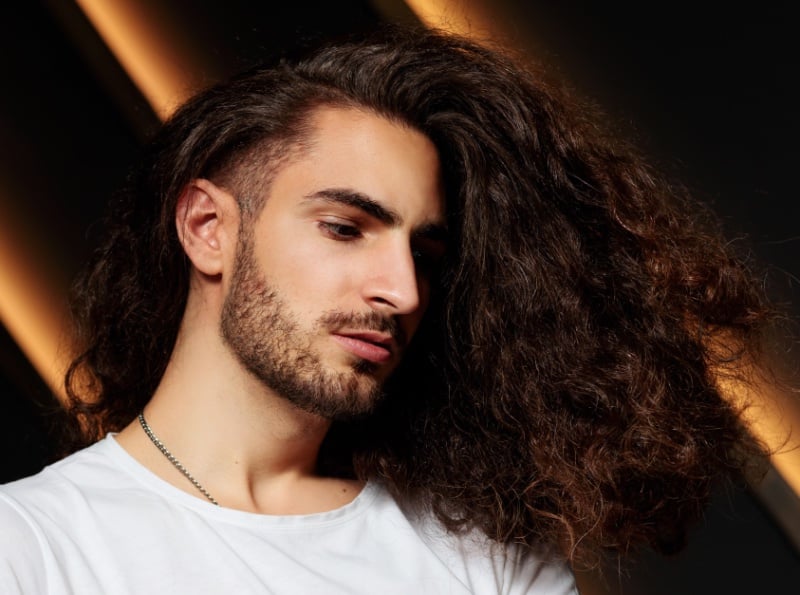
On long curly hair, a taper exposes small areas at the sideburns and neckline beneath the hanging curls. Wearing the hair back reveals more of the clipping; leaving it loose can cover much of the taper. Trimming the edges alone will not remove weight from the longer sides, so discuss those sections separately when growing the top.
How to Ask for a Taper Fade on Curly Hair
Specify a low, mid or high taper, then show where the short sections should end at the temples and nape. A side and back reference helps establish how much hair to retain between them. Choose the shortest finish separately, whether a #1 or #2 guard or skin at the edge.
For the top, describe where the fringe and upper curls should sit when dry. Shrinkage varies, so the barber should assess the natural curl before deciding how much length to remove. Discuss selective weight removal instead of heavy thinning throughout, which can break up curl groups.
How to Style Curly Hair with a Taper
Work a small amount of leave-in conditioner, curl cream or balm through damp lengths where needed. Shape the curls in sections and let them air-dry, or use a diffuser on low heat for more lift. Gel can add hold to loose waves as well as tighter curls. Adjust the amount to the hair's density and the finish wanted.
Book edge touch-ups according to how closely clipped the taper should remain. A skin finish reveals regrowth sooner than a longer guard finish, while the top can often keep growing between edge trims. Reassess the upper sides when the silhouette becomes wider than intended.





