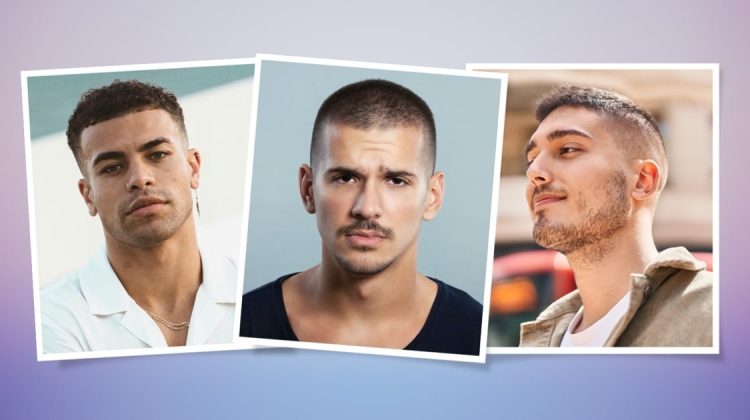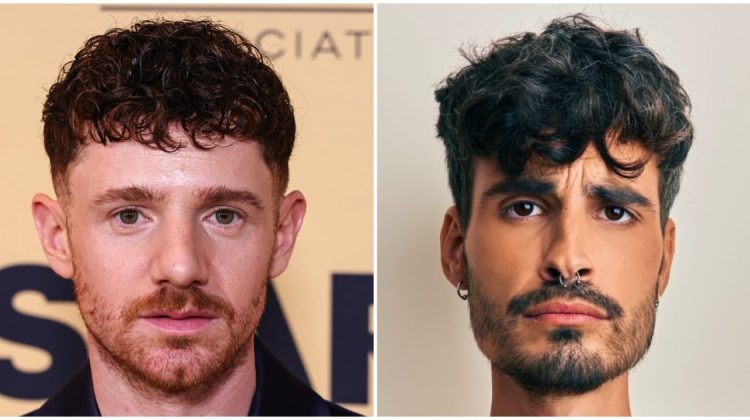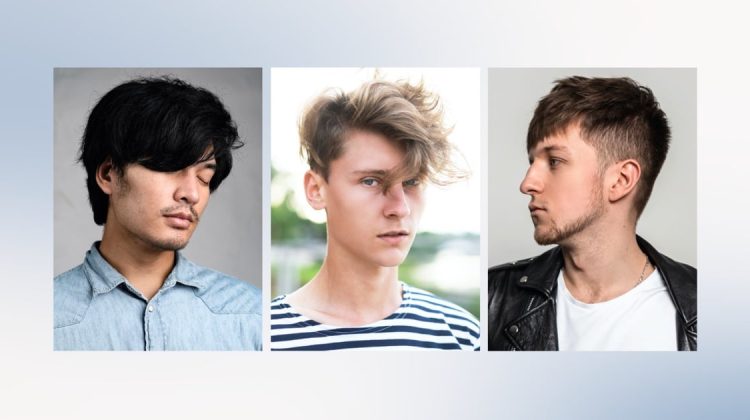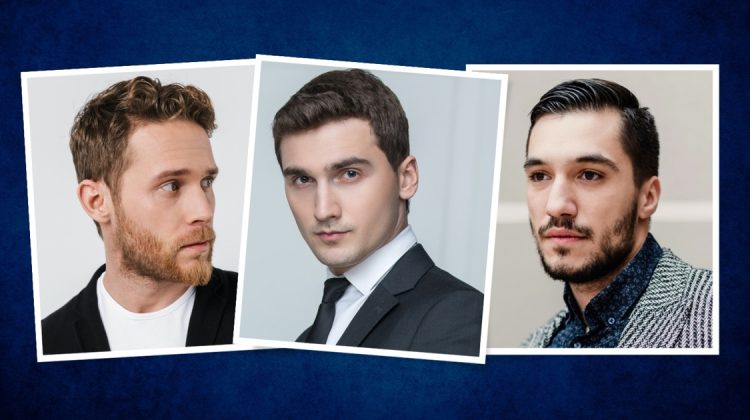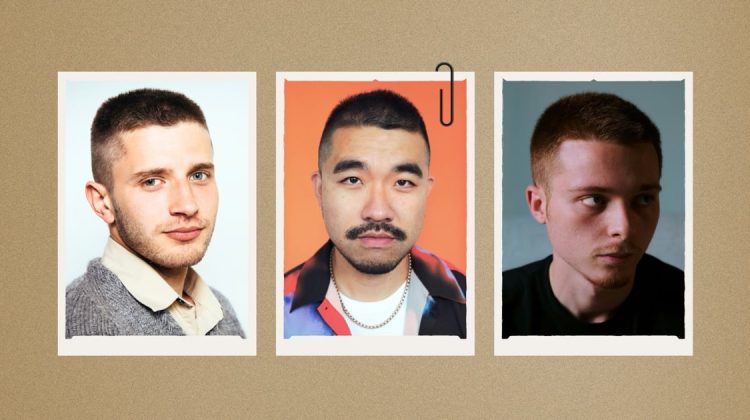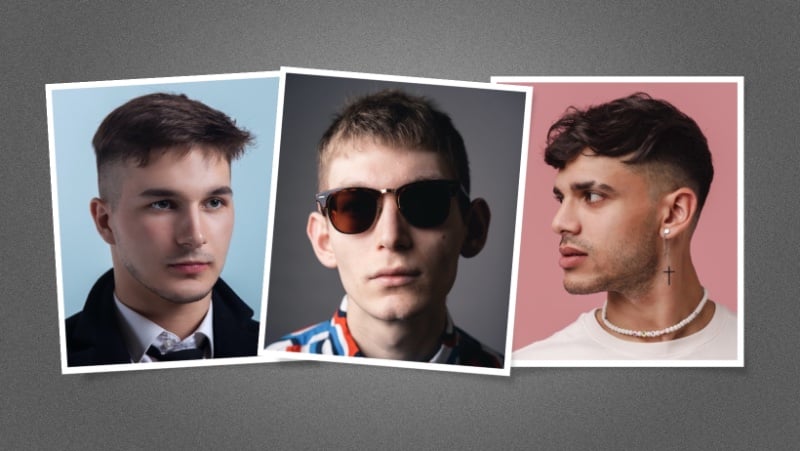
A French crop is a short haircut with a slightly longer top pushed forward into a fringe, and tapered or faded sides. It’s one of the lowest-maintenance men’s haircuts, and it works on straight, wavy and curly hair.
The cut shares its forward fringe with the Caesar, though a French crop generally leaves more length to work with. A blunt edge makes the forehead line graphic; point-cut ends give it a broken, irregular finish.
What Is a French Crop?
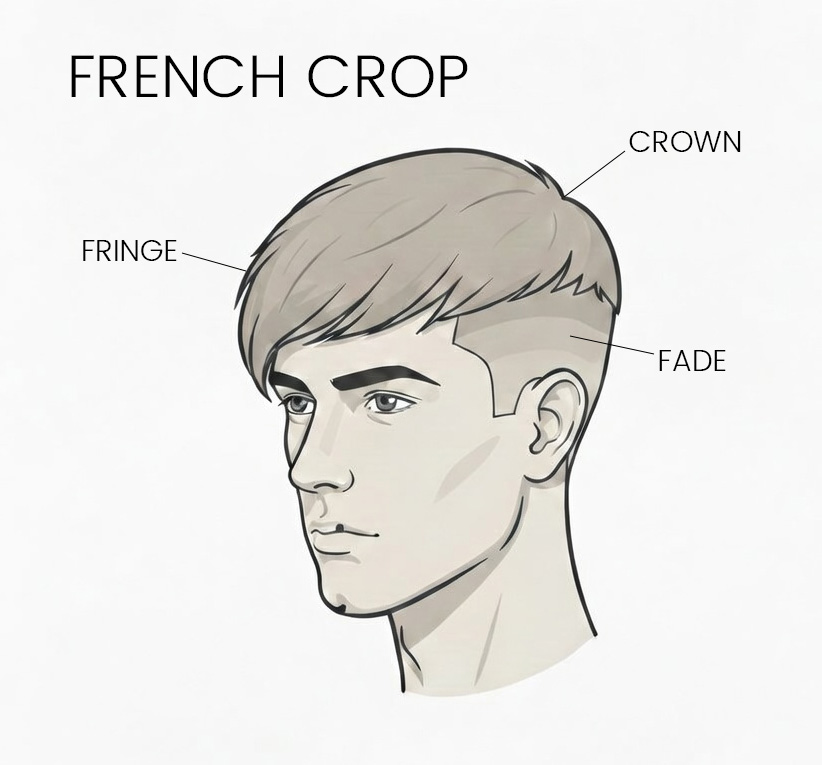
A French crop has three parts, and each one changes the look. Unlike a buzz cut or a crew cut, the top is pushed forward instead of up.
The fringe can sit in a straight horizontal line or break into uneven pieces. That small difference gives the haircut much of its character.
The top generally measures 1 to 2 inches, with enough length at the crown to lie in its natural direction. Bringing the front forward can also make a receding hairline less prominent, depending on hair density.
A taper retains hair around the temples and ears; a high skin fade exposes more scalp and puts the emphasis on the fringe.
French Crop Haircuts
Classic French Crop
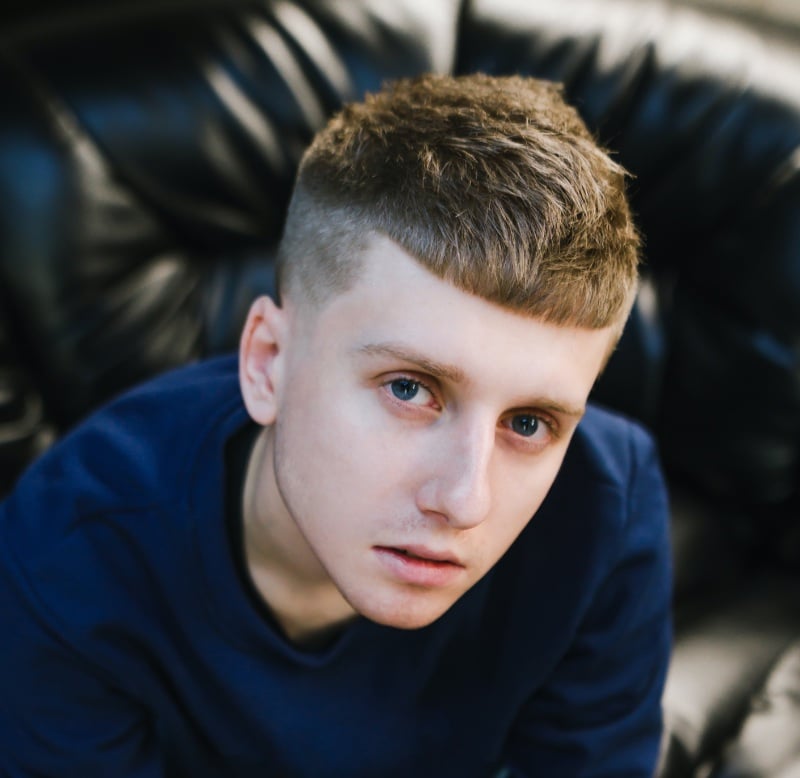
The classic crop keeps the fringe blunt and the sides evenly tapered. Its straightforward outline suits hair that naturally falls toward the forehead, with little styling required.
| The Cut | Details |
|---|---|
| Fringe | Blunt and straight across the mid-forehead |
| Sides | A taper or a #2 or #3 guard, which keeps the ears and neckline clean without showing much scalp |
| Top | 1 to 2 inches, point-cut so it lies flat with visible separation |
| Hair type | Straight or slightly wavy |
| Styling | A pea-sized amount of matte clay or sea salt spray to keep the hair moving forward |
Fringe French Crop Fade

A dense fringe sits almost like a shelf above the eyebrows, while the high skin fade removes weight at the temples. The strong horizontal edge is the defining detail.
| The Cut | Details |
|---|---|
| Fringe | Blunt and dense, hanging low, just above the eyebrows |
| Sides | A high fade that starts above the temples and drops to skin at the ears and nape, which makes the top look thicker |
| Hair type | Straight, thick or coarse hair that holds a sharp line |
| Styling | A strong-hold matte pomade to keep the fringe flat and in place |
Textured French Crop
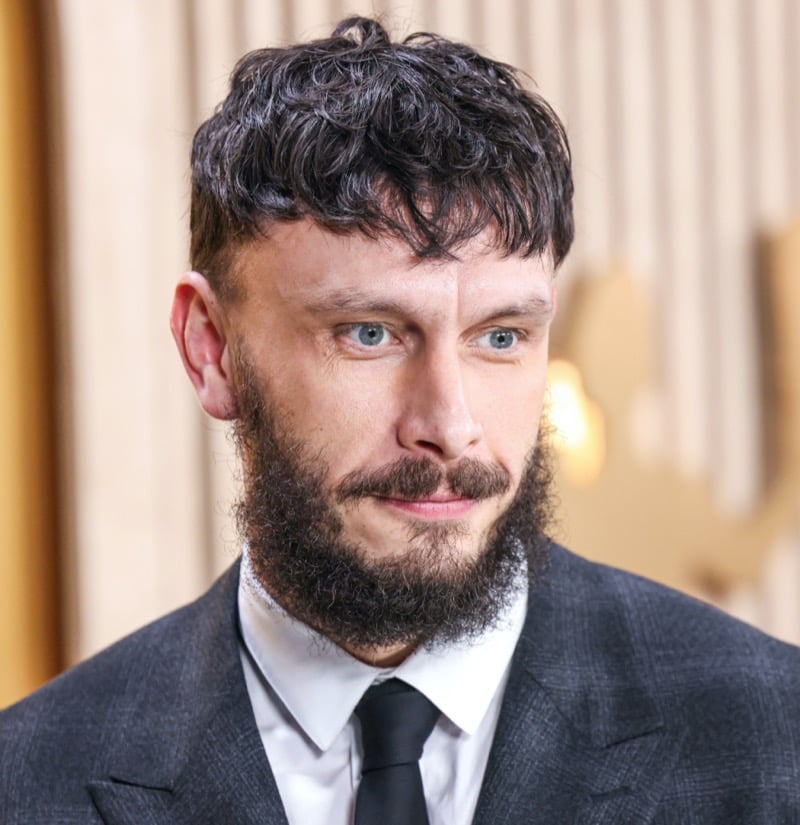
Richard Gadd’s textured French crop has an irregular fringe and short, separated pieces through the top. It feels less uniform than the classic cut. For a looser variation, see the textured crop.
| The Cut | Details |
|---|---|
| Fringe | Choppy and uneven, with weight removed using thinning shears or slide-cutting |
| Top | Cut at several lengths, so it doesn’t look like a helmet and can be styled messy or neat |
| Sides | A mid drop fade or soft taper |
| Hair type | Fine or wavy hair. The texture makes fine hair look fuller |
| Styling | Sea salt spray or volumizing powder for grip without shine |
French Crop Fade
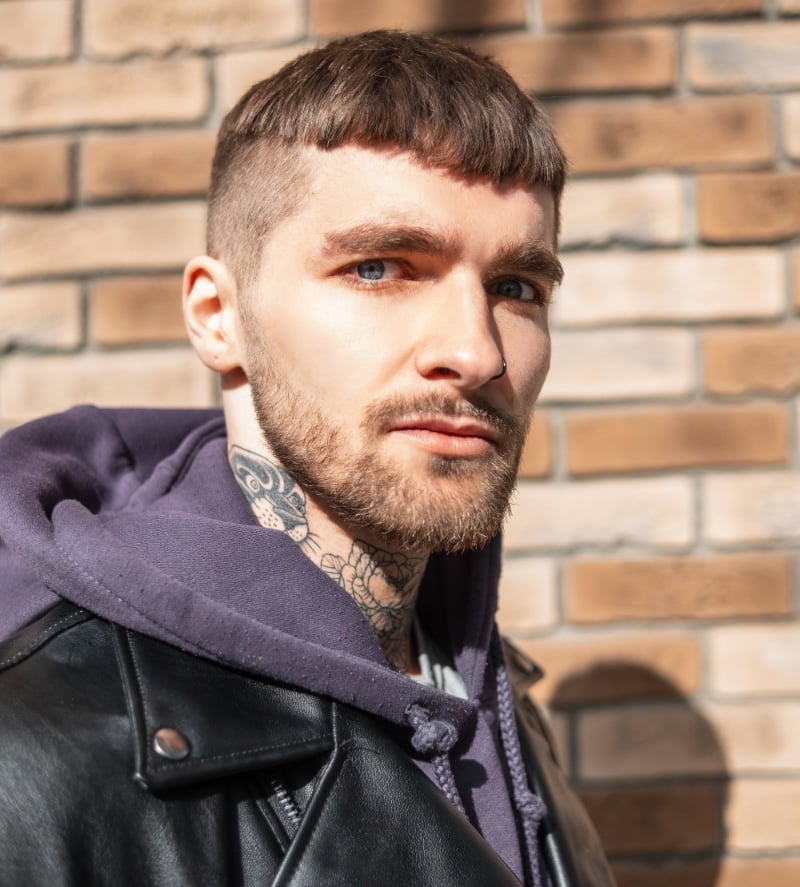
Here, the fade is the defining change. The sides graduate from very short at the neckline into the longer crown, sharpening the outline while keeping the familiar forward fringe.
| The Cut | Details |
|---|---|
| Sides | A low, mid or high fade. A high fade looks bolder, a low fade more conservative |
| Neckline | Usually blurred, so it looks fresh for longer as it grows back |
| Shape | The fade leaves a little more hair at the corners of the forehead to keep the crop’s square outline |
| Tip | A skin fade gives the most contrast on dark hair |
| Upkeep | A touch-up every two to three weeks |
French Crop for Straight Hair

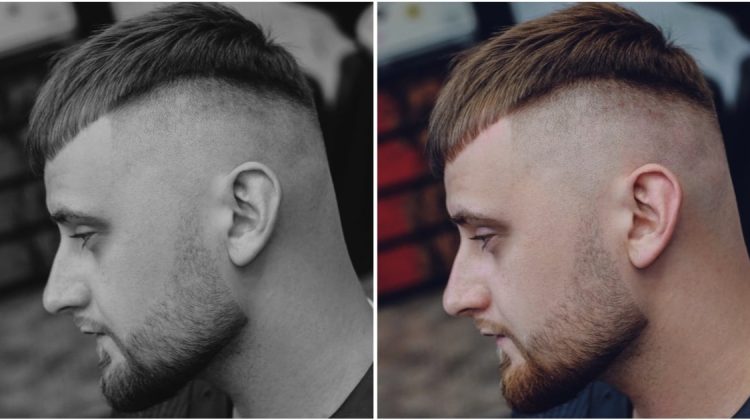
On straight hair, small changes in length are especially visible. Vertical point-cutting breaks up the surface, while the bleached finish in this example makes the jagged fringe more apparent.
| The Cut | Details |
|---|---|
| Fringe | Choppy or point-cut. A perfectly blunt line on straight hair can look like a bowl cut |
| Top | Shorter at the back and longer toward the front, so the hair falls forward on its own |
| Sides | A taper that blends into the skin |
| Hair type | Fine, straight hair that lacks volume |
| Styling | Volumizing powder or sea salt spray at the roots, scrunched forward with the fingers |
Curly French Crop
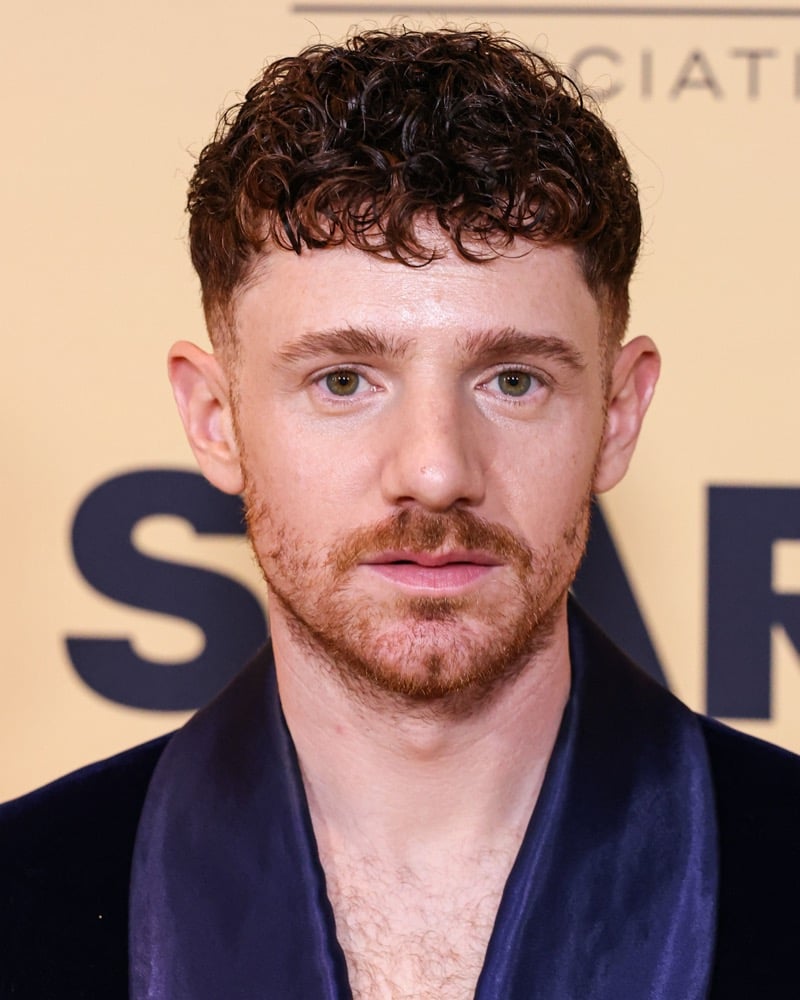
The curly French crop lets individual curls form the fringe, adding height at the front. Keeping the sides close allows the curl pattern on top to stand out.
| The Cut | Details |
|---|---|
| Fringe | Left loose and natural, with individual curls cut by hand so they sit on the forehead |
| Sides | A mid to high drop fade that follows the curve of the head |
| Crown | Left a little longer to avoid flat spots |
| Care | A sulfate-free shampoo keeps curls hydrated |
| Styling | Curl cream or sea salt spray on damp hair, then air-dry or diffuse |
Messy French Crop With Mid Fade
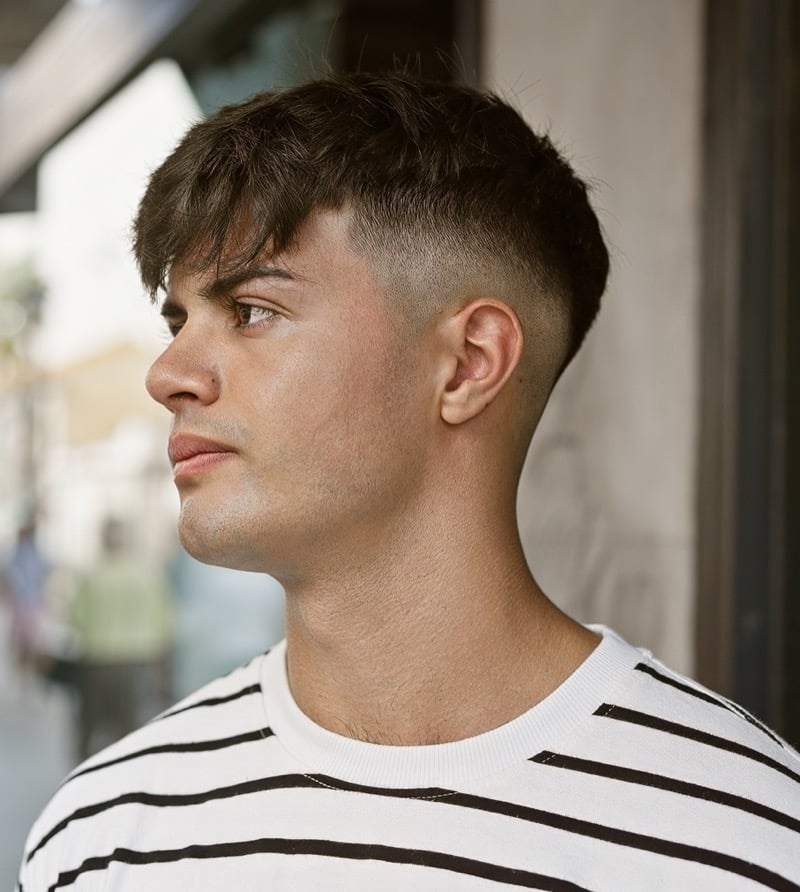
Uneven lengths give the messy French crop a tousled top, with a mid fade keeping the sides close. The fringe can be pushed into separated pieces instead of one continuous line.
| The Cut | Details |
|---|---|
| Top | Point-cut or razor-cut at different lengths so it doesn’t sit as a solid mass |
| Sides | A mid fade, cleaner than a taper but softer than a skin fade |
| Fringe | Pushed in different directions, which also helps hide a cowlick or uneven hairline |
| Hair type | Thinning hair, which the layers make look fuller, or thick hair that needs weight removed |
| Styling | Matte powder or a gritty paste, worked into the roots and pushed forward and up |
Short French Crop
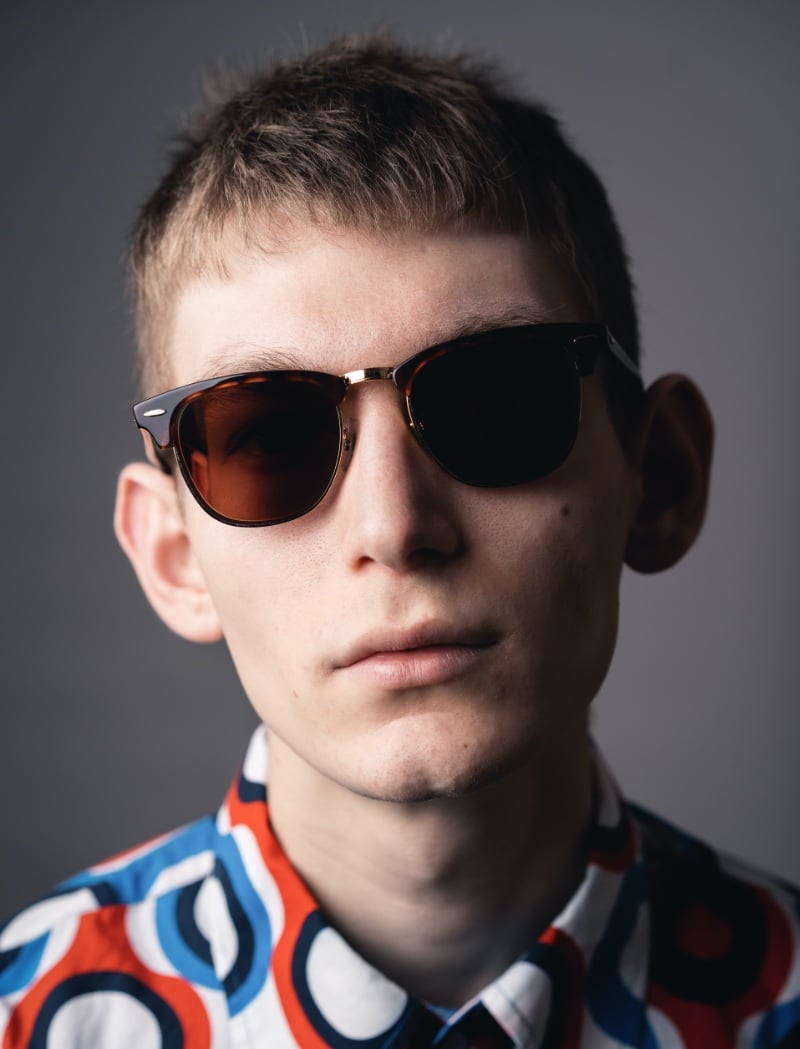
The short French crop reduces the fringe to a narrow strip across the forehead. With the sides cut close, the outline stays recognizable even when the top is barely long enough to style.
| The Cut | Details |
|---|---|
| Fringe | Very short, often about an inch, and usually blunt |
| Sides | A high taper or #1 guard, kept tight to hold the crop shape |
| Crown | Short enough to control cowlicks |
| Styling | A tiny amount of matte wax, or just a towel-dry |
French Crop Mullet
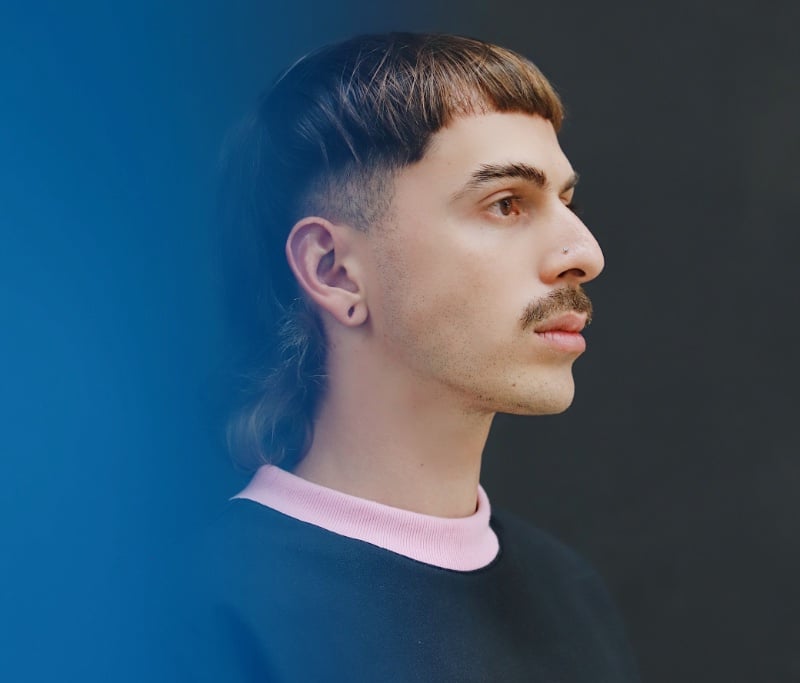
The French crop mullet, also called a cropped mullet, combines the forward-styled front of a crop with the length of a mullet at the back. It works especially well on textured hair.
| The Cut | Details |
|---|---|
| Front | A choppy, textured crop fringe |
| Sides | A burst fade or taper behind the ear |
| Back | Long enough to cover the collar, often layered for a flick or natural wave |
| Hair type | Wavy or thick hair gives the back the most movement |
| Tip | Ask for a tapered mullet rather than a blocked back for a more modern finish |
French Crop Skin Fade
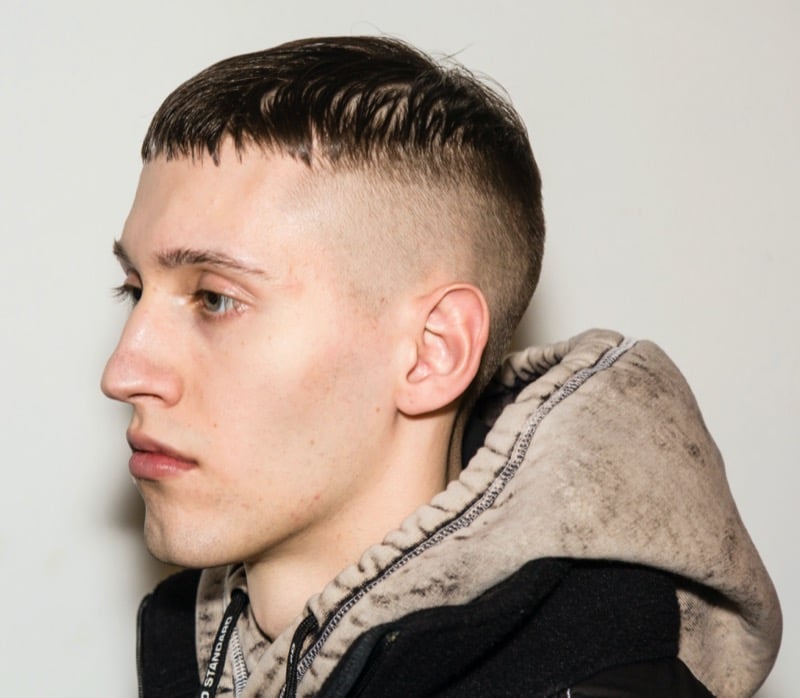
The French crop skin fade exposes the scalp beneath the fade, making the short top and straight fringe stand apart. See the skin fade for more.
| The Cut | Details |
|---|---|
| Fringe | Dense and usually straight across. With such short sides, the fringe becomes the focus |
| Sides | Finished with a foil shaver or zero-gap trimmer at the base, starting at the ears and blending up |
| Upkeep | High. A touch-up every 10 to 14 days keeps the blend clean |
Long French Crop

An eyebrow-length fringe changes the proportions of the long French crop, bringing more hair across the forehead. The extra length can be worn straight ahead or directed slightly to one side.
| The Cut | Details |
|---|---|
| Fringe | Long and heavily textured, so it can be swept to the side or left hanging straight |
| Sides | A low taper or subtle fade, slightly longer than a skin fade to balance the top |
| Top | Weight removed from the middle so it moves rather than sitting flat |
French Crop With Beard
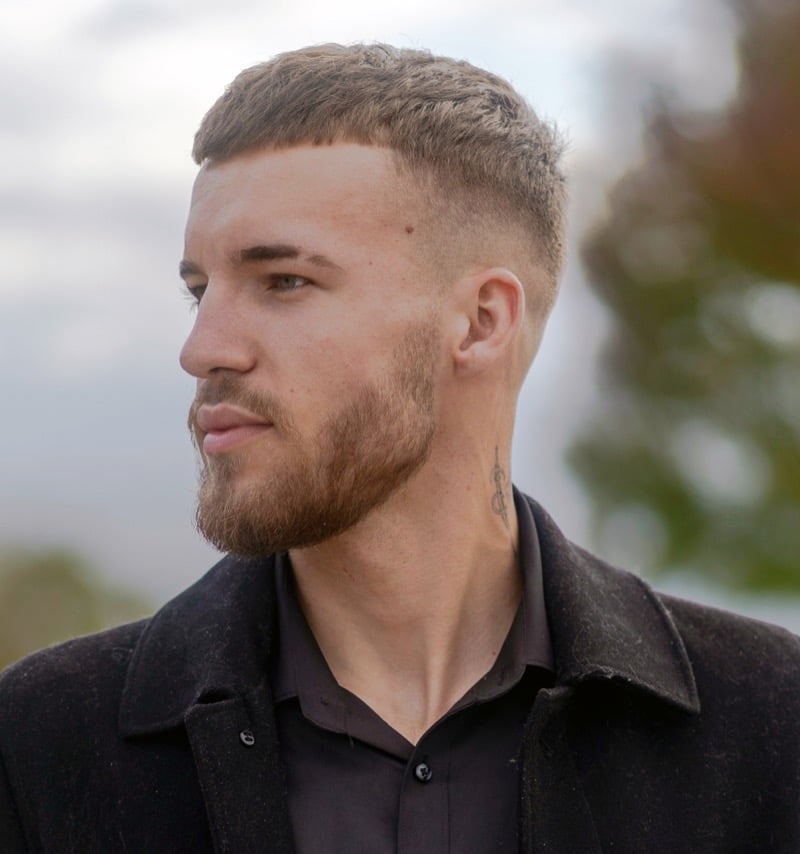
The short fringe leaves the beard to carry much of the visual weight. A gradual taper through the sideburns connects the haircut to the facial hair.
| The Cut | Details |
|---|---|
| Fringe | Shorter and choppier, so the face isn’t crowded with hair |
| Sides | Tapered at the sideburns, blending the haircut into the beard |
| Styling | Matte product for the hair and a balm for the beard |
Disconnected French Crop
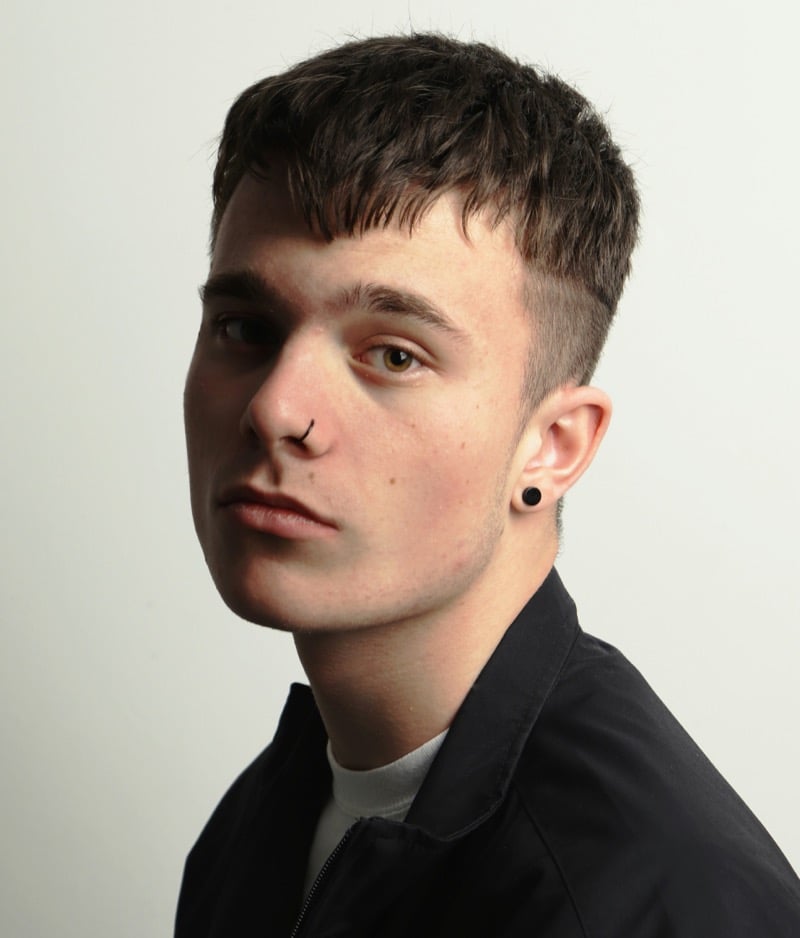
The longer top ends abruptly above clipped sides, creating a visible ledge instead of a gradual blend. Thick hair makes that difference in length particularly pronounced.
| The Cut | Details |
|---|---|
| Fringe | Long and heavily textured |
| Sides | Clipped to one length, like a #0 or #1, with no fade |
| Hair type | Thick hair. It removes a lot of bulk while keeping the top full |
| Tip | With no blend to hide mistakes, it needs a precise barber |
Modern Low Fade French Crop
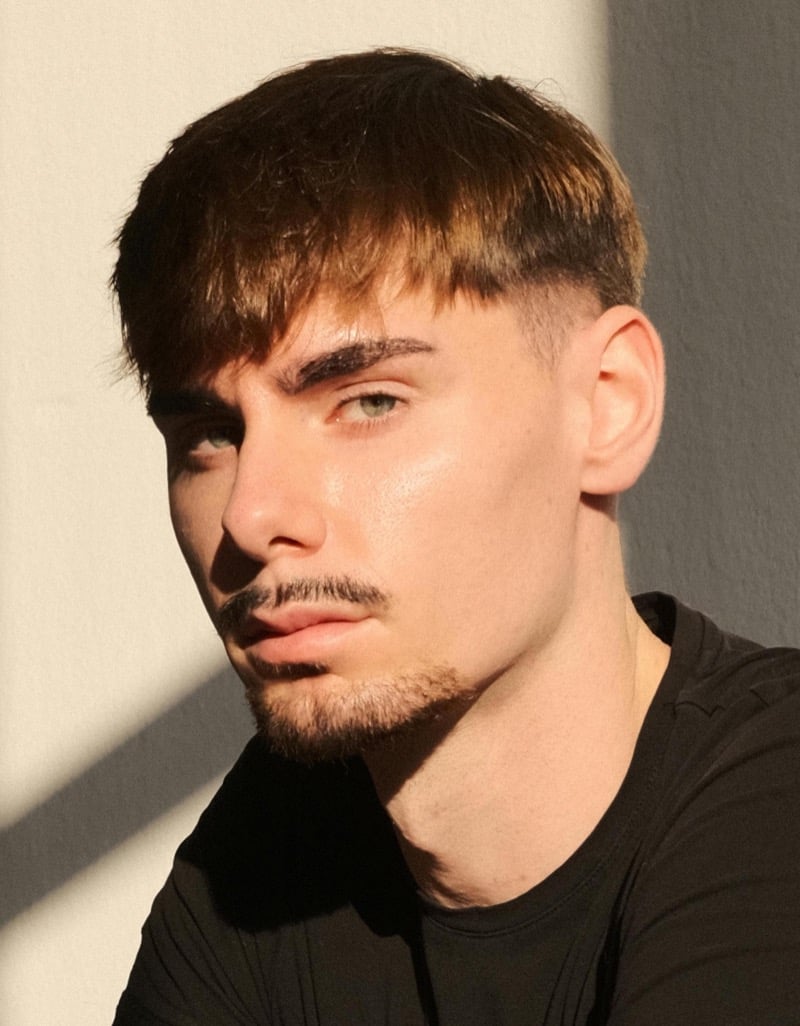
The modern low fade French crop starts the fade just above the ears and at the base of the neckline, leaving more hair at the temples. The fuller temples give it a gentler outline than a high fade. See the low fade for more.
| The Cut | Details |
|---|---|
| Fringe | A soft blunt cut or a slight side sweep |
| Sides | A subtle fade from the very bottom of the hairline |
| Hair type | Fine or light-colored hair, where a skin fade can look patchy |
French Crop High Fade

The French crop high fade starts the fade near the temples, exposing the temples and concentrating the visible hair above the fade. For more, see the French crop high fade.
| The Cut | Details |
|---|---|
| Fringe | A heavy, straight line sitting high on the forehead |
| Sides | A high fade that drops quickly to skin |
| Hair type | Darker hair, where the contrast with the scalp shows most |
Layered French Crop
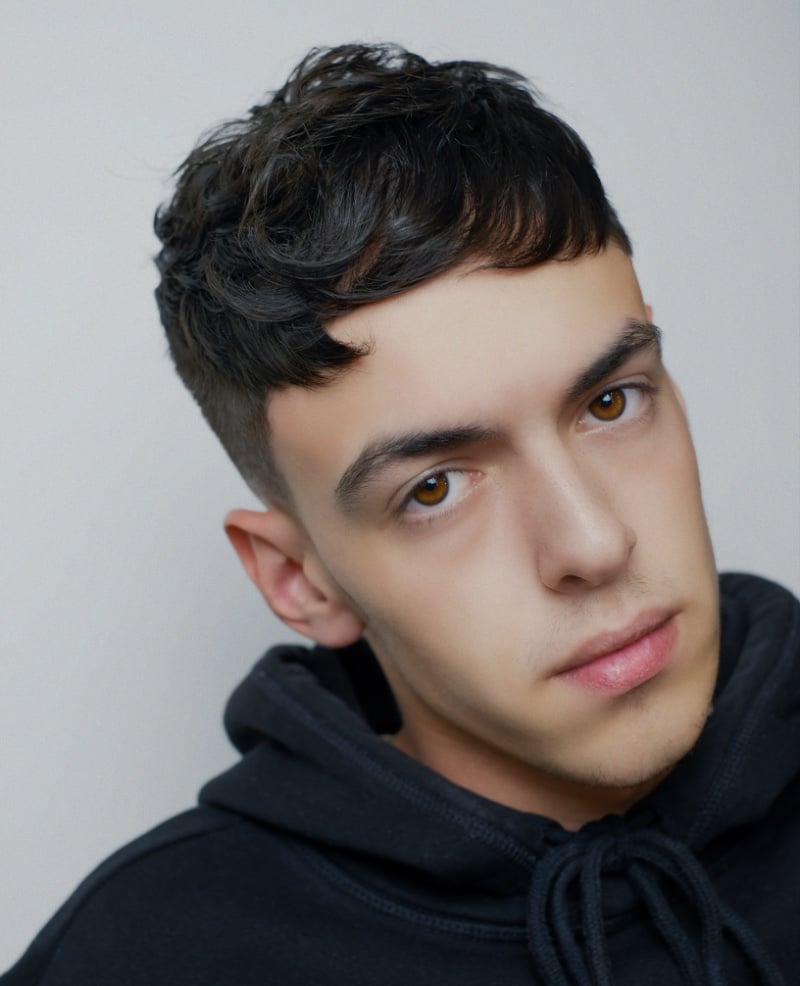
Short layers interrupt the top’s surface, giving the fringe a broken edge and the crown a little lift. A softer taper keeps the emphasis on the cut’s uneven lengths.
| The Cut | Details |
|---|---|
| Fringe | Point-cut or razor-cut for a jagged edge, which is more forgiving and easier to style around a cowlick |
| Sides | A soft taper rather than a skin fade |
| Top | Choppy, vertical layers that stack for natural volume without strong-hold products |
French Crop Top Fade
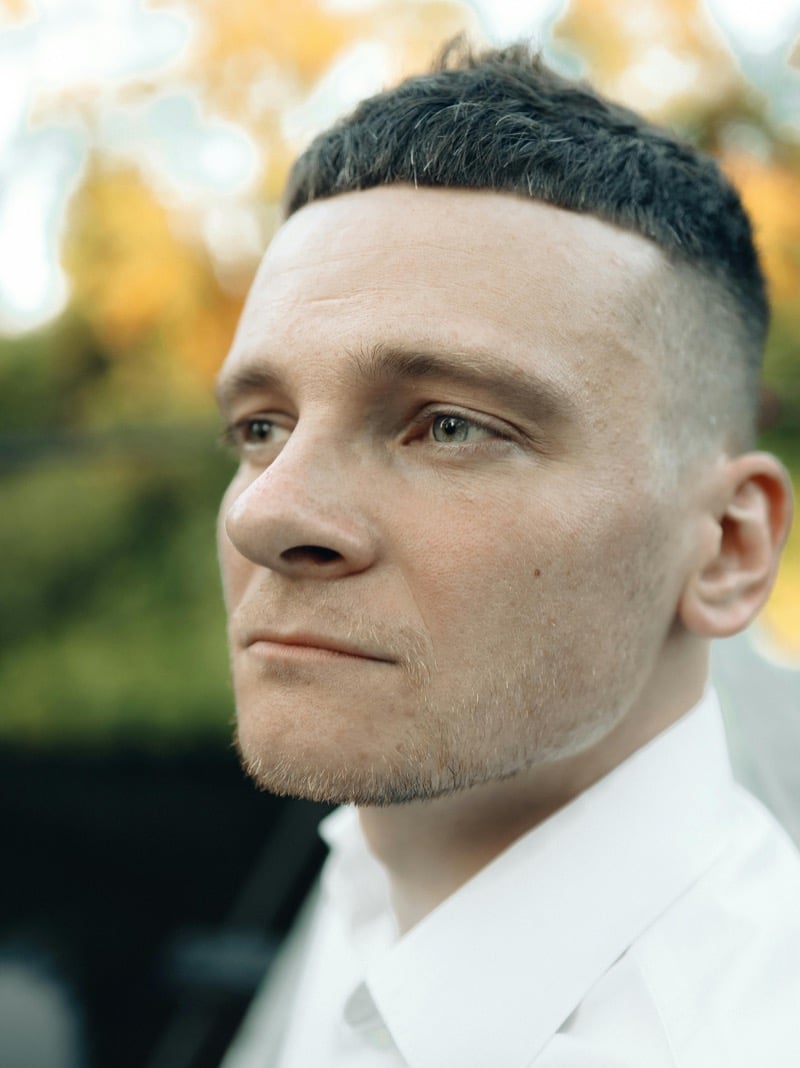
The fade sits unusually high, leaving a compact section of hair across the top. On coarse hair that grows outward, the close sides make the cropped silhouette easier to maintain.
| The Cut | Details |
|---|---|
| Fringe | Short and compact, sitting off the forehead |
| Sides | A high weight line for a square shape |
| Crown | Clipped close so the back doesn’t stick up |
| Hair type | Thick or coarse hair |
Wavy French Crop With Drop Fade
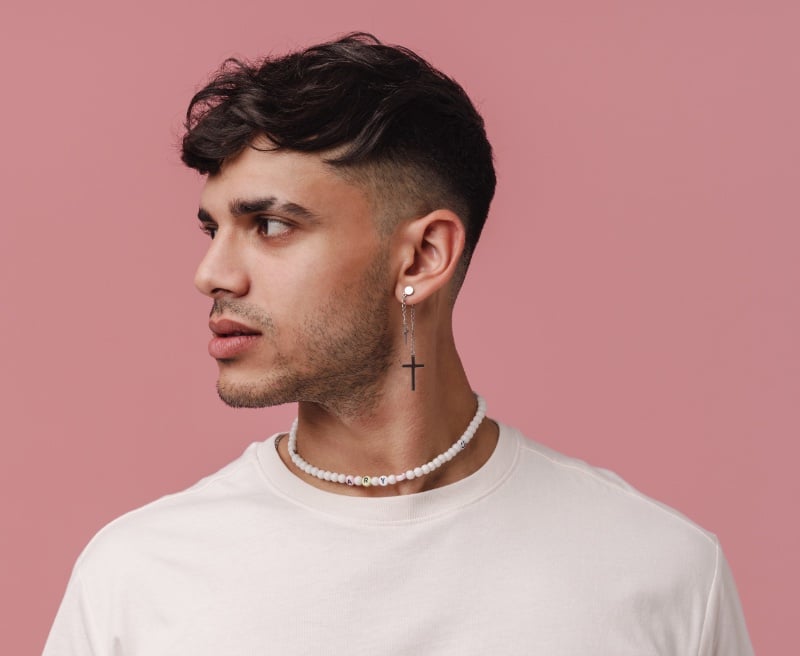
The wavy French crop with drop fade leaves enough length for the waves to bend across the forehead. The drop fade curves down behind the ear, following the head’s curve while the fringe stays loose.
| The Cut | Details |
|---|---|
| Fringe | Longer than a standard crop so the waves can form, with a point-cut edge |
| Sides | A drop fade that curves toward the nape |
| Top | Thinned sparingly so the wave pattern stays intact |
French Crop With Angular Fringe
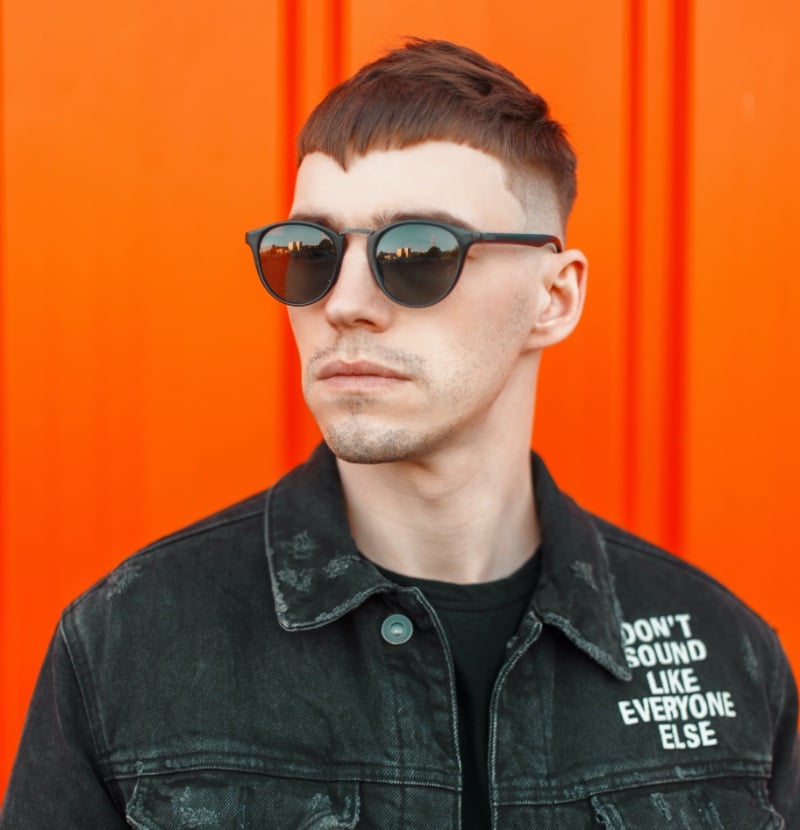
An angled fringe crosses the forehead diagonally, ending shorter at one temple. The slant brings an asymmetrical edge to the otherwise compact crop.
| The Cut | Details |
|---|---|
| Fringe | Cut at an angle, as subtle or as sharp as preferred |
| Sides | A mid to high skin fade, which matches the hard line of the fringe |
| Top | Deep point-cuts create pieces that follow the direction of the slant |
The Contemporary French Crop
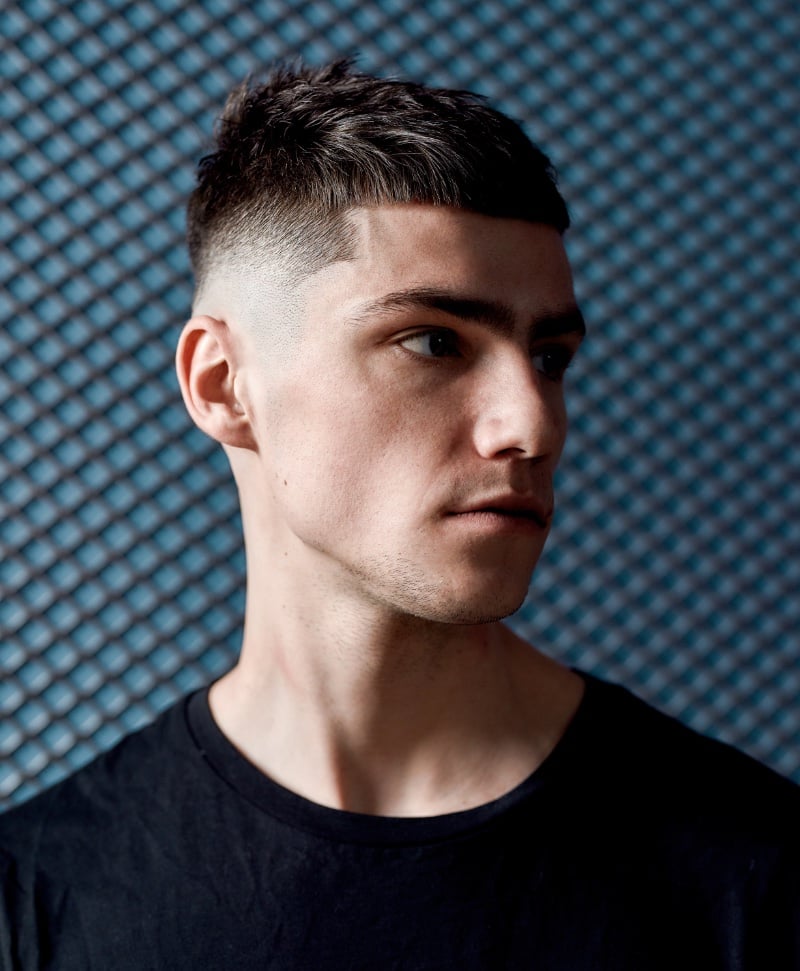
The contemporary French crop moves away from the razor-sharp edges of earlier versions toward a softer, more natural finish. The top can be directed forward with a small amount of product.
| The Cut | Details |
|---|---|
| Fringe | Point-cut for a soft, feathered edge instead of a heavy line |
| Sides | A smooth taper or mid fade, blended so it looks like a shadow, with no visible steps |
| Top | Weight removed with thinning shears or a razor so it’s light and easy to style with little product |
How to Ask Your Barber for a French Crop
A barber needs more than the name of the cut. The useful details are the fringe length, how the sides should graduate and how much weight should remain on top.
- Fringe: Ask for a blunt cut for a heavy, straight line or a point-cut finish for a softer, textured edge. For a long crop, ask for the fringe to sit just above the eyebrows. For a short crop, at mid-forehead.
- Sides: Ask for a skin fade for the most contrast, a taper for a classic look, or a drop fade for wavy or curly hair. Say how high the fade should start: low, mid or high.
- Texture: On thick hair, ask for weight to be removed with thinning shears or point-cutting. On fine hair, ask for the top to stay dense with minimal layering.
- Back: Most modern crops have a tapered neckline. A blocked or squared nape gives a more traditional look.
Bring a photograph showing the preferred fringe and fade height. Those details are easier to match than a haircut name alone.