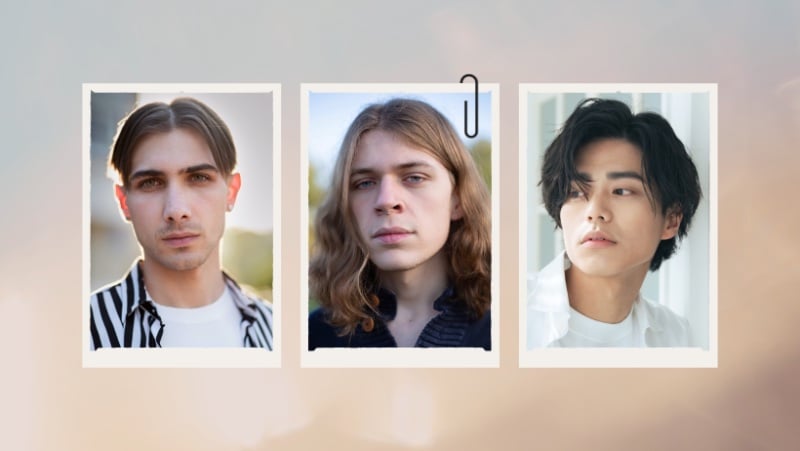
Middle part hair for men divides the top along the center, sending the lengths toward either side. It can form a short split fringe, a curtain haircut or long sections that fall past the ears. Among men's haircuts, the center division makes differences in length, curl and styling direction especially visible.
What Is Middle Part Hair?
The line starts near the middle of the hairline and runs toward the crown. The front needs enough length to bend away from it, though the amount depends on texture, density and growth direction. Straight hair may fall sooner than a tight curl, which draws upward as it dries.
Layers can remove weight from a dense top or let shorter front pieces bend away from longer sides. The sides may stay full, taper at the edges or include an undercut. A middle part fade shortens the sides gradually beneath the divided top.
Types of Middle Part Haircuts for Men
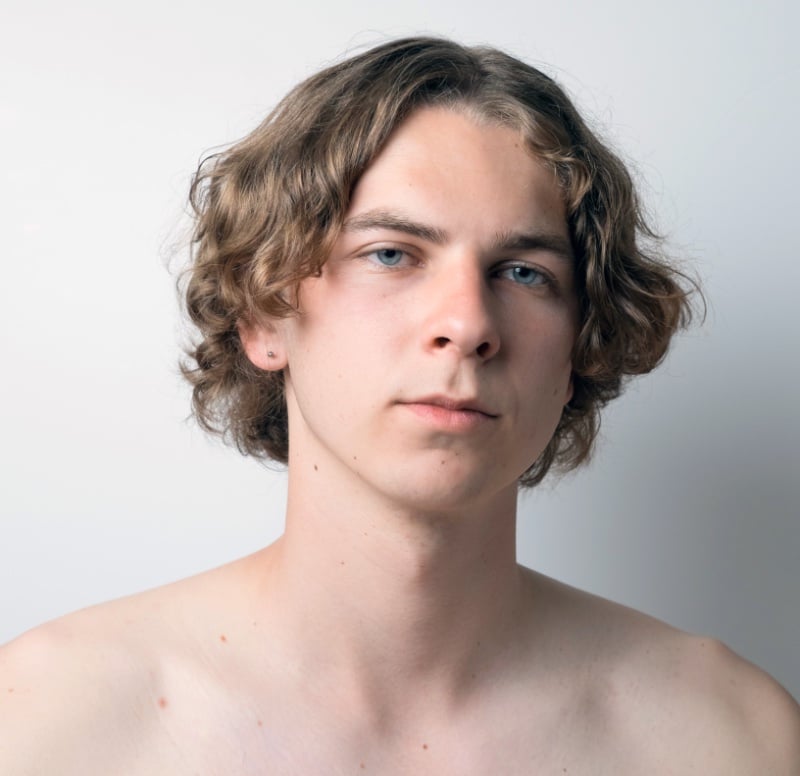
These 21 variations change the length, texture and direction of the hair on either side of the part.
Classic Middle Part
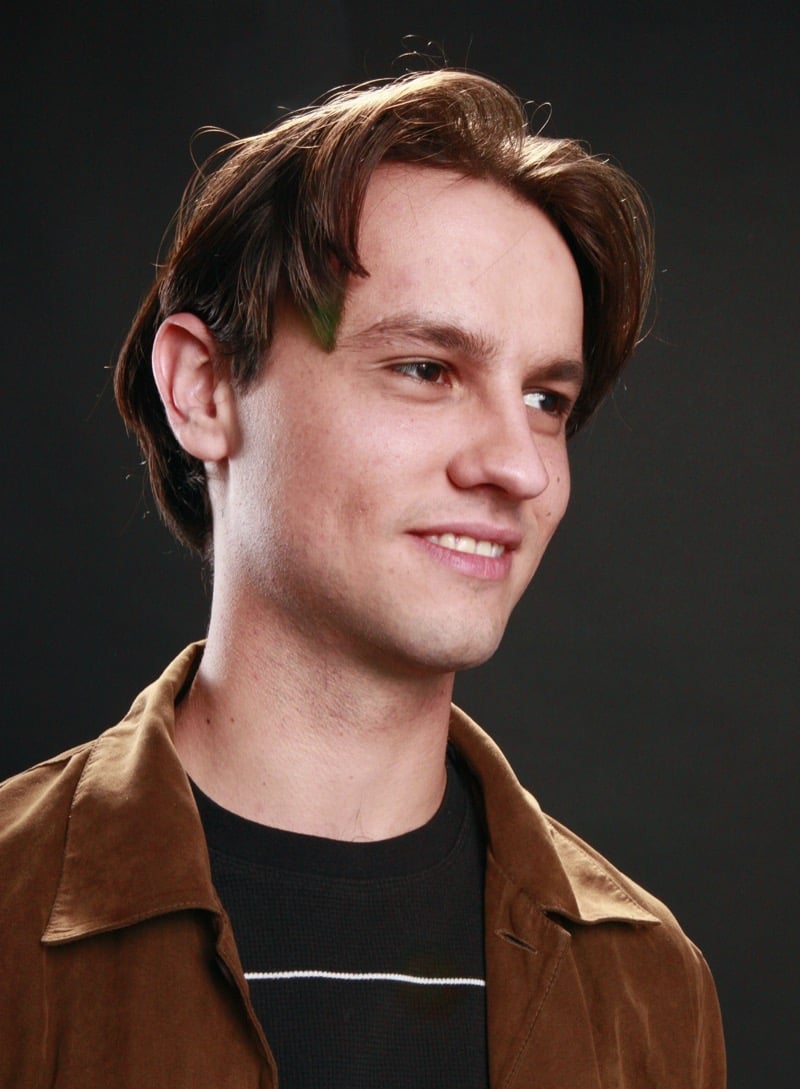
Two curved front sections fall away from the center line in a classic middle part. The forehead shows between them, and the ends turn back near the temples. Similar lengths on either side make the division easy to see.
Follow the roots' natural separation when placing the line. If one side lifts more strongly, dry that section into its curve instead of forcing both halves flat with extra product.
Messy Middle Part Haircut

Loose pieces cross the forehead and partially cover the eyes in a messy middle part haircut. Uneven ends break up the center division, with longer strands curling toward the cheeks.
Layers give those strands room to fall at different heights. Separate selected sections as they dry, leaving some ends to turn outward instead of arranging every piece in the same direction.
Short Middle Part
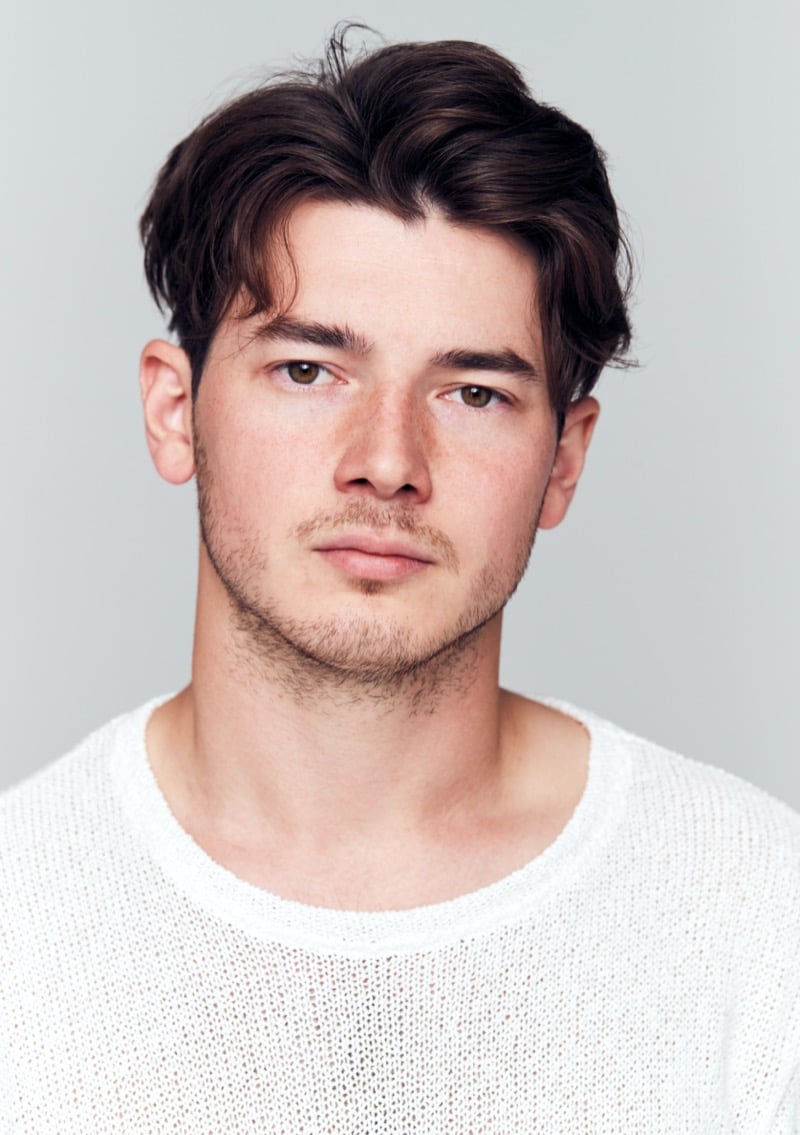
A short middle part ends near the brows and temples, leaving the ears exposed. The front splits into two compact curves, with less hanging length than a curtain cut.
Short hair is more likely to lift at the part before its ends bend aside. Leave enough length at the front for that bend, then use a little cream only where the tips need help staying in place.
Layered Middle Part for Men
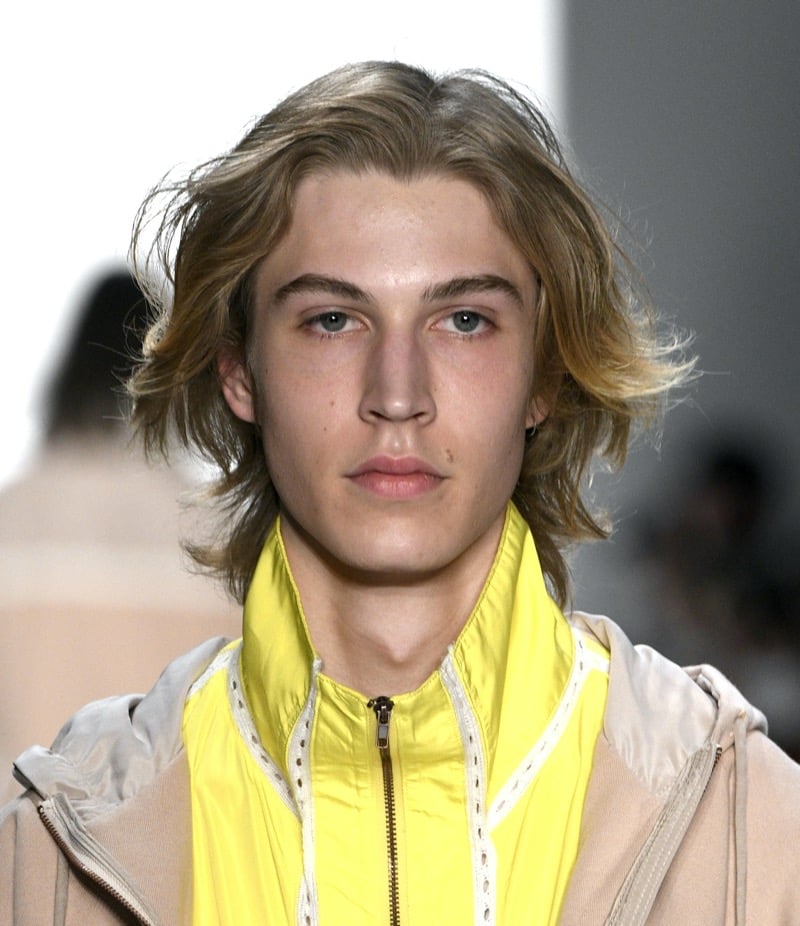
Long layers leave shorter sections near the cheekbones and longer ends toward the nape. Their different lengths interrupt the outer edge, letting pieces turn outward around the ears.
Ask the barber to check where each layer falls when dry. Removing too much length near the temples can leave ends that spring out above the longer section beneath them.
Straight Hair Middle Part
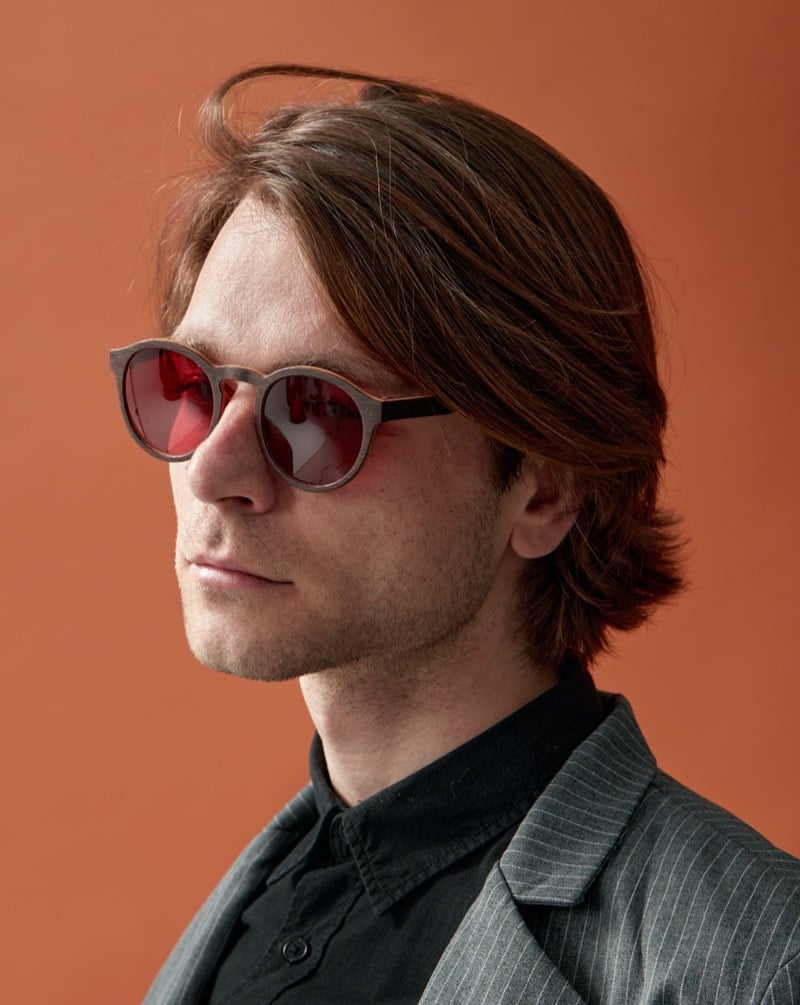
Straight hair falls in broad sheets from the center line, revealing the part more clearly than a curl or wave does. Front sections can sweep toward the ears while the back extends beyond them.
The ends determine whether the outline looks blunt or separated. Retain their weight for a fuller lower edge, or discuss lighter layering if dense hair gathers around the ears.
Textured Middle Part

Hart Denton's textured middle part has uneven ends extending toward the jaw, with shorter pieces interrupting the surface. The center line stays visible at the roots while the lengths fall less evenly.
That broken edge recalls surfer cuts. Work a small amount of matte cream through selected ends if they need separation, keeping the roots light enough to retain their lift.
Middle Part Dreads
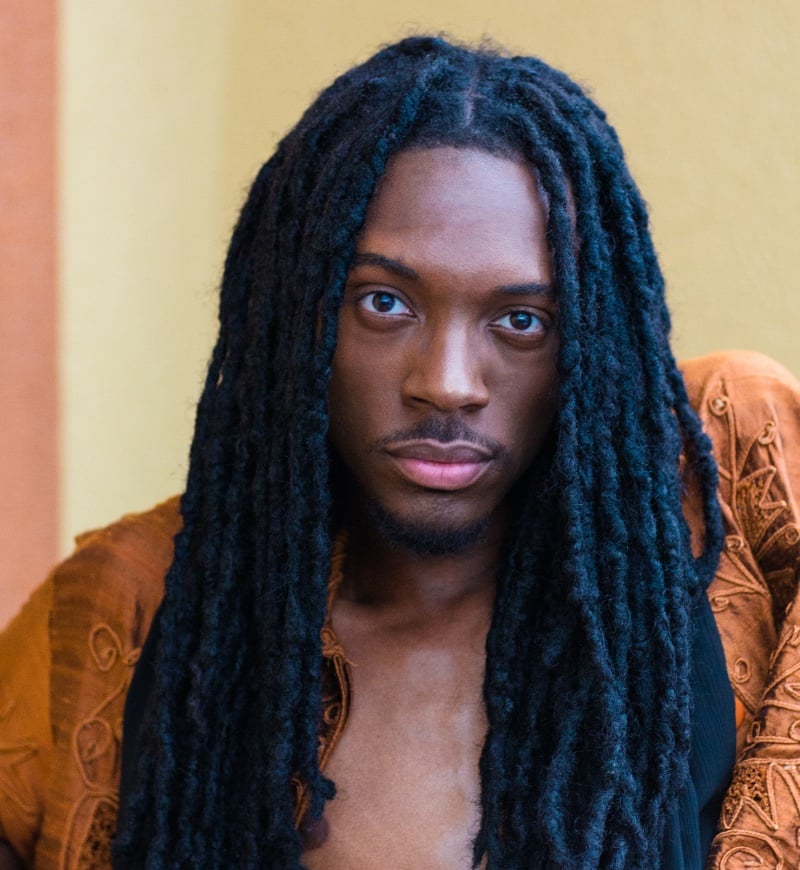
A center division separates dreads into two groups, with individual locs falling beside the forehead. Their roots determine how exact the line appears.
Discuss that division when establishing or maintaining the locs. Pulling sections repeatedly across an opposing root direction can create tension, especially along the front hairline.
Long Middle Part for Men
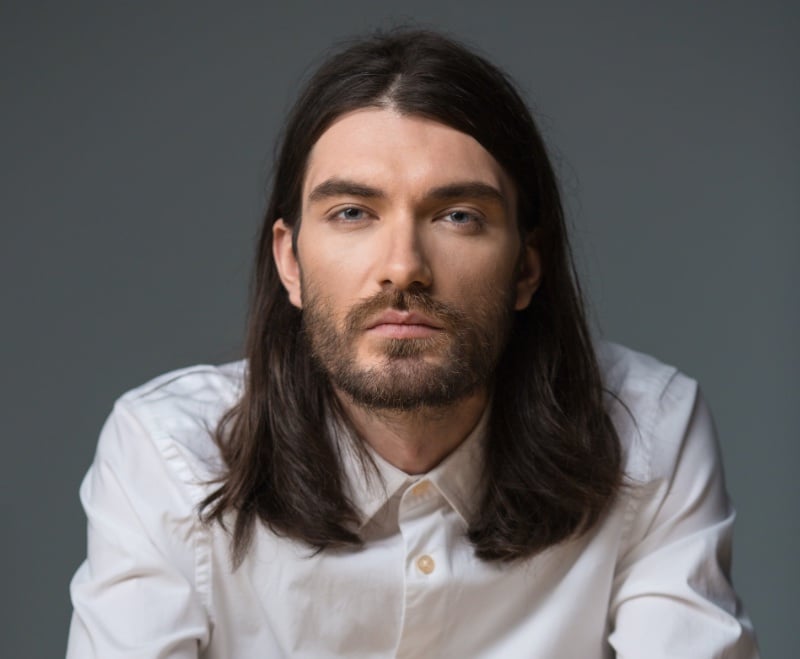
Long lengths descend from the center part to the shoulders, covering the ears and narrowing near the ends. Their weight draws the top closer to the scalp than a short, lifted version.
With this long hairstyle, the lower edge can stay blunt or break into layers. Check the length with the head upright so both sides hang where they will be worn.
Curly Hair Middle Part

Individual loops divide around the forehead in a curly middle part, with shorter curls rising above longer ones at the temples. With curly hair, the line may appear less exact as neighboring sections bend across it.
Set the part while damp, then apply curl product only as needed through the lengths. Judge the shape after drying, when shrinkage reveals how far the front actually falls.
Push Back Middle Part

Percy Hynes White's front sections travel back from the center, exposing the forehead before settling toward the ears. The ends extend behind the jaw, so the backward direction continues through the sides.
Dry the roots away from the line, following the hair's growth near the crown. Enough side length allows the ends to tuck back; shorter pieces may need to bend outward instead.
Feathered Middle Part for Men

Feathered layers turn away from the forehead and flick outward above the ears. The longer back follows the nape, sharing the loose outline of a flow haircut.
For 70s feathered hair, a round brush can direct the shorter layers outward during drying. Keep the brush turning away from the face so the ends curve back instead of folding inward over the cheeks.
Middle Part Quiff
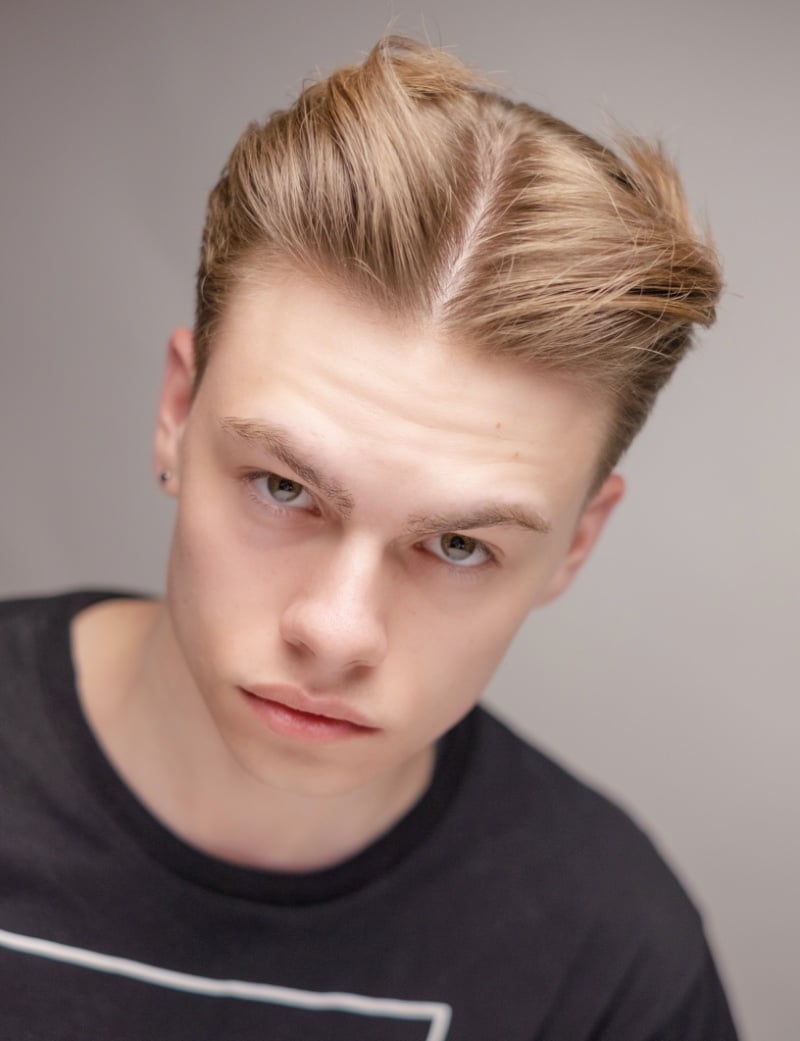
The middle part quiff divides a raised front into two sections. Both rise from the hairline before sweeping back, leaving the center line visible between them.
Lift the roots with a brush and dryer before adding the finishing product. A little pomade emphasizes a combed surface; separating the ends by hand leaves wider gaps through the raised front.
Middle Part Twist Out
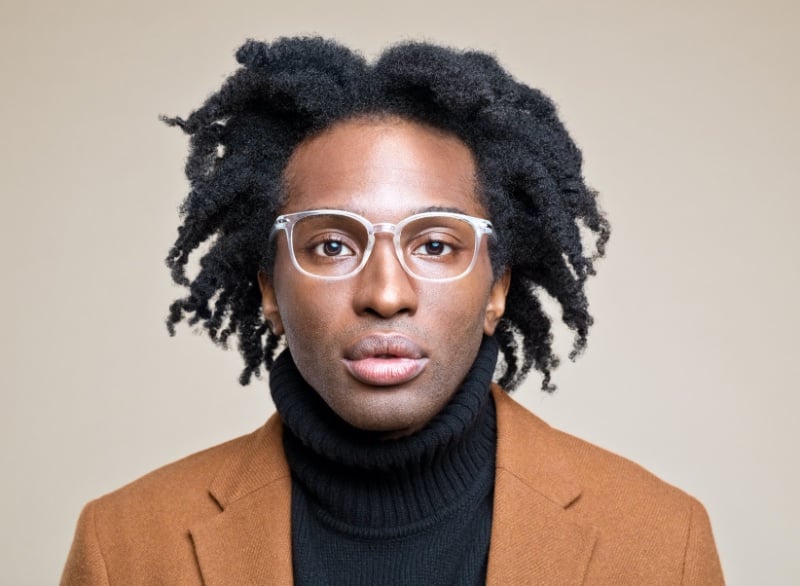
A center line divides the full top of a middle part twist out, with separate coils spreading outward from the roots. The division stays visible even as the ends expand around it.
Set the part before twisting if a distinct line is wanted. Let the twists dry fully before gently unraveling them, then separate only as much as needed to retain the definition.
Modern Middle Part Undercut Fade
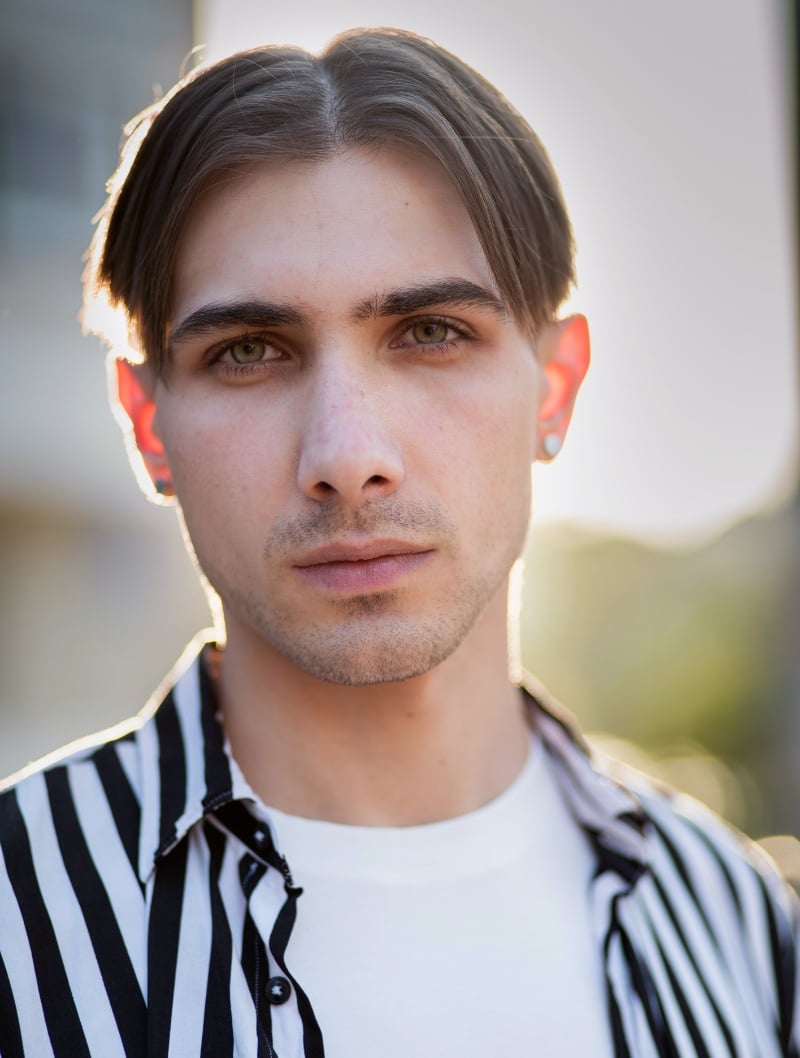
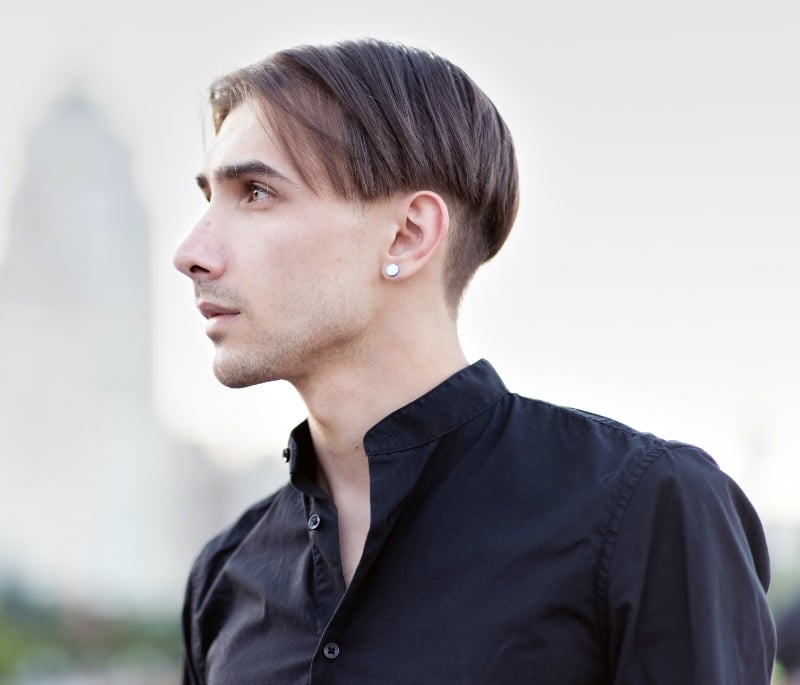
The undercut separates a longer, parted top from closely clipped sides. A fade can graduate the shorter section toward the skin while the upper edge retains that abrupt change in length.
In front view, the longer ends fall toward the temples; in profile, the clipped area reveals how far they overhang. Specify both the top length and the height of that division when requesting the cut.
Fluffy Middle Part

Loose waves lift above the temples in a fluffy middle part, making the top wider than the sides beneath it. This fluffy style leaves spaces between sections instead of merging them into a combed surface.
Lift the roots as the hair dries, then handle the lengths lightly to preserve those spaces. Dense hair may need some weight removed near the sides to keep the widest point from sitting at ear level.
Wet Hair Middle Part
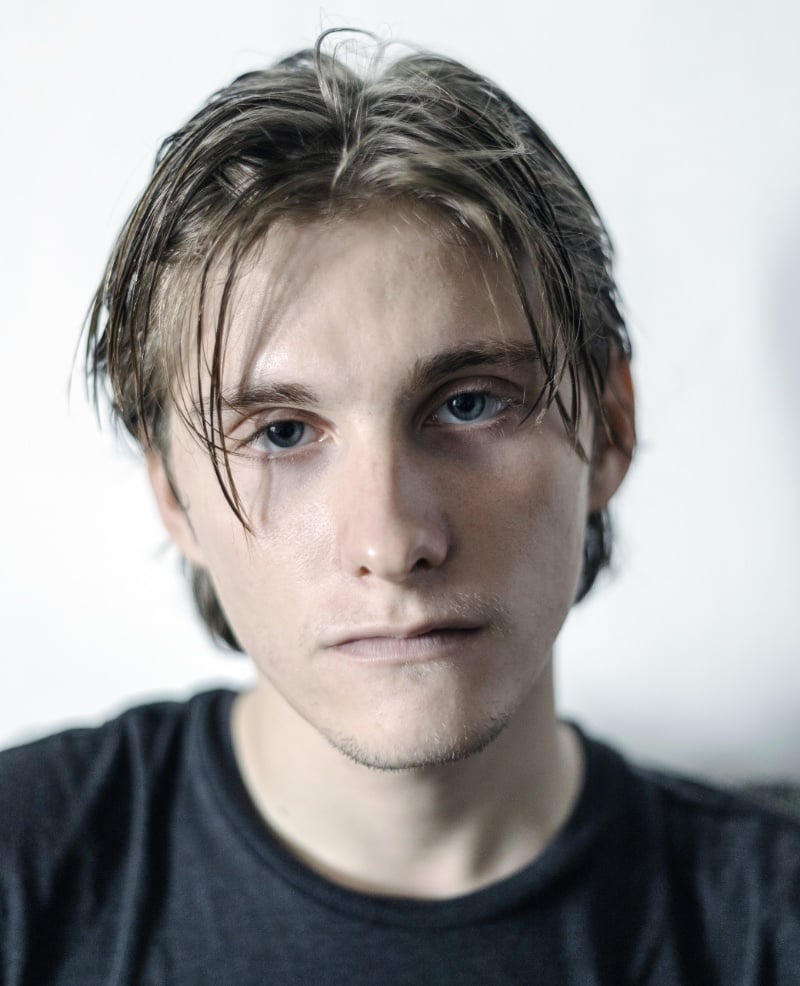
A wet hair middle part groups the lengths into narrow, glossy strands. The line shows at the roots, and separate front pieces fall toward the brows while the sides sit closer to the scalp.
Apply gel as its directions specify, then comb or separate the hair into the desired sections. Finish and hold vary by formula, so a glossy appearance does not guarantee that the hair will stay fixed all day.
Middle Part with Beard
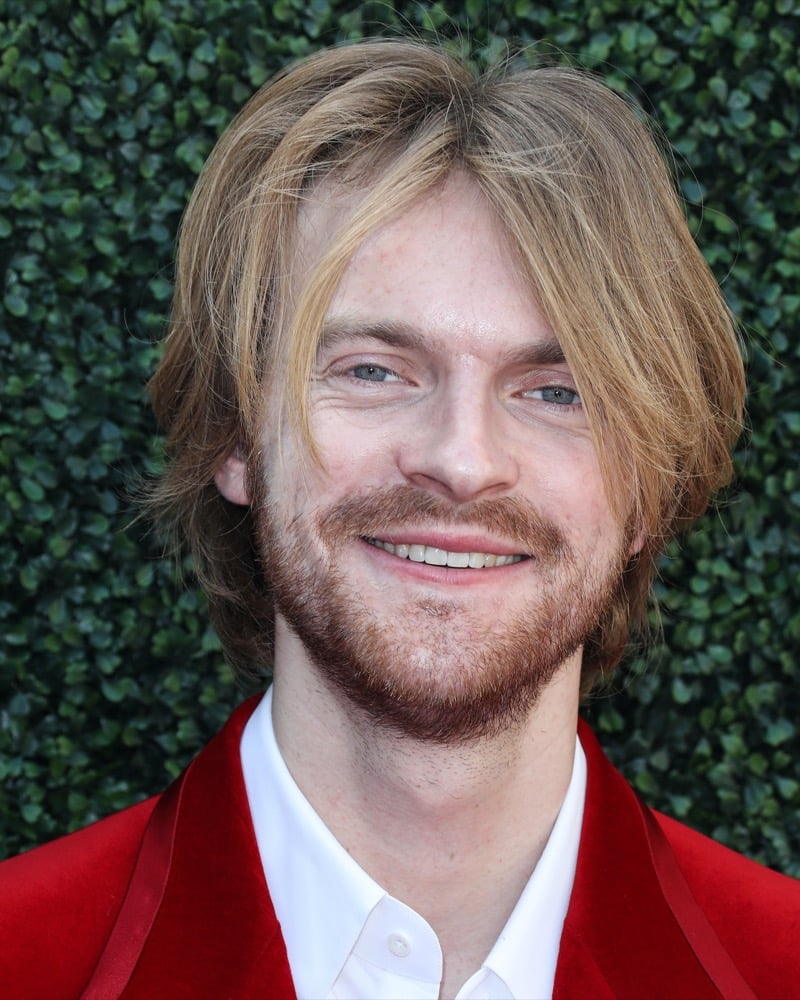
Finneas wears longer front sections beside the forehead, with the ends turning outward near the ears. The short beard follows the jaw beneath those hanging lengths.
The hair and beard have separate lower edges. Decide where the sideburns meet the facial hair when trimming so the longer top does not leave an awkward gap beside the beard.
Middle Part with Highlights

Lighter streaks run through the front and ends of a highlighted middle part, while darker roots show the division. The contrast makes bends and overlapping sections easier to distinguish.
Separating the front pieces exposes the lighter lengths beside the forehead. Keep enough of the base color between highlighted sections if distinct streaks are wanted instead of an evenly lightened top.
Slick Back Middle Part
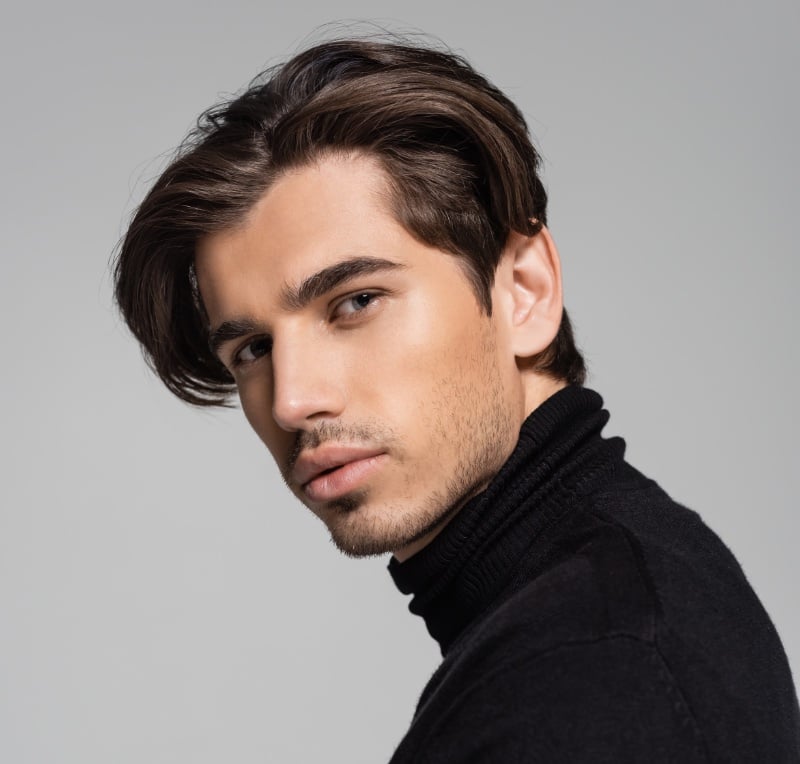
The slick back haircut gains a center division in this version. Longer front pieces curve backward on either side, exposing the hairline before settling near the ears.
Comb each half back separately so the division remains visible. Work with the crown's growth direction, and add product gradually to avoid pulling the raised front flat under its weight.
Tousled Middle Part
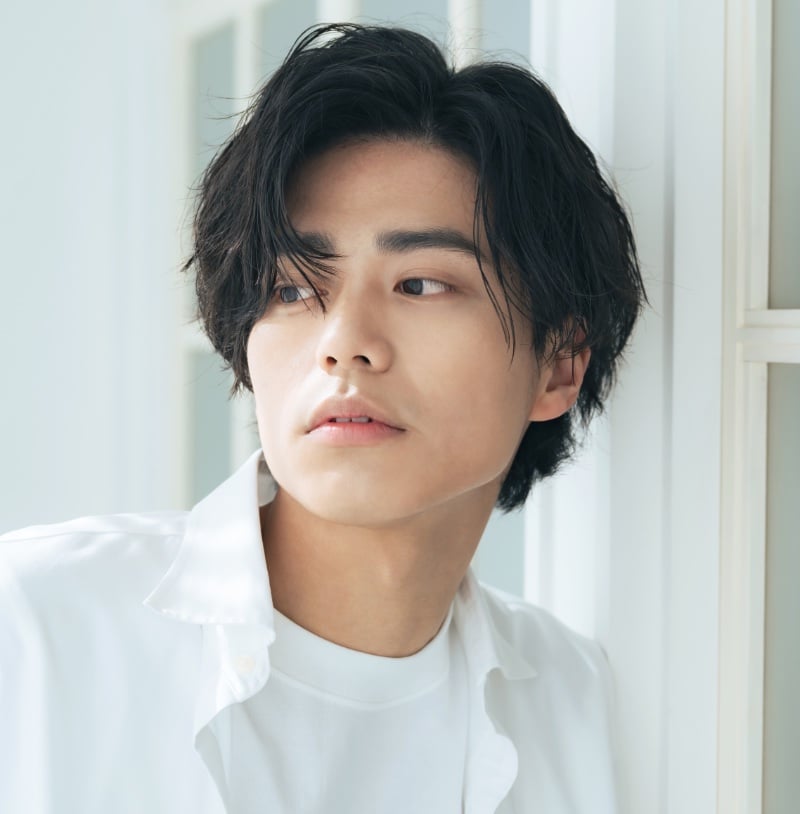
The front of a tousled middle part falls in separate bends, with a few ends crossing toward the brows. Shorter sides sit under the longer pieces, leaving more fullness above the temples.
Set a loose division with the fingers, then follow the existing bends while drying. A small amount of texturizing cream can separate the tips if they join into larger sections.
Wavy Middle Part

The wavy middle part carries broad bends down toward the jaw. The center line is visible near the hairline, then becomes less distinct as the waves overlap farther back.
Longer sides allow those bends to continue around the ears. Remove length gradually during a trim so a wave does not end just where it turns outward and leave an unwanted kick at the edge.
Famous Actors with Middle Parts
These five actors show how the center division changes with longer ends, loose waves and a backward sweep.
Johnny Depp
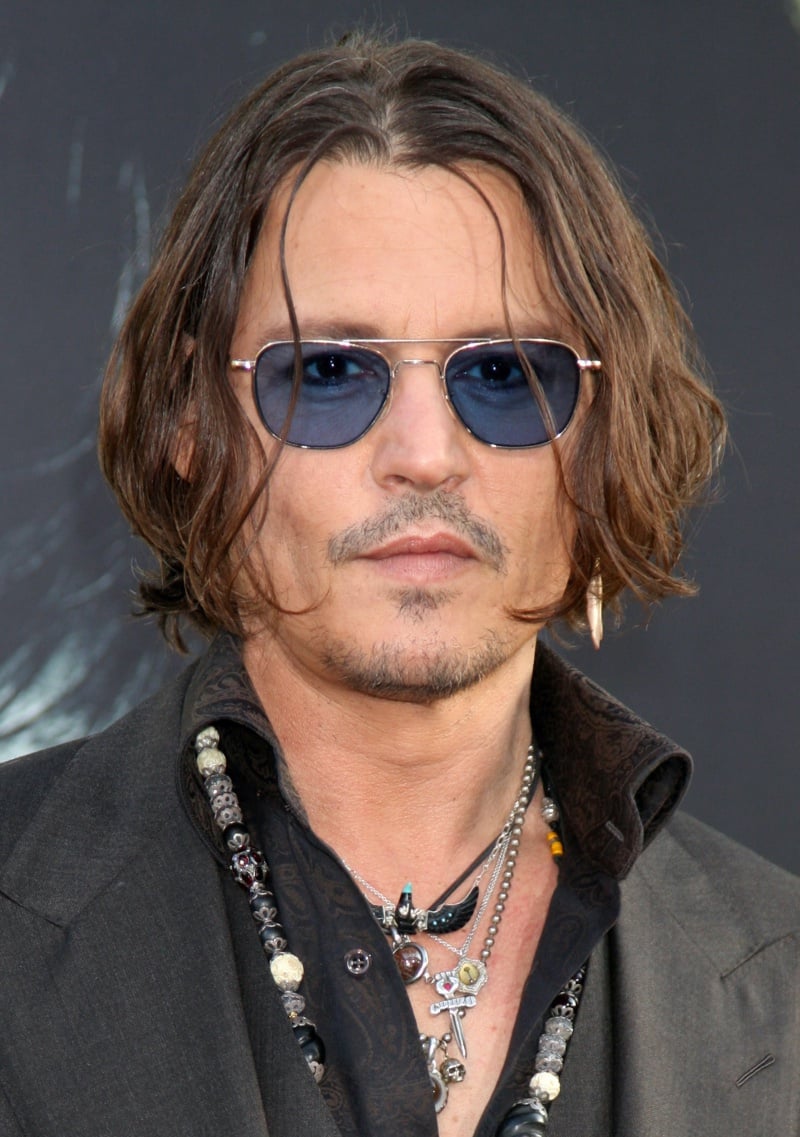
Johnny Depp's middle part leaves separate strands hanging beside the forehead and longer ends turning outward near the jaw. The loose lengths partly cover the ears, with little height at the roots.
Keanu Reeves

Keanu Reeves wears the center division above lengths that fall past the jaw toward the shoulders. The top sits close to the scalp, while the ends bend outward near the collar.
Timothée Chalamet

Timothée Chalamet's waves rise above the forehead and turn back toward the ears, breaking the part into an irregular line. The front has more lift than the sides. Chalamet's hairstyles often show how waves alter the outline of a longer top.
Erik von Detten
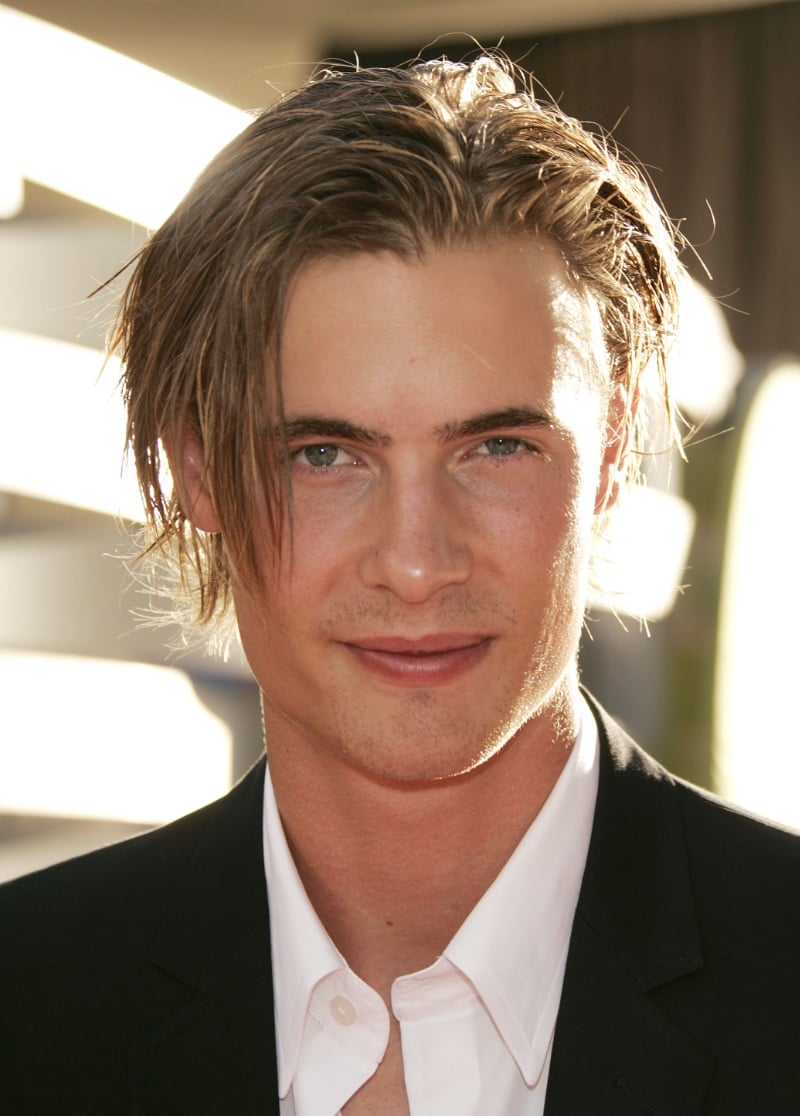
Erik von Detten's curtains recall 90s haircuts for men, with long front pieces falling toward the brows. The roots sweep back first, leaving gaps between the sections that hang beside his forehead.
Brad Pitt

Brad Pitt's front sections brush back from a loose center division, with longer ends extending behind the ears. Short facial hair leaves the jaw visible beneath them. Brad Pitt's hairstyles also show the difference between a close backward sweep and lengths worn forward.
How to Style a Middle Part

Start with damp hair and separate it near the center of the hairline, following the line toward the crown. A comb draws an exact division; the fingers separate broader groups of strands. Adjust slightly if the roots resist a perfectly centered line.
Dry each half away from the part, lifting the roots where the front needs height. Let curls and waves settle before adding a finishing product. Cream or a texturizing spray can separate the ends; gel or pomade can emphasize a combed surface. Persistent growth patterns may need a different layer length or a slightly shifted division, even after repeated styling.





