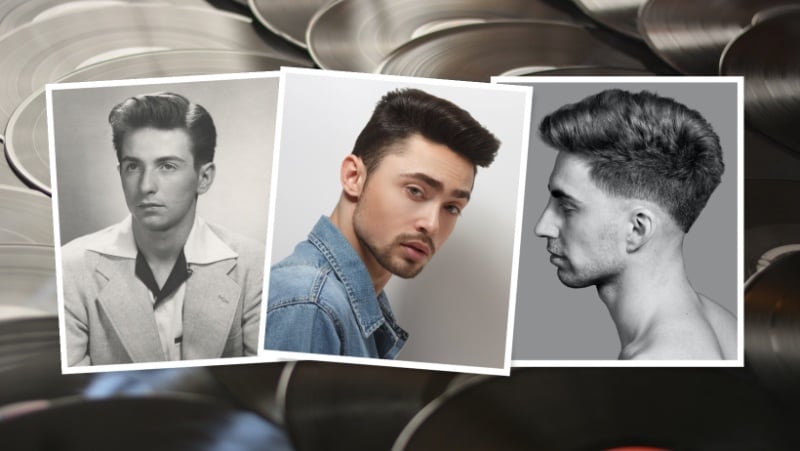
A pompadour sweeps the longer top up and back from the forehead above shorter sides. Elvis Presley's high, glossy front made the shape closely associated with 1950s rockabilly. Lower, matte versions retain that backward sweep while exposing more of the hair's texture.
The pompadour has traveled from Elvis Presley's publicity portraits to New Wave photography and the Saint Laurent runway. Each setting changes the proportions of the men's haircut. A broad roll reads differently from a narrow crest, even when both lift the hair off the forehead.
Shine makes the sweep appear continuous, with comb lines tracing its direction. Separating the ends breaks that surface into smaller pieces. The finish can change the impression as much as the height.
What Is a Pompadour Haircut?
The front rises from the hairline, then curves back through the top. Shorter sides expose that curve in profile. The top needs enough length to bend backward, though the amount depends on hair density, growth direction and the height wanted.
The quiff concentrates lift at the front and can separate or sweep to one side. A pompadour carries fullness farther back through the top in a more continuous curve.
The hairstyle takes its name from Madame de Pompadour, the 18th-century mistress of Louis XV of France. The familiar men's version belongs to a much later period, with its strongest popular association in 1950s American music and film.
The Pompadour Through Time
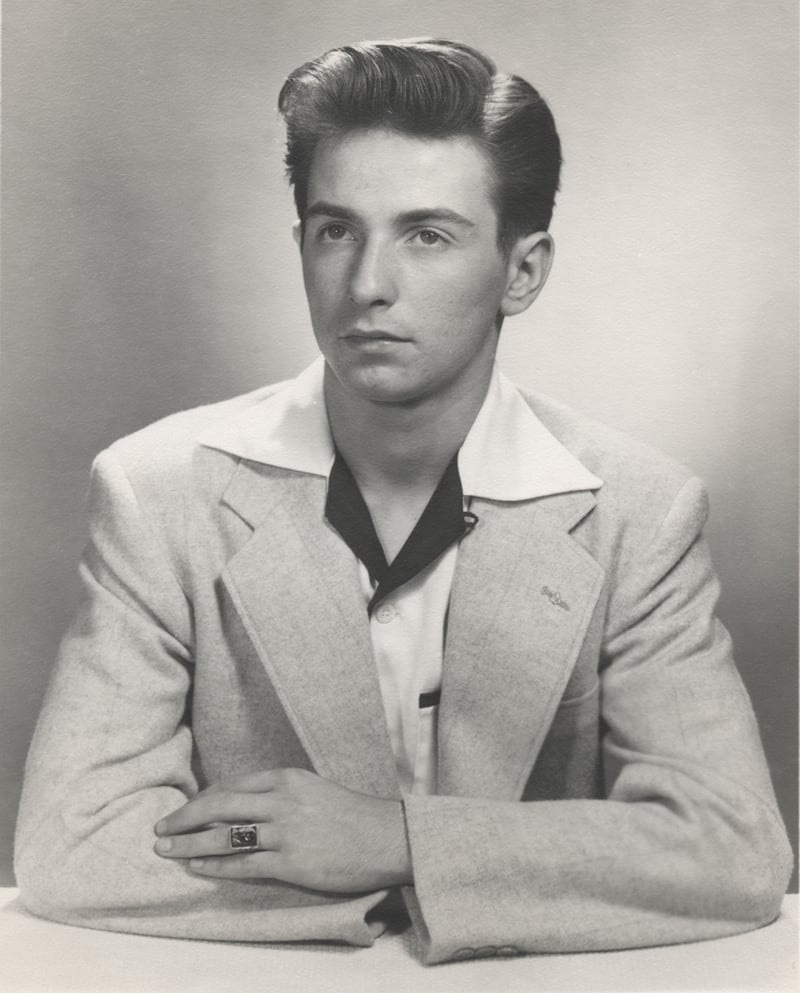
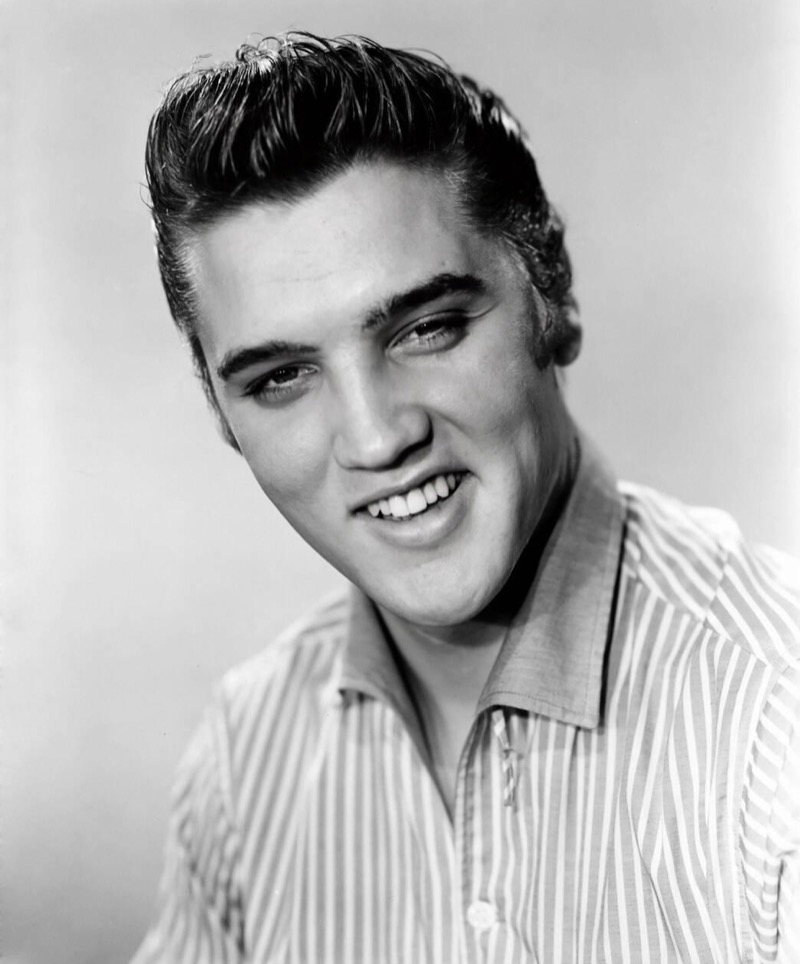
By the mid-1950s, Elvis Presley had made the raised, swept-back front central to his image. His 1956 publicity portrait shows how the hair rises above the forehead before curving back, with the sides combed close to the head. Pomade gives that roll a reflective surface.
Reducing the height changes the proportions of the 1950s roll. A lower front and closer sides retain the swept-back direction but place less hair above the forehead. The distinction is visible in profile, where the curve follows the head more closely.
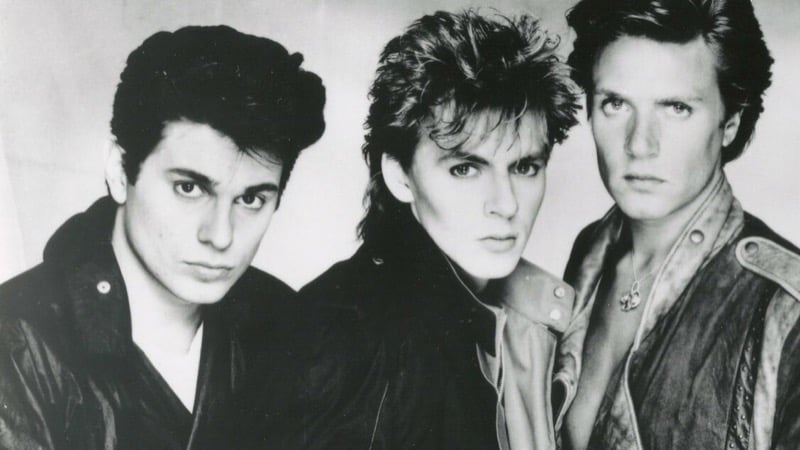
The 1980s supplied new versions of the raised front. Rockabilly revivalists retained the glossy roll, while punk and New Wave styling separated it into sharper or looser shapes. Roger Taylor's 1983 portrait shows the front lifted above the forehead with the ends breaking up its surface.
Those differences persist in modern cuts. A high, combed roll, a matte top and a faded side treatment each emphasize a different part of the same upward-and-backward sweep.
The Pompadour in Fashion
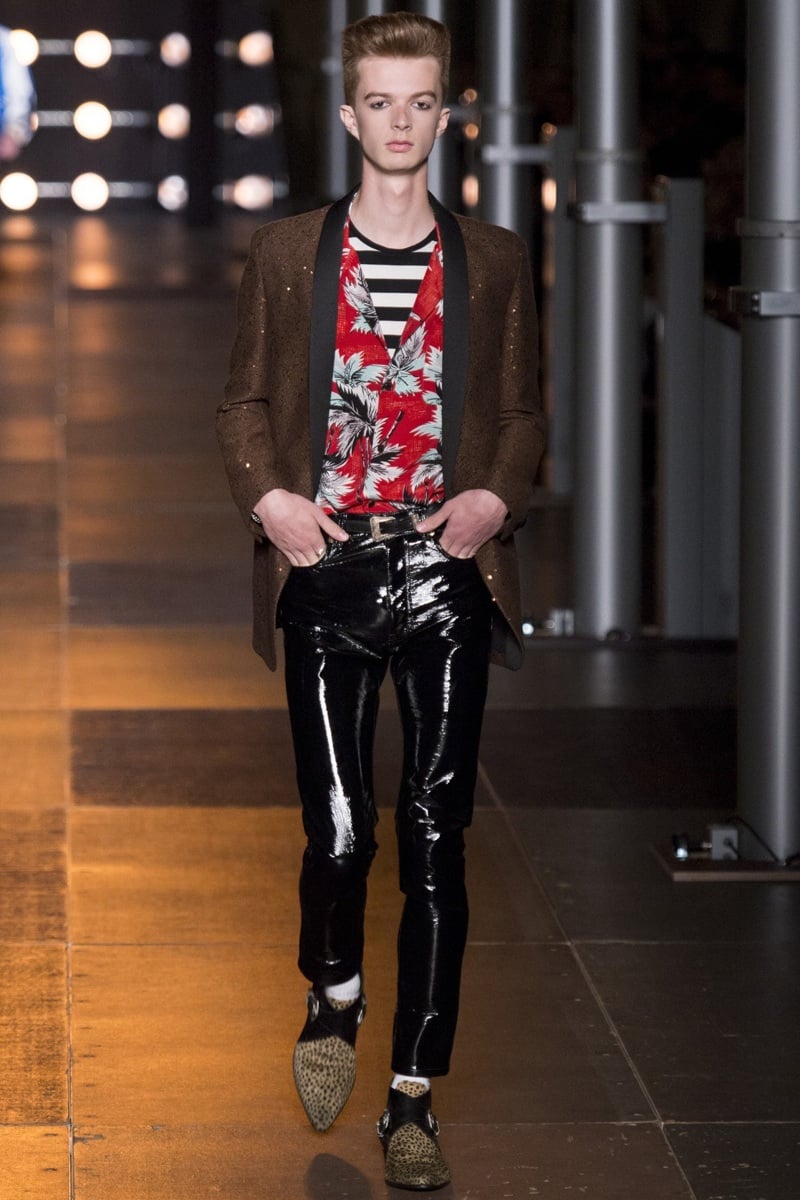
Hedi Slimane used raised, swept-back hair in Saint Laurent's spring/summer 2014 menswear collection. Height above the forehead extended the narrow silhouette of the tailoring, while the glossy finish recalled rockabilly grooming. The close sides kept the width of the hairstyle near that of the head.
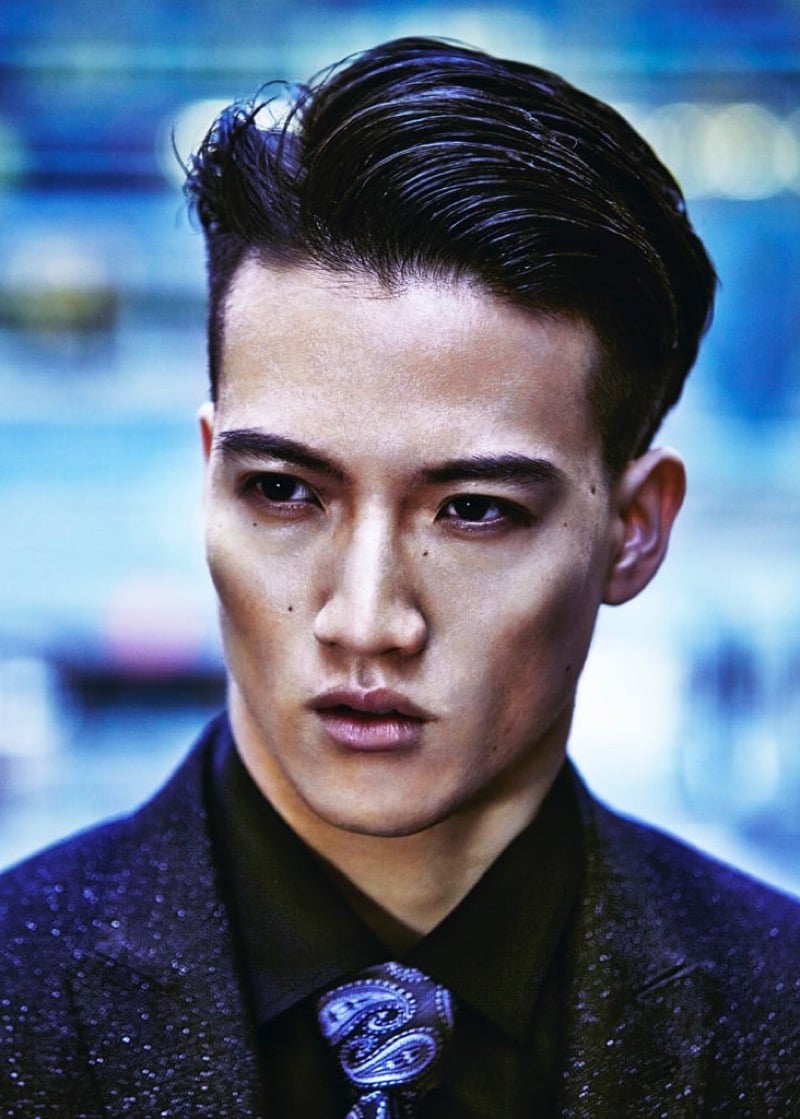
In the Fashionisto editorial, a dark, glossy sweep rises above the forehead and falls slightly to one side. The combed surface carries the light across the top, while the shorter sides expose the temples. That combination makes the direction of the hair legible even in a tightly cropped portrait.
The Modern Pompadour
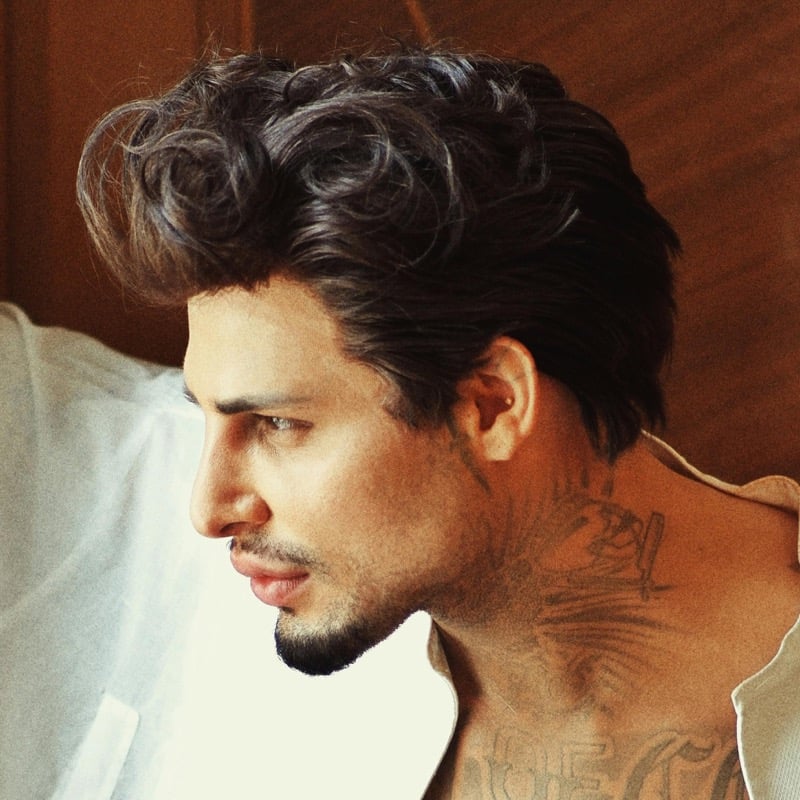
A modern pompadour can retain height while allowing individual sections to separate. Matte clay or paste reduces surface shine; a taper leaves more coverage at the sides than a close skin fade. Neither finish requires the top to be cut lower, though a shorter front creates a smaller curve.
For a more pronounced 1950s reference, comb the top into a continuous roll and choose a product with shine. A lower, broken surface gives the same cut a less formal finish. Product alone cannot supply the height that the length and drying technique must support.
Waves introduce ridges through the sweep, while curls leave a more irregular outline. Straighter hair shows the comb's path more clearly. Cut the top to accommodate those differences so the front can lift and bend back as it dries.
Pompadour Haircut Styles
The Classic Pompadour with Full Beard

A high, smooth roll sits above closely cut sides, with comb lines running back through the top. The full beard adds length below the chin, while its shorter cheek line exposes the jaw. Pomade with shine emphasizes the continuous surface of the hair; choose the hold according to its weight and density.
The Pompadour with Side Part & Taper Fade
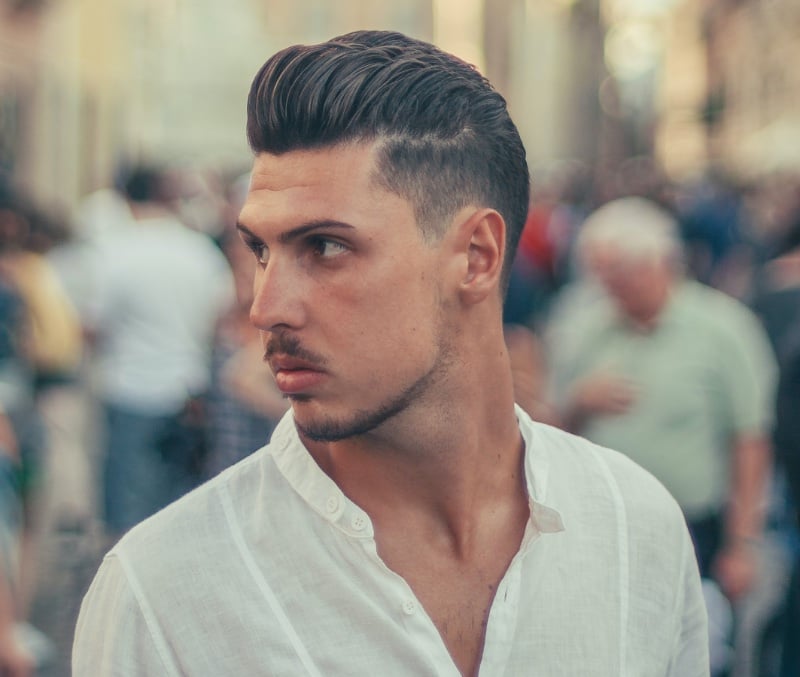
A hard side part marks a narrow strip of scalp beside the swept-back top. Parallel comb lines follow the longer section toward the crown. The sides shorten below the part, making its fixed edge more apparent. Use a fine-tooth comb for that surface, adding pomade gradually so excess weight does not flatten the front.
The Refined Pompadour with Tapered Sides
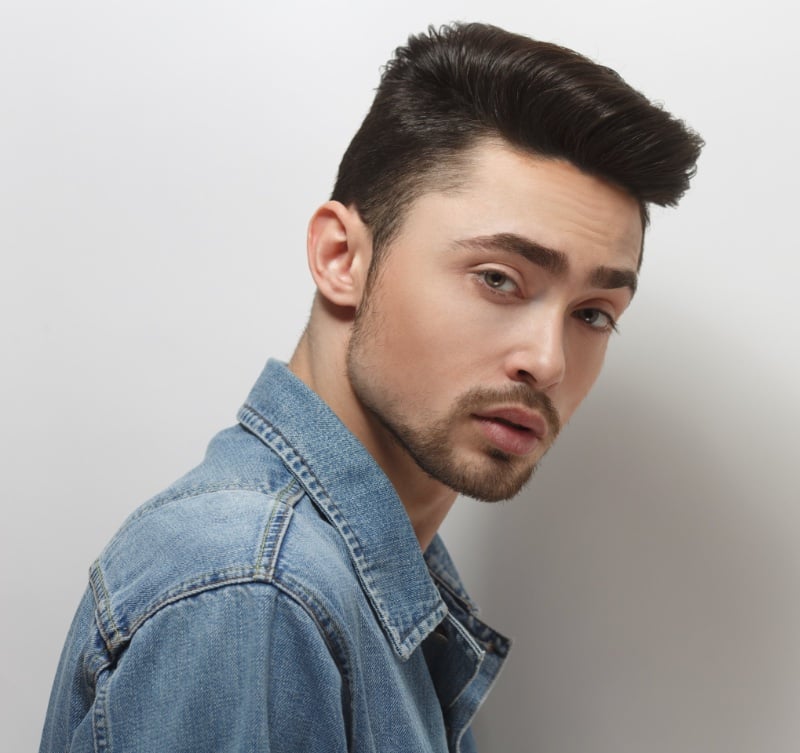
Moderate height and a matte finish expose individual strands across the top. The tapered sides retain coverage as they shorten toward the ears and neckline, giving the cut a fuller side profile than a skin fade. Dry the front into its curve before using a little clay to separate the ends.
The Modern Pompadour
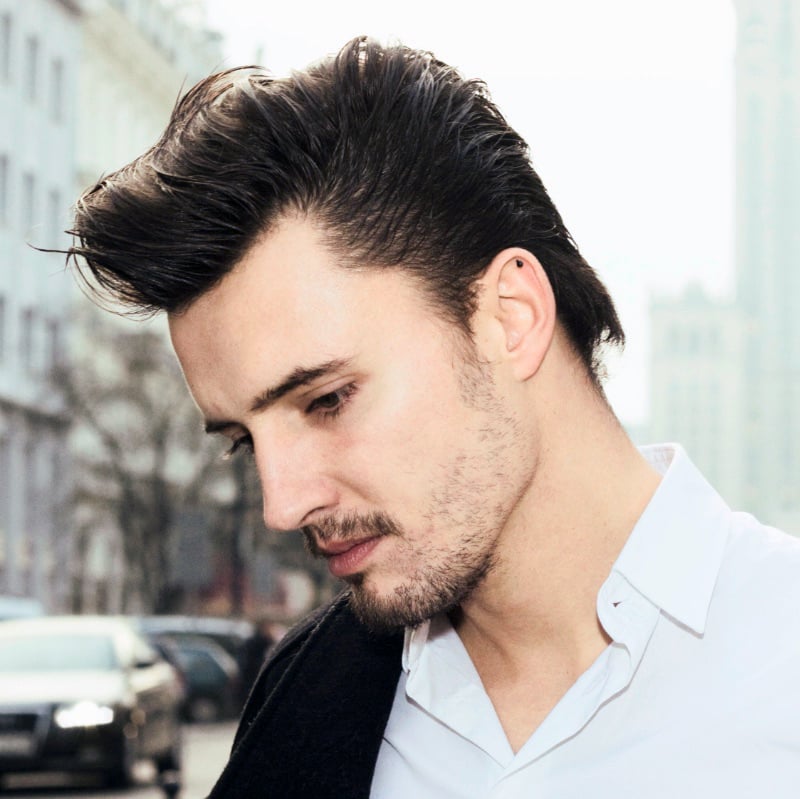
Separated sections lift behind the hairline and bend back through the top. The gaps make the surface irregular even at this height. More length remains at the temples, so the width comes from both the sides and the raised front. Keep product light enough to preserve those gaps.
The Tousled Pompadour
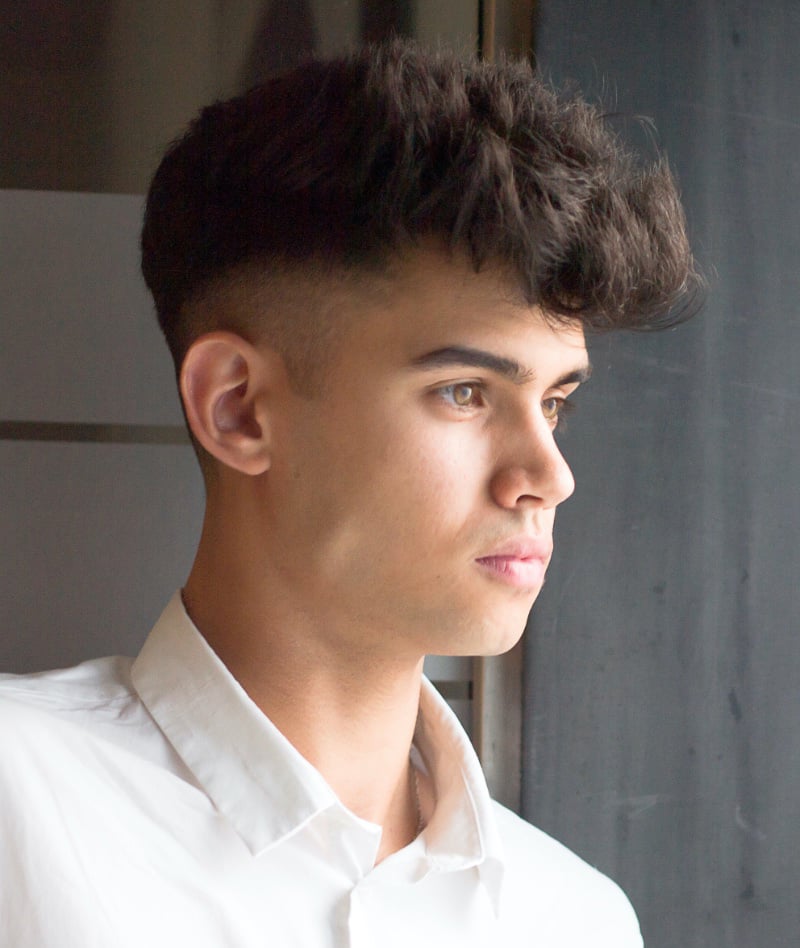
The front bends slightly forward before sweeping back, leaving an uneven edge above the forehead. Loose groups of strands interrupt the matte surface. A mid fade narrows the sides beneath that fuller top. Shape the ends with the fingers to retain the bends instead of combing them into one sheet.
The Textured Pompadour
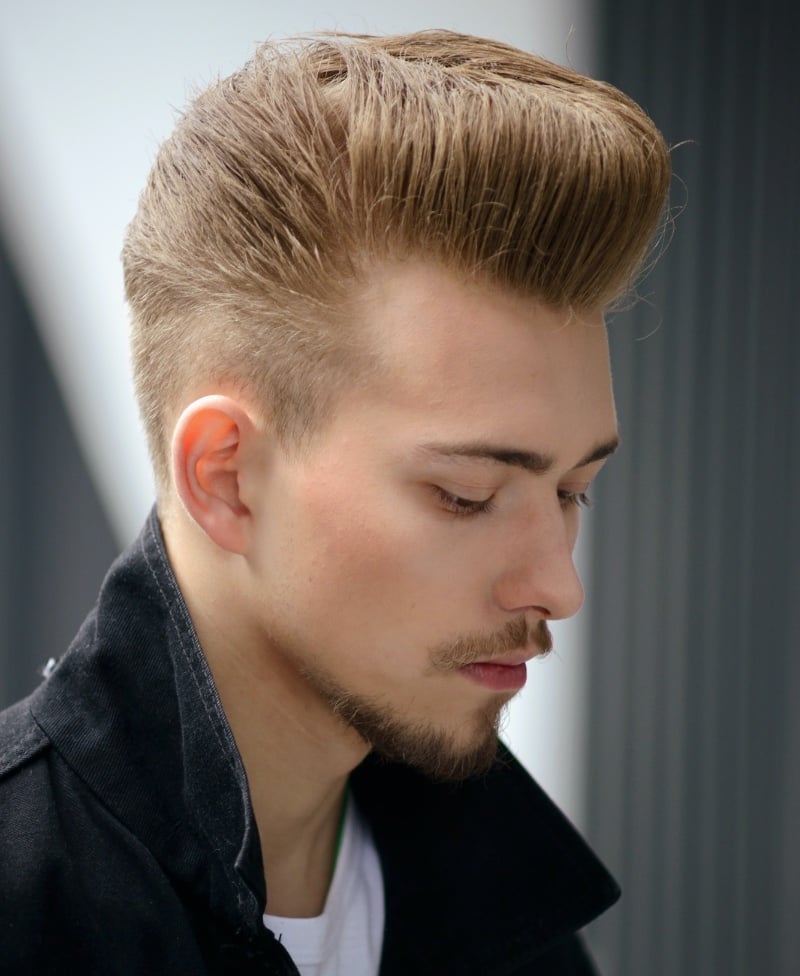
The front rises high above the forehead and curves over in a broad roll. Fine strands remain visible across its outer surface, giving the tall shape texture. Shorter sides expose the full height. As the top grows heavier, the front may need more root lift or some length removed to keep it upright.
The Textured Pompadour with Low Fade
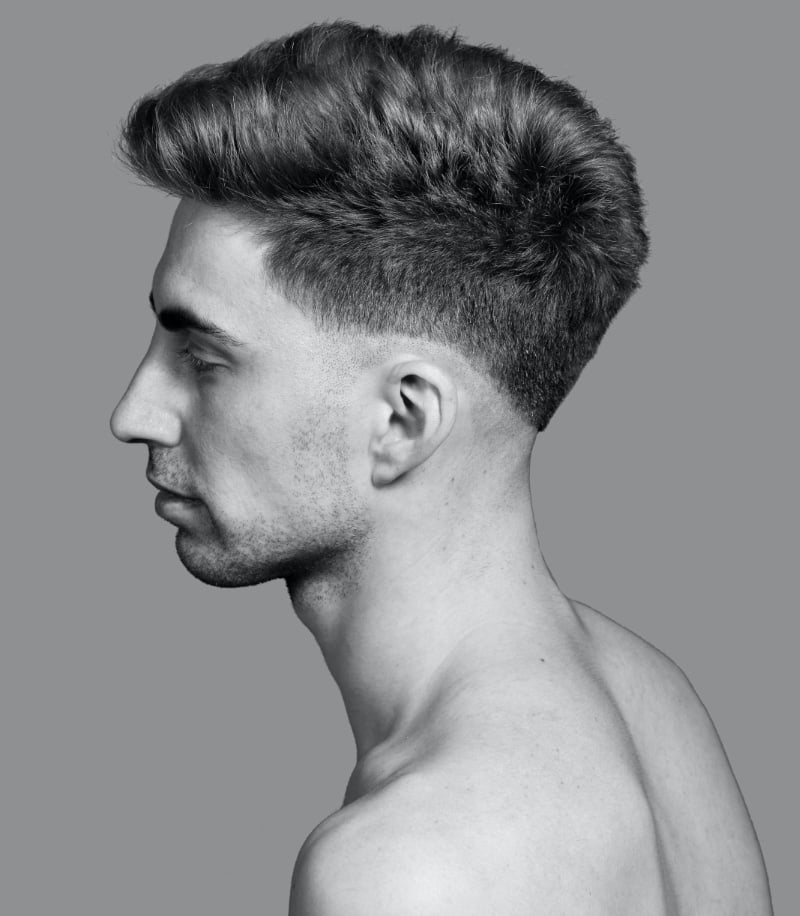
Seen from the side, the top forms a rounded arc with the most height near the front. The curve lowers toward the crown, and visible strands break up its surface. A low fade reduces the hair around the ear while retaining darker coverage above it, beneath the overhanging top.
The Pompadour with Low Fade
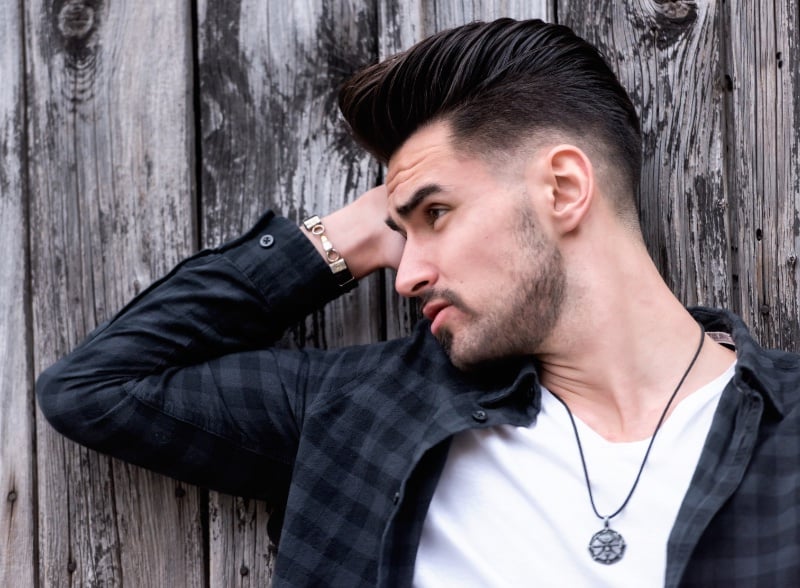
A low fade shortens the hair near the ears and neckline, leaving more coverage through the upper sides. Above it, the top sweeps back in a smooth curve with moderate height. The darker upper sides make the change in width less abrupt than a higher fade.
The Curly Pompadour with Taper Fade
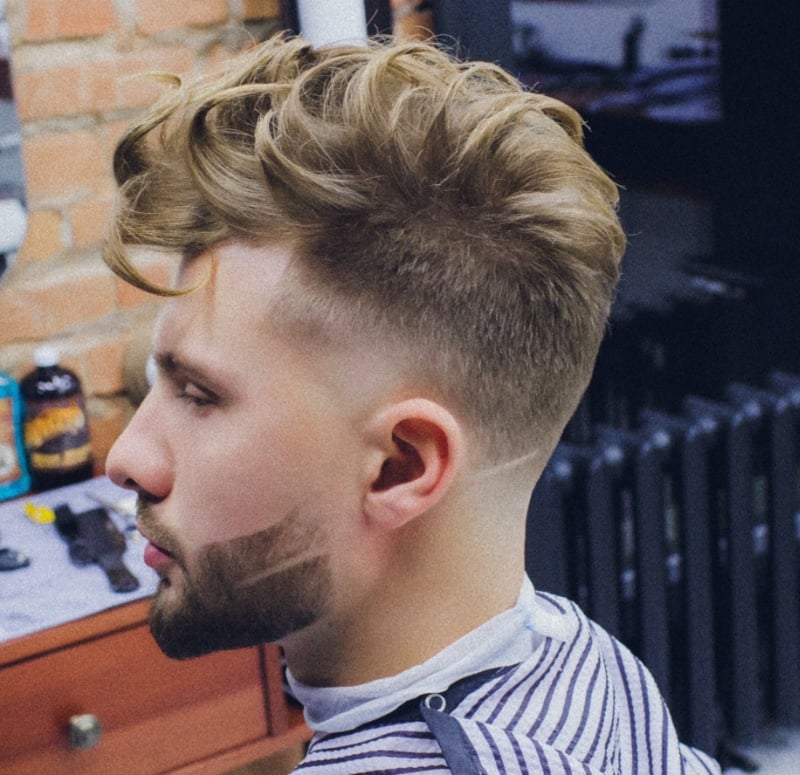
Loose bends stack above the hairline, showing how curly hair can form a pompadour while retaining its pattern. Closely clipped sides expose the edges of the waves, and a narrow beard follows the jaw. Direct the damp top upward and back, using curl cream sparingly before air-drying or diffusing.
The Pompadour with High Fade
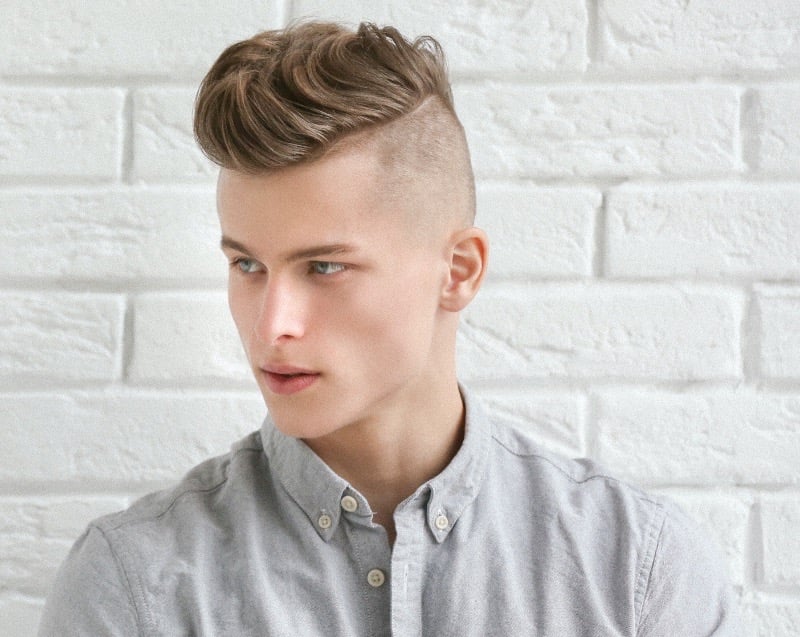
The high fade exposes more of the upper sides beneath the longer front. The top rises and bends back in separate sections, with the shortest hair making that height more apparent. Regrowth will darken the clipped area first, reducing the contrast before the top changes much in length.
The Pompadour Undercut
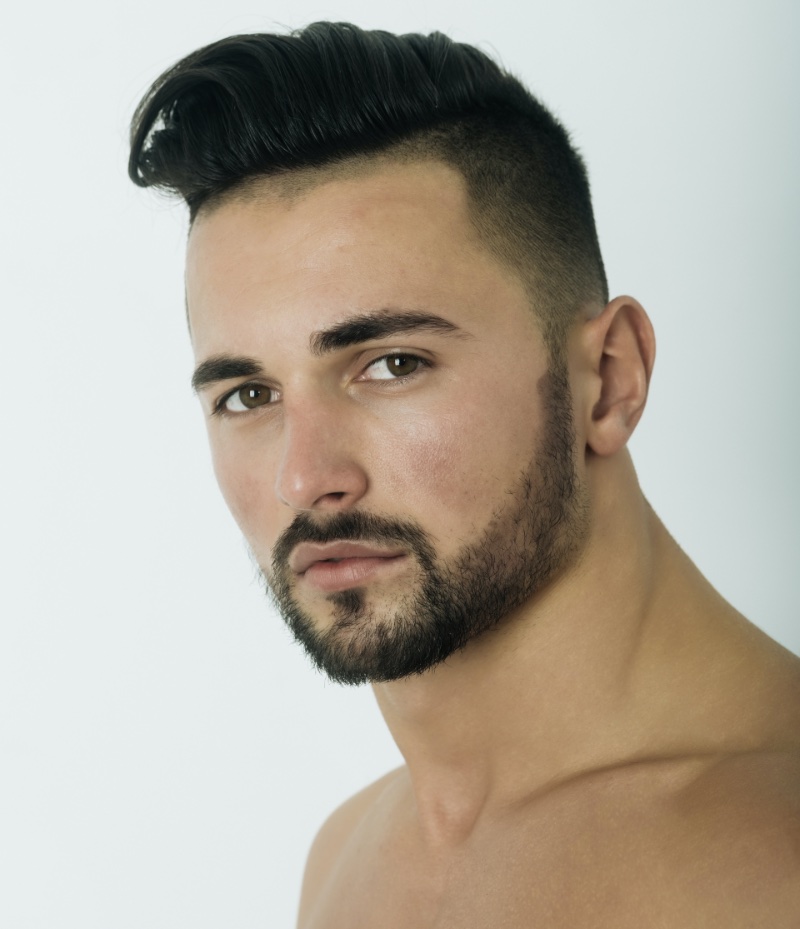
The longer top projects above closely clipped sides, showing the abrupt change in length associated with an undercut. The front has a compact roll, with a few separated ends across the surface. Combing it back exposes the division along the temples.
The Slick Back Pompadour
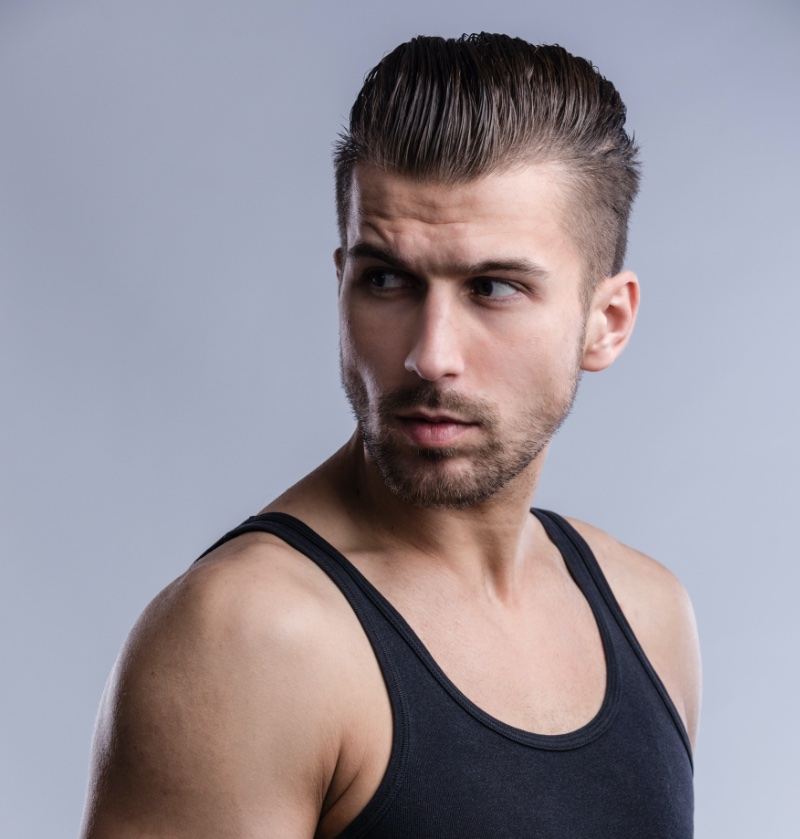
This lower version combs the top close to the head, following the direction of a slick back. A slight rise at the forehead leads into a flatter sweep through the crown. Shine and visible comb lines make that rearward path more apparent, while the clipped sides retain some coverage.
The Sculpted Pompadour with Fade
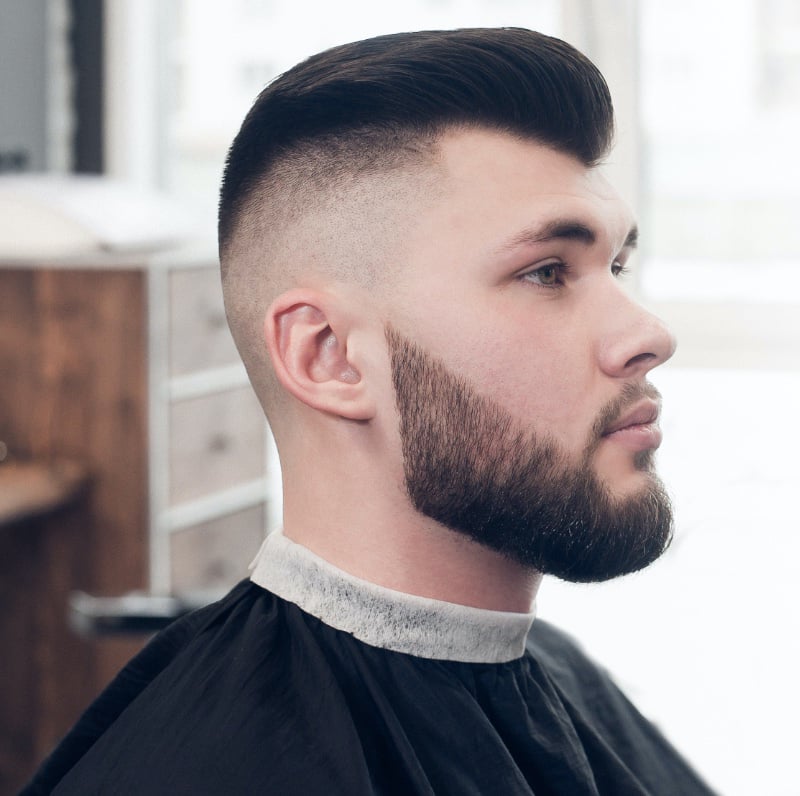
A small crest lifts at the forehead before the top curves backward. The front edge rises more abruptly than the flatter crown, with a close fade exposing its side profile. Dry the roots upward first, then direct the ends back to keep that distinction between the crest and the rest of the top.
The Asymmetrical Pompadour
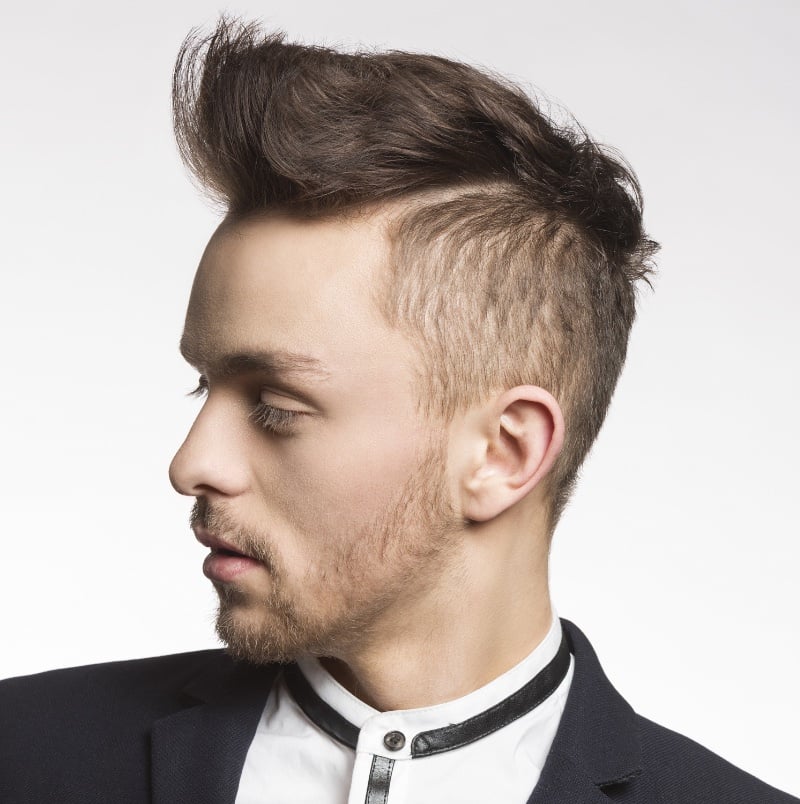
The raised front fans to one side, leaving one edge higher and fuller than the other. Separate strands cross the top diagonally above closely cropped sides. Work a texturizing product through dry lengths in small sections, following the sideways sweep instead of pulling every piece straight back.
The Deconstructed Pompadour

Longer sections fall sideways and forward across the forehead, loosening the usual backward sweep. The undercut remains visible beneath the hanging ends. A few pieces retain lift near the roots while others fall under their own weight, giving the top an uneven outline.
The Edgy Spiky Pompadour
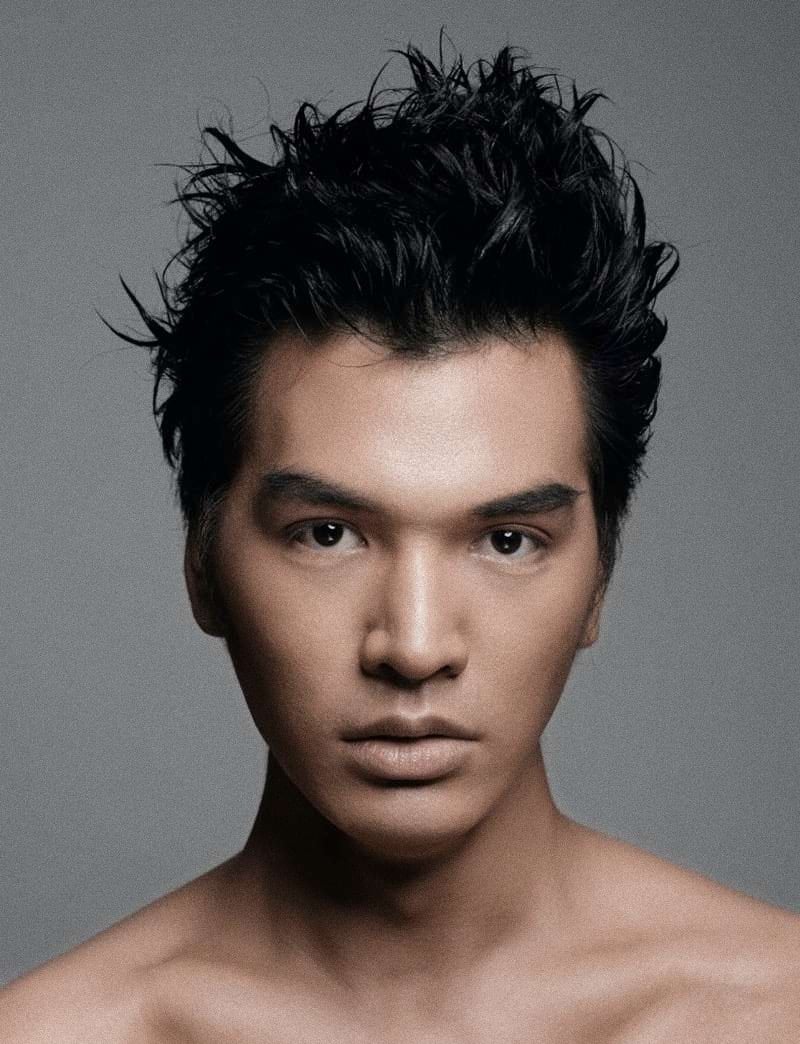
Pointed tips rise above the forehead in separate groups, with some angled slightly forward. Their spacing replaces the continuous roll of a classic pompadour. Distribute wax or a fiber product through dry hair, then pinch the ends of small sections to define the spikes.
How to Style a Pompadour
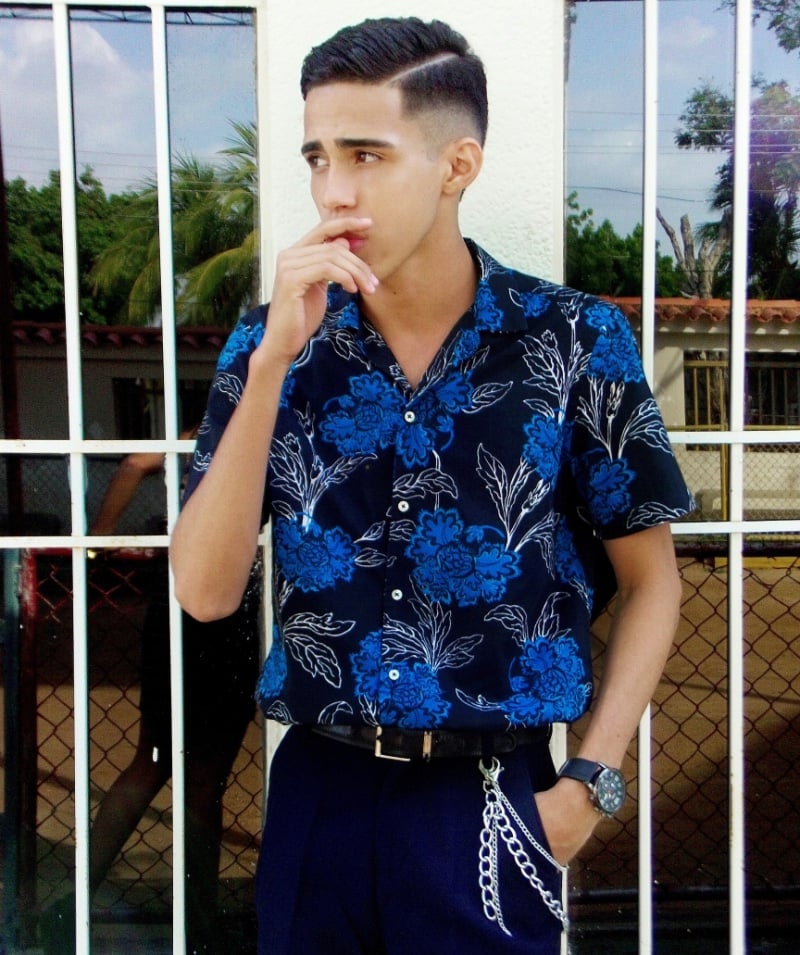
Build the Volume Before Product
Apply heat protectant as directed, then blow-dry damp hair upward and back with a brush, lifting at the roots. A round brush helps form a curved front. Keep the dryer following the hair's backward direction so the ends settle into the sweep.
Match the Product to the Finish
Choose pomade for shine or matte clay or paste for a lower-shine finish. Hold varies within each product type, so match it to the hair's density and the height wanted. Follow the product's directions for damp or dry application instead of assuming every formula behaves the same way.
Start With Less Product
Start with a small amount, spread it between the palms and distribute it through the lengths. Add more only where the shape needs hold or separation. Too much can flatten the roots or merge the top into heavy sections.
Direct the Hair in Sections
Lift the front first, then direct the remaining top backward in sections. Follow the growth pattern at the crown, adjusting the brush direction where the hair swirls. Keep the greatest height at the front if a descending curve is the aim.
Trim the Sides Every Three to Four Weeks
Three to four weeks can be a useful starting interval, depending on growth rate and the finish at the sides. A close fade shows regrowth sooner than a longer taper. Trim when the outline becomes bulky or the top grows too heavy to hold its curve.






