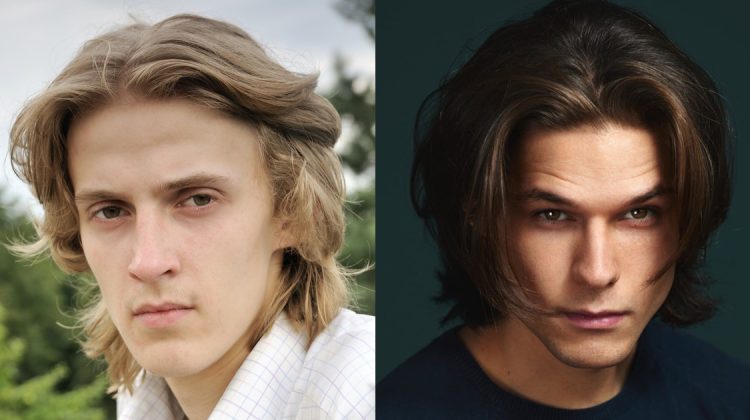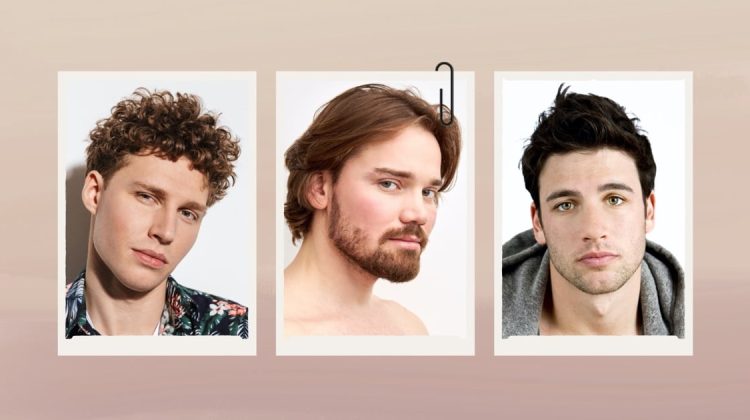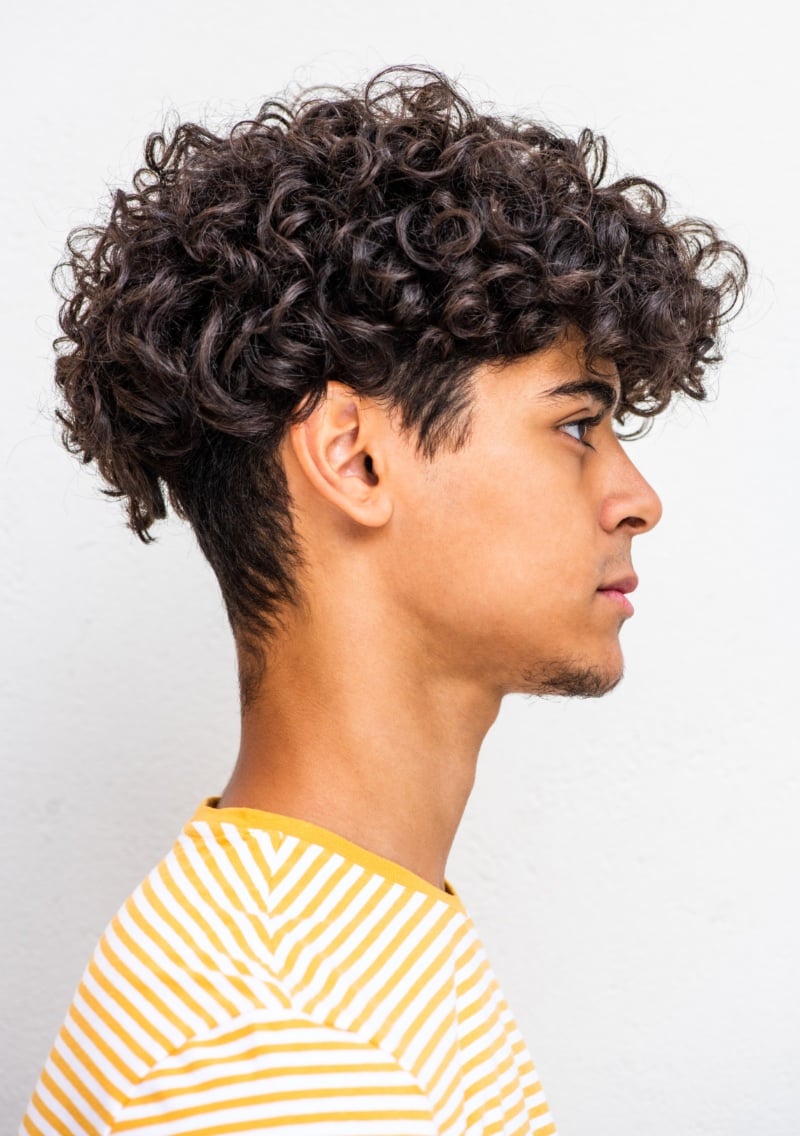
A curly undercut leaves curls overhanging closely clipped sides. The break between the two lengths gives this undercut a rounded top and narrower outline at the temples. Removing bulk beneath the curls keeps the hair from spreading as widely around the ears.
What Is a Curly Undercut?
The longest curls sit through the front and crown, with their ends forming an irregular edge above the buzzed sides and nape. Curl spring affects that outline. Hair stretched during cutting can settle noticeably shorter once it dries.
The barber can cut the curls dry or check the shape after drying to see where each curl falls. The shorter section can stay one length or include a fade. A fade changes the graduation within that section; the longer top can still remain disconnected.
Curly Undercut Styles
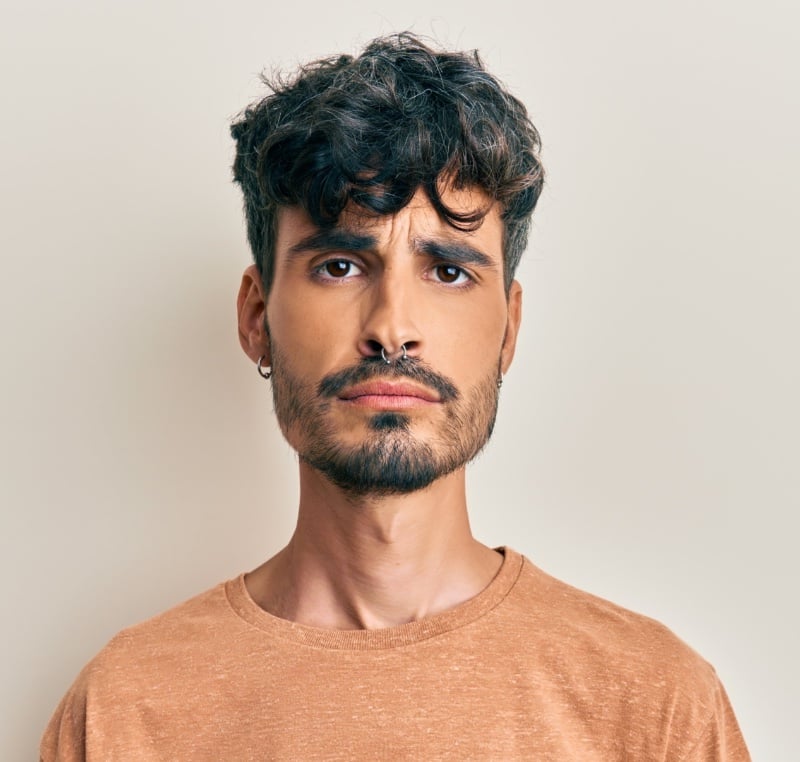
Top length changes how far the curls hang over the sides, while the clipped section determines how much scalp shows beneath them.
- A short curly undercut keeps a compact layer of curls above the clipped section. Less length means less overhang, though the curl pattern still determines how much the front springs up.
- A long curly undercut lets the curls fall farther over the temples and forehead. Their weight can stretch the pattern, particularly when the top is pushed back or swept to one side.
- A curly undercut fade graduates the shorter section toward the ears and nape. It can finish at the skin or retain some hair, depending on how much scalp exposure is wanted.
- A disconnected curly undercut leaves an abrupt step beneath the curls. One short length at the sides makes that step especially visible when the top is lifted away from it.
Other haircuts for curly hair retain more length through the sides for a fuller outline.
Which Curls Work Best
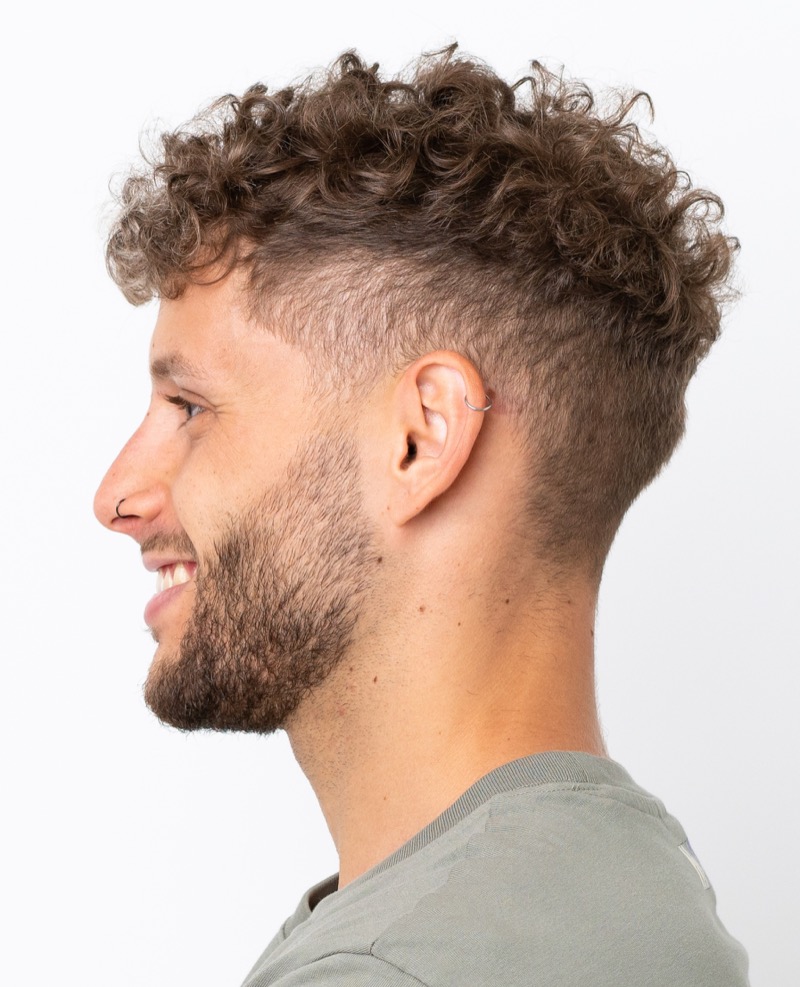
Dense coils and tight S-shaped curls create a broad, rounded top. Looser curls hang lower and may need less length to keep their shape above the clipped sides. Density matters as much as curl tightness when deciding how much hair to remove beneath them.
Work a little curl cream or light leave-in through damp lengths, choosing the amount by how the hair responds. Air-drying lets the curls settle naturally. For diffuser drying, use low heat and airflow and avoid disturbing the curls once they have set.
When the Fade Fades
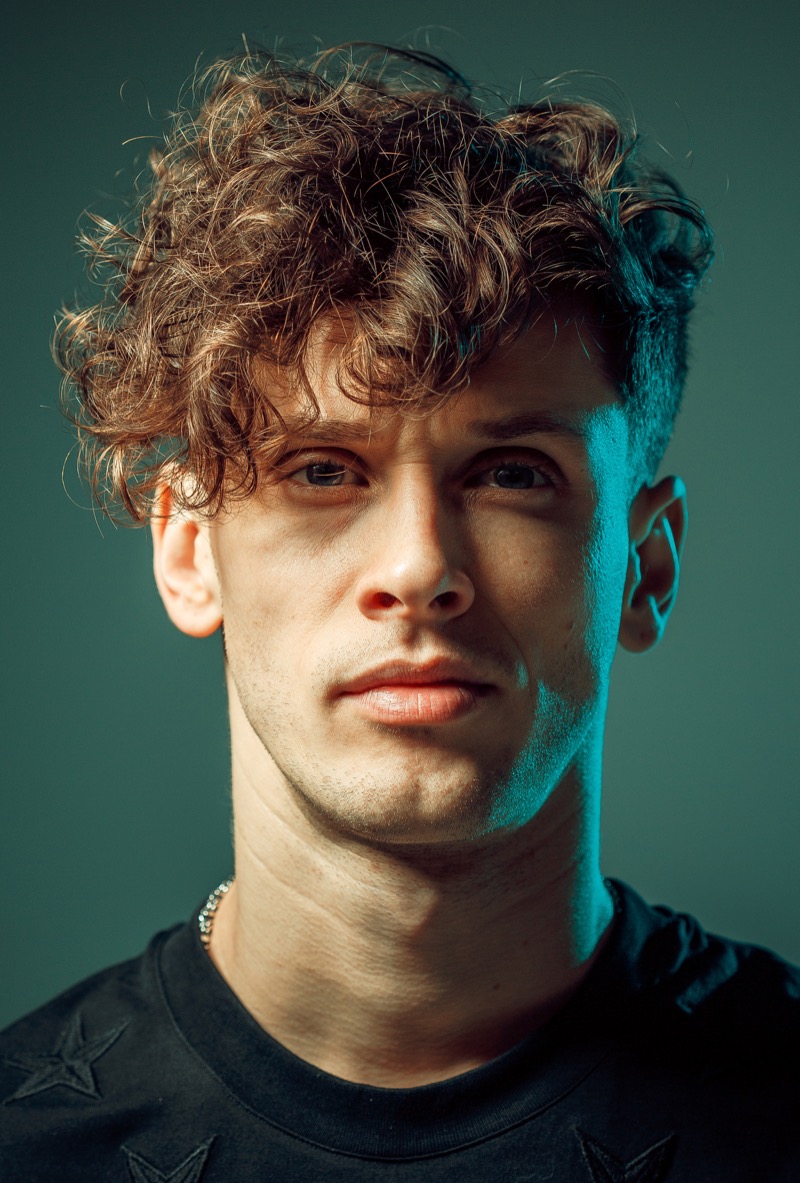
As the sides grow, the clipped section looks darker and fills out around the ears and nape. The step beneath the longer top remains, but its contrast becomes less pronounced. Longer curls can also stretch and hang farther over that edge.
A trim can restore the short sides while leaving most of the top's length intact. Reshape the curls when the fringe falls too low or the top becomes heavier on one side, checking their dry shape before taking off more length.