Braids for men gather the hair into woven sections, from cornrows that follow the scalp to box braids that hang freely. On textured and coily hair, they can reduce daily combing and handling, provided the roots aren't pulled too tightly. Braids have a long history in Black men's hairstyles, with parting patterns, length and accessories giving each version a different silhouette.
What Are Braids for Men?
A braid interlaces three strands of hair. A twist wraps two sections around each other, producing a spiral that remains visible along its length. Twists often appear alongside braids in salon menus, though the techniques differ.
Cornrows and straight-back braids follow rows along the scalp. Individual braids start at separate sections and hang freely, with box braids distinguished by their square parts. Extensions can add length or thickness to either approach. Viking braids and stitch braids offer further variations in arrangement and braiding technique.
Types of Braids for Men
Parting, braid size and the choice between woven strands and twists distinguish these eight styles.
Box Braids
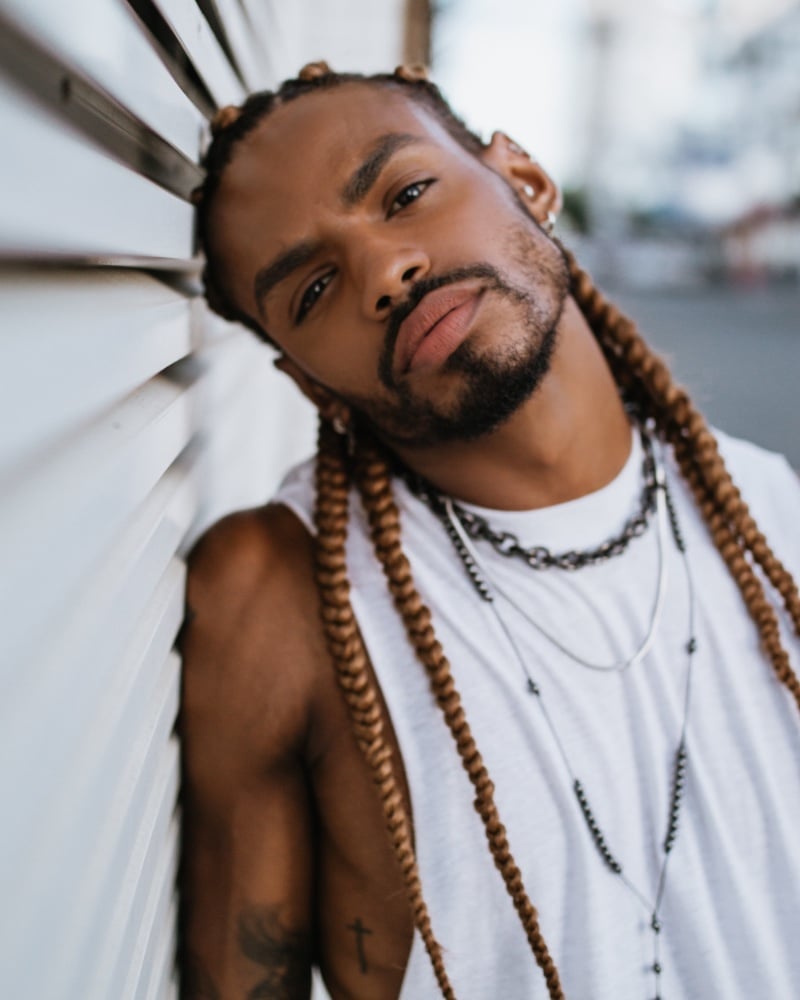
Square sections give box braids their name and create a grid between the roots. Each braid hangs separately, with its thickness determined by the section size and any added hair. Even parts help keep the pattern consistent, but comfortable tension still depends on the braider's technique.
Left loose, box braids show their full length. A ponytail or bun gathers them away from the face, provided the tie doesn't pull at the hairline.
Single Braids
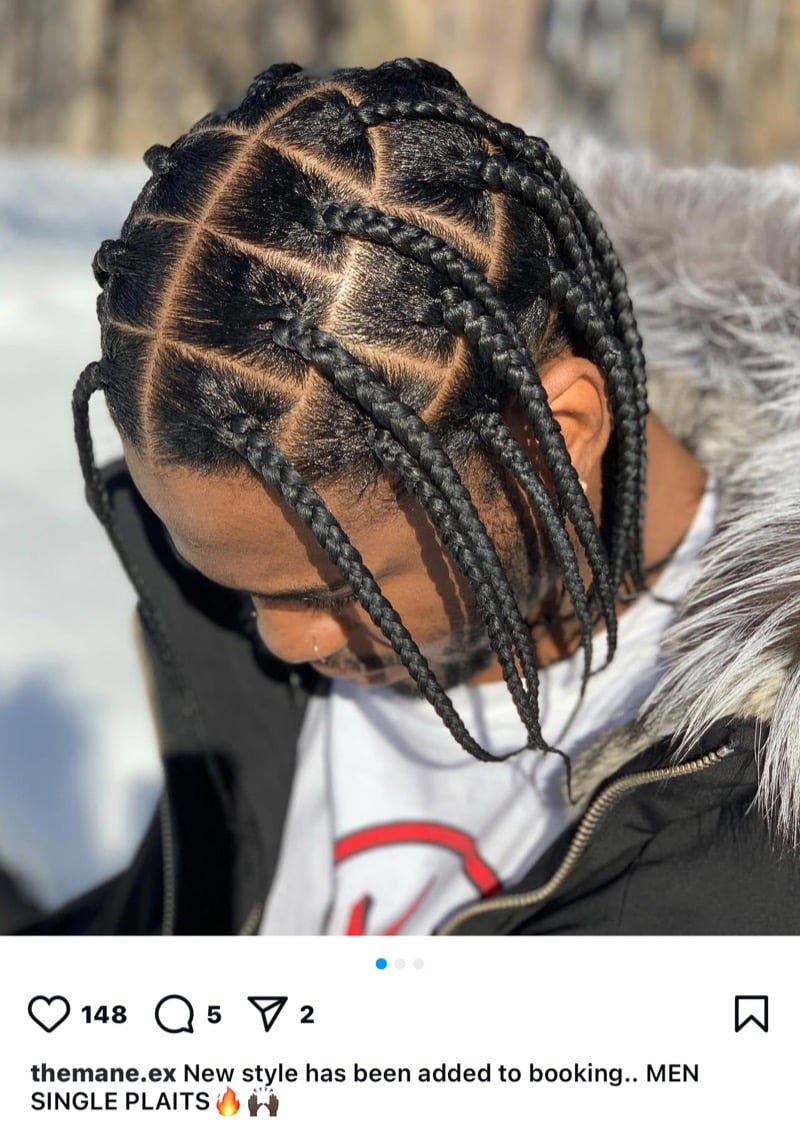
Single braids are individual plaits, a group that includes box braids. Defined parts leave the scalp pattern visible between them. The placement of those parts determines how the braids fall when worn loose or gathered back.
Mini Twists
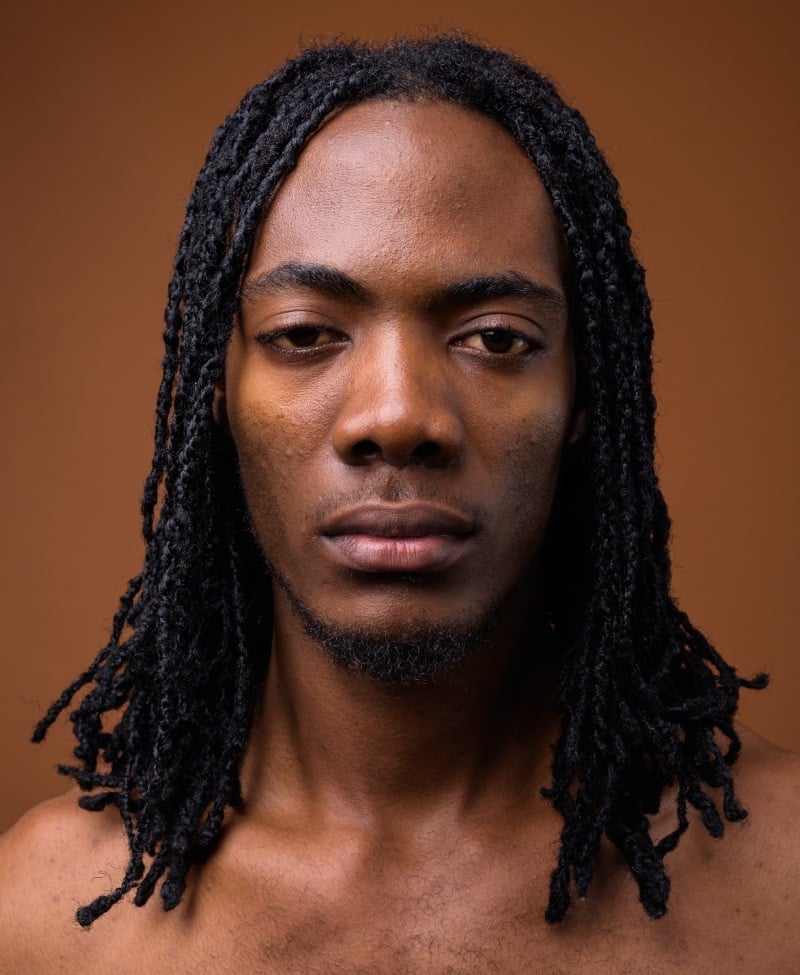
Mini twists divide the hair into small sections, producing many slim coils across the scalp. Their finer size gives the ends more separation than chunky twists, though installing them can take time. Once finished, they reduce the need to detangle and restyle the hair each morning.
Straight Back Braids
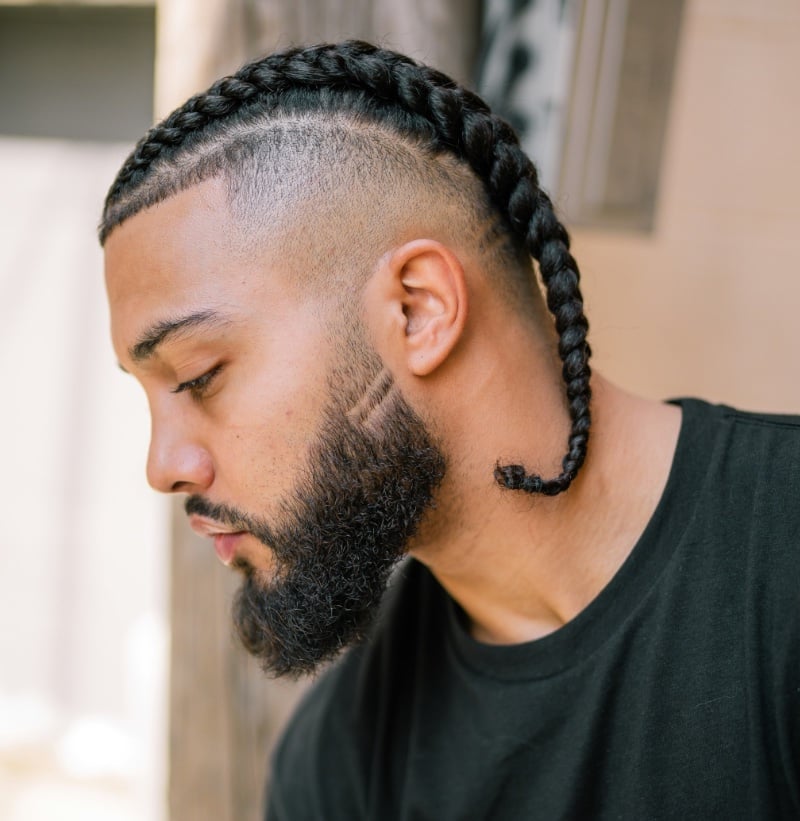
Parallel rows run from the forehead to the nape in straight back braids. The cornrows stay close to the scalp, exposing the parts between them. Two straight back braids divide the hair into broad halves, while a greater number of rows creates a finer striped pattern.
Thick Cornrows
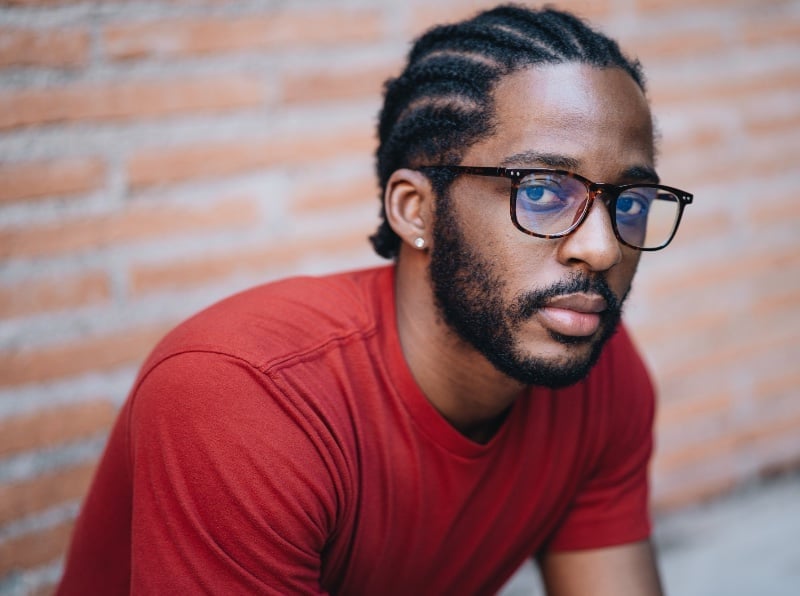
Larger sections form the wide, raised ridges of thick cornrows. Fewer rows leave more space for the parting pattern to show, and installation may take less time than a comparable set of fine cornrows. A fade clears hair from the sides beneath the braided top.
Twist Braids
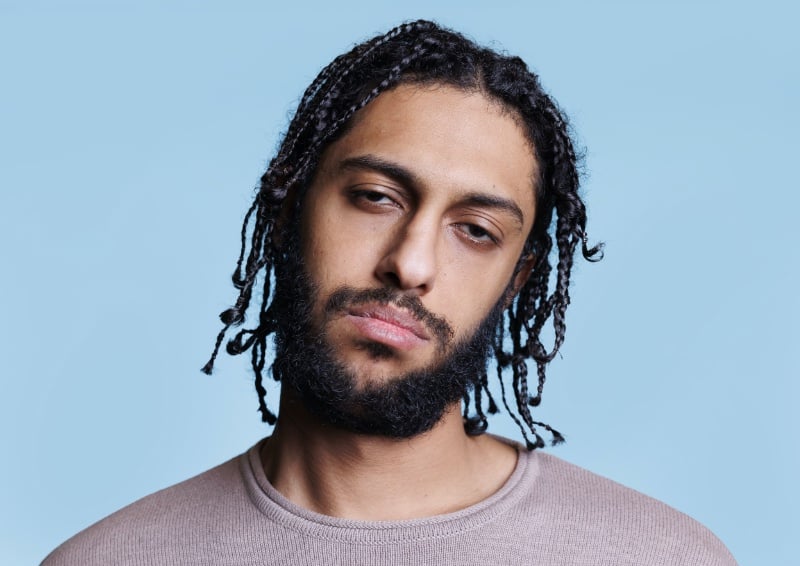
Twist braids is a common name for two-strand twists. Fine sections produce narrow spirals, while larger sections make the overlapping strands more pronounced. Natural texture gives these twists a fuller surface than the smoother finish of Senegalese twists.
Senegalese Twists
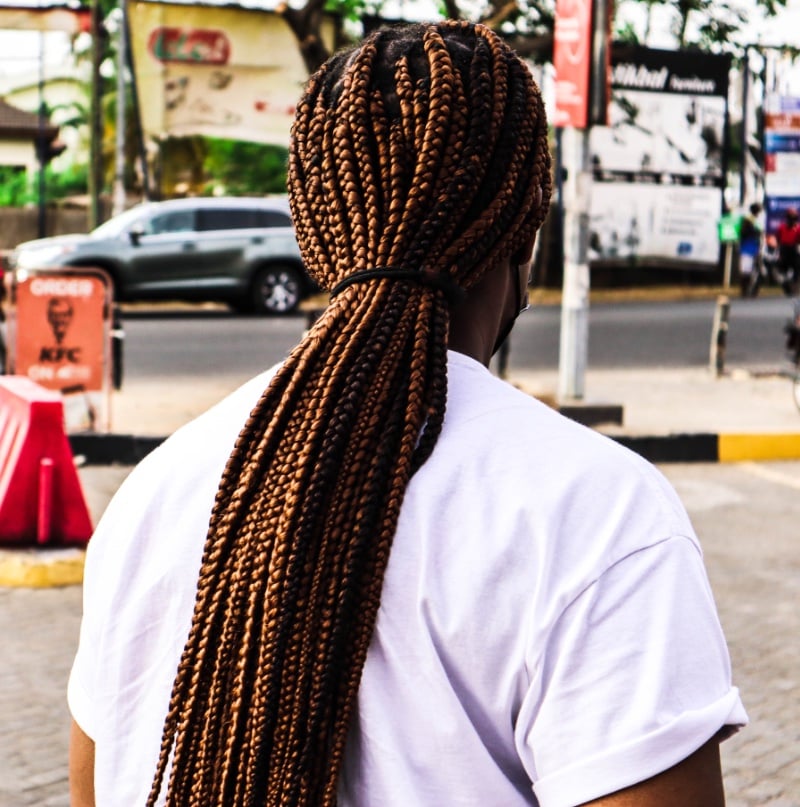
Senegalese twists use extensions worked into the natural hair to create smooth, even ropes. Their regular spirals make the length especially visible when worn down. Gathering them into an updo shifts the weight toward the tie, so added length and thickness need to stay comfortable at the roots.
Straight Braids
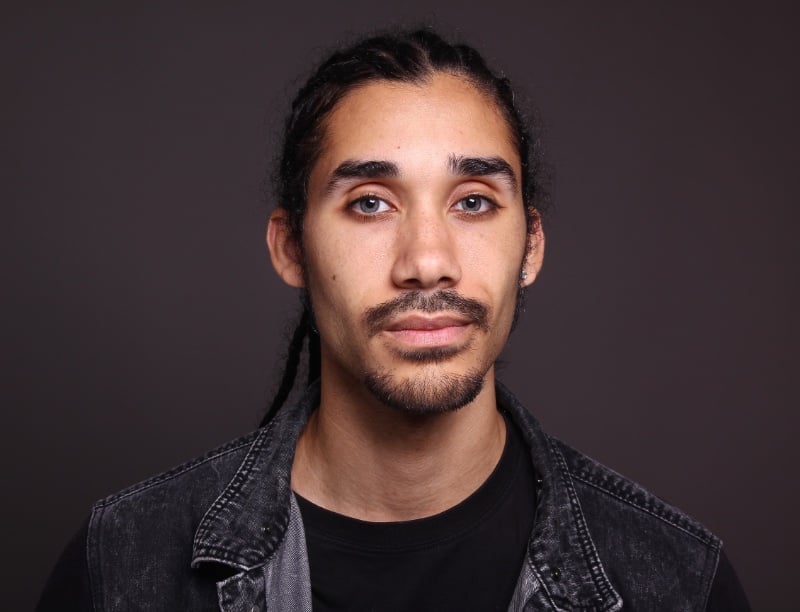
Long plaits hang down the back in straight braids, with the individual lengths forming the outline. They differ from straight back cornrows, which describe the direction of braiding along the scalp. Even lengths keep the hanging ends aligned.
Celebrity Braids for Men
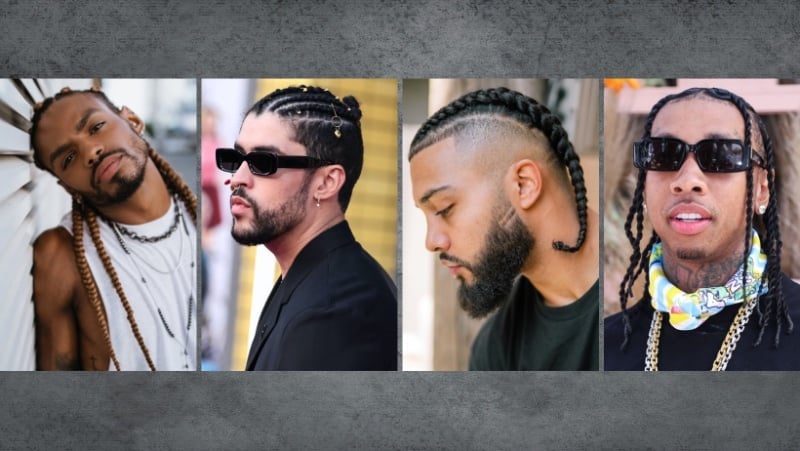
These six celebrity looks show how braid placement, color and accessories change the shape around the face.
Snoop Dogg's Long Braids
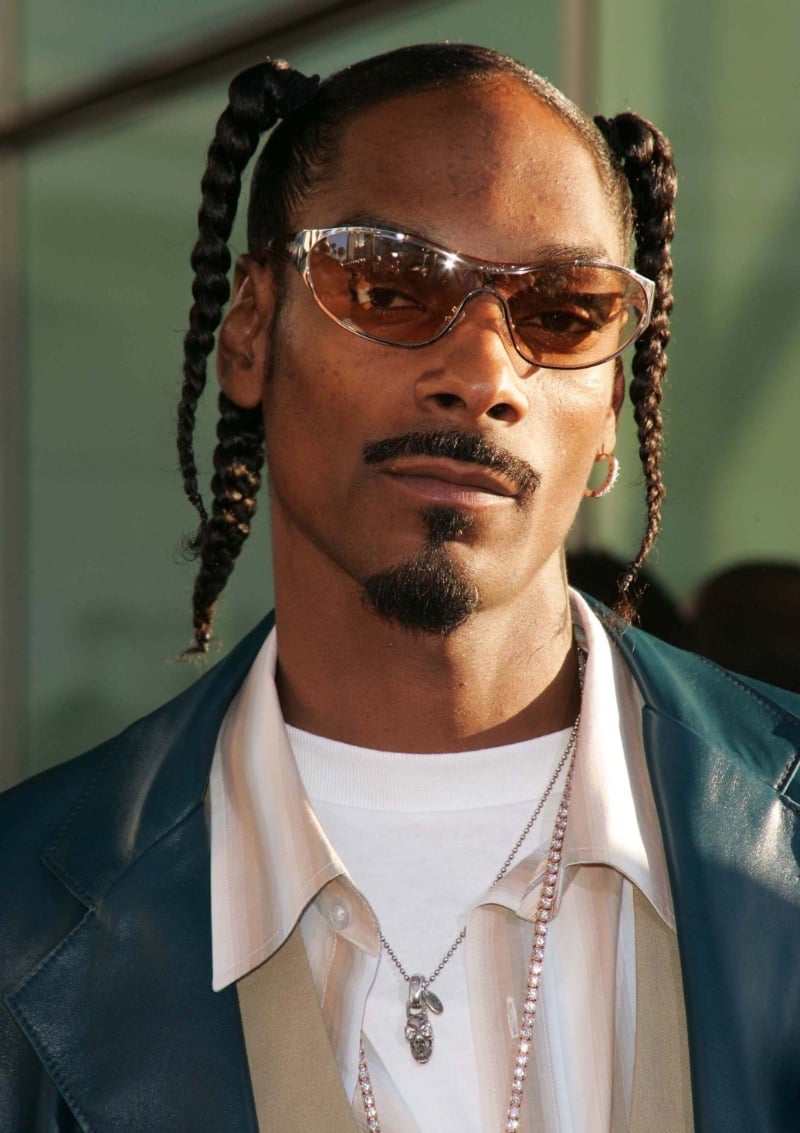
Snoop Dogg's long braids fall from high sections on either side, with thick plaits narrowing toward the ends. The exposed forehead and separated lengths make the parting as noticeable as the braids themselves.
Lewis Hamilton's Cornrows with Highlights
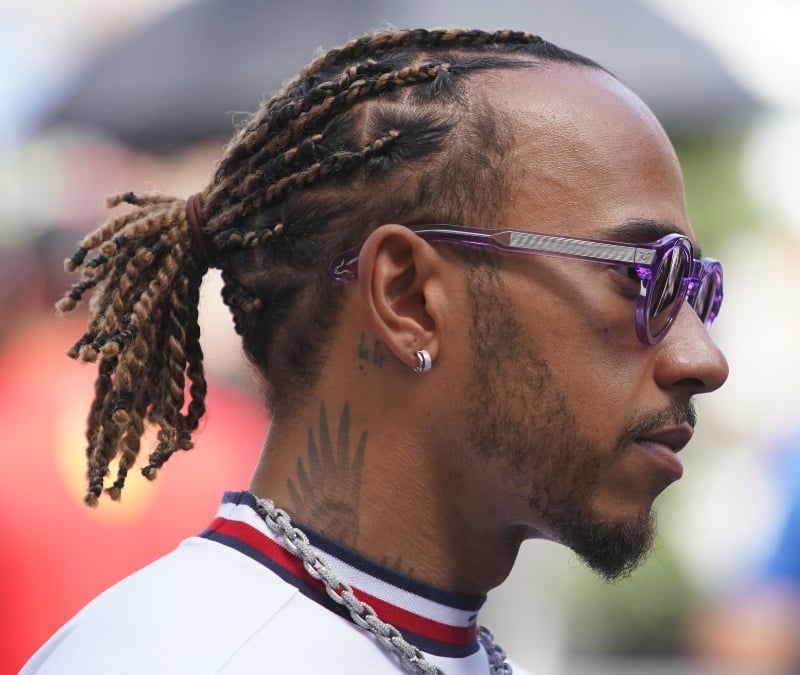
Lighter strands trace Lewis Hamilton's cornrows from the forehead toward the back. The highlighted lengths gather into a short ponytail, carrying the color beyond the scalp pattern. Darker roots make each row easier to follow in profile.
Tyga's Long Braids
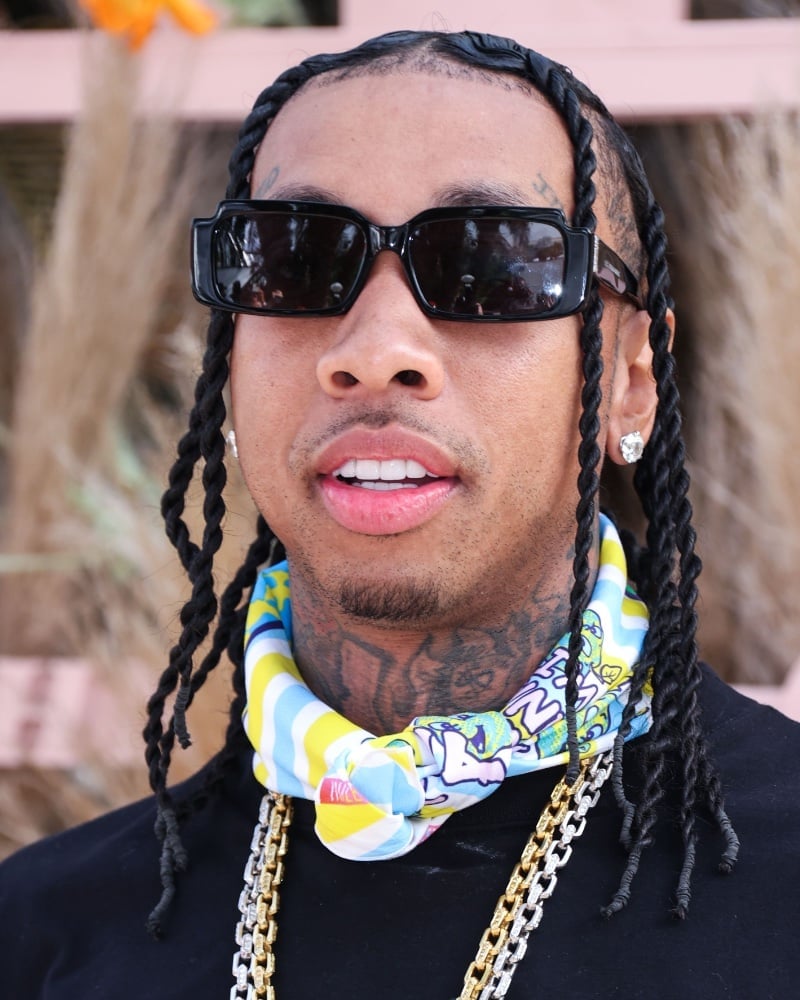
Tyga's long braids fall beside his cheeks and continue past the jaw. Similar thicknesses give the hanging plaits an even outline, while the exposed parts keep the top from reading as one solid mass of hair.
Quincy Brown's Patterned Cornrows with a Skin Fade
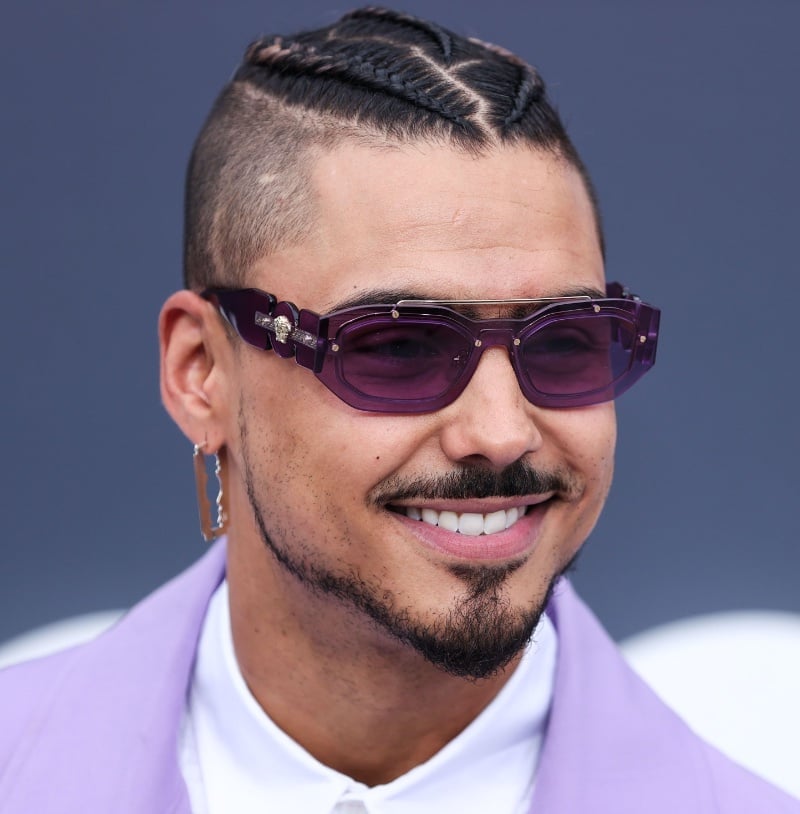
Quincy Brown's patterned cornrows curve across the top, with angled parts cutting between the rows. A high skin fade separates the braided area from the sides, making the pattern legible from the front and in profile.
Lil Nas X's Two-Strand Twists
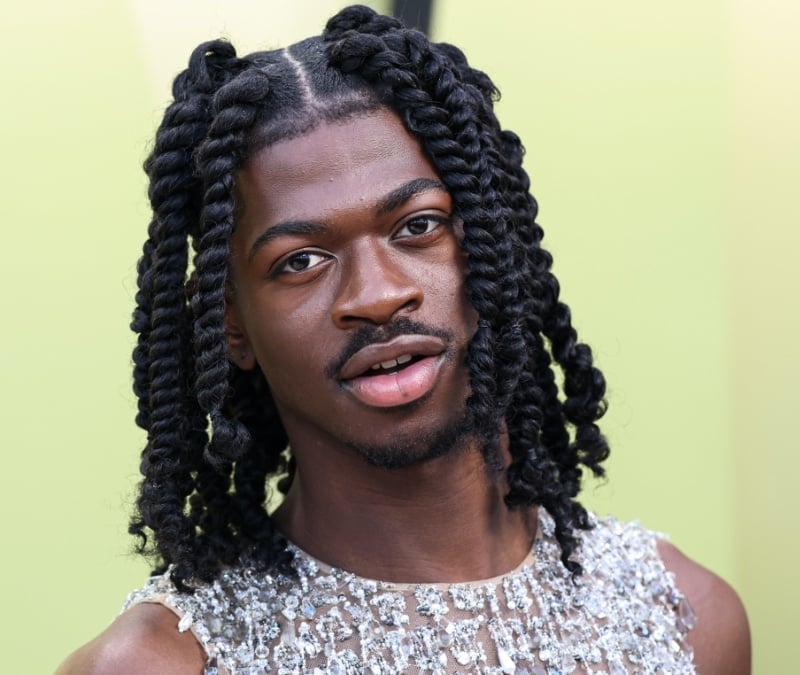
Chunky two-strand twists give Lil Nas X's hair a broad outline around the cheeks and shoulders. Textured extensions, often used for Marley twists, add fullness to the spirals. A center part separates the front sections, and the ends retain a looser, fuzzy texture.
Bad Bunny's Cornrows with a Bun
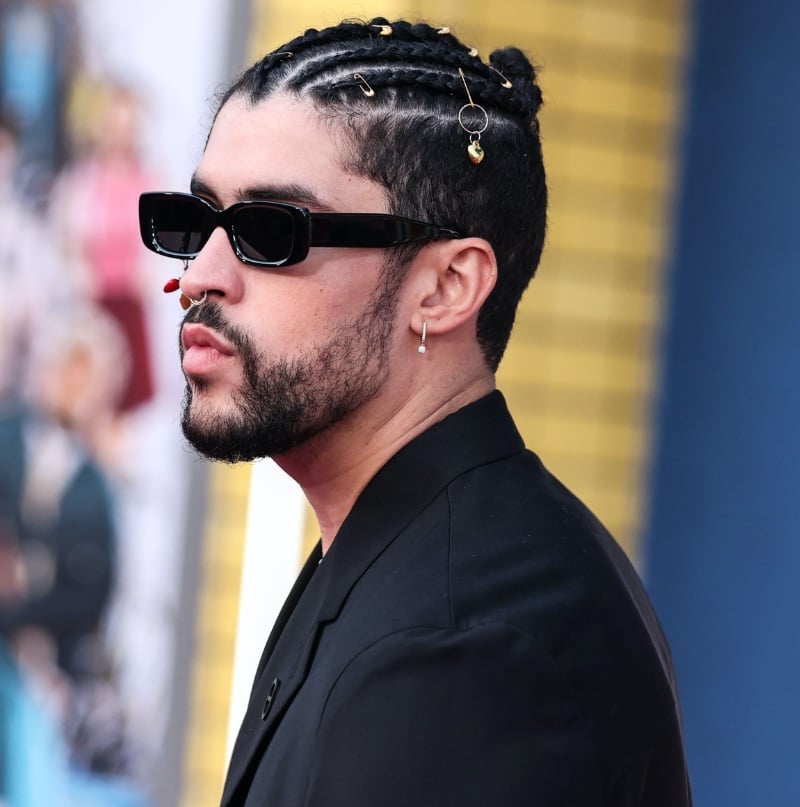
Bad Bunny's cornrows travel toward a small bun at the back, leaving the sides cropped short. Gold safety pins punctuate the rows with small metallic details. The cornrows carry the hair toward the man bun, keeping most of the length off the face.
Accessories for Braids
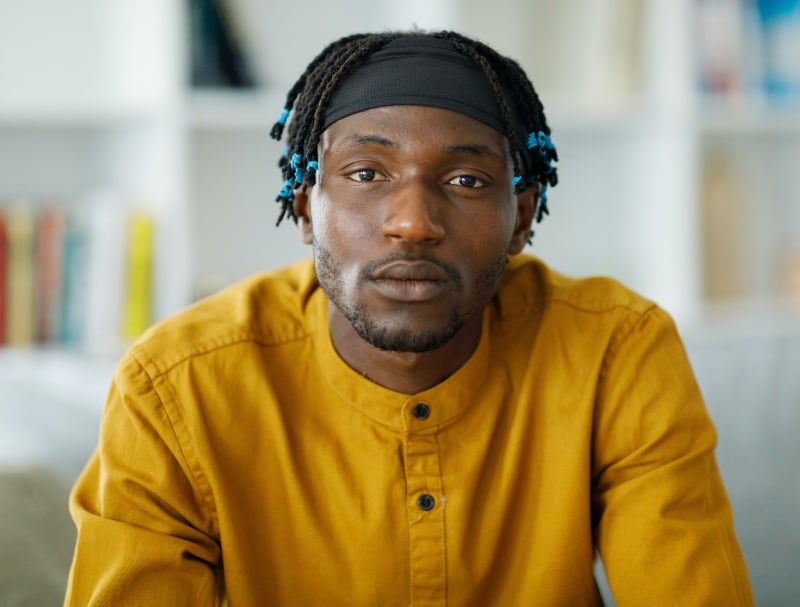
Bands secure the ends, beads add weight and color, and cuffs sit along the length of a braid. Their placement can emphasize individual plaits or repeat a pattern across the hair.
Braid Bands
Small bands hold the ends together when braids need help staying closed. Clear bands blend into the hair, while colored ones create visible dots at the tips. Remove them gently to avoid snagging the ends.
Beads
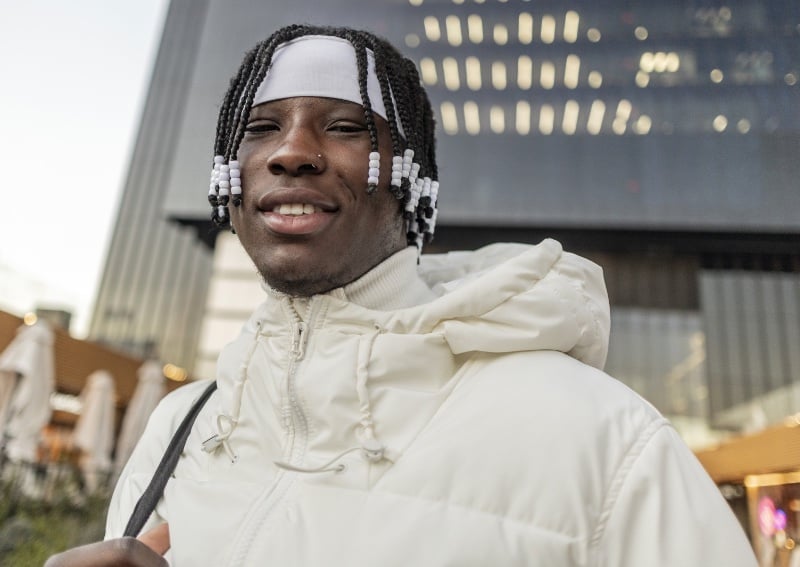
Beads thread onto individual braids, often near the ends where their color is easiest to see. White beads create a strong contrast against dark hair; wood and earth tones give a less pronounced contrast. Keep their weight light enough that the braids don't tug at the roots.
Hair Cuffs
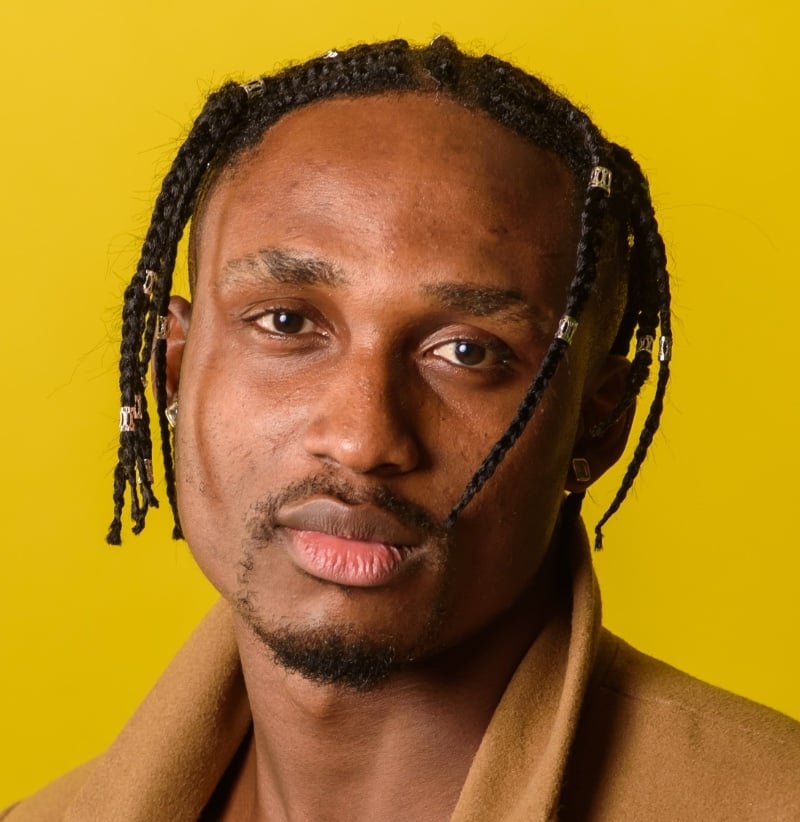
Metal cuffs clip around a braid, so they can sit higher along its length than beads secured at the ends. Silver or gold rings can mark a few selected plaits or repeat at intervals. They should close securely enough to stay in place, with no sharp edges catching the hair.
How Long Braids Last & How to Care for Them
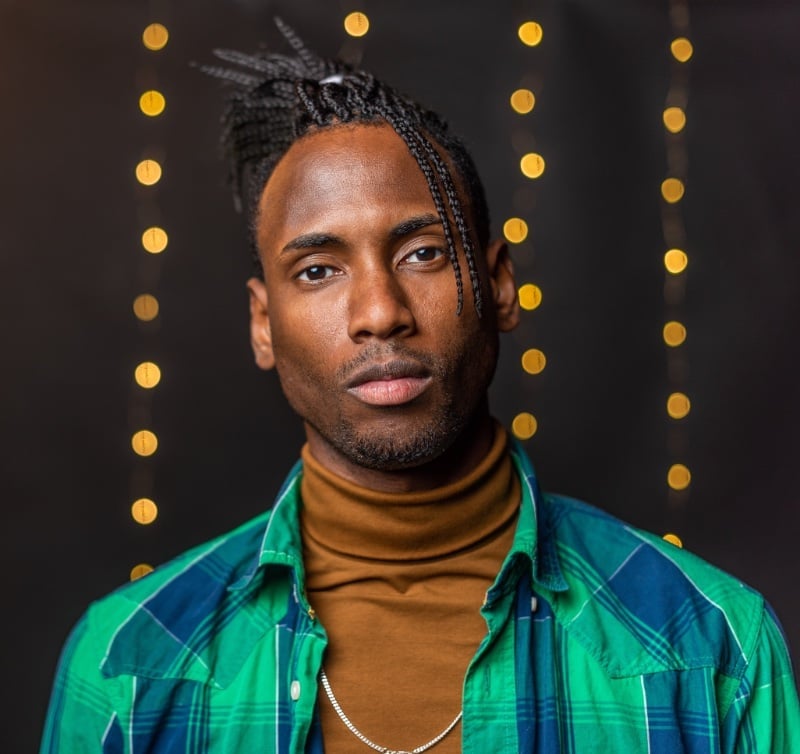
Braids may last from roughly two to eight weeks, depending on the technique, hair and upkeep. Cornrows often need redoing sooner than individual braids. Use that range as an estimate, not a target to reach if the roots are matting, buildup is accumulating or the scalp is uncomfortable.
Wash the scalp as needed for oil, sweat and product buildup, using shampoo along the parts and rinsing thoroughly. Let the roots and braids dry fully. A durag, satin scarf or satin pillowcase can reduce rubbing at night. A little oil may suit a dry scalp, but it won't resolve every cause of itching. Pain, bumps or persistent pulling call for loosening or removing the style. Repeated tension can cause hair loss, so alternate braids with styles that put less strain on the hairline.





